
UA doctor says food and mindfulness can fight stress
A University of Arizona medical resident told TenWest Festival attendees that diet and mindfulness practices can help manage stress, lower disease risk and improve overall health.

Instead of reaching for Tylenol, a Tucson doctor says the answer to managing stress and preventing illness might already be in your kitchen.
"A topic that I think is extremely relevant to all career people (is) how can we use something that is a part of our daily lives, eating, to mitigate stress and prioritize focus?" said Natalie Vela, a second-year resident at the University of Arizona College of Medicine, during her session at TENWEST, an annual event that celebrates entrepreneurship, creativity and innovation.
Practicing mindfulness and utilizing food to better one's overall health falls under integrative medicine, Vela said.
"We have evidence-based complementary and alternative practices, really focusing on holistic health of a whole person," she said. "The more physiologic term for stress is allostasis … being the body's state of equilibrium while we're responding to both physical and psychological stressors."
Vela said people encounter different types of stress: good stress that promotes resilience in the body; stress that is tolerable but uncomfortable; and toxic stress, which manifests as chronic stress.
Both physical stress, like a workout, and psychological stress can trigger similar responses in the body, showing up as increased heart rate, fatigue or behavioral changes.
"Your body, ideally, should be able to experience a stressful experience and then come back from that," Vela said.
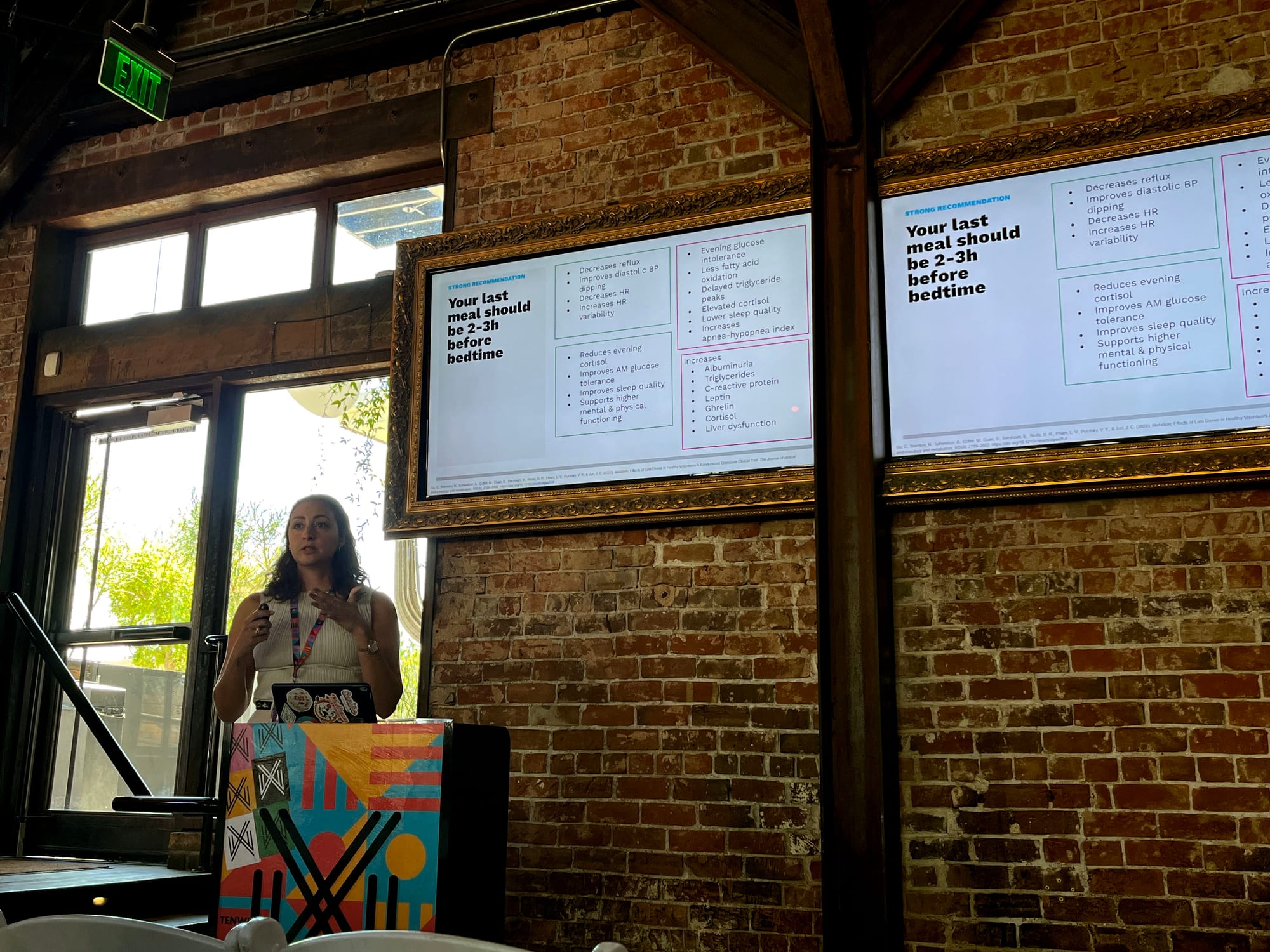
Vela said one way to counteract stress is through a practice called the relaxation response.
This mechanism was developed by Dr. Herbert Benson and involves offsetting the body's fight-or-flight response through meditation, according to Vela. She said practicing mindfulness can counteract cortisol levels and lower blood pressure.
Another way to prevent cortisol spikes is to avoid eating while in fight-or-flight mode.
"We have the power to decrease all of those signals and take back our stress response," Vela said.
Vela led attendees through an exercise practicing the relaxation response, with the room falling silent as attendees closed their eyes, relaxed their muscles and meditated.
"These practices have been around for centuries and they're actually very universal," she said.
Another way to counteract stress and reduce the risk of health conditions like heart disease and diabetes is through healthy eating. Some foods promote heart and brain health and lower the risk of diabetes, including nuts and seeds, whole grains, citrus, berries, fish and omega-3 fatty acids, essential polyunsaturated fats the body cannot produce on its own and must obtain through diet.

She also said olive oil, which is primarily a monounsaturated fat, decreases overall mortality risk by reducing inflammation, blood sugar levels and low-density lipoprotein, or "bad" cholesterol. High LDL levels can lead to plaque buildup in arteries, increasing the risk of heart disease and stroke.
"Extra virgin olive oil is huge," she said, adding that research has proven that eating more fruits and vegetables will decrease a person's risk of health issues. "We're not just kidding when we're at the doctor's office telling kids and adults to eat more vegetables. The data, the evidence is there."
The average adult requires about 0.8 grams of protein per kilogram of body weight, Vela said. Pregnant women, older adults and those who do not eat meat require more, around 1.0 grams per kilogram.
In addition, eating between 25 and 35 grams of fiber daily and consuming an equal amount of protein at breakfast, lunch and dinner is optimal for sustaining energy throughout the day.
Taking a 10-minute walk after eating can also help decrease glucose spikes.
"When people know about how to make these things more sensible in their lives, you can grab your family members, your roommate and say, 'Hey let's just leave this mess in the kitchen and walk for 10 minutes," Vela said, adding that these healthy and intuitive practices are a standard way of life for many countries across the globe. "I recognize it's a challenge, because our society, especially in the states, is not really set up well. I think we have plenty to learn from our friends in Europe, in Latin America and Asia … who have it as a cultural standard to sit down and be in community during meal time."
Arilynn Hyatt is a journalism major at the University of Arizona and Tucson Spotlight intern. Contact her at arilynndhyatt@arizona.edu.
Tucson Spotlight is a community-based newsroom that provides paid opportunities for students and rising journalists in Southern Arizona. Please consider supporting our work with a tax-deductible donation.