
UA alumna investigates the cost of growing up online
Journalist Fortesa Latifi's new book examines the hidden costs of family influencer culture, from privacy loss to exploitation, and asks who is really protecting children online.

A University of Arizona alumna has turned three years of reporting on family influencer culture into a book that asks a question most parents scrolling through social media haven't stopped to consider: what does growing up on camera really cost a child?
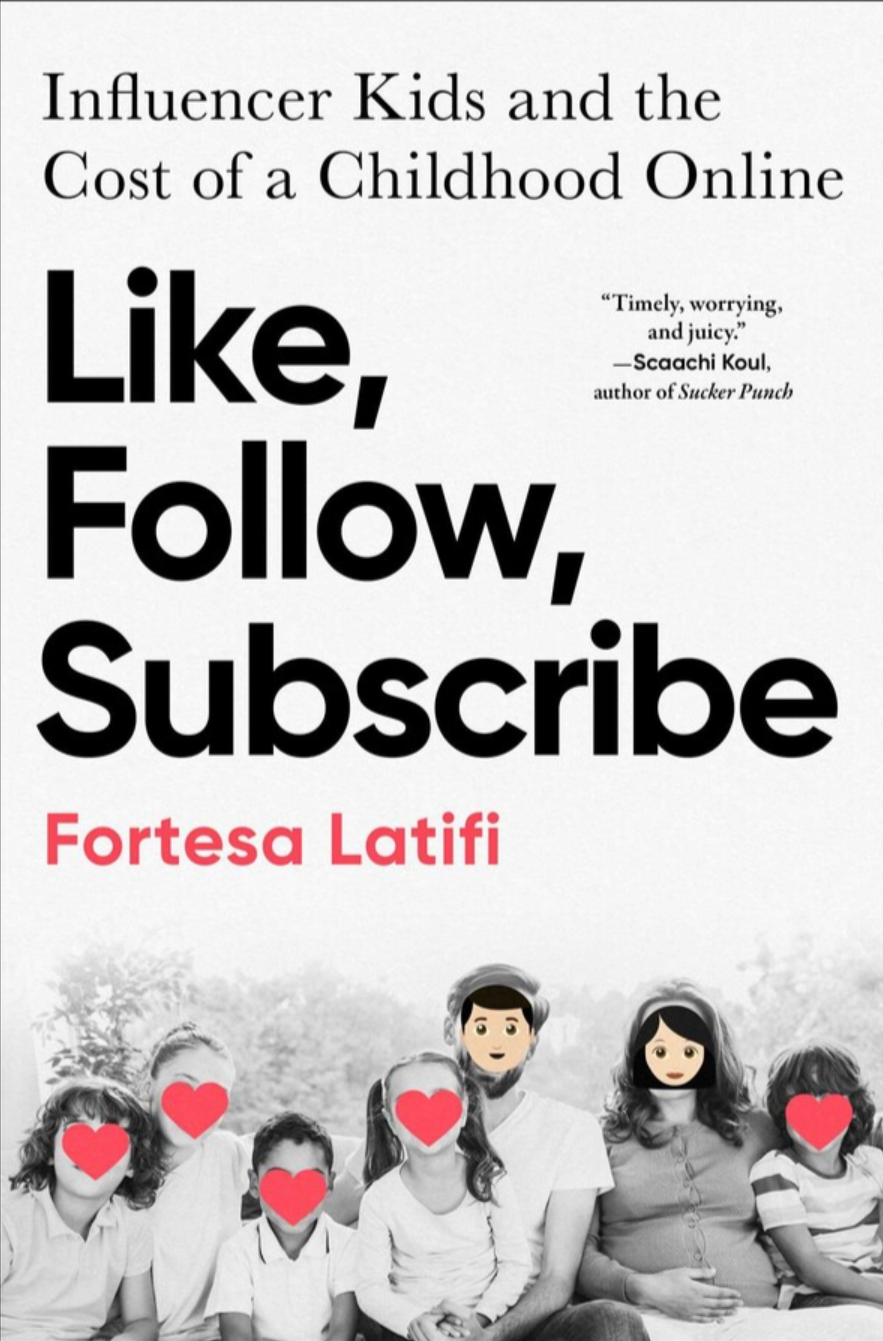
Journalist and Tucson native Fortesa Latifi's book "Like, Follow, Subscribe: Influencer Kids and the Cost of a Childhood Online" was released April 7 and explores why families go viral, what it costs kids, and why platforms, lawmakers and parents have yet to find solutions to the ethical questions surrounding children's lives online.
Latifi knew she wanted to become a journalist from the start, but the path into her career was not linear.
"I started college in 2010 and it was right at the peak of the print decline, and everyone was like, 'Journalism is dead,'" Latifi said. "(I thought,) 'Okay, great. I don't know what to do, because this is what I wanted my whole life.'"
Latifi pivoted, graduating with a degree in family studies and human development.
But after working in the field for two years, she decided to return to her first love and pursue a master's degree in journalism from Arizona State University.
"I worked for another year or so," Latifi said. "I couldn't break into journalism."
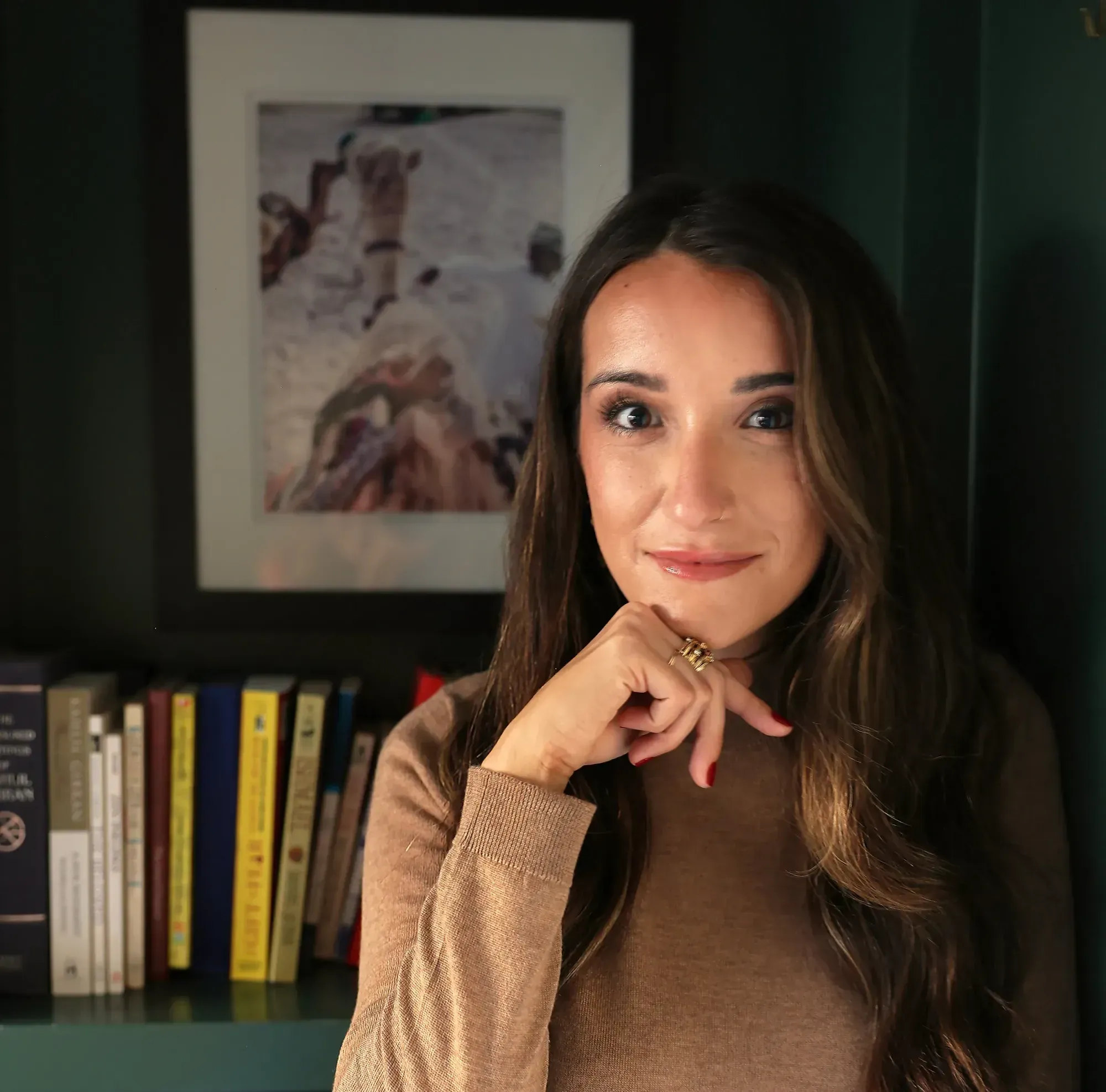
She freelanced, eventually finding herself at Teen Vogue with one burning question: What is it like to grow up as an influencer kid?
"I started looking around, and I got an interview with a young woman who had grown up on a family vlogging channel. The interview that I had with her was so harrowing and so fascinating," she said. "People still had a lot of questions. I have a lot of questions too. It unwittingly became my beat."
For three years, her reporting on the child and family influencer space was featured in publications including Cosmopolitan, The Washington Post, and Rolling Stone, where she interviewed Shari Franke, a former member of the "8 Passengers" family YouTube channel whose mother pleaded guilty to four counts of aggravated child abuse after abusing Franke and her siblings behind the scenes.
But writing a book based on her reporting did not come without reservations.
"I started talking to my agent, and she was like, 'I think there's a book here,'" Latifi said. "Yeah, there could be, but I don't know."
Latifi's hesitation shifted when a three-part series she wrote for Cosmopolitan went viral. The stories explored why family vloggers do what they do, why some families leave the vlogger life, and what child influencers have to say about the lack of regulation to ensure they receive payment for their work.
"Book editors and publishing houses started reaching out to me," she said. "(I) wrote a book proposal in five days, I was also seven months pregnant at the time, but … this is the moment that I'd been waiting for."
Latifi secured a book deal with Simon & Schuster and wrote her book with new reporting inspired by her previous journalistic work.
The book explores themes of parenting in an age of internet algorithms, where children raised as the center of content may face the loss of privacy, autonomy and authentic family bonds, impacts that may surface as resentment and embarrassment as children get older.

In writing the book, Latifi spoke with influencer families and children who grew up on camera, interviews that required her to build genuine trust with sources sharing vulnerable experiences.
"When these young people are thinking about talking to a journalist, it's very scary. Most people have never talked to a journalist, most people have never been interviewed. They don't know what that process is like," she said. "I try to be as open as possible and tell them, 'This is what it'll look like. This is what off the record means. This is what happens if you change your mind.'"
She would also refer sources to her previous work so they could see for themselves.
"I treat this subject very delicately and that I'm not just coming down hard on one side or the other," she said. "I really take it very seriously to have a lot of nuance and acknowledge the complexities of this industry in my work."
Part of developing that trust is the nuance she has brought to her journalism over the years, nuance that is also central to the book.
"People ask me, 'Which influencers are getting called out in your book? If you're looking for that, you're gonna maybe a little bit disappointed. But if you're looking for the nuance and complexity of this industry and really like how I grappled with it, then this is your book,'" she said.
Whether speaking with a nanny of a family influencer or a former family vlogger, Latifi found that her sources were less concerned with naming names than with illuminating the broader problems at play in the industry.
There has been increasing interest in research regarding child influencer culture. One in four fetuses already have a digital footprint prior to their birth and 86% of young Americans want to be influencers when they grow up, according to Latifi.
"We often see this content as aspirational, or that it's going to be beneficial to us in some way, but really it just makes us feel terrible," Latifi said. "I quote many academic studies about the emotional toll that consuming mom influencer and family vlogger content takes on people … there was one study that women mothers are especially sensitive to this material in the pregnancy and postpartum period. That makes so much sense."
For many families, the appeal of monetizing content is what draws them to family vlogging — an opportunity that, if not approached carefully, can become exploitative to the children involved.
"The middle class is vanishing. Wages aren't keeping up with the cost of living. It's so difficult to figure out childcare and the costs of childcare while working," Latifi said. "I talked to parents who were struggling or even living in Section 8 housing, and then they hit it big on TikTok or Instagram, and they're making their yearly salary in one brand deal, and they get to stay home with their kids. You can understand how, how the scales would tip."
Mothers are typically at the helm of this content, and Latifi says that reflects just how difficult it is to be a mother in today's economy.
"When you're a mom, you're either a working mom or a stay at home mom. You really do see in this industry, that women are often the head of the content and of this effort," she said. "It really shows how difficult it is to be a mother, that they are looking for both this outlet and for this financial opportunity."
With childcare costs soaring and many jobs failing to cover them, Latifi says it's no surprise that mothers are seeking work they can do from home alongside raising their kids.
As a mom herself, Latifi understands the drive.
"I really do feel genuinely incredibly sympathetic to the parents involved in this industry," she said.
Technology also plays a major role. With algorithms and audiences driving demand for family content — even content that captures children in their most vulnerable moments — major tech companies have little incentive to protect children when their platforms profit from the exposure.
"There was this case that I write about in the book of Wren Eleanor, who was a toddler whose mother was making videos that people saw as sexually suggestive," Latifi said. "She was licking popsicles, or like eating pickles, what people saw as, like phallic food. And there was this huge uproar. And people were like, 'Why don't the platforms do anything?'"
While tech companies do have policies against the sexual exploitation of children, Latifi says even those are difficult to enforce given how hard it is to define where the line actually falls.
There are also social and cultural factors that drive this type of content. The same curiosity that causes people to rubberneck at car crashes is what consumers of family content experience, meaning that audiences also bear some responsibility.
"People are drawn to watching other people in vulnerable situations … you just can't help but be interested … but it also has turned into this monetization hellhole," Latifi said. "Multiple family vloggers and mom influencers told me on the record that the content that does best is content where their child is sick, sad or injured."
There are also legal and ethical questions to consider.
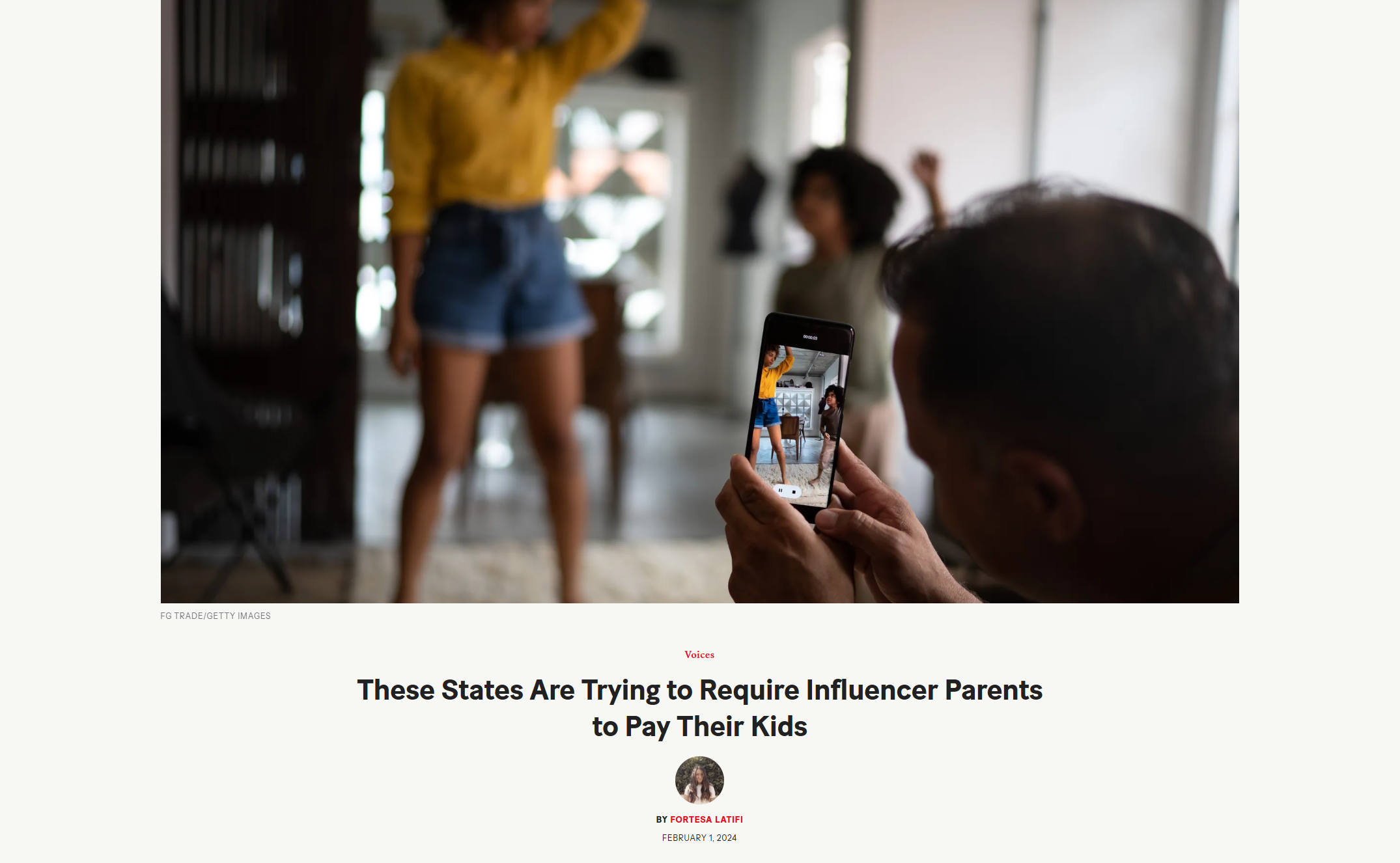
Only a few states have adopted protections for child influencers, raising questions about why legislation has been slow to establish safeguards for minors in this space. Still, there have been pushes for laws that would give child influencers the right to say no, the right to anonymity, and access to third-party representation.
"A child cannot really understand what they're consenting to. Even if you say, 'Hey, can I post this on Instagram?' Can they really comprehend that it might go to millions of people?" she said. "But on the other hand, I think parents make choices for their children all the time that they can't consent to, that's kind of what childhood is. It's so complicated."
Latifi doesn't claim to have all the answers.
"This is an incredibly complicated topic," she said. "I don't feel that it's black or white, or if you put your kids online, you're a bad parent."
"Like, Follow, Subscribe: Influencer Kids and the Cost of a Childhood Online" is available for purchase at local bookstores or online.
Topacio “Topaz” Servellon is a reporter with Tucson Spotlight. Contact them at topacioserve@gmail.com.
Tucson Spotlight is a community-based newsroom that provides paid opportunities for students and rising journalists in Southern Arizona. Please consider supporting our work with a tax-deductible donation.