Tucson water, trash rates may rise under new fee package
The Tucson City Council voted 6-1 to signal its intent to adopt a sweeping package of fee increases covering water, trash, road permits and planning services.
Tucson residents can expect to pay more for water, trash pickup, road permits and city planning services under a sweeping package of fee increases the City Council signaled its intent to adopt earlier this month, changes officials say are needed to keep up with costs that current rates no longer cover.
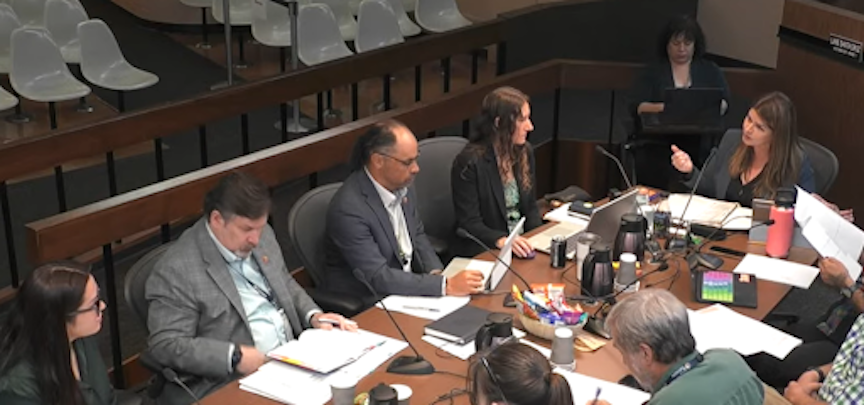
The Tucson City Council approved a notice of intent to adopt the fee changes in a 6-1 vote during its March 17 meeting. Ward 3 Councilman Kevin Dahl was the lone opposing vote.
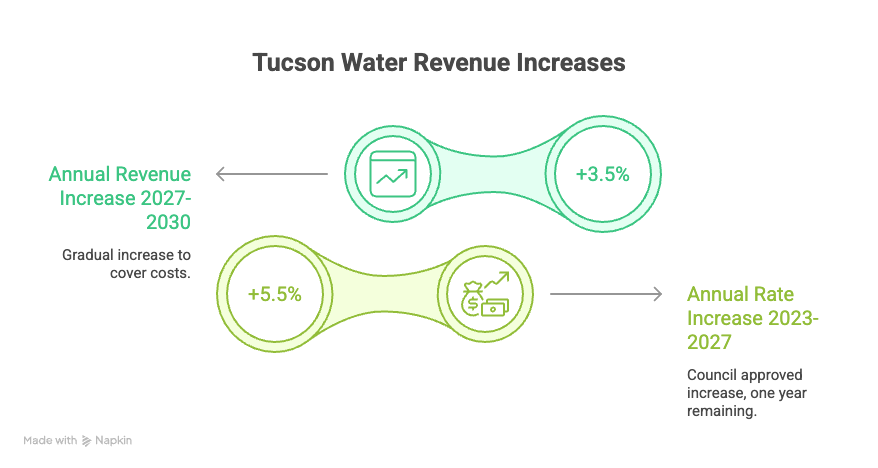
Tucson Water staff recommended a gradual 3.5% annual revenue increase from fiscal years 2027 through 2030 to cover daily operations and infrastructure costs. The Civilian Water Advisory Committee, however, recommended a steeper 5.5% increase in fiscal year 2027, followed by 3.5% increases through 2030.
Tucson Water Director John Kmiec said the higher starting increase would strengthen the utility's finances and potentially lead to lower rates in the long term.
The council opted to go with the staff recommendation of a 3.5% annual increase, with Dahl noting that his "no" vote was meant to express his preference for the CWAC recommendation.
The increases follow the council's 2023 approval of a 5.5% annual rate increase that runs through fiscal year 2027, with one year remaining.
During that period, the city also adjusted rates to encourage conservation and offset rising Colorado River water supply costs, and introduced a tiered rate structure charging outer-city residents more to reflect the greater infrastructure needed to serve them.
The city is also considering its first miscellaneous fee update in 13 years, which would raise Central Arizona Project water fees by approximately 20%.
Transportation and Mobility requested a simplification of right-of-way permit fees, which Deputy Director Jim DeGrood said currently cover only 61% of related expenses. The department also proposed two new fees: one to recover the loss of value when pavement is cut, and a lane closure fee.
"Our objective here is to fully recover our costs, recognize the loss of value to the public from inconvenience and congestion, and incentivize more rapid work within city right-of-way," DeGrood said.
The lane closure fee would be the first of its kind in Tucson. A 24-hour closure of an arterial or collector street would cost $2,000 per direction per half-mile — $1,500 for a daytime closure and $500 for a nighttime closure, with the split intended to push contractors toward overnight work. Turn lane and local street closures would cost $500 and $600, respectively.
The Planning and Development Services Department requested fee increases to better align rates with the cost of services, targeting fees not tied to construction costs that currently fall short of covering expenses. Proposed changes include a 5% increase for non-valuation permits such as site review and zoning, doubled professional review fees, significant increases for floodplain use permits, and a 10% to 25% increase for special approvals.
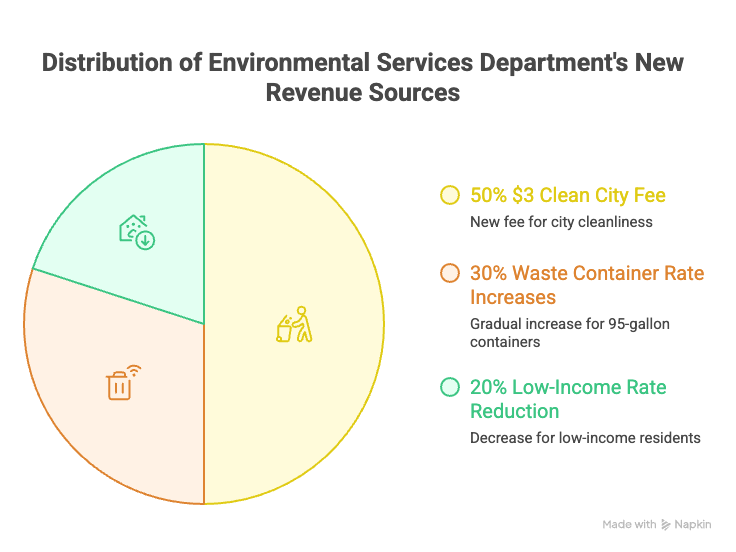
The Environmental Services Department requested a new $3 clean city fee starting next year and a gradual increase in residential rates for 95-gallon waste containers from $23 to $26, rising $0.75 annually through 2030. Rates for 48- and 65-gallon containers would remain unchanged, an incentive for residents to reduce waste. The low-income rate would drop from $11 to $9.75 before rising $0.75 annually until reaching $12 in 2030.
Environmental Services Director Carlos De La Torre said the increases would allow the department to maintain services like graffiti abatement and homeless camp cleanup, as well as its vehicles and equipment.
"These adjustments would also allow us to strengthen our graffiti abatement program and continue with safe and clean community programs," De La Torre said.
The department also plans to gradually raise roll-off container fees from $182 to $340 by 2030 and reduce commercial dumpster rates from 25% to 15% by 2029.
The city plans to present the full package at town halls through the end of April, with a public hearing set for May 19. If approved, the changes would take effect in July.
Ward 2 Councilmember Paul Cunningham called Tucson's existing fees "very competitive" compared to neighboring municipalities like Marana and Oro Valley and larger ones like Phoenix.
"I'm pretty happy with the kind of where we ended up and the fact that the fact of the matter is that, considering other jurisdictions and what they're charging, we're very affordable," Cunningham said.
The council also discussed a proposed energy collaboration agreement with Tucson Electric Power, part of the city's broader effort to define its role in the local energy landscape.
"This would be a voluntary agreement between the city and TEP that, once signed, becomes less voluntary," said City Manager Tim Thomure. "But it would be an opportunity for us to work together on our clean energy goals and advancing our Tucson Resilient Together climate adaptation."
The proposal follows a series of public town halls and a 2025 letter of intent between Tucson and TEP to collaborate on climate goals, with negotiating direction shaped by public feedback.
"This agreement represents the first of its kind in the state of Arizona, and there are only a handful nationwide," said Chief Resilience Officer Fatima Luna.
The agreement is tied to a 25-year franchise agreement requiring voter approval. It would provide $2 million in TEP shareholder funds, escalating 2% every other year, totaling $56 million over 25 years, directed toward priority projects in five areas:
- Reducing greenhouse gas emissions through solar power and energy storage
- Enhancing resilience infrastructure through cooling centers and heat response
- Supporting vulnerable communities through assistance and outreach programs
- Expanding economic development and career pathways in energy-related fields
- Creating reliable, affordable electricity through coordination and efficiency
Luna said most community feedback on the agreement was positive, though many felt $2 million was insufficient and didn't account for future inflation, and others preferred a lump sum upfront from TEP.
Some residents worried the agreement would close the door on public power discussions, since the current draft would terminate if the city moved toward a voter referendum on municipalization.
City Attorney Roi Lusk said the city prioritized a standalone agreement that clearly outlines commitments and includes an exit clause if moving forward ever becomes inappropriate.
Lusk said the city wanted to isolate the elements both TEP and the city saw as community priorities: shareholder funding for the climate action plan, commitments around resilient infrastructure and greenhouse gas emissions, solar implementation and more.
"But the reality is that it was just getting sort of convoluted and a little confused when we were trying to put it into an already sort of established franchise agreement," he said.
The city held town halls in both English and Spanish. Luna said Spanish-language sessions focused on economic concerns like affordability, weatherization and workforce development, while English-language sessions centered on clean energy and the level of shareholder funding.
Dahl apologized to residents who felt their concerns were overlooked, saying now is the time for adjustments, and signaled openness to future options.
"Just because we're not including it in the ECA doesn't mean we don't agree with you," Dahl said. "We should lobby the legislature to allow community choice or aggregate power or other things that were suggested."
Ian Stash is a journalism major at the University of Arizona and Tucson Spotlight intern. Contact him at istash@arizona.edu.
Tucson Spotlight is a community-based newsroom that provides paid opportunities for students and rising journalists in Southern Arizona. Please consider supporting our work with a tax-deductible donation.