Tucson team tracks decline of San Pedro River beavers
Tucson researchers and volunteers joined a bi-national effort to survey the San Pedro River this fall, documenting scarce beaver activity as they work to understand the species’ continued decline.
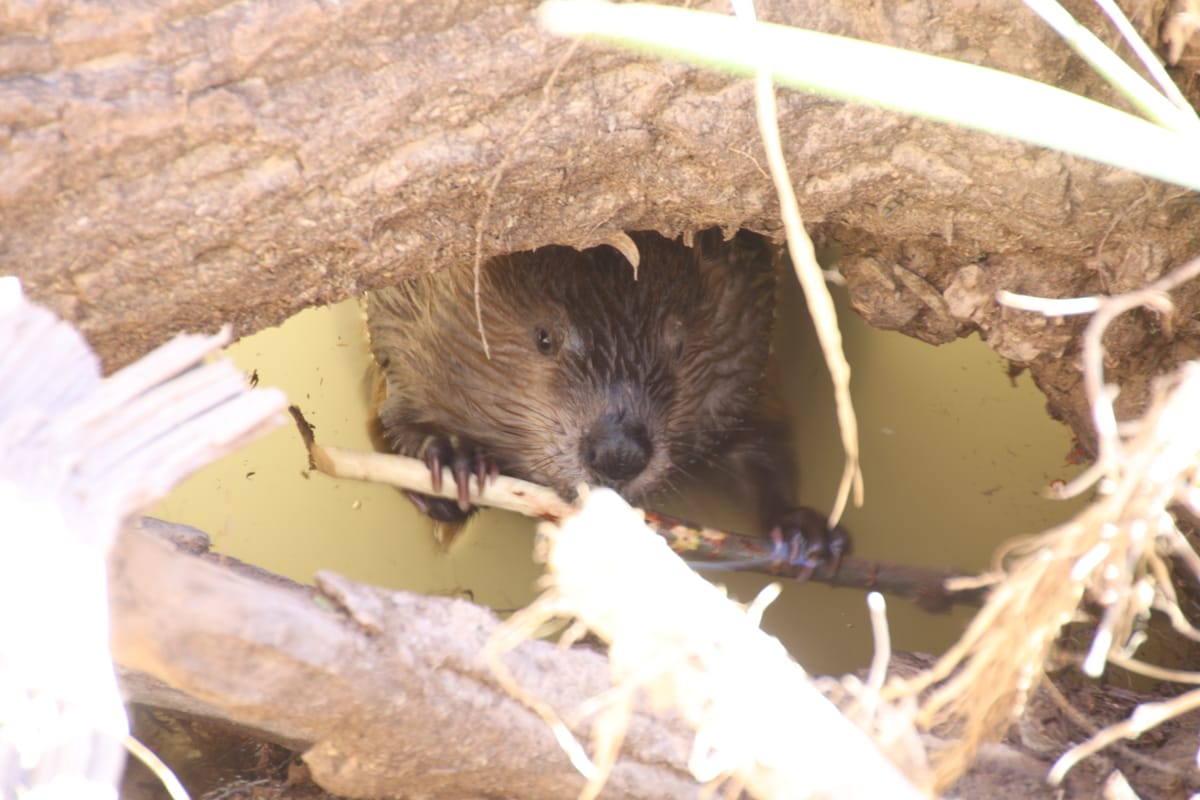
A rare beaver sighting along the San Pedro River greeted surveyors earlier this month as Tucson’s Watershed Management Group launched its annual bi-national beaver survey, part of a growing effort to understand why the species is once again declining in a river it helped shape for centuries.
This marks the group’s fifth year participating in the effort, a citizen science–based initiative that surveys the San Pedro River Valley for a once-thriving beaver population.
The San Pedro River, historically known as Beaver River, begins in Sonora, Mexico, passes through Sierra Vista and Benson, and eventually merges with the Gila River near Mammoth.
The river does not pass through Tucson, but the Watershed Management Group participates in the survey because its health directly affects regional water systems and restoration efforts across southern Arizona.
Beavers, North America’s largest rodent, were once abundant along the San Pedro River, but demand for their fur led to heavy trapping in the 1820s, pushing the population to the brink of local extinction.
As a keystone species, their dams slow the flow of water and act like ecological sponges, holding water higher in the watershed and helping restore aquifers. Without those dams, the beaver decline contributed to the loss of more than one-third of the state’s cienegas, or wetlands.
A 1999 collaboration between the Bureau of Land Management and Arizona Game and Fish reintroduced 15 beavers to the San Pedro Riparian National Conservation Area in hopes of restoring a once-lost population.
In the years since, Arizona Game and Fish has actively relocated beavers that have been a nuisance in other parts of the state into the San Pedro River to maintain the population, which grew to more than 100 beavers by 2010.
But those numbers have been decreasing over time with no clear reason as to why.
Although the survey is not intended to determine the causes of the population decline, experts have proposed several possibilities.
“What we're seeing with our surveys is that the population has basically continued to decline,” said Nadira Mitchell, WMG’s restoration ecology coordinator and the coordinator for this year’s beaver survey. “There are a lot of different variables involved in why the beavers are not thriving.”
One theory is that the beavers reintroduced to the San Pedro Riparian National Conservation Area moved down to Sonora, where reservoirs hold water year-round, unlike the San Pedro River, which can dry out throughout the year.
“The river is a degraded river system because it isn't flowing as much as it used to flow because of groundwater pumping in that area, cattle ranching,” she said. “Because the (San Pedro) river has been fluctuating with flooding and drought, that opens up beavers to predation from mountain lions.”
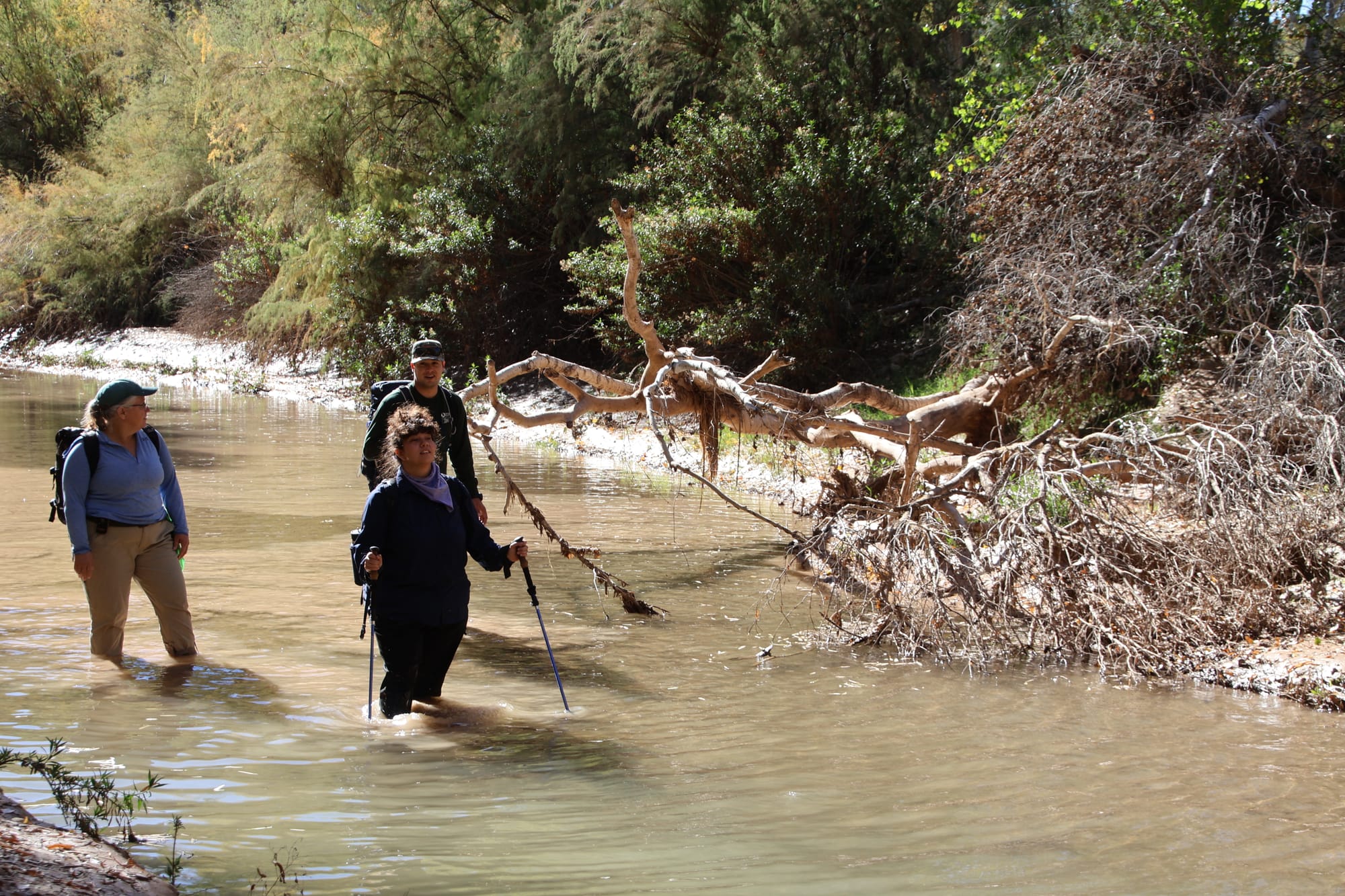
The decreasing beaver population caught the attention of Mike Foster, who had been conducting his own beaver surveying since 2015, joining efforts with WMG in 2021.
“Our work is not just monitoring beavers, but also advocating for the release of more beavers if the habitat is suitable, and also educating community members that beavers used to be abundant here, advocating to bring back the flow of our rivers and creeks,” Mitchell said.
The group formalized its survey using a Bureau of Land Management model and the data-collecting app Survey123. Information gathered by volunteers is later peer-reviewed by local beaver experts and partner agencies.
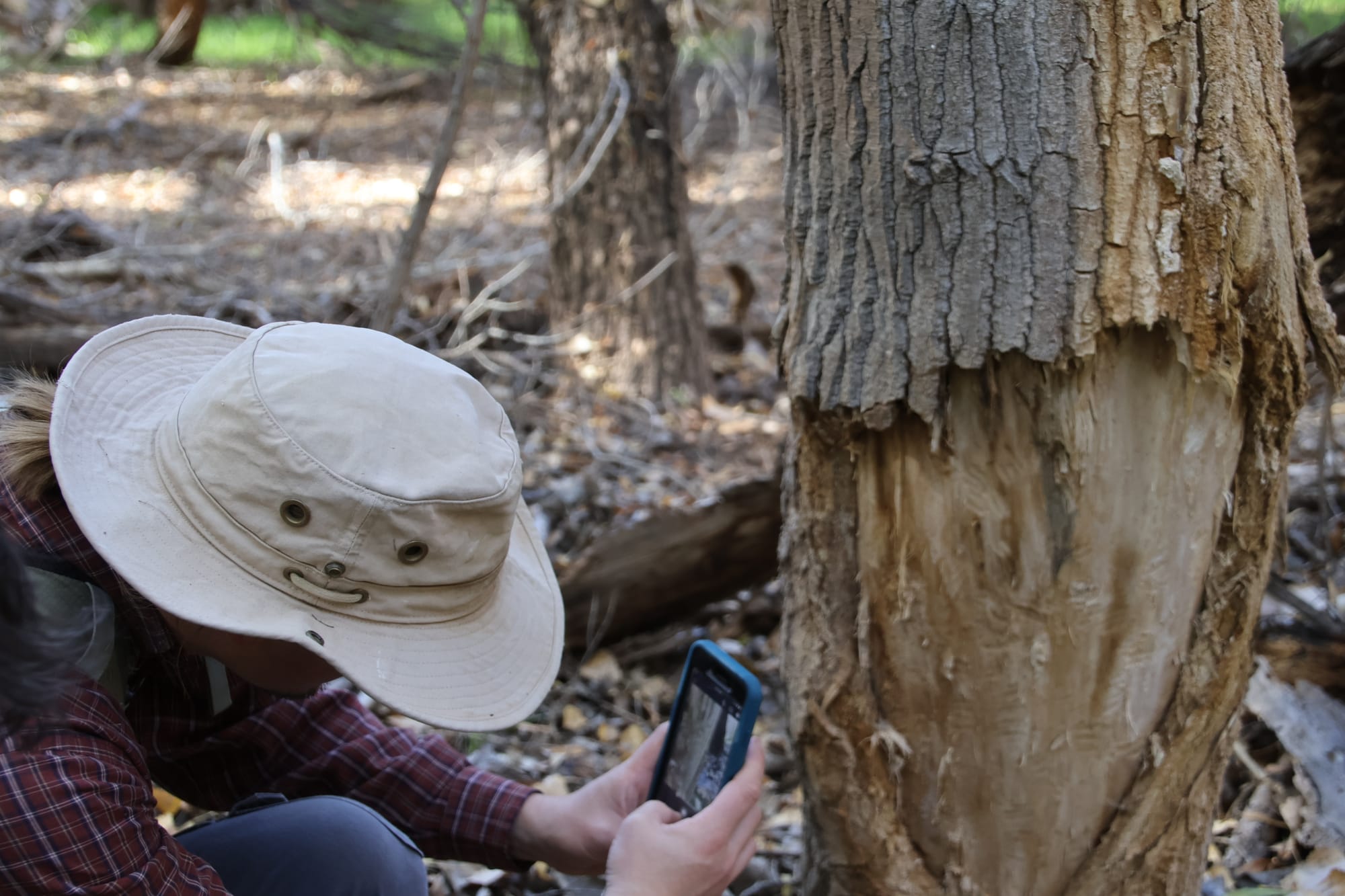
“We're creating a population estimate based on their activity,” Mitchell said. “Based on the amount of dams, lodges, or beaver chews, and the distance between certain (activities), we estimate where a family group is, or if there's just roaming individuals around.”
Last fall, 120 volunteers surveyed 77.5 river miles of the San Pedro River where previous beaver activity was observed.
The 2024 survey estimated that there were approximately 30 to 38 beavers along the San Pedro River. An estimated 13 to 17 beavers were found in sections of Sonora, while 17 to 21 beavers were spotted in Arizona.
This year’s survey was held over a couple of weekends in November at the San Pedro Riparian National Conservation Area near Sierra Vista and the San Pedro Headwaters in Sonora, Mexico.
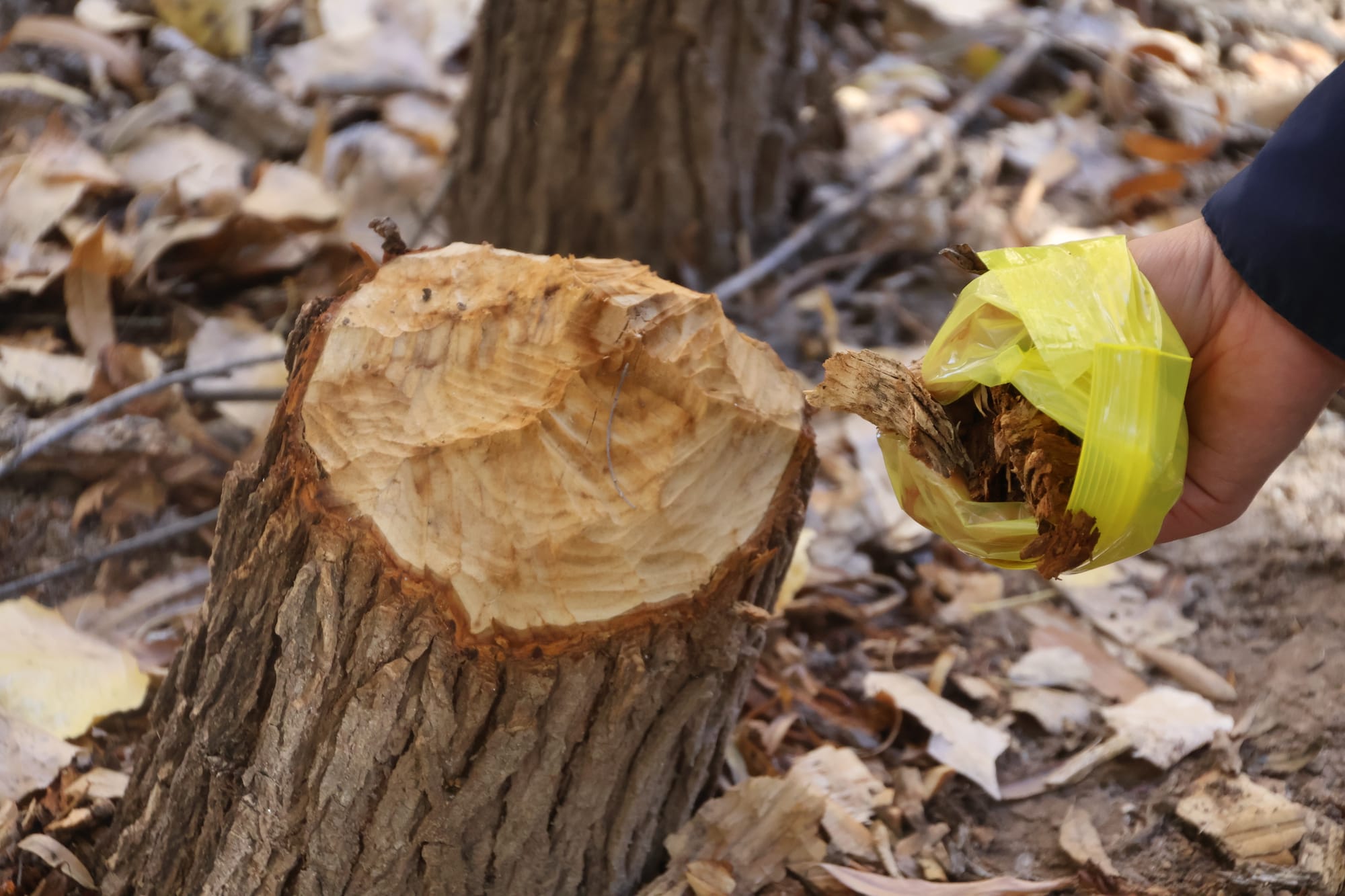
The survey wrapped up in Arizona Dec. 6 at the lower and middle San Pedro River, where, after hours of hiking, surveyors heard gnawing from within the cottonwoods.
While taking pictures of chewed trees and collecting wood chips for lab analysis, the group watched the water ripple beneath a tree submerged in the riverbed, and moments later a beaver popped into sight.
This was the first and only beaver spotted during this year’s beaver survey, with sightings a rarity since beavers are most active from dusk to dawn.
Coordinators finalized their surveying in Mexico last weekend, wrapping up their research. Data from this year’s survey is expected to be released in the spring.
The limited sightings underscore the need for broader collaboration and long-term monitoring.
Building on their work with the survey, WMG founded the Arizona Statewide Beaver Working Group earlier this year, a collective of 60 partners and organizations aiming to build a collaborative, statewide management plan for the beaver population.
“In order to have that happen, we need to have these conversations and collaborate on restoration and data analysis, geospatial modeling and beaver coexistence,” Mitchell said. “(In) Southern Arizona, we have an issue of not enough beavers, but in Northern Arizona, they can be seen as a nuisance. We have different needs throughout the state. It'd be really interesting to be working and finalizing cool initiatives into the future.”
Topacio “Topaz” Servellon is a reporter with Tucson Spotlight. Contact them at topacioserve@gmail.com.
Tucson Spotlight is a community-based newsroom that provides paid opportunities for students and rising journalists in Southern Arizona. Please consider supporting our work with a tax-deductible donation.