
Tucson takes action as feds threaten Colorado River cuts
A proposed 77% cut to Arizona's Colorado River water supply has Tucson's universities and water managers racing to build a more resilient future before federal negotiations conclude.
The federal government wants to cut Arizona's Colorado River water supply by more than 77%, and Tucson isn't waiting to find out what happens next.
The proposed cut targets the Central Arizona Project, a 336-mile system that delivers Colorado River water to central and southern Arizona.
The seven states that rely on the Colorado River, Arizona, California, Colorado, Nevada, New Mexico, Utah and Wyoming, have been negotiating new water allocations after the 2007 Interim Guidelines for managing Lake Mead and Lake Powell are set to expire this year.
The federal government intervened in early 2026 after the states missed the November 2025 negotiation deadline.
The Draft Environmental Impact Statement, released by the Bureau of Reclamation, proposed a 77.4% cut to Arizona's water supply, a 16.67% cut to Mexico's and a 5.93% decrease for Nevada. The other five states would not be affected.
The proposed cut stems from Arizona's "junior priority" status among the seven states, meaning it is one of the first to face reductions in water supply negotiations.
The principle of "first in time, first in line" has governed Colorado River water rights since 1922, prioritizing states with older irrigation systems.
On March 2, CAP, along with counties and water companies across the state, sent a letter to Doug Burgum, the secretary of the interior, asking the federal government to reconsider the proposal.
"The waters of the Colorado River are foundational to the economy and people of Central and Southern Arizona, supporting 6 million Arizonans, many tribal communities, a thriving advanced microchip manufacturing industry, and critical mineral and agricultural production," the letter said.
The proposal would affect the state's agriculture sector while also driving up groundwater usage and utility rates.
"The (Draft Environmental Impact Statement) alternatives threaten to tear apart a generation of careful water management and topple the architecture supporting Arizona's economy which is home to the heart of the American semi-conductor manufacturing and AI infrastructure industries," the letter said.
While state and federal officials negotiate, local institutions are already working to reduce their dependence on Colorado River water.
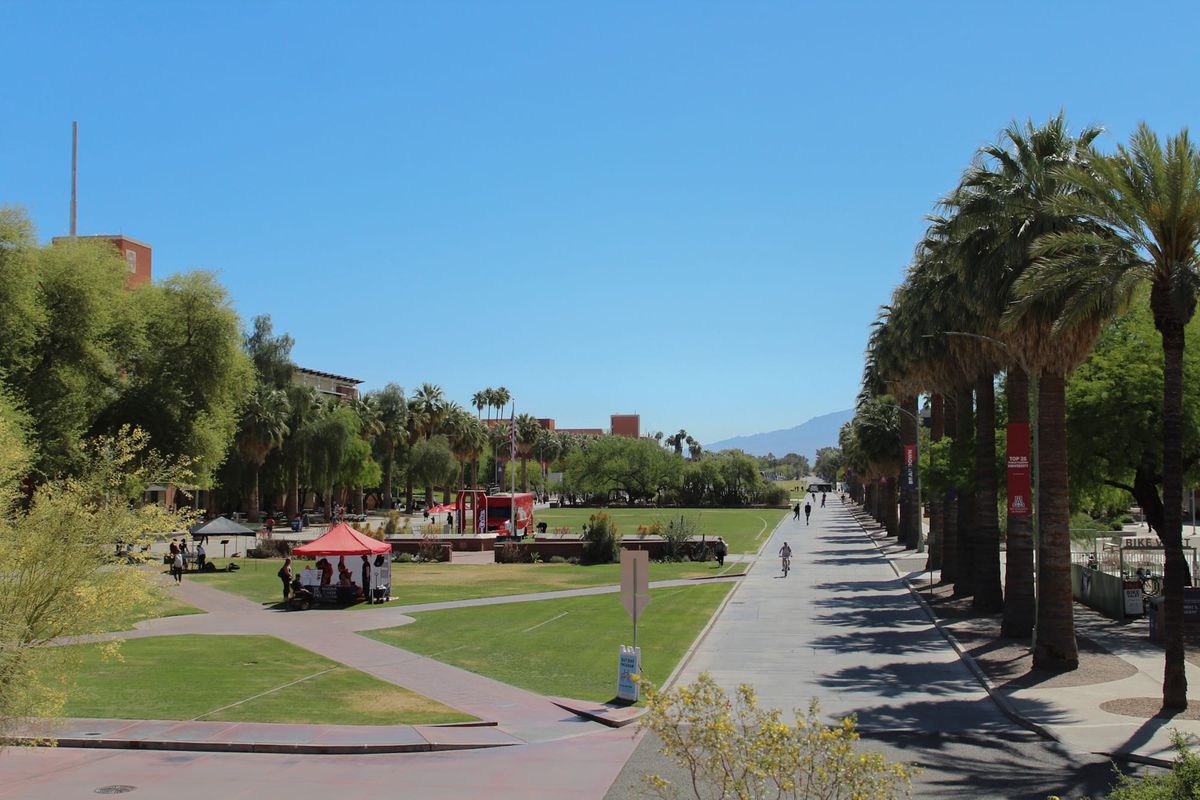
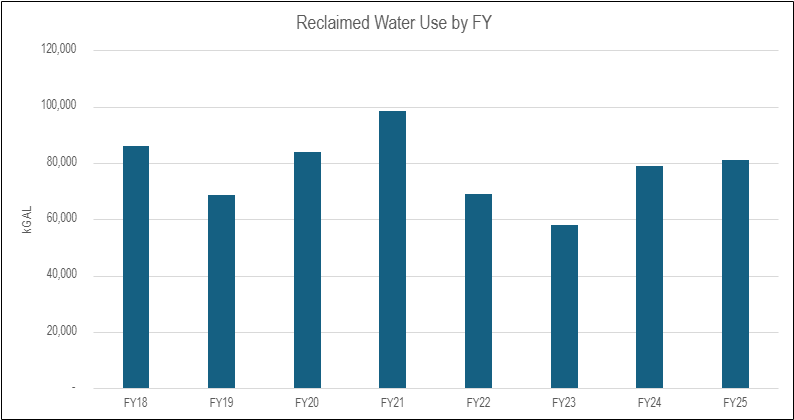
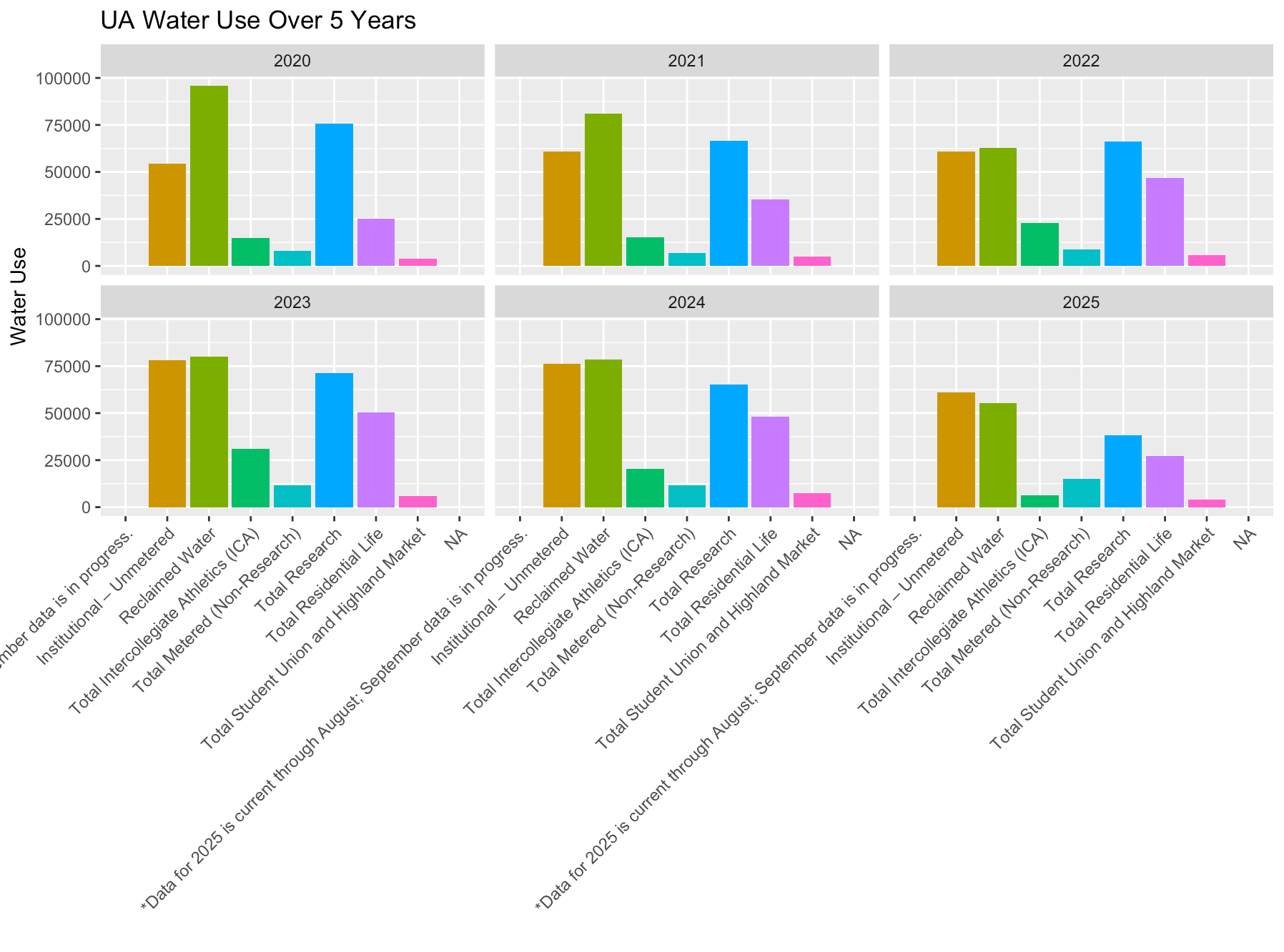
The University of Arizona campus relies primarily on reclaimed water through an internal distribution system. This reduces the need to purchase potable water for landscaping.
"UA has long been a leader in sustainable irrigation practices, including purchasing smart irrigation controllers decades ago," said spokesman Mitch Zak. "These systems were last substantially updated around 2018 and can detect ambient moisture to only apply water when needed."
Total water usage fluctuated over time but dropped significantly between 2018 and 2023, according to UA data.
In 2022, the university saw a notable decrease in water use, in part due to the closure of the UA Mall for a stormwater project, Zak said.
The university is also home to the Water and Energy Sustainable Technology Center, known as WEST, co-located at the Agua Nueva water campus. Its primary goal is to ensure a sustainable water supply while protecting and promoting human and environmental health.
The center has two main programs, engineering and microbiology, with most of its research focused on water, said Andrea Achilli, the center's deputy director.
Achilli's research primarily focuses on membrane processes, desalination for water use as well as energy recovery from water and wastewater processes. He is currently working on a multi-year water resiliency and self-sufficiency project for the Arid Southwest Research Program.
"The scope is to essentially increase national water security and resilience for water use," he said. "The core is to develop more resilient water use technologies that can enable more security for water sources."
The project began in 2023 in partnership with the University of Southern California and the University of Nevada, Reno. It is funded by the U.S. Army Engineer Research and Development Center, a division of the Army Corps of Engineers.
"The consortium was born in the southwest because the southwest region is experiencing more water scarcity and drought, but also, it is definitely a national effort because we are doing research that is applicable to different parts of the country," Achilli said.
The center also researches water-efficient technologies and PFAS, a group of chemical compounds linked to health risks.
At the city level, Tucson Water has the One Water 2100 Plan, a long-term sustainability strategy aimed at securing a reliable water supply through the end of the century.
"Water sustains life, and without potable water it's really hard to sustain a growing city," Achilli said.
Arilynn Hyatt is a journalism major at the University of Arizona and Tucson Spotlight intern. Contact her at arilynndhyatt@arizona.edu.
Tucson Spotlight is a community-based newsroom that provides paid opportunities for students and rising journalists in Southern Arizona. Please consider supporting our work with a tax-deductible donation.