Tucson residents push back on data center zoning rules
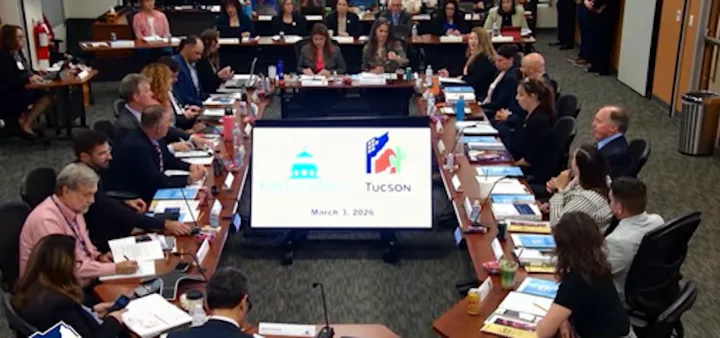
Dozens of Tucson residents turned out to a March 5 community meeting to oppose large-scale data centers in the city, as officials sought public feedback on proposed zoning regulations following the Project Blue controversy.
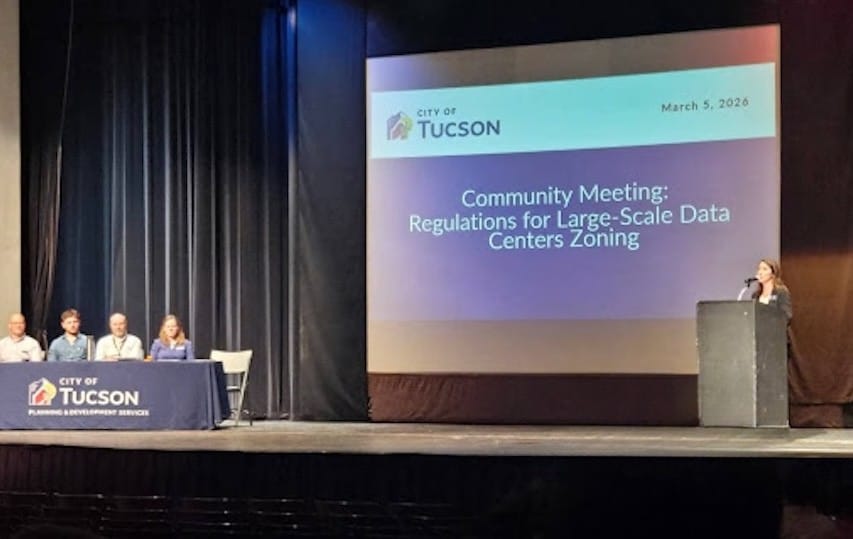
Dozens of Tucson residents turned out to a community meeting earlier this month to voice opposition to the possible placement of large-scale data centers in the city, as officials sought public feedback on proposed zoning regulations.
Large data centers, warehouses packed with thousands of computers that run around the clock to store, process and deliver digital services, have been the subject of intense debate across southern Arizona for nearly a year.
The controversy began last summer, when developer Beale Infrastructure proposed Project Blue, an Amazon-backed data center near the Pima County Fairgrounds that could use up to five million gallons of water per day. The Tucson City Council voted to block the project's annexation, but Pima County approved it on a 3-2 vote. The debate then spread to Marana, where the Town Council rezoned 661 acres for a separate Beale Infrastructure data center in January, a decision that has since spawned two lawsuits.
Following the Project Blue controversy, Tucson's mayor and City Council directed city staff to draft a zoning amendment regulating the development of large-scale data centers.
The March 5 meeting was one of a series of public sessions held by the City of Tucson to gather community input on proposed zoning regulations for large-scale data centers, defined as facilities over 50,000 square feet.
Key proposed regulations include requiring data centers to be located at least 400 feet from residential areas and addressing water and power consumption. The panel consisted of city planning staff, technical advisors and city representatives.
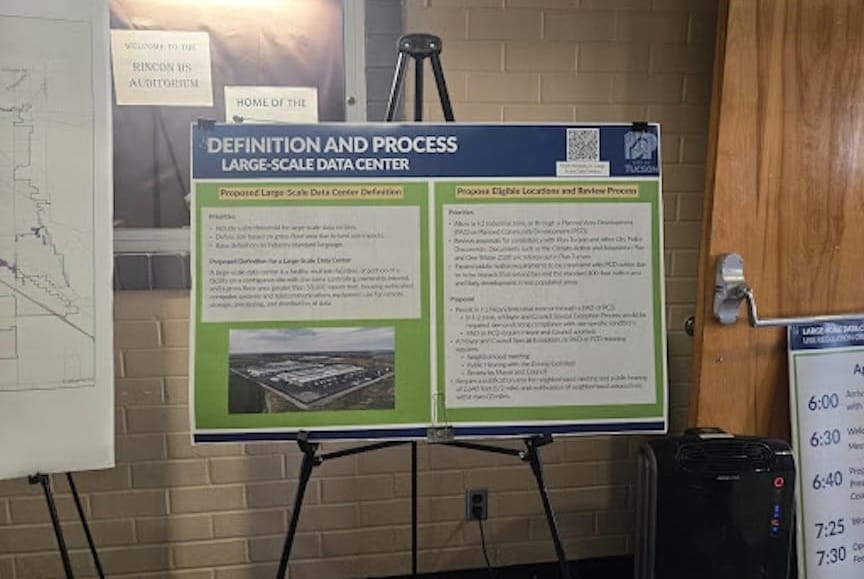
The meeting began with panelists and staff stationed at information boards and a large drawing pad where participants could leave suggestions on sticky notes.
"In our zoning codes, we try not to get too specific about a lot of different things like what kind of data is being stored in there because it's ... a little bit broad and it's hard to regulate," said panelist and long-range planning section manager Nicholas Martell.
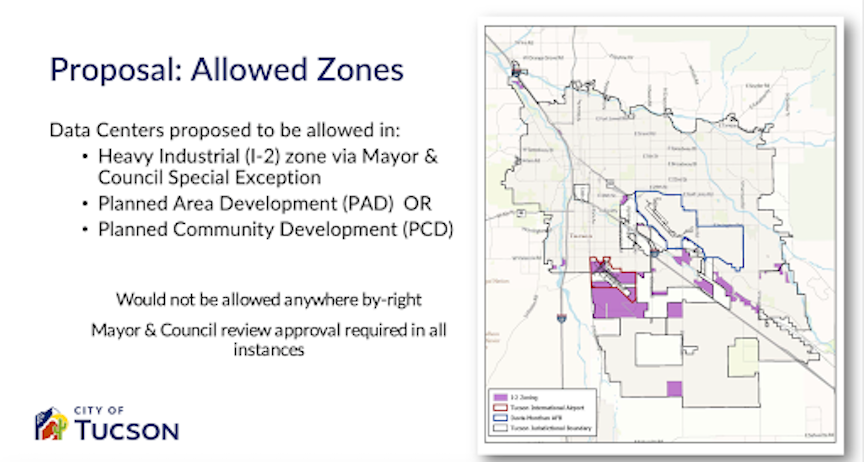
Panelists presented slides covering proposed regulations including energy consumption, water usage, noise limits, generator use, landscaping and parking standards and environmental compatibility, as well as how public feedback would be collected and processed. Most attendees arrived with clear opinions already formed, many holding signs opposing the data centers.
The presentation also covered zoning regulations, which drew sharp criticism from some attendees who argued that siting data centers in poorer communities and communities of color amounted to environmental racism.
"They are 80% Latin (American,) and ... you can see the western border there is the San Javier district of the Tohono O'odham Nation," one attendee said during a question-and-answer period following the presentation. "These are folks who are disenfranchised by these data centers and that's the heaviest concentration right there. This is environmental racism."
With only one minute to speak, many attendees used their time to point out the negative impacts a data center could have on the community.
"I'm tired of this. I'm tired of coming to these meetings. I'm tired of saying the same things over and over again to the city officials, specifically mayor and council, who do not appear to be listening," said attendee Reed Spurling. "Why should we expect mayor and council to listen to you or to listen to the feedback that we have given you when they were spending they spent a couple years before they told anyone about project blue working behind the scenes to make it happen?"
Spurling asked panelists how they planned to get Mayor and Council to listen to community feedback, given what he described as a betrayal of public trust during the Project Blue process, saying he had no faith that they would.
"It's not about the data centers. It's about land, water money and power and companies and government officials in the pockets of those companies who are working together to try to exempt control of land, water, money, and power from all democratic processes," Spurling told Tucson Spotlight after the meeting. "This is not inevitable and we can stop it."
While the city has not approved a data center within Tucson's limits, participants said they hoped their feedback would help keep it that way.
Christy Russell is a journalism major at the University of Arizona and Tucson Spotlight intern. Contact her at crussell68@arizona.edu.
Tucson Spotlight is a community-based newsroom that provides paid opportunities for students and rising journalists in Southern Arizona. Please consider supporting our work with a tax-deductible donation.