Tucson residents gather for Day of Racial Healing dialogue
Tucson community members and local leaders gathered at the YWCA for a Day of Racial Healing event focused on guided dialogue, shared experiences and community healing.
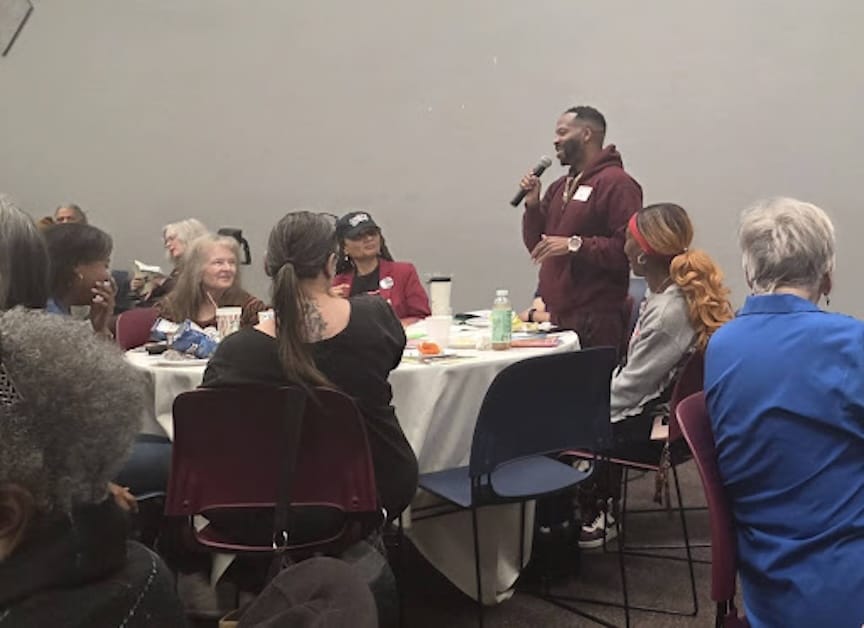
On a Saturday afternoon at the YWCA, Tucsonans from different backgrounds gathered not to debate, but to listen, using personal stories and guided discussion as tools for racial healing during Martin Luther King Jr. Day weekend.
The Jan. 17 Day of Racial Healing event was attended by local officials and community members alike and served as a driving force behind both the city of Tucson and Pima County declaring Jan. 20 Racial Healing Day in Tucson and the National Day of Racial Healing in Pima County. The event was funded through a grant from the MacArthur Foundation and community donations.
“Today is a very special day. This is part of a national effort to really think about the way that we engage with healing. In particular, we’re looking at racial healing,” said NAACP Tucson Branch President Cheree Meeks. “This is happening in communities all across the county.”
Attendees were seated at round tables and challenged to think “uncomfortable thoughts” to introduce new perspectives and come to an understanding about racial legacies.
The tables began with light, personal prompts — such as the meaning behind participants’ names and their favorite foods — to introduce attendees to the discussion format. The round table setup was intended to foster equality, with conversation guided by plush talking sticks; only the person holding one was permitted to speak before passing it to the next participant.
From there, the conversations grew more complex, with participants asked to reflect on how aspects of their identity — such as race, sex, religion or age — shaped their day-to-day lives and influenced experiences like job interviews, shopping or interactions with law enforcement.
This portion of the discussion was intended to remain within each table, after which the group reconvened for volunteer speakers to share their reflections on racial inequity and community.
“50 years ago, the focus of your house was the front porch. Today, it is the garage door,” said Fresh Start Tucson Director Tom Cortese. “If you want to see your neighbor and you want to find out about your community, open your garage door. Take a step outside and if you see somebody, say hi. And you’ll find that you may meet somebody that’s not so different from you.”
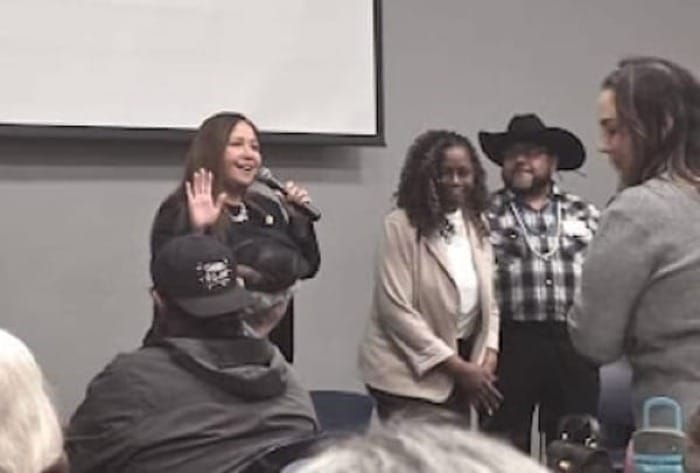
Echoing the theme of unity through shared experience, Da’Mond Holt, founder and CEO of Fresh Start International, said he believes love is a powerful force in building community. Fresh Start is a nonprofit dedicated to assisting formerly incarcerated individuals with reentry, reintegration, and legal record, clearing through "one-stop-shop" expos.
“You know what makes chicken soup really good? Imagine if it was just black pepper,” Holt said. “What if your soup only had nothing but white salt? Imagine the taste of that soup. Imagine the taste of yellow garlic powder. You know what makes chicken soup a beautiful dish? It’s all the differences of the spices that know how to come together. That’s what our nation should be.”
U.S. Rep. Adelita Grijalva, a YWCA board member, attended the event and told attendees about her recent trip to Minneapolis with 28 other members of Congress in the aftermath of protests against Immigration and Customs Enforcement.
“If there ever was a time in our nation’s history where we needed healing, this is it,” Grijalva said. “There is so much division in America now based on race, based on ethnicity, based on religion or language, so to have a room of people who are working on how to heal, how to move forward together, it’s incredibly powerful.”
Johnny Chavez, founder and director of Voices of Change, an organization dedicated to changing lives through the use of literacy and writing, told attendees that race was largely absent from his upbringing in a military family, where skin color often took a backseat to “green” among fellow military children.
However, he said he rarely encountered other Hispanic people in his early life and was educated at a time when English as a second language programs did not exist, which later forced him to relearn Spanish as an adult.
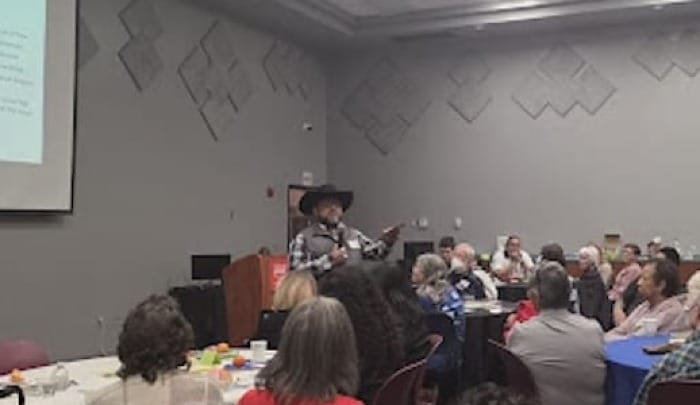
Chavez said he first encountered racism while working in corrections. His final assignment before retirement was at the Federal Correctional Complex Tucson, the Bureau of Prisons’ only gang-designated dropout yard, where white supremacists, Gangster Disciples and MS-13 members were housed within the same institution.
“I created a space for them that was safe and honest, and I allowed them to share the way we did today,” Chavez said. “I allowed them to talk about their lives, to talk about their daily experiences. And what happened was the most amazing thing ever. It broke down the racial barriers. We spent one or two days talking about how racism is just a social construct, how it’s not real.”
Chavez said the men in his class grew to become friends and that incident rates dropped as a result of those efforts.
Jackie Ortiz, policy adviser to Tucson Mayor Regina Romero, delivered the city’s proclamation declaring Jan. 20 Racial Healing Day, saying that racial inequities are deeply rooted in all local communities and that it is the shared responsibility of residents to foster equal opportunity and safe, nurturing environments.
Pima County District 3 Supervisor Jennifer Allen participated in the event and later delivered the county’s National Day of Racial Healing proclamation.
Attendee Greg Wakefield said he found the experience of sitting in the circle and hearing new perspectives on religion and sex enlightening.
“I thought it was valuable to hear from so many different voices,” Wakefield told Tucson Spotlight. “To hear people speak about that vulnerably, it was inspiring.”
Ian Stash is a journalism major at the University of Arizona and Tucson Spotlight intern. Contact him at istash@arizona.edu.
Tucson Spotlight is a community-based newsroom that provides paid opportunities for students and rising journalists in Southern Arizona. Please consider supporting our work with a tax-deductible donation.