Tucson psychiatrist talks politics and endurance
At a Tucson event, psychiatrist Dr. Amit Suneja discussed choosing endurance over outrage amid growing political polarization and social media pressure.
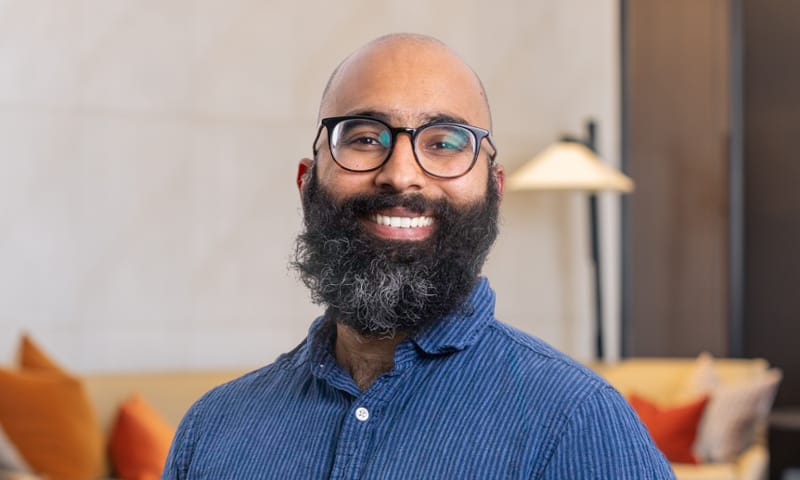
As national politics grow more polarized and public outrage increasingly shapes civic life, a Tucson psychiatrist is inviting the community to consider a different response: endurance.
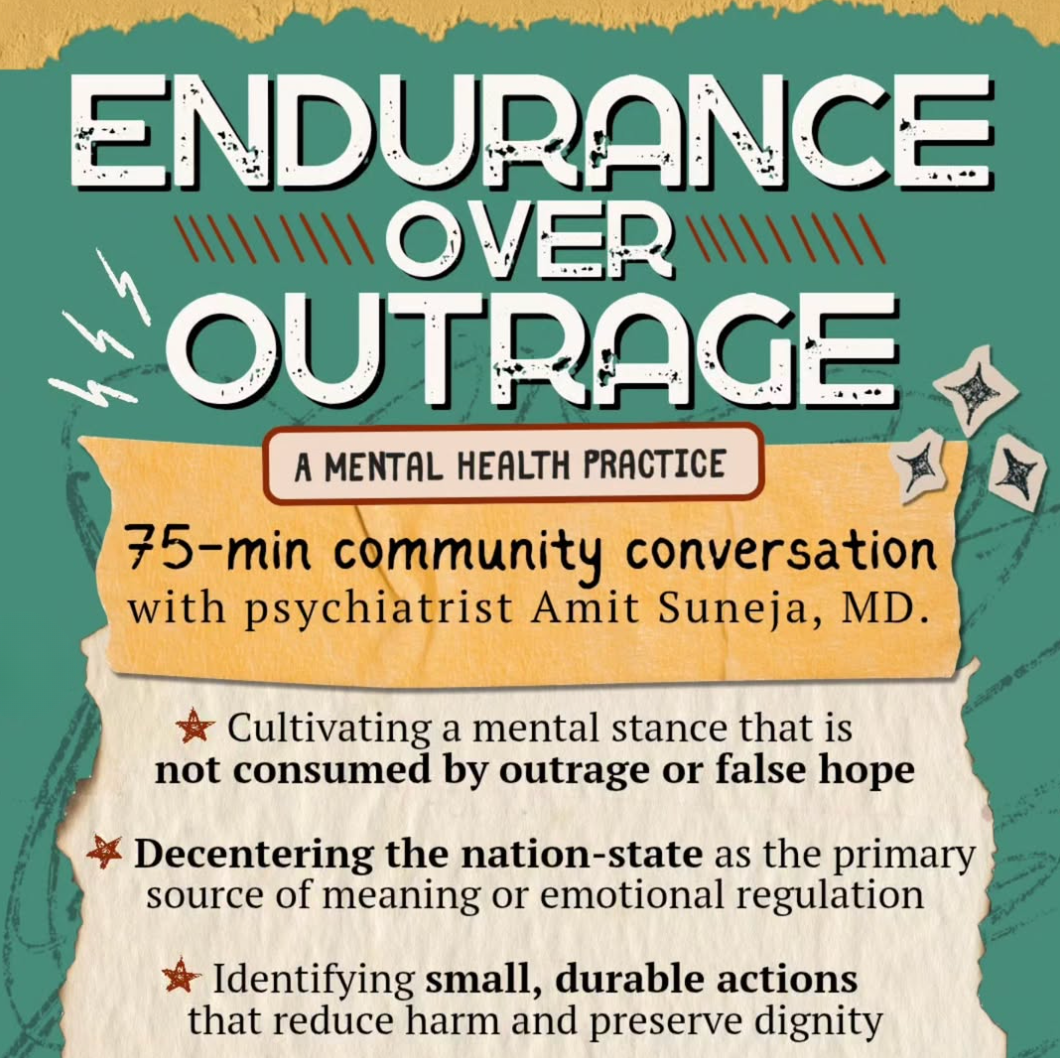
Dr. Amit Suneja, a Tucson-based psychiatrist, led “Endurance Over Outrage,” a 75-minute community conversation hosted earlier this month at Homeward Books. The facilitated discussion, described as neither therapy, debate nor protest, focused on cultivating what Suneja calls a grounded, ethical mindset in a political climate where power feels increasingly concentrated and less accountable.
The focus on endurance is rooted in Suneja’s own experience navigating uncertainty and reassessing long-held assumptions about career, identity and purpose.
Suneja’s career path has not been linear.
“I got accepted to med school, but I took a year (off) to teach public school,” Suneja told Tucson Spotlight. “I went to Johns Hopkins and really wanted to test out what it was like to be in academia. I really didn't like it. I matched into emergency medicine for my intern year. I found it brutal to my mental health.”
He eventually found his calling in psychiatry, but a sudden injury while working at a rural hospital led him to reassess long-held beliefs about himself and what he wanted from his life.
“It's time for me to live my life and do and say what I want to do, it's time,” Suneja thought at the time.
Suneja’s winding career reflects the concept of endurance he now teaches. In psychological terms, endurance refers to developing the mental resilience needed to navigate life’s challenges over time.
“I see endurance as a mindset. It's a lens through which to interpret things that you do and see,” Suneja said, adding that endurance does not invalidate overwhelming experiences.
Instead, he describes it as a tool that helps people take meaningful action and continue moving forward despite adversity.
“How can one get anywhere if you can't endure for long enough to get to and realize, actualize and materialize the world you want to live in?” Suneja said. “That's what endurance means to me, is being able to stay intact and not be fractured internally, psychologically, spiritually, in whatever form.”
For Suneja, endurance is not passive acceptance but sustained engagement over time.
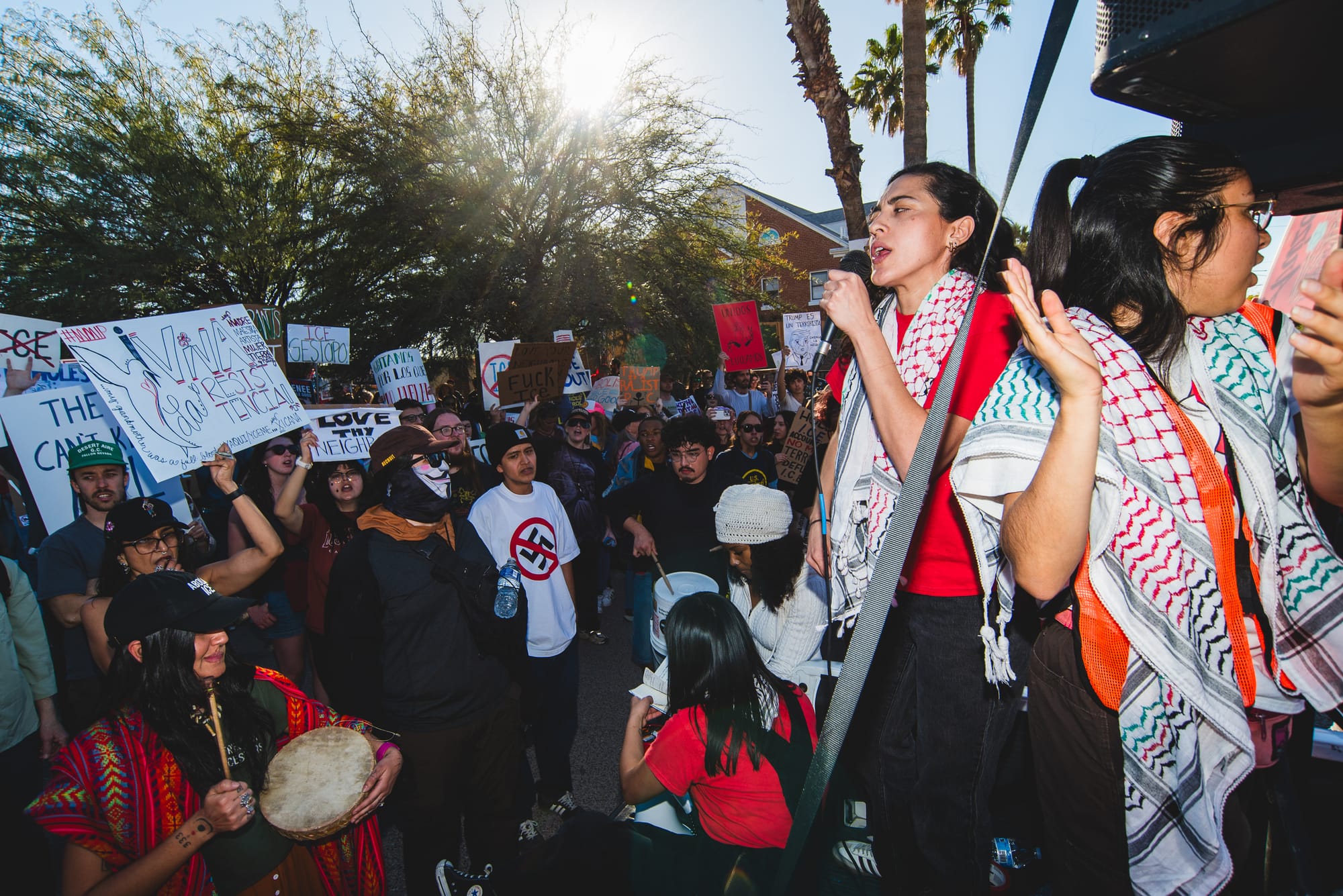
As media coverage of protests, immigration enforcement actions and government responses becomes more prominent, many people feel pressure to respond to each development in real time.
Social media algorithms are designed to prioritize content that provokes strong emotional reactions to maximize engagement, even when that content is negative.
Many users may not realize that frequent exposure to environments that consistently provoke anger and outrage can contribute to feelings of helplessness or a loss of control over their personal circumstances.
“Outrage is what is forced upon us as the way to supposedly ‘endure,’” Suneja said. “(However), outrage extracts from our energy. It takes away from our ability to participate. It reduces our longevity.”
The conversation at Homeward Books centered on that distinction — not dismissing anger, but questioning whether constant outrage is sustainable.
“The point (of endurance) is to get there and be able to feel energized, to feel enthusiastic, to feel and be able to contribute to your community and your family and all these different levels,” Suneja said. “You just can't do that if you're outraged all the time.”
For Suneja, the focus is less on reacting to each headline and more on cultivating steadiness over time.
“Let's think about the long game,” Suneja said. “Let's think about the world we want to live in and be around for.”
The Homeward Books event did not aim to debate policy or organize protest. Instead, it asked how individuals can remain grounded when national systems feel unstable or unequal. In a political climate often fueled by urgency and outrage, Suneja urged attendees to focus on steadiness and the long-term work of shaping a livable future.
Topacio “Topaz” Servellon is a reporter with Tucson Spotlight. Contact them at topacioserve@gmail.com.
Tucson Spotlight is a community-based newsroom that provides paid opportunities for students and rising journalists in Southern Arizona. Please consider supporting our work with a tax-deductible donation.