Tucson protest targets ICE, U.S. role in Venezuela
The Tucson protest came amid demonstrations in other cities opposing U.S. immigration enforcement and foreign policy.
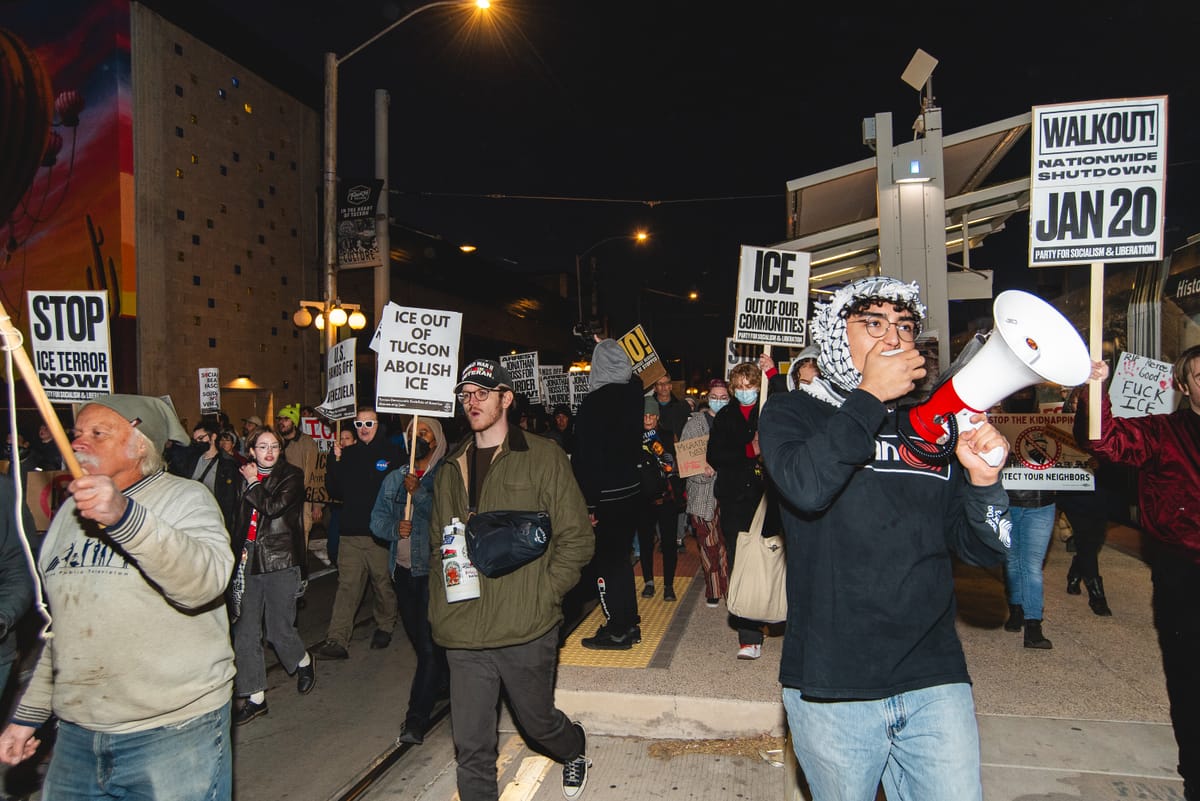
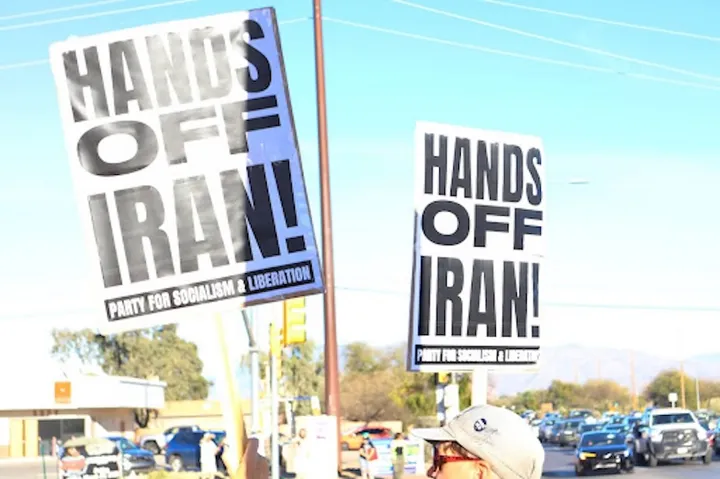
Protesters opposing U.S. involvement in Venezuela and the expansion of Immigration and Customs Enforcement gathered at Catalina Park on Saturday for a demonstration organized by the Tucson chapter of the Party for Socialism and Liberation.
The Tucson protest came amid demonstrations in other cities opposing U.S. immigration enforcement and foreign policy.
The event opened with speakers condemning U.S. interest in Venezuelan oil and warning about the impact of Immigration and Customs Enforcement on local communities.
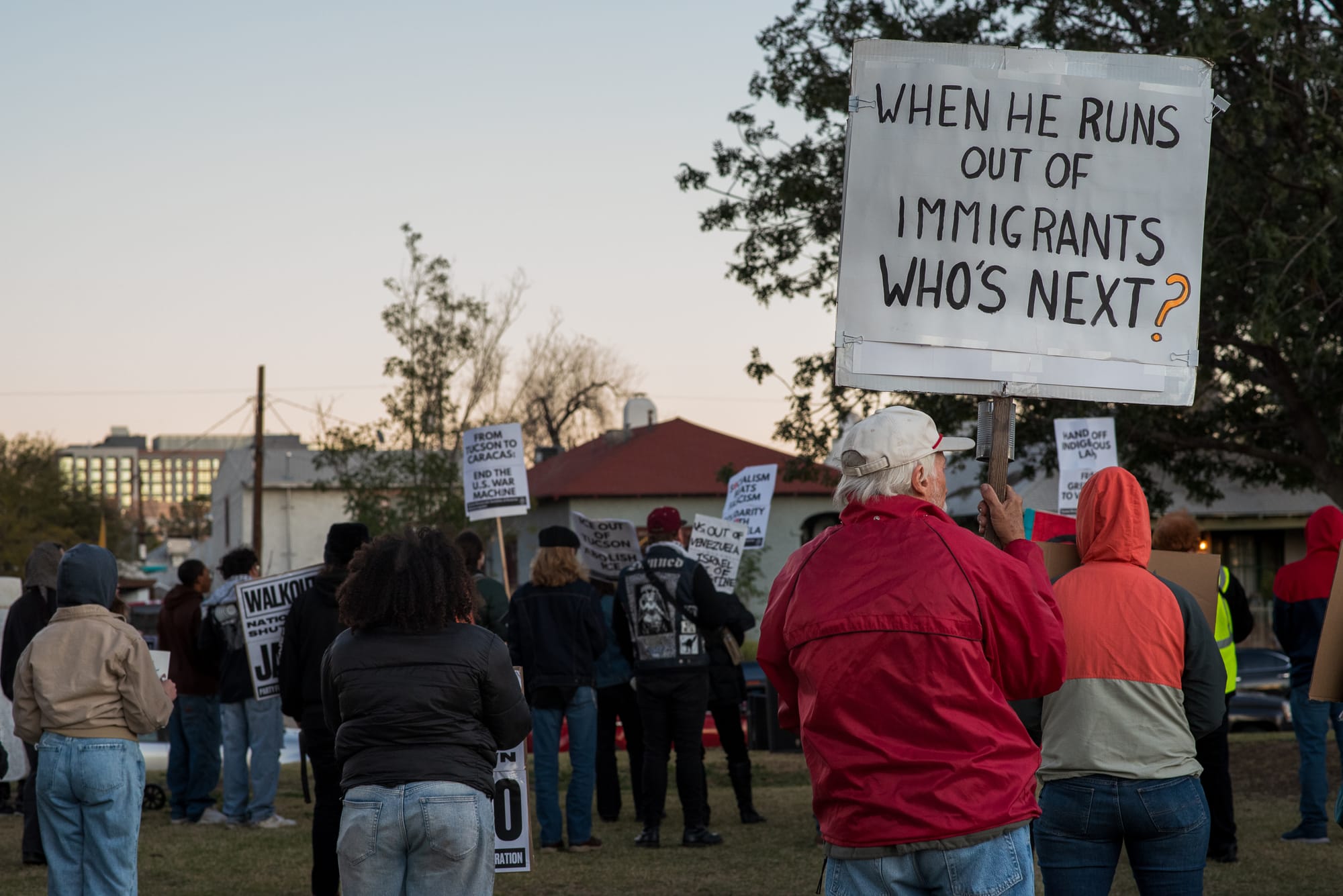
Attendees carried signs reading “Arrest Jonathan Ross for murder now,” “Walkout nationwide shutdown Jan. 20” and “No war with Venezuela.”
Protesters left the park at 5:45 p.m., marching north on Fourth Avenue, down Congress Street, south on Sixth Avenue, east on Broadway Boulevard and Toole Avenue, before returning to Catalina Park via Fourth Avenue an hour later at 6:45 p.m. The march was escorted by Tucson police officers and the Sun Link streetcar.
“Today we’re out here to say no war with Venezuela and to stop the ice terror in our streets,” said PSL member Tanya Nuñez, who also mentioned the group's planned nationwide walkout on Jan. 20.
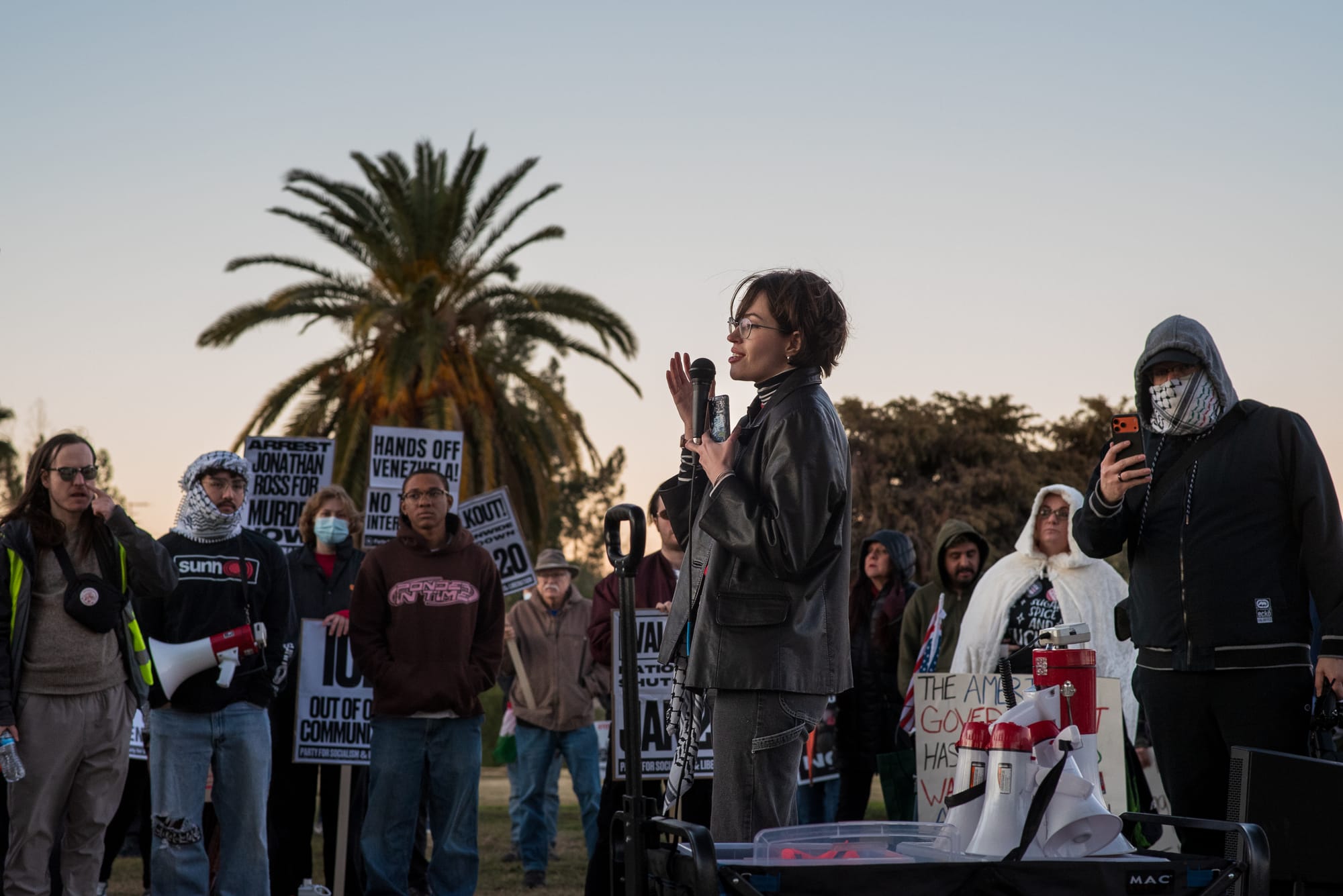
PSL is calling on students and workers to leave classes and jobs in protest of U.S. war spending and immigration enforcement.
“We don’t have money for housing, we don’t have money for universal health care, but we have money for wars, and so that’s why it’s important for us to be hitting the streets, demanding that that money go to education and all health care and not war,” Nuñez said.
PSL has already hosted three protests about the situation in Venezuela this year and organized protests around other Venezuela-related issues in 2025.
“We are doing protests because this is a long-waged war against Venezuela,” Nuñez said.
Desiree Nguyen, an organizer for Students for Socialism, PSL’s student chapter at the University of Arizona, said the group works to inform students about international and local issues and how those issues affect them.
“I think what students really gravitate towards is being able to explain how these issues abroad affect them at home,” she said.
Nguyen helped organize a protest against the proposed Compact for Academic Excellence in Higher Education, which was sent to University of Arizona President Suresh Garimella.
The compact would have tied preferential access to federal funding to universities’ agreement to certain policy conditions, including limits on diversity initiatives, caps on international student enrollment, and restrictions on how race and sex are considered in admissions and hiring.
The university declined to sign the compact as written after student and campus opposition, citing a need to protect academic freedom, institutional independence and merit-based research funding.
“He was forced to reject that compact and make a promise to students that he will protect us,” she said. “But that achievement is not because of Garamella’s goodwill, which we have recognized, but because the will of the people demanded for such.”
Protesters returned to the park later in the evening, where they gathered to listen to several speakers discuss the meaning of the protest and outline next steps.
Marlon Bedoy is a Pima Community College student and Tucson Spotlight intern. Contact him at marl.star.nn@gmail.com.
Tucson Spotlight is a community-based newsroom that provides paid opportunities for students and rising journalists in Southern Arizona. Please consider supporting our work with a tax-deductible donation.