Tucson museum showcases history of tiny microcars
The Tucson Auto Museum's collection of postwar microcars tells the story of how European engineers turned wartime factories into manufacturers of some of the world's smallest and most innovative vehicles.
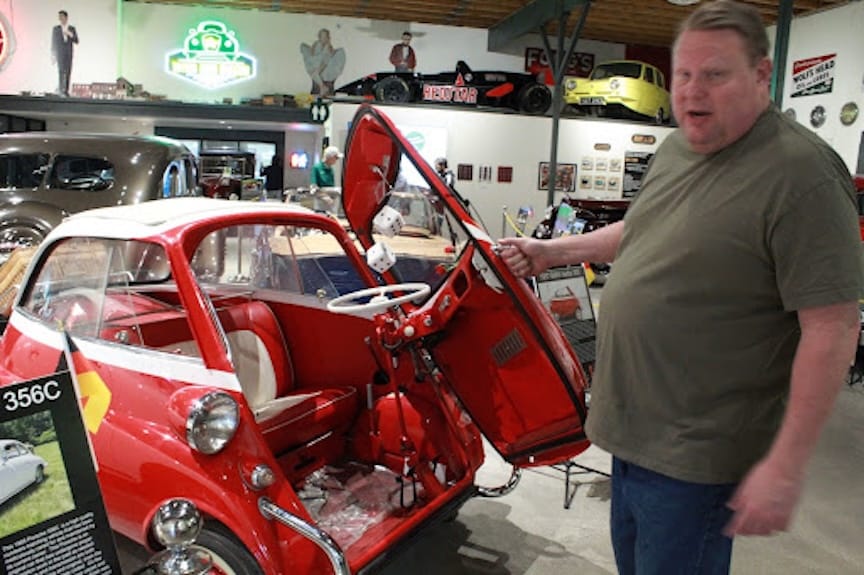
Tucked inside the Tucson Auto Museum, a collection of some of the world's smallest cars tells a story of postwar necessity, automotive ingenuity and the European engineers who turned wartime factories into manufacturers of pint-sized people-movers.
Fashioned with lightweight frames, small fuel-efficient engines and just enough room for a couple and some luggage, microcars played a major role in making automobiles more accessible to average households in the 1950s. They were city cars, built for little more than the daily commute.
"Roads in Europe are traditionally more narrow anyways, and a lot of them were damaged from the war, so they needed smaller cars for many reasons," said Tucson Auto Museum Executive Director Dave Johnson. "After World War II, there was a huge demand for transportation, as well as materials, oil and gas, which were all very scarce."
Germany was also left with a dissolved military program, putting wartime manufacturers out of work. Former aircraft makers including BMW, Heinkel and Messerschmitt repurposed what remained of their infrastructure toward microcar production.
"As Germany was allowed neither airplane production nor any shipbuilding capacity to supply a merchant navy, all facilities of this type were destroyed over a period of several years," according to the museum's March newsletter.
Originally designed by Iso Rivolta to traverse the narrow streets of Italy, the Isetta debuted in 1953 and was eventually licensed to car manufacturers around the world. BMW was the first to fully capitalize on it, improving the model until it became a hit in Germany, selling more than 160,000 units and earning the nickname "bubble car."
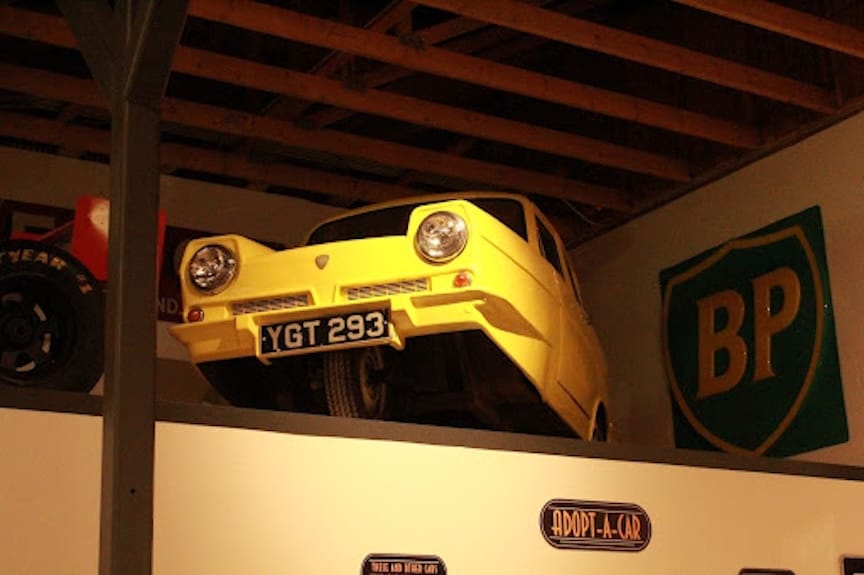
The design also opened the door to creative classification strategies, with some manufacturers engineering their cars to qualify as motorcycles rather than automobiles, which came with lighter regulations and lower tax rates.
"By putting three wheels on instead of four, and maybe a smaller air-cooled engine in, it became a motorcycle," Johnson said. "We call them microcars, but they are essentially motorized bikes, so they are actually regulated more like that."
Known in France as "voiture sans permis," or "car without a license," certain microcars can still be driven by teenagers as young as 14 and operate under reduced tax rates. Though too small for highway use, VSPs are seeing a resurgence in popularity with the introduction of electric models.
Microcars dominated the European market through the 1970s, but as economies recovered from the war, consumer preferences shifted toward roomier, more capable vehicles.
"Its distance, comfort, and the ability to actually put stuff in it," Johnson said. "People want more out of their cars than just a commuter vehicle."
Microcars are gaining attention from American enthusiasts, with Kei trucks being imported from Japan and renewed discussion about opening the U.S. market to the small vehicles.
American-made microcars remain unlikely in the near future, but the novelty has found a following in Tucson's local car communities.
Ian Davis is a Pima Community College student and Tucson Spotlight intern. Contact him at imdavis52023@gmail.com.
Tucson Spotlight is a community-based newsroom that provides paid opportunities for students and rising journalists in Southern Arizona. Please consider supporting our work with a tax-deductible donation.