Tucson leaders, young residents connect at first Democracy Forum
Local officials and young Tucson residents gathered at the inaugural Democracy Forum to discuss accountability, housing, public education and community well-being.
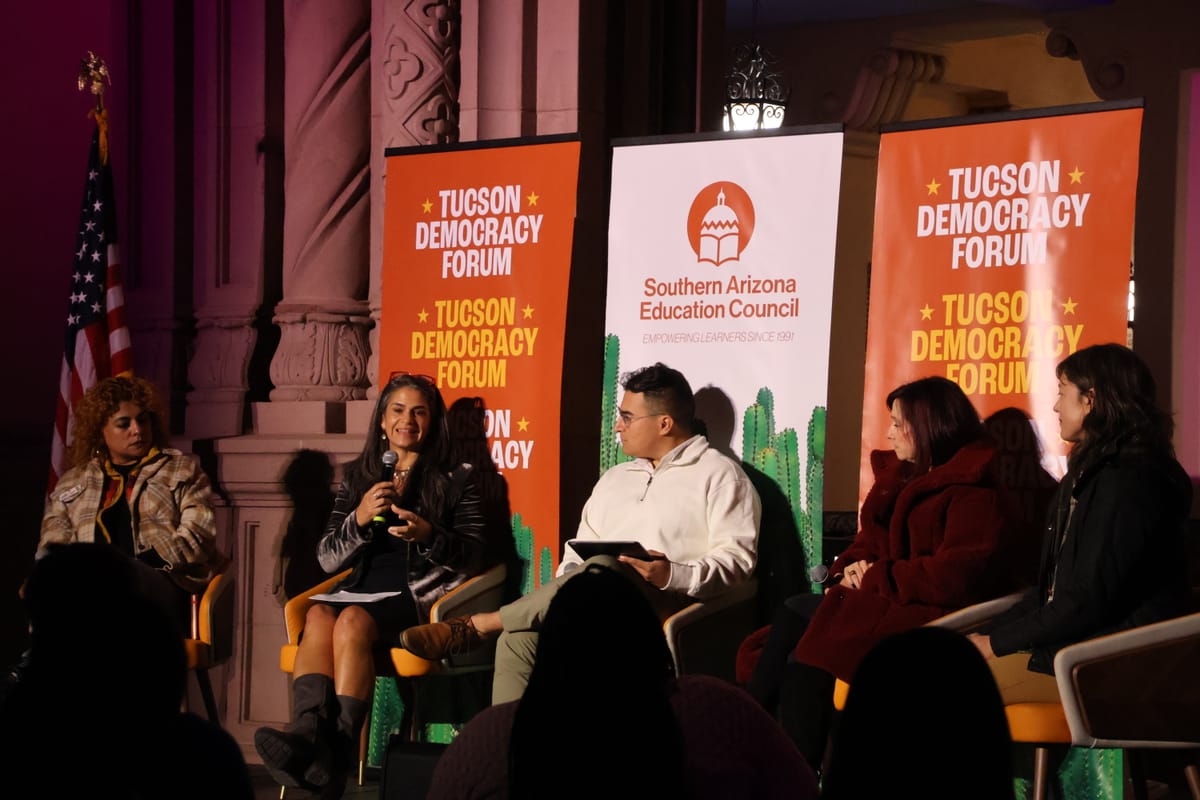
With democracy and civic trust strained nationwide, Tucson leaders and young residents met Friday night for the inaugural Democracy Forum to discuss accountability, public education, housing and other policies shaping daily life.
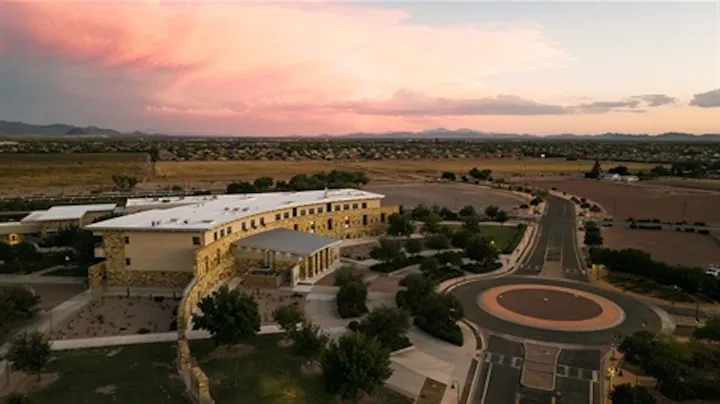
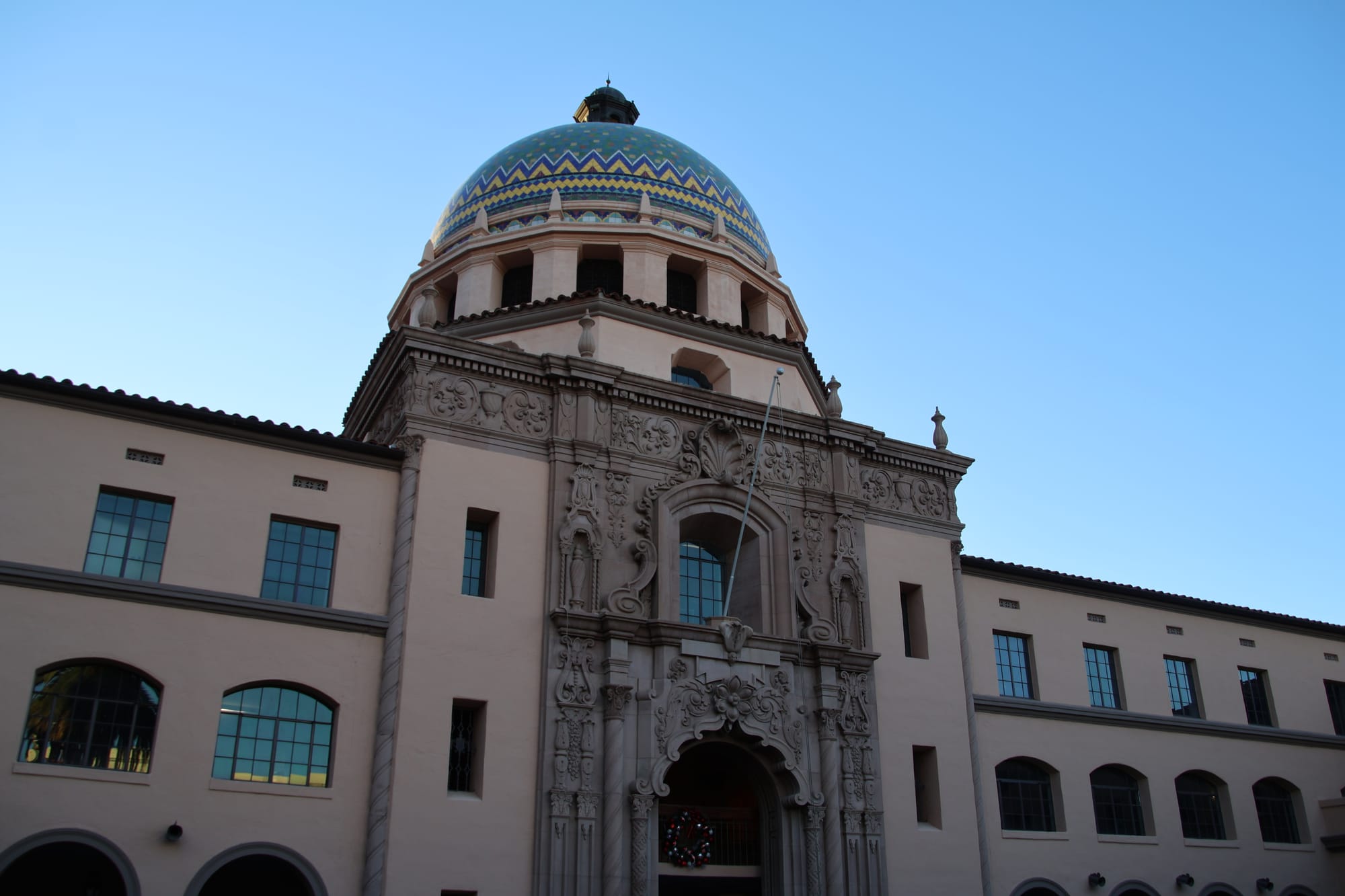
The forum, hosted by the Southern Arizona Education Council and Tucson Young Professionals and held at the Historic Pima County Courthouse, was designed to spark honest conversations.
“General education is really about our democracy and how we participate in our democracy and people turn out can also have an impact on education,” said Southern Arizona Education Council CEO and President Rocque Perez. “This is the focus of this occasion.”
Perez recently wrapped up a stint as Tucson’s Ward 5 city councilman. He was appointed in May at age 26, becoming one of the youngest people to serve on the council.
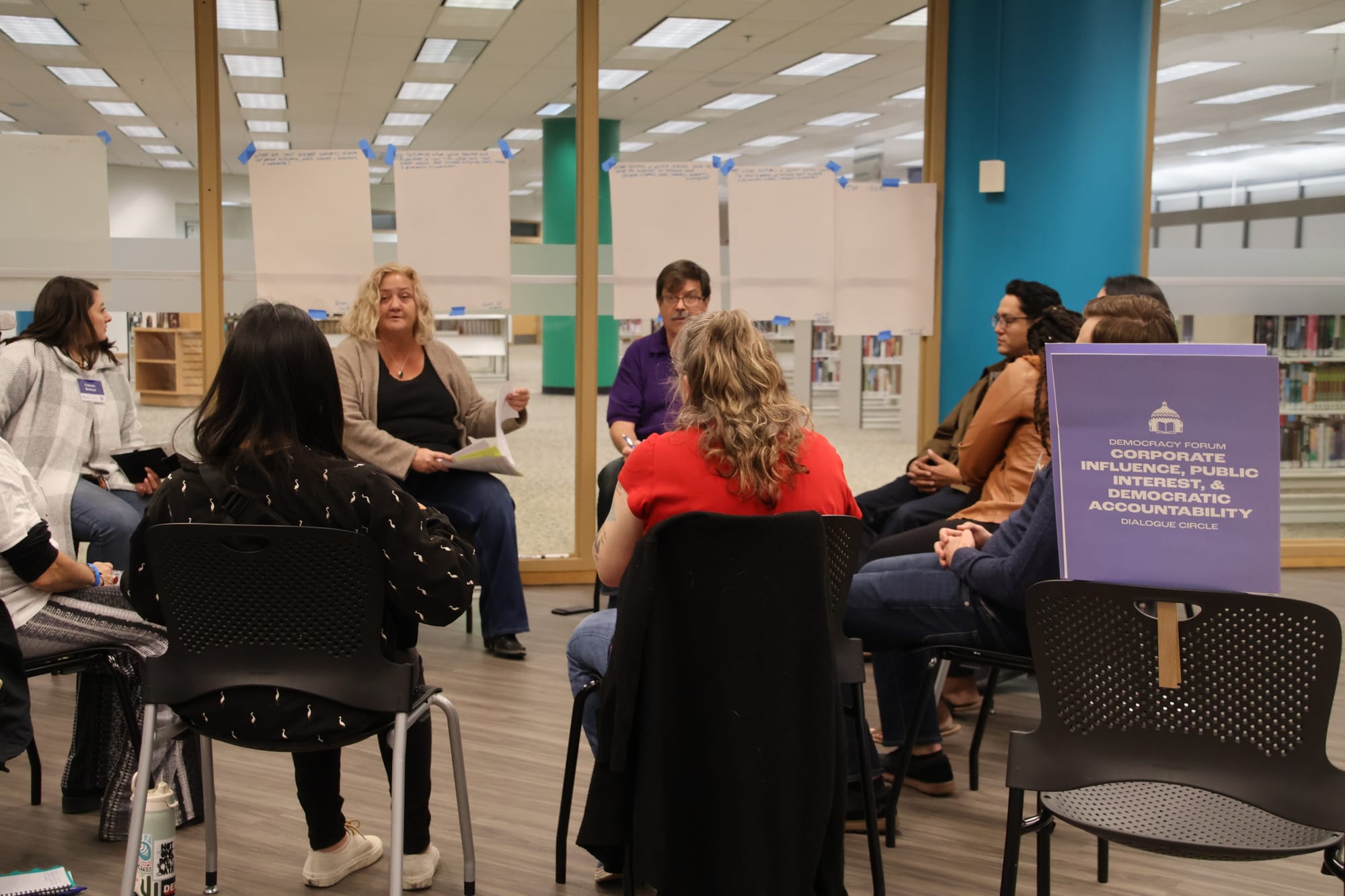
Youth in attendance had the opportunity to engage with city leaders and agencies on four critical topics: corporate influence and public accountability; housing and transportation justice; the future of public schools; and community safety and health.
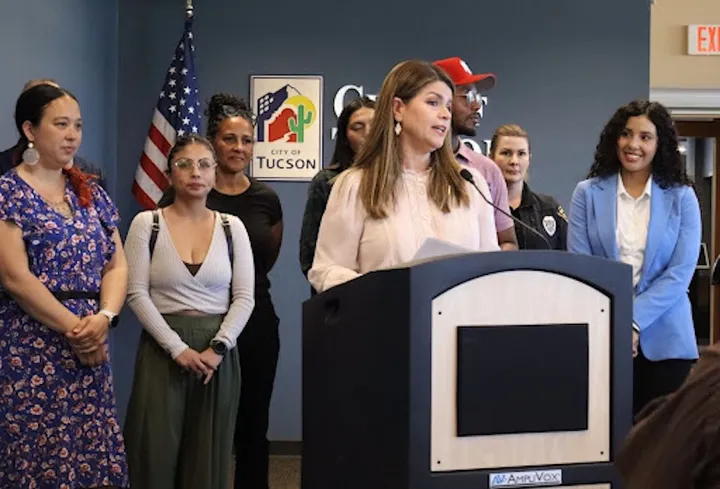
The event kicked off with a panel that included Tucson Vice Mayor Lane Santa Cruz, Pima County Board of Supervisors Vice Chair Jennifer Allen, Arizona state Rep. Nancy Gutierrez and Ward 6 Councilwoman Miranda Schubert.
Your donation is doubled right now. Don’t wait
Panelists discussed the importance of accountability at the local level, agreeing regulation is one safeguard for major economic or infrastructure decisions.
“It is part of the way to ensure that accountability and transparency and to balance power,” Allen said. “It’s got to be written, it’s got to be a matter of policy that is out there, is known and public.”
Allen said regulation can help maintain transparency, as the group discussed the proposed Project Blue data center and a policy passed by the Pima County Board of Supervisors on nondisclosure agreements.
“We do need regulation, but it shouldn’t always come from the top down, it should come from the local level,” Gutierrez said.
She said voters have the right to know how their public officials are voting on policies and, if they disagree, should be able to discuss those decisions with their elected officials.
“It’s really important to empower our communities to reach out to their electeds, no matter what level of government they are and ask us to be in these spaces with you,” Gutierrez said.
Transportation and affordable housing have also been hot topics in the city and beyond. Newly sworn-in Councilwoman Schubert said effective housing and transportation policy brings people together, gives residents more transit options and makes it possible to live in different types of housing.
“What has made Tucson really special has been traditionally that we have had a low cost of living, which has allowed artists and makers and just unusual people able to live here and thrive and experiment and take risks,” she said.
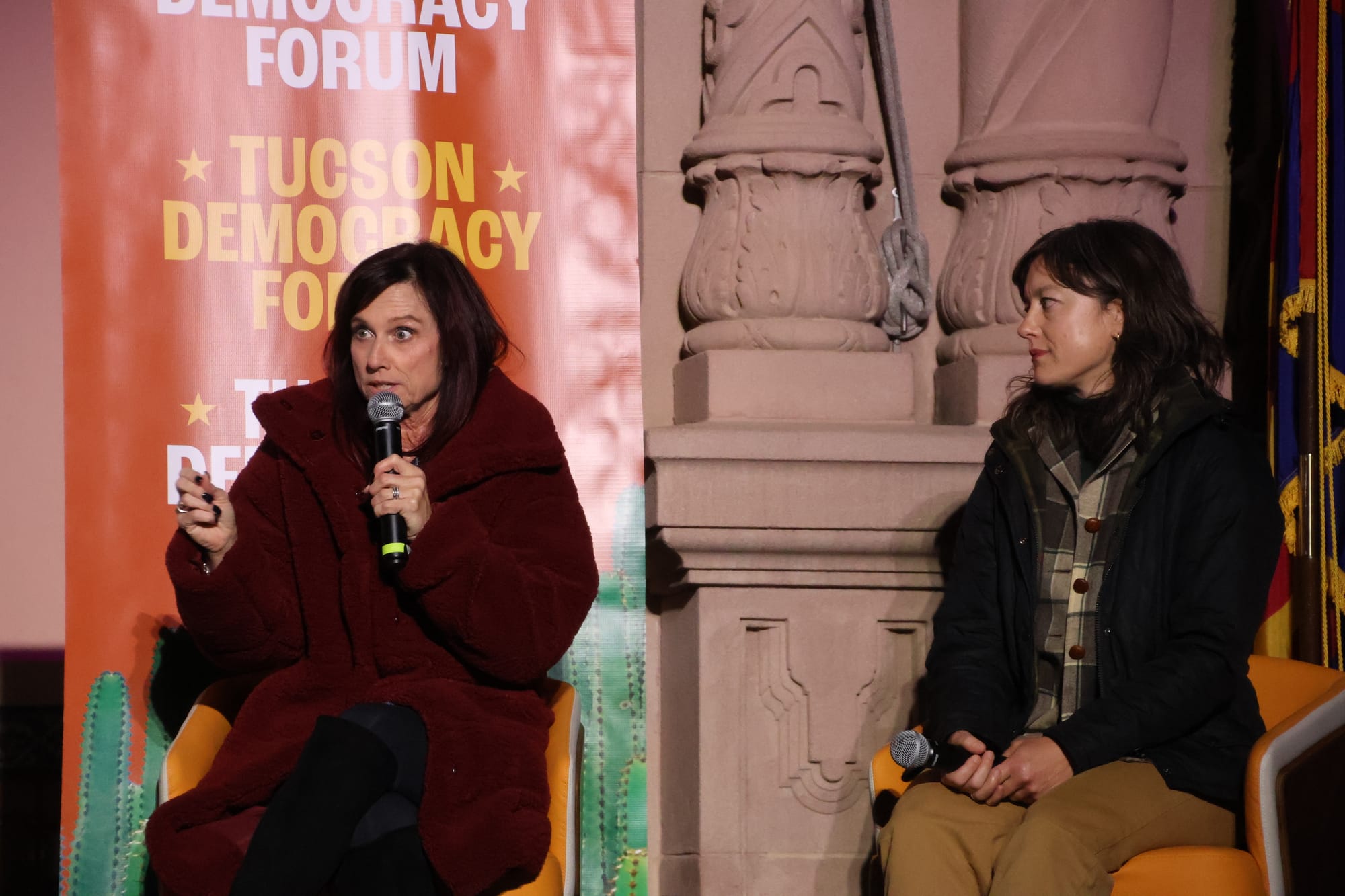
Schubert said misinformation and misunderstanding around fare-free transit mean Tucson must continue those conversations. She said residents need to look at the bigger picture holistically to develop equitable transit solutions.
Education emerged as another key concern as the discussion shifted to the future of local schools.
The recent announcement that the Amphitheater School District plans to close up to four elementary schools in the 2026-27 school year because of declining enrollment has once again brought education to the forefront of city conversations.
Panelists cited declining public school funding, low enrollment and the growing use of the Empowerment Scholarship Account, or school voucher program, as major concerns for Pima County schools.
The voucher program was created to help special education students who were not being served in public schools, Gutierrez said.
Arizona expanded its school voucher program in 2022, creating the nation’s first universal program and allowing any public school-eligible student to access state funds for private schools, homeschooling, tutors or therapies.
The expansion has led to budget strains, enrollment drops in public schools and criticism over a lack of accountability.
“I don’t want that program to go away and neither do any of my colleagues,” Gutierrez said. “We are specifically talking about the 2022 expansion.”
Gutierrez said the expansion was expected to cost less than $100 million but now accounts for more than $1 billion in the state budget.
“That is directly affecting our public schools,” she said.
Increased regulation and legislation to expand the tobacco tax were mentioned as potential solutions to boost public school funding.
Panelists also agreed more conversation is needed around community safety, health and human dignity, along with increased regional collaboration, improvements to the state tax structure to allow for more funding, and expanded treatment programs to address public safety and mental health needs.
After the panel, attendees broke into small groups for off-the-record discussions on the four topic areas.
Arilynn Hyatt is a journalism major at the University of Arizona and Tucson Spotlight intern. Contact her at arilynndhyatt@arizona.edu.
Tucson Spotlight is a community-based newsroom that provides paid opportunities for students and rising journalists in Southern Arizona. Please consider supporting our work with a tax-deductible donation.