Tucson House breaks ground on $200M renovation
The overhaul includes converting the aging tower into affordable housing for low-income seniors 55 and older by summer 2028.
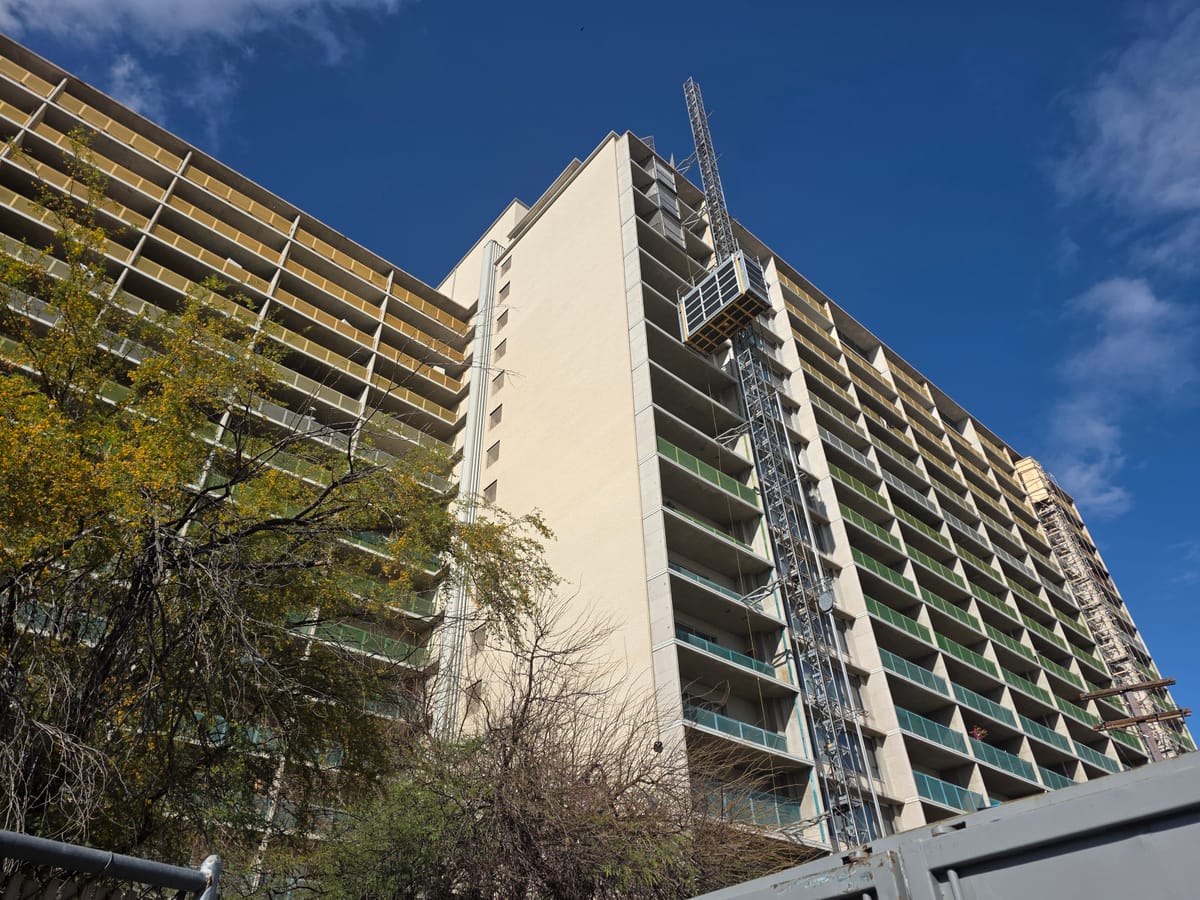
With 40,000 people on Tucson's public housing waitlist, the city broke ground last week on its most ambitious affordable housing project in decades, a $200 million renovation of the historic Tucson House high-rise on Miracle Mile.
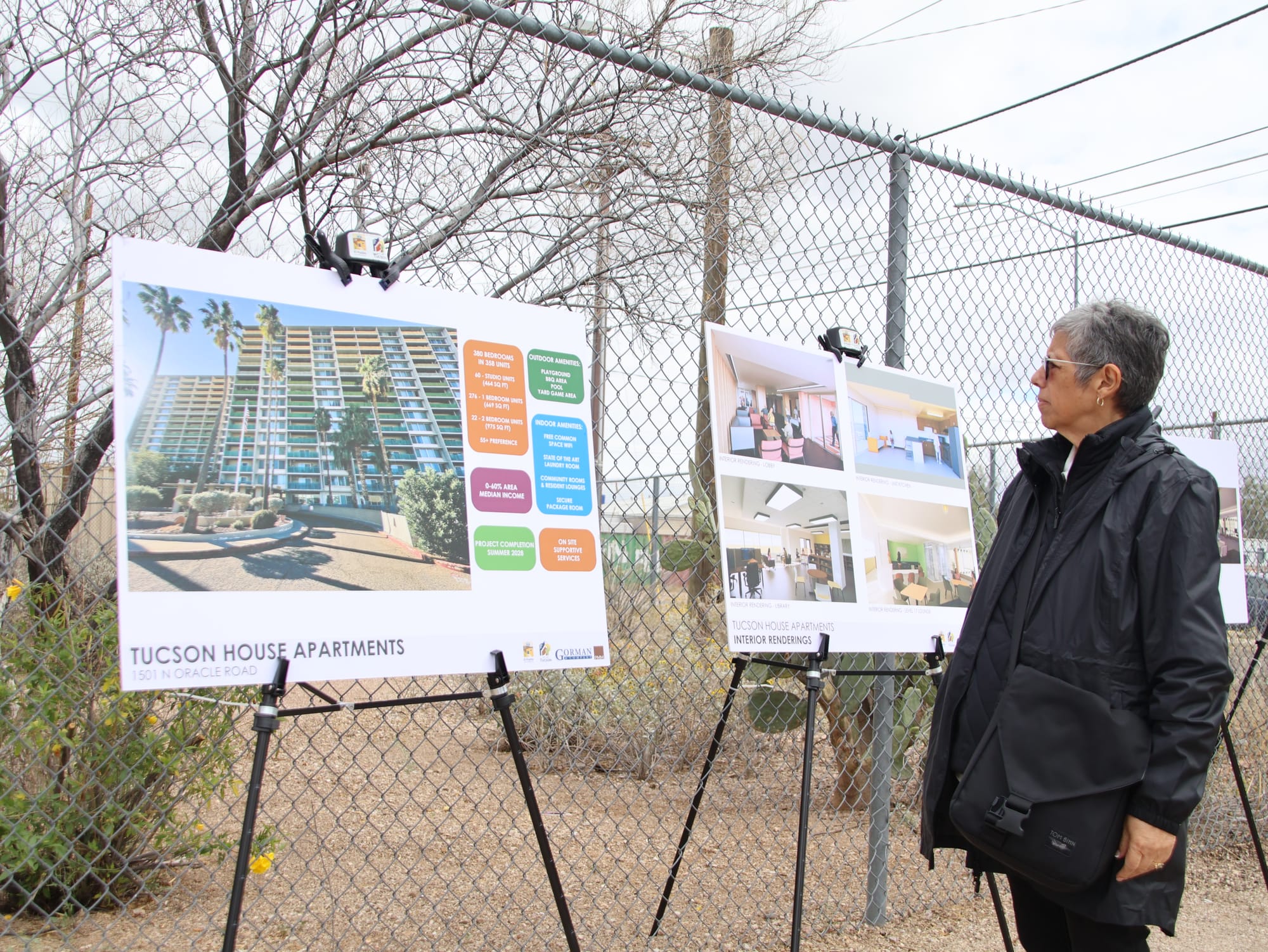
Once renovated, the 17-story Tucson House will offer 358 units ranging from studios to two-bedrooms. Upgrades will include indoor common spaces and community rooms, an outdoor area for yard games and a pool, along with on-site caseworkers providing support services for residents.
Tucson House will provide housing to residents 55 and older who earn up to 60% of the area median income, making it one of the few affordable housing options for low-income seniors in the region.
The project is expected to be completed by summer 2028.
Previously featured in TIME Magazine and TV Guide, Tucson House was completed in 1963, made up of 407 units and considered a luxury high-rise apartment complex, hosting notable guests, including John Wayne and Lee Marvin.
In 1970, construction of Interstate 10 redirected traffic away from Miracle Mile, leading to economic decline in the surrounding neighborhoods. In 1979, the building was foreclosed on and acquired by the U.S. Department of Housing and Urban Development, which later transferred ownership to the City of Tucson.
The building was repurposed as public housing in the 1980s.
In 2017, Miracle Mile was listed in the National Register of Historic Places, with Tucson House credited as a contributing structure. The designation helped pave the way for a preservation plan to address the building's aging infrastructure, accessibility issues and deteriorating systems.
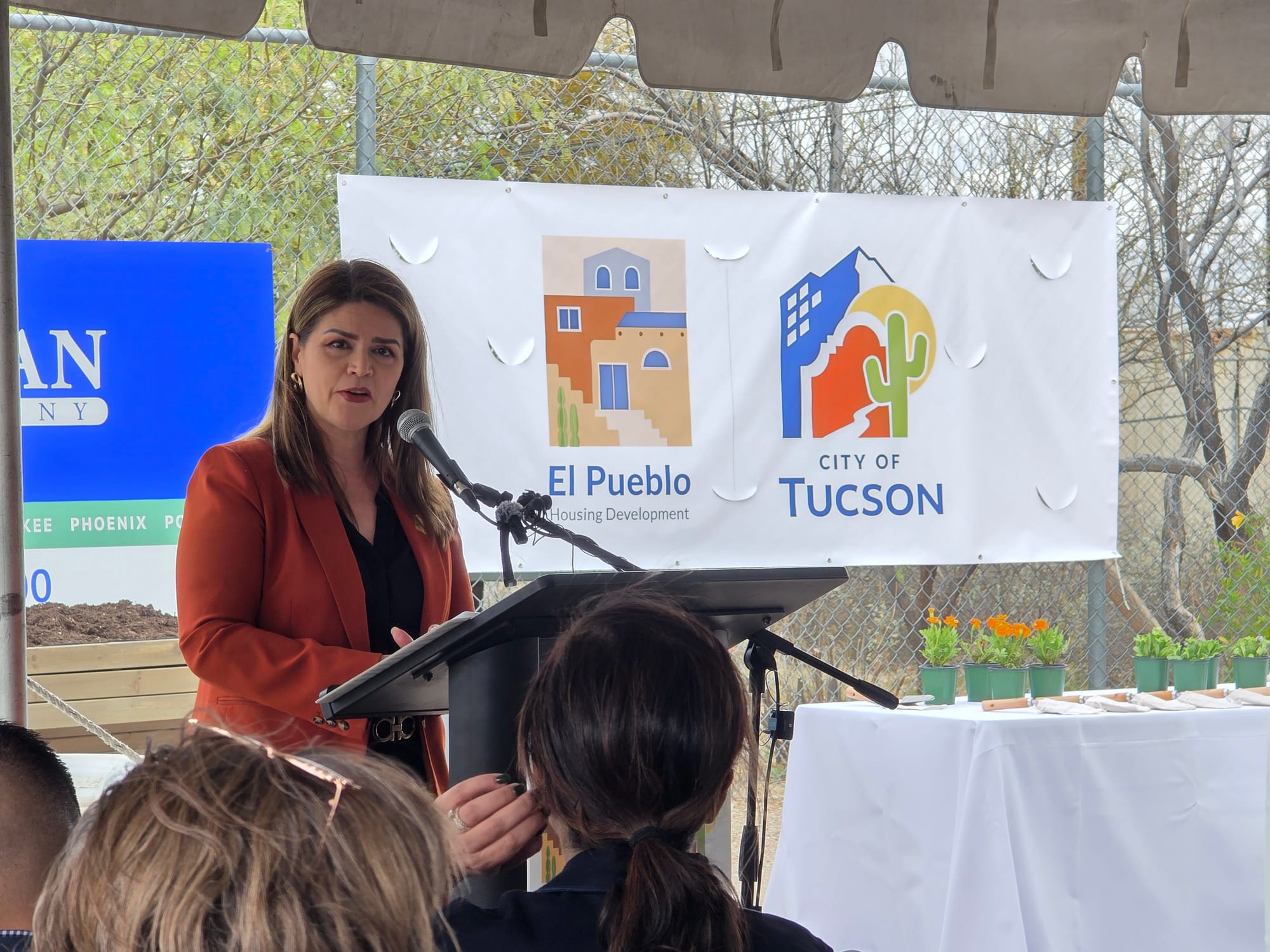
The project is a public-private partnership led by the City of Tucson and the Arizona Department of Housing, with advisory support from El Pueblo Housing Development and the Tucson Industrial Development Authority. Gorman & Company is serving as architect, with financing from Fannie Mae, JP Morgan Chase, Hudson Housing Capital and Practice Consulting Group.
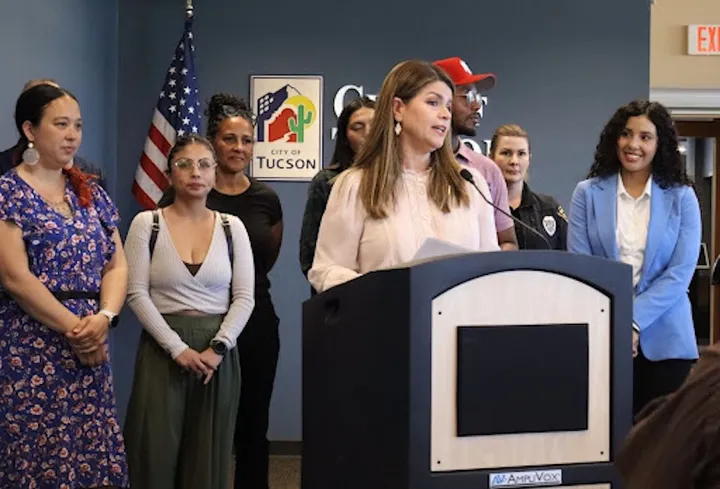
City, county and state officials gathered alongside architects and developers March 10 to break ground on the project, sharing details about the plans and the scope of work underway.
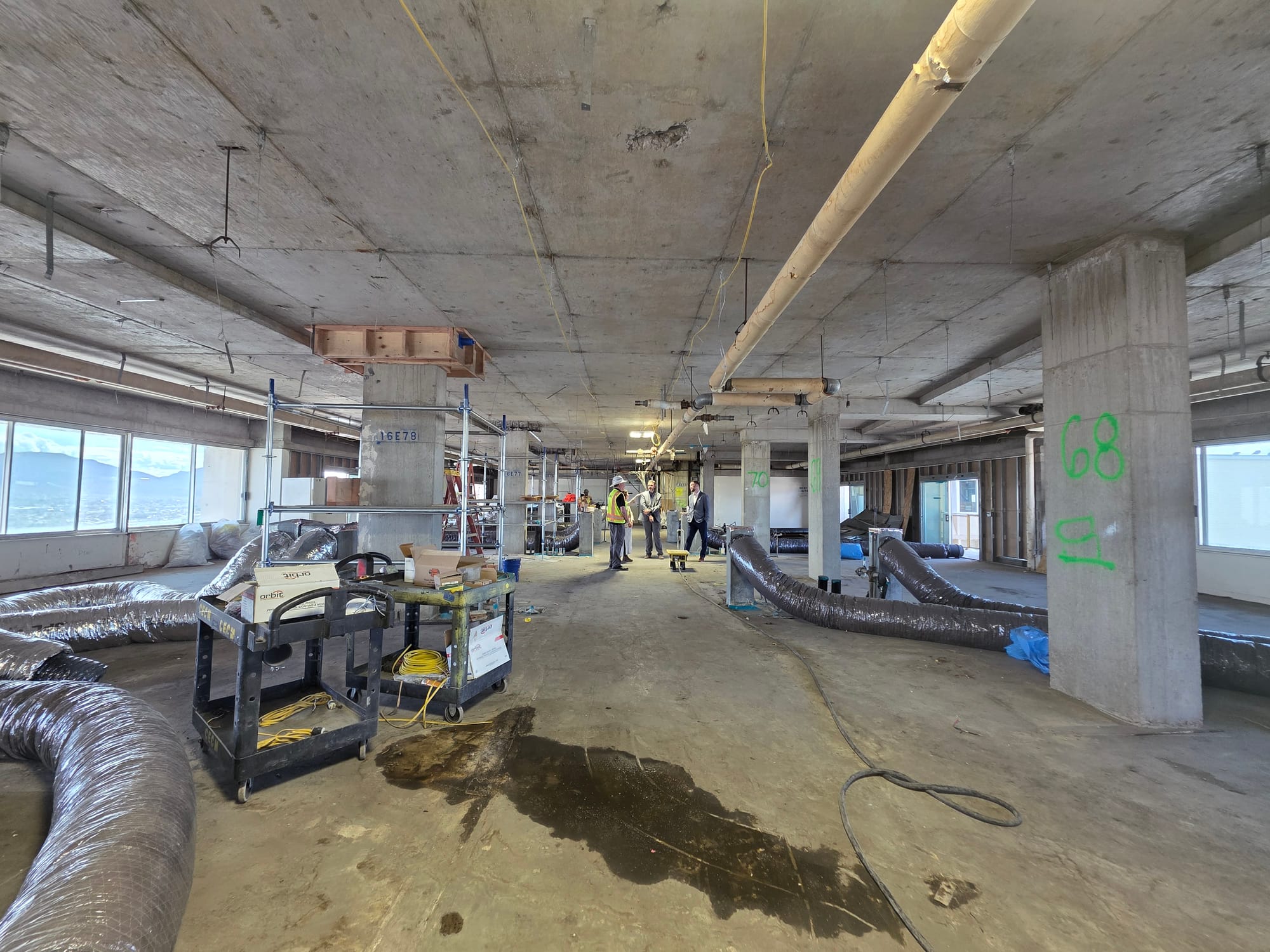
"We are completely replacing all the systems, the elevators, the plumbing, the heating, the cooling," said Housing and Community Development Director Ann Chanecka. "We are creating a lot of space for resident services and the case managers. We are bringing property management back into the building, which was a specific request of the residents. We are creating recreational facilities and enhanced laundry service."
Deputy Director of Housing and Community Development Johanna Hernandez called the project "as unique as it gets," while touring one of the floors set for renovation.
"Not only because it's a tower rehab and it's historic preservation, but because we're doing an in-place rehab," she said. "All the residents, the majority of the residents, are staying in the building while we're doing the rehab."
Last month, the city announced that once renovations are complete, Tucson House will transition from public housing to the Housing Choice Voucher Program, also known as Section 8. Officials say the shift will keep units affordable, address the building's long-term needs and help finance the property.
Residents have been centered in the process and given a choice to stay at Tucson House during the renovation or permanently relocate with funding help from a $50 million Choice Neighborhoods Implementation Grant.
Residents who decided to stay have been asked to provide feedback on the units and shared spaces of the Tucson House.
"We created a lot of improvements around that, including more accessible units to help them age in place, more community space, more economic services," Hernandez said. "We really wanted to build this with them, not for them."
Gov. Katie Hobbs was on hand for the occasion, telling attendees that she toured Tucson House during her first year in office.
"When I visited, I learned that converting these units into public housing was smart, responsible, and is going to be hugely impactful," Hobbs said.
Hobbs has invested $9 million from the Housing Trust Fund to preserve housing for older adults as part of the Thrive in the 05 Initiative, a unified effort bringing together community-based crime reduction strategies, housing and workforce and economic development initiatives in the 85705 zip code.
"As Governor, I have set out to reshape the way we tackle Arizona's housing crisis, centering policies around people instead of profits, prioritizing communities that have been pushed aside," she said. "Every dollar invested directly into our communities is worth it."
Hobbs announced during her January State of the State address the creation of the Housing Acceleration Fund, a tool designed to make it faster and cheaper to build affordable homes across Arizona.
The Housing Acceleration Fund helps affordable housing developers access low-cost financing to build more units. It combines public and private dollars with the goal of generating up to $10 in housing investment for every dollar put in.
"This project is not just about preserving housing, it's about transforming public housing into something that is sustainable, dignified and built for the future. This development will modernize building systems, improve energy efficiency, expand common spaces where residents can gather for programs and services and enhance the overall quality of life for people who live here, all while maintaining housing affordability," said Tucson Mayor Regina Romero. "At a time when federal funding can be unpredictable and economic uncertainty creates instability, strong partnerships with our state leaders and our county leaders are more important today than ever."
In February, the Tucson City Council declared a housing and homelessness emergency. The declaration came after the city closed its public housing waitlist, which had swelled to 40,000 applicants.
Pima County Supervisor Andrés Cano highlighted the county's efforts to address the housing gap, including a $1 million contribution to the Tucson House project.
"I had a unique opportunity to be able to say yes to lots of investments, but the one I am most proud of is the $50 million investment into the Arizona Housing Trust Fund in 2023, the largest investment in the Affordable Housing Trust Fund ever," Cano said. "Over the next decade, we are investing $250 million to support this growth and demand. We need to build 6,000 units per year to be able to sustain the growth in our region, and so this means we have to keep thinking big, acting with urgency and investing in the kind of housing that our community needs."
Besides affordable housing, Tucson House will also continue to expand social services for its residents.
"One of those folks who moved in who had a young child, with coaching, care, coordination and access to education and employment opportunities, that resident has now completed their GED, they recently bought their own vehicle, and they have a full time job that they're going to every day," Chanecka said.
Romero closed the ceremony with a broader call to action.
"As we break ground today, we are not just constructing buildings. We are building a more just, compassionate and resilient Tucson," she said.
Topacio “Topaz” Servellon is a reporter with Tucson Spotlight. Contact them at topacioserve@gmail.com.
Tucson Spotlight is a community-based newsroom that provides paid opportunities for students and rising journalists in Southern Arizona. Please consider supporting our work with a tax-deductible donation.