Tucson Heat Summit targets mobile home risks
Experts at Tucson’s annual heat summit examined indoor heat dangers in mobile home parks, gaps in utility regulation and the health impacts of prolonged extreme heat.
As extreme heat tightens its grip on Tucson, public health researchers, housing advocates and state officials gathered earlier this month to examine who is most at risk and why existing systems are still falling short.
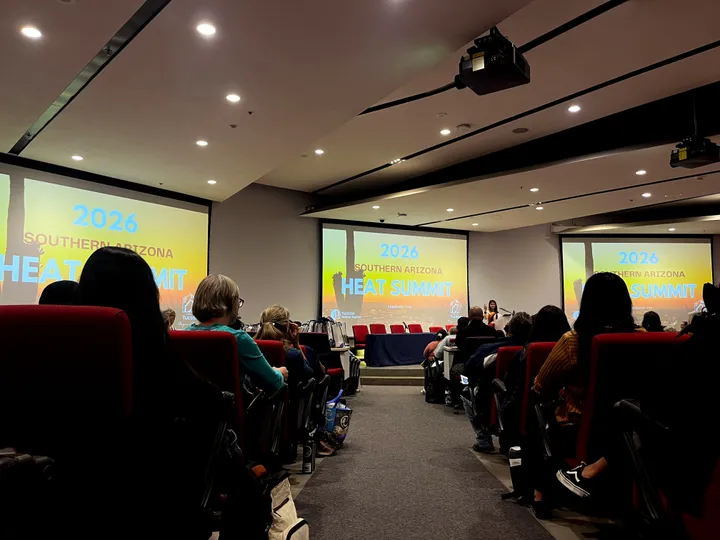
The city’s third annual heat summit on Feb. 7 spotlighted indoor heat in mobile home parks, gaps in utility regulation and new research showing the cumulative toll prolonged heat exposure can take on the body.
Despite those shortcomings, experts also highlighted solutions and strategies to reduce the impacts of extreme heat on vulnerable communities.
“There’s not any other city in the United States that’s doing kind of a continual heat summit like this with a range of partners that we have, so I think that’s something we could be really proud of,” said Ladd Keith, associate professor at the University of Arizona, director of the Heat Resilience Initiative and faculty research associate at the Udall Center.
Keith’s research focuses on heat planning, policy and governance.
That research underscores how prolonged heat exposure does not affect all residents equally. Prolonged heat exposure can affect a wide range of people, particularly vulnerable communities such as construction workers and residents of mobile home parks.
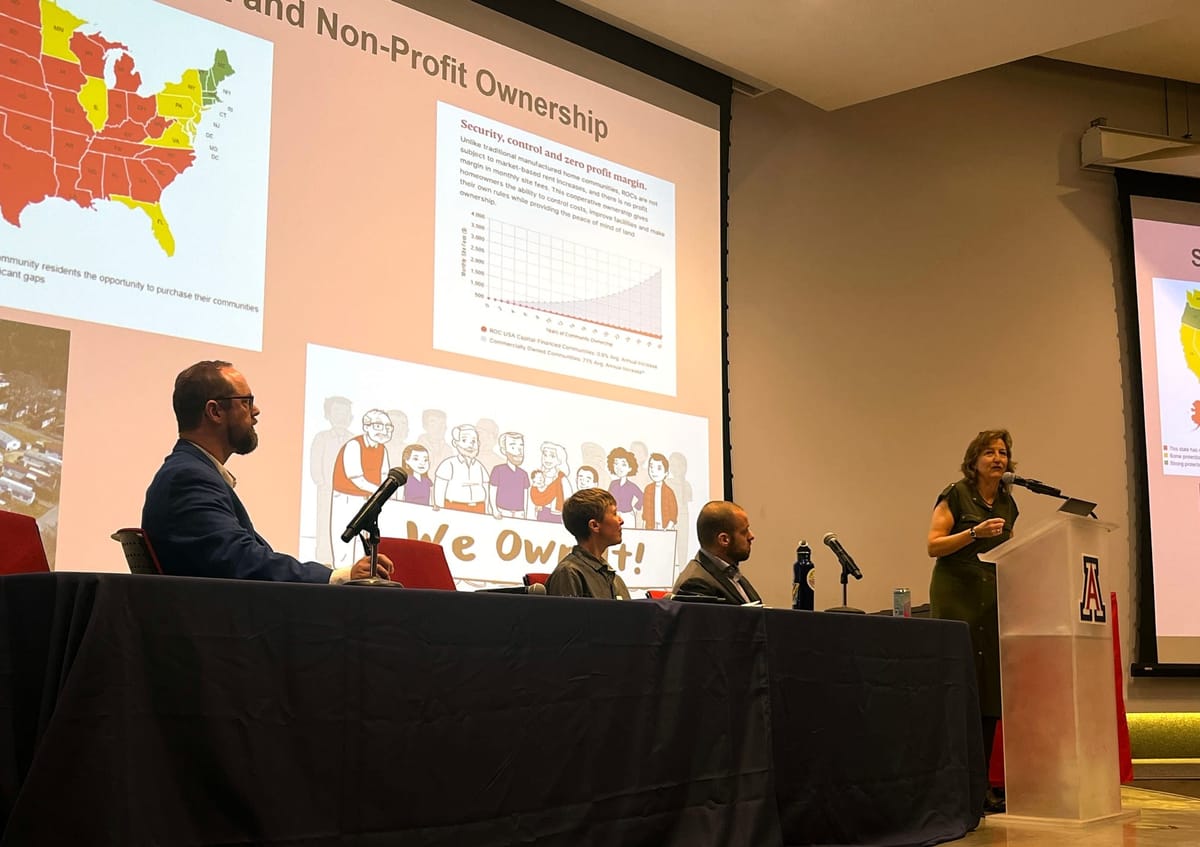
“There are multiple causes and impacts of these dangerous indoor temperatures, temperatures as high as 111 degrees inside someone’s home,” said Raye Winch, a certified community legal advocate for Poder Casas Móviles and director of policy and strategy with the Tucson Alliance for Housing Justice.
Winch, a legal fellow with the Sustainable Economies Law Center, is licensed to provide limited-scope legal advice on housing and eviction matters. At the summit, they focused on utility regulation affecting mobile home residents.
Some mobile home parks operate on a master-meter system, meaning utilities are delivered to a centralized meter owned by the park.
“Residents are paying utilities directly to the park, rather than the utility company, meaning they have no account number,” they said. “They can’t access low-income discounts.”
In addition, residents in these master-meter mobile home parks lack the same regulatory protections as a direct utility customer and can be evicted over nonpayment, according to Winch.
“Arizona law does require that mobile home parks provide adequate utility service and prohibits charging more than if the resident were a direct customer,” Winch said. “But who’s enforcing these laws?”
Neither the utility company nor the Arizona Corporation Commission has jurisdiction to check the status of the meter, according to Winch.
While questions remain about oversight and enforcement, panelists said regulation is only one piece of the broader heat crisis.
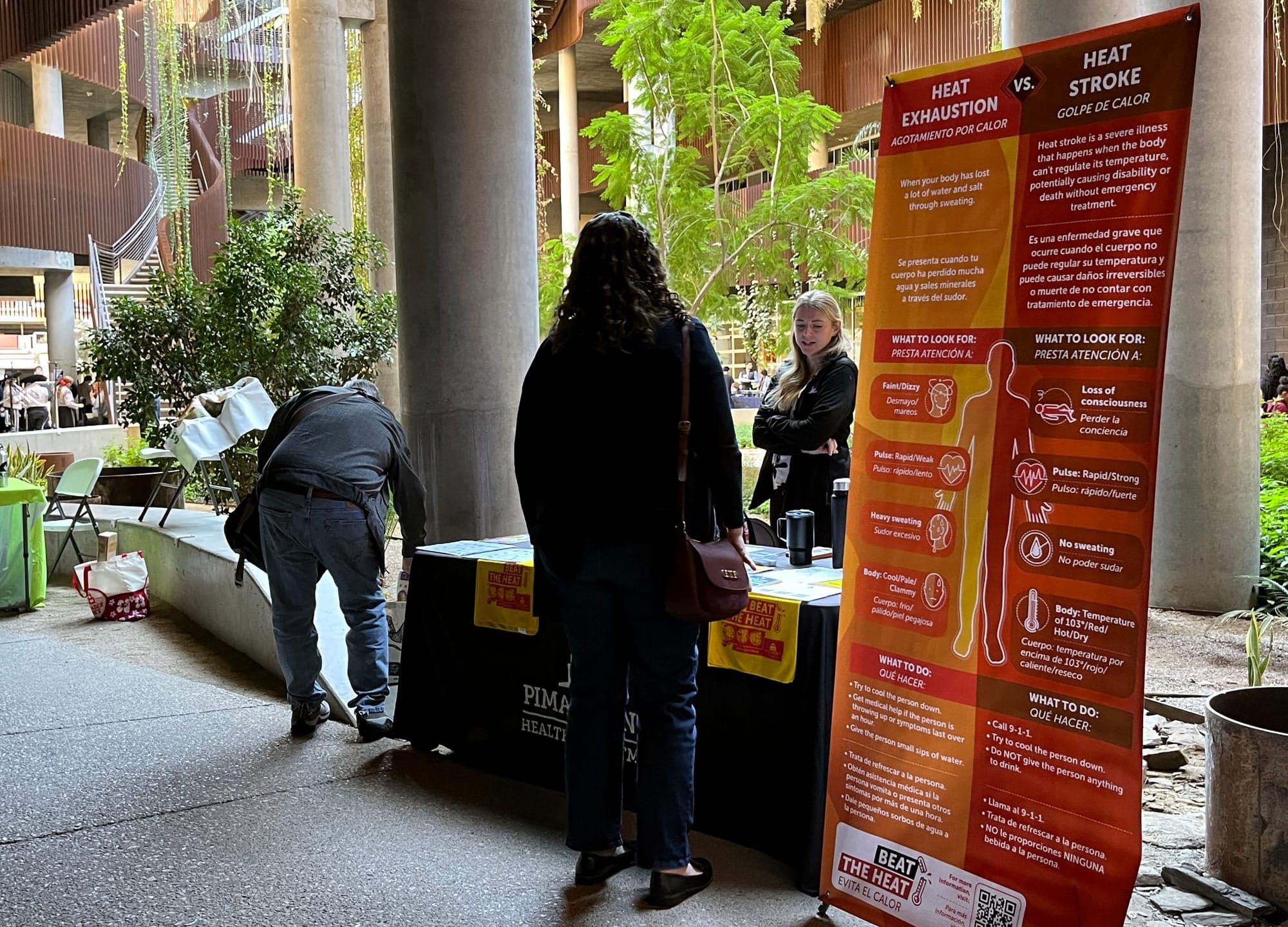
On the health side of extreme heat, Dr. Robert Meade, a thermal physiologist in the Department of Epidemiology at the Harvard T.H. Chan School of Public Health, discussed how the body responds to extreme heat and highlighted findings from his research.
Meade’s research combines thermophysiology and field epidemiology to study human heat tolerance and support community-led heat adaptation strategies.
“Most of my research in the past decade or so has been spent thinking about this question, you know ‘why does heat harm more people,’” Meade said.
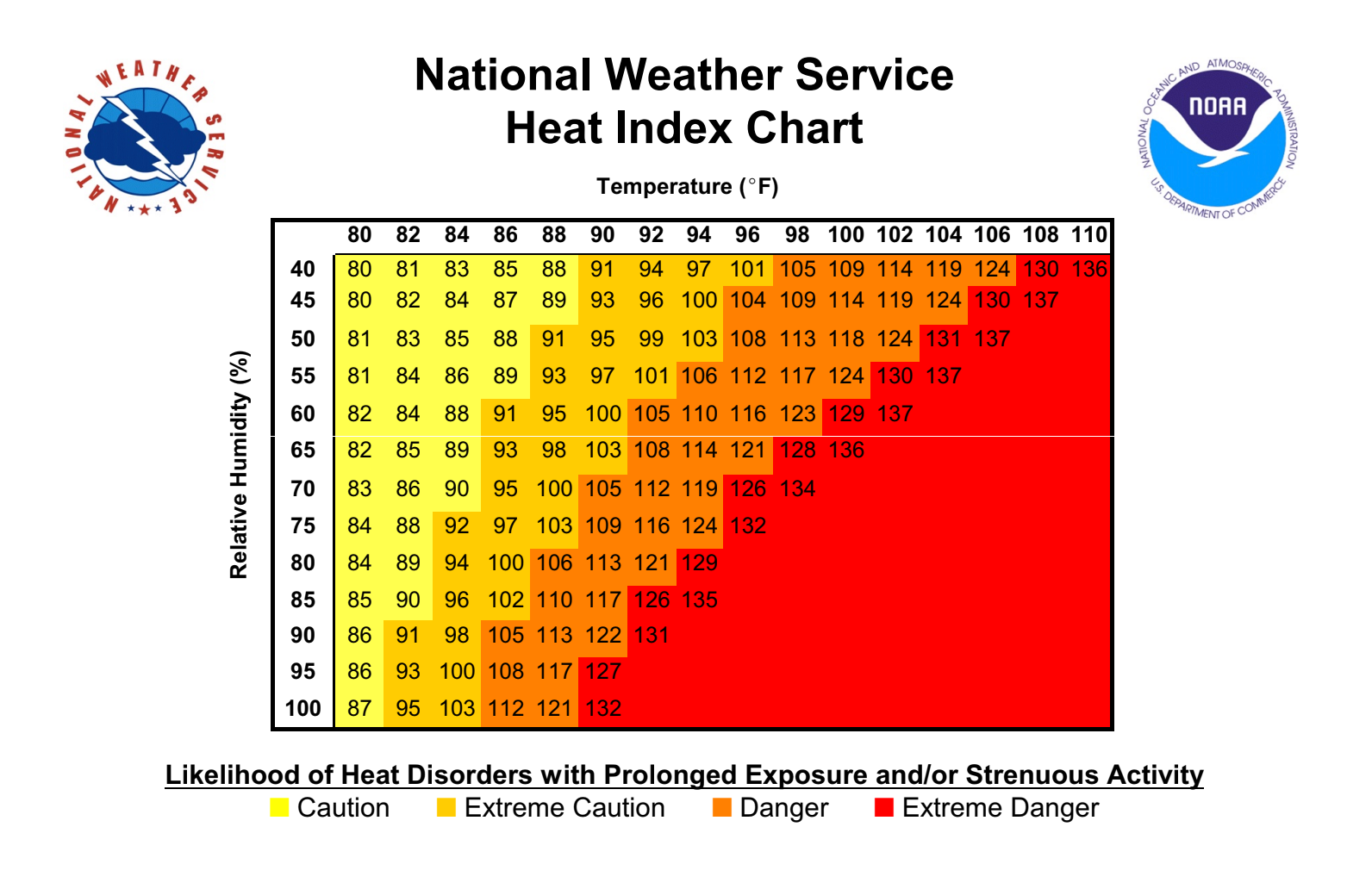
Regulating internal temperature is essential to human survival, Meade said. The body’s systems, from individual cells to major organs, function within a tightly controlled temperature range.
“These processes are meant to try to ensure at any given month, that how much heat we are gaining is balanced by how much heat we are losing,” he said.
This constant balancing act is driven by thermal receptors, primarily in the brain and skin, that signal the body to activate heat-response mechanisms, Meade said. Those responses include increased blood flow and sweat production.
“If we have a situation or a heat stress that’s so extreme that our thermal regulatory system has been completely outpaced, the temperature goes up and up,” he said. “This will lead to heat stroke.”
Thermal responses function as a negative feedback loop, meaning the body works to maintain and stabilize its internal temperature rather than amplify the response.
Through his research, Meade found that people can still experience heat-related illnesses and injuries at lower temperatures. He said that may be partly because people spend more time in moderately hot conditions, but even low-rate heat stress can strain the body.
His thesis examined low-rate heat stress through an experiment in which participants were exposed to varying temperature conditions.
“As long as you're exposed, even though the body temperature was able to stabilize in those hot conditions, it’s doing so at a higher level,” he said.
When the experiment was extended to three days, Meade said researchers still observed significant stress and strain on the body.
“The question becomes if it might not take an extreme heat wave, what happens when we’re exposed to something like this over days, over weeks, over a hundred days,” Meade said. “So this is how we’re starting to think about the dangers of these prolonged heat waves.”
As researchers continue examining the long-term health impacts, advocates say policy change is equally urgent.
Winch said there needs to be policy changes and greater accountability for mobile home parks.
“When residents own their communities as a cooperative, when it's owned by a nonprofit or taking the profit motive out of it, master meeting can be a large cost saving,” Winch said.
At the state level, the Arizona Attorney General’s Office Environmental Protection Unit is working toward addressing climate change. Kirsten Engel, interim chief of the unit, said extreme heat is an issue of energy and environmental policy and justice.
“Our office is trying to address all of those aspects because this is one of those kinds of wicked problems where everything is very, very interrelated,” she said.
The Attorney General’s Office is working to keep utility bills as affordable as possible as temperatures rise, particularly for residents of mobile home parks.
“Mobile home residents make up 10% of all housing but they account for 30% of heat related deaths indoors,” Engel said.
For the Heat Resilience Initiative’s Keith, those disparities underscore how much work remains.
“We’re not protecting everyone yet and we’re not preventing every preventable heat related death,” Keith said.
Arilynn Hyatt is a journalism major at the University of Arizona and Tucson Spotlight intern. Contact her at arilynndhyatt@arizona.edu.
Tucson Spotlight is a community-based newsroom that provides paid opportunities for students and rising journalists in Southern Arizona. Please consider supporting our work with a tax-deductible donation.