
Tucson forum tackles HIV and Hep C funding cuts
The Southern Arizona AIDS Foundation held its first public forum on funding cuts to HIV and Hepatitis C services, with panels on LGBTQ+ needs, HIV care and advocacy.
As federal and state funding cuts threaten HIV and Hepatitis C services across Arizona, the Southern Arizona AIDS Foundation brought together advocates, medical providers and community leaders for the region's first public forum on how to respond.
The first panel, on LGBTQ+ community needs, featured SAAF Epidemiology and Programs Manager Vanesa Delgado, SAAF Youth Coalition Coordinator Gino Cocchi, Fluxx Productions Executive Director Dante Celeiro and Southern Arizona Senior Pride Executive Director Mary O'Donoghue.
“We go to local high schools right now … about four or five of them in this coming school year,” Cocchi said. “We have three different curriculum that we go and facilitate.”
The first covers substance use and misuse, focusing on decision-making, risk factors and risk-taking, and giving students tools to make healthier choices when they face consequential decisions as young adults. Another teaches mental health, wellness and first aid. A third, the LINK program, covers healthy relationships, how to recognize abuse or mistreatment, and how to advocate for yourself in those situations.
Delgado said the presentations have faced some pushback.
“As soon as they hear it's Southern Arizona Aids Foundation, they're like, ‘Oh no, you're not coming in,’ So it's been trying to find different ways to approach it because it's not just AIDS and HIV that we're presenting with the students, we're presenting them with life skills they’re not taught in schools,” Delgado said. “it’s finding the different ways to approach them and get them to understand how helpful what we're doing for all youth, not just the LGBTQ+ community.”
O'Donoghue said isolation and loneliness are risks all older adults face, but can be especially difficult for members of the LGBTQ+ community.
“Older LGBTQ adults face it with some compounding issues,” she said. “Some are estranged from their biological families or do not have children or traditional caregivers. Others have lost partners and friends, sometimes an entire chosen family to aging, illness, or HIV-AIDS.”
Tucson Spotlight trains the next generation of Southern Arizona journalists and publishes their work free for everyone. No paywalls, no corporate backing — just readers who believe this community deserves better local news.
Seven in 10 older LGBTQ adults age without a partner, spouse, adult child or biological family, compared to three in 10 of their heterosexual counterparts, O'Donoghue told attendees.
“Other factors … such as relocation. retirement, mobility limitations, transportation barriers, hearing or vision changes, can make it even harder to stay connected,” she said. “I share some of these rather obvious points because at times, they are not so obvious.”
Celeiro said Fluxx has had to be resourceful to stay funded.
“Our community is small, so we're all fighting for the same dollars, we're fighting for the same donors. And then the grants are getting smaller and smaller, so, even if we're collaborating, those dollars have gone down,” Celeiro said. “We're really fortunate that the production side helps to offset the cost because we have so many groups and so many people coming in and asking for mutual aid.”
Fluxx holds small fundraisers, with Celeiro pointing to Venture-N as an example, saying they often aim to break even rather than turn a profit. If an event sparks conversations people don't usually have, he said, it has accomplished something.
“Do we need the money? Of course we need the money, but we have to get creative,” Celeiro said.
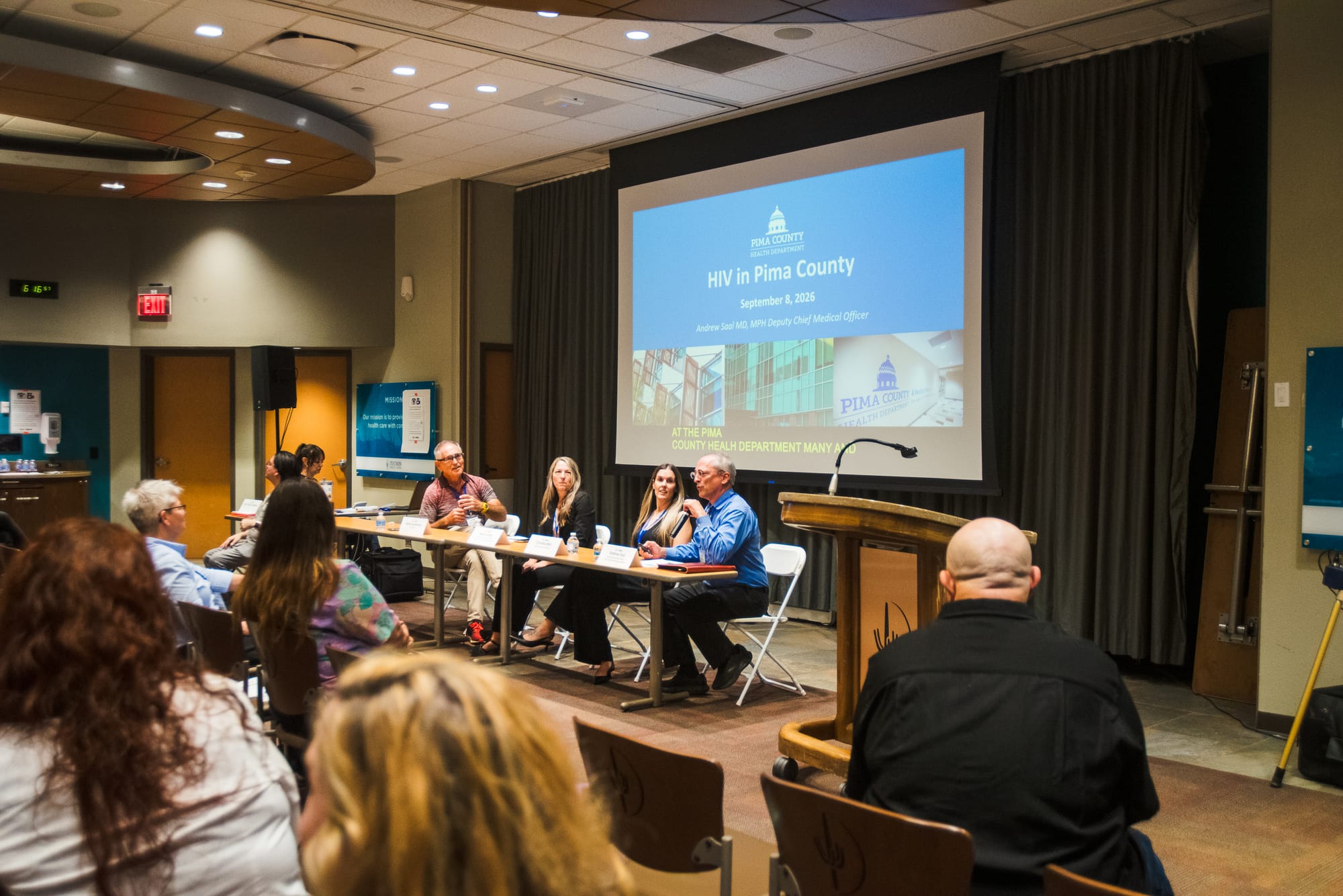
The second panel, on HIV services, featured Dr. Andrew Saal, deputy chief medical officer at the Pima County Health Department; Alyssa Guido, program director for HIV programs at the University of Arizona College of Medicine; Christina Bolt, a family nurse practitioner at the SAAF Health Clinic; and Dr. Kevin Carmichael, an infectious disease specialist.
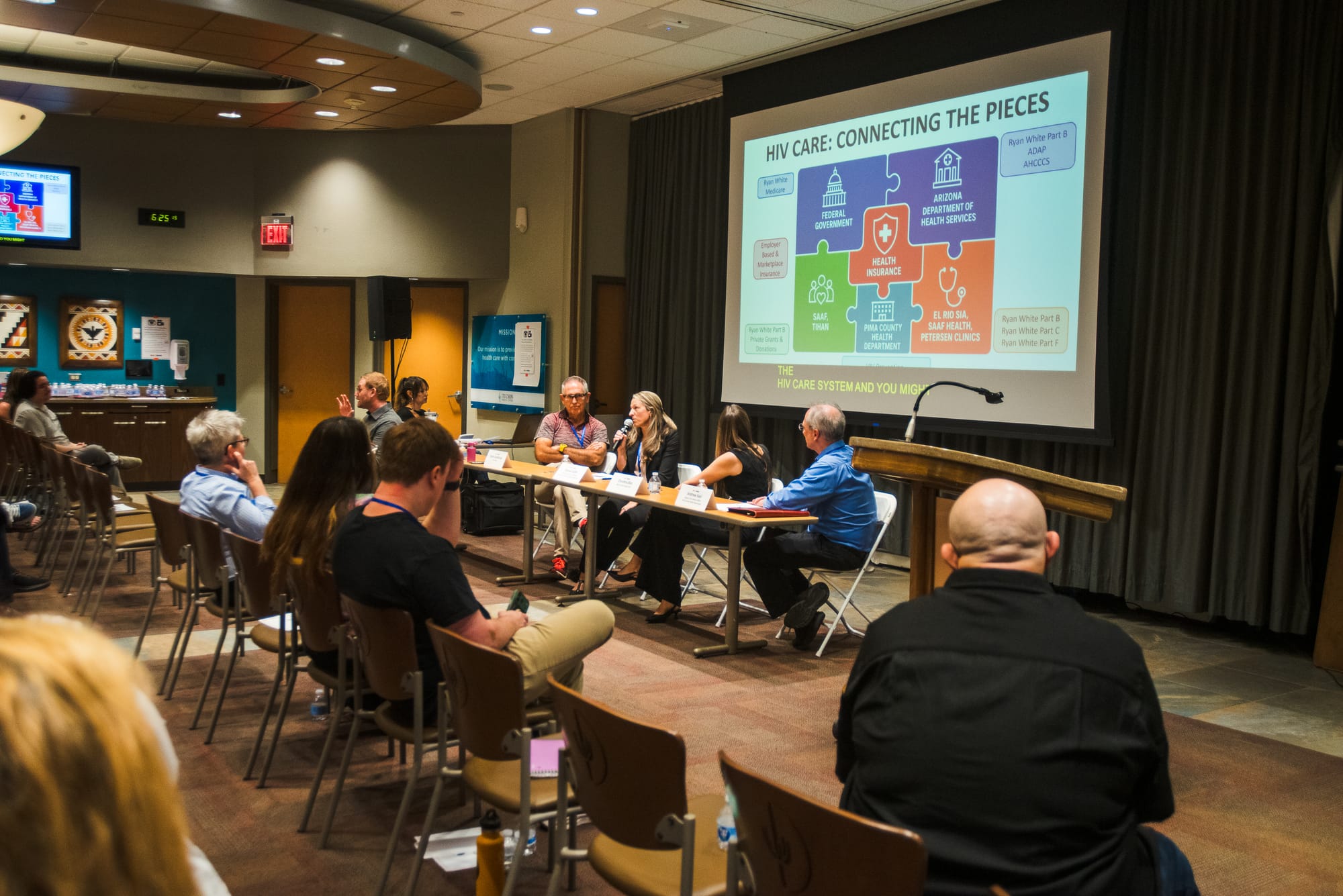
Guido said the HIV care system isn't a single program or funding stream, but more like a puzzle.
“It's a network of many different entities, including the federal government, the county and state public health offices, medical providers, community serving organizations, and health insurance. And each entity has its own program, it has its own funding streams,” she said.
But she pointed to one critical missing piece: the patients.
“At the end of the day, it's the patients that have to navigate this system,” Guido said. “They're the ones who have to show up for their doctor's appointments, go to the lab and take their medication every day or get an injection every few months. It could be a real challenge even for the most organized patients out there.”
Ryan White is a federal program that pays for HIV care and support services for low-income people who are uninsured or underinsured. It is the payer of last resort, meaning applicants must first apply for AHCCCS, Arizona's Medicaid program.
HIV care is more than medication, doctor visits and lab appointments, Guido said. Staff at provider offices and community-based organizations help patients navigate their health insurance options, screen for behavioral health and substance use treatment needs, and link patients to critical assistance programs, including emergency financial assistance, transportation, housing and food assistance.
“You might be thinking why do all these count as HIV care? They’re actually critical. They are often the determining factor whether or not somebody can actually stay in care and take their medication,” Guido said. “We know that a certain number of people who are on AHCCS are going to have to work 20 hours a week … or volunteer 20 hours a week in order to maintain their access. We recognize that this is going to create a barrier for people maintaining their health insurance as AHCCS. Which means they might have to then tap into that Ryan White as the payer of last resort to have their medication and care covered.”
Guido said the changes could also mean staff at community organizations spend extra time helping patients navigate their insurance options. Losing coverage often leads to missed appointments and missed medication doses, she said, which can cause a patient's viral load to creep back up.
Prevention was also a focus of the panel. Bolt outlined the four options for PrEP, or pre-exposure prophylaxis, medication taken by people who don't have HIV to reduce their risk of getting it. The options include two daily pills, Truvada and Descovy, and two injectables, Apretude and Yeztugo. She said all four are vastly underused.
“At the state health clinic, we had five new HIV infections about eight weeks ago. (PrEP is) not being used as often as it should be. And there are reasons for that, there's stigma attached to it,” Bolt said. “Even though we try to approach this as anybody who's having sex should think about PrEP. There's a ton of stigma. Also, if we have folks that are engaging in safe sex, they don't want people knowing that they're on anything. So, that's why injectable prep is a really good option.”
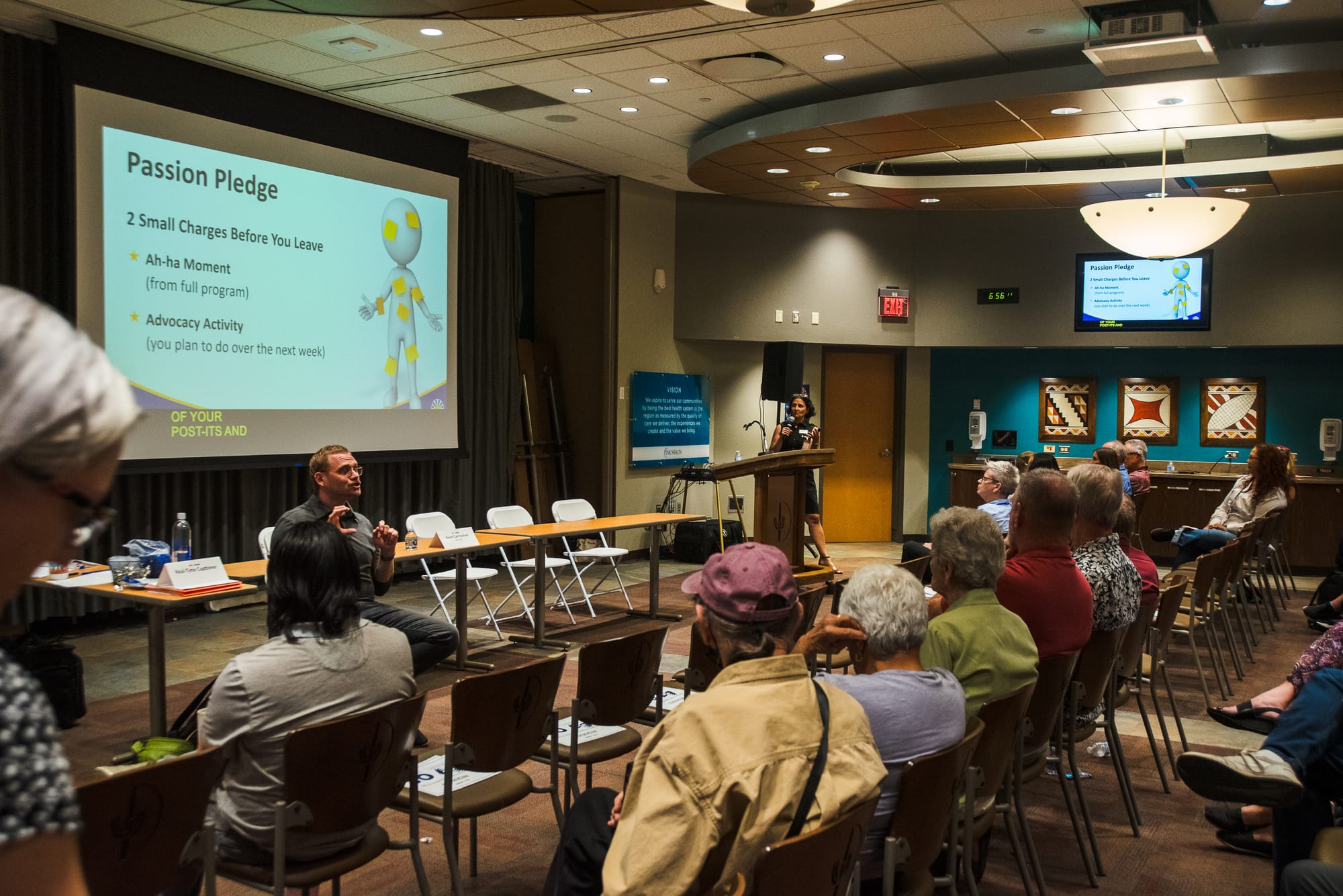
The third panel, on advocacy, featured Vicki Cuscino, executive director of the Direct Advocacy & Resources Center, and SAAF CEO Carlos Hernandez.
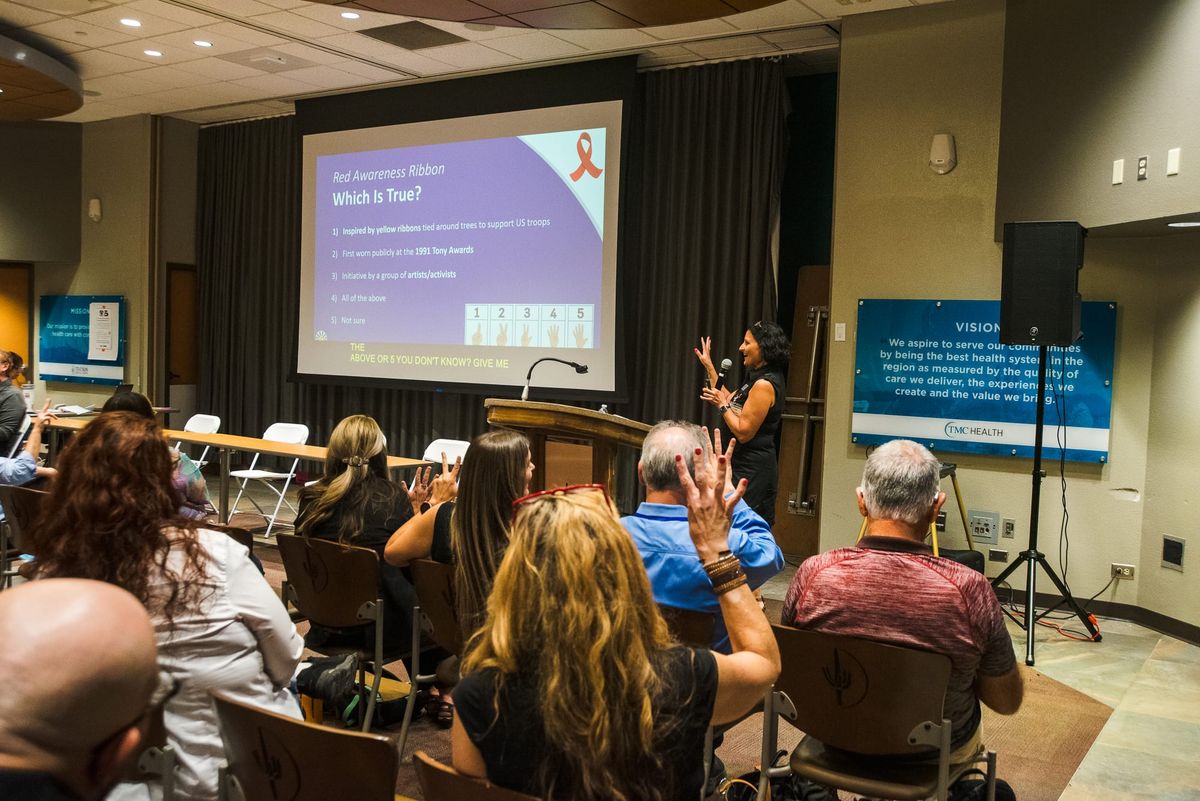
Cuscino shared a brief history of the red ribbon, an initiative by a group of artists and activists inspired by the yellow ribbons tied around trees to support U.S. troops. The ribbons were first publicly worn at the 1991 Tony Awards.
She said advocacy is “a tool we use to actively create positive change” and outlined four types: self-advocacy, individual advocacy, systems and policy advocacy, and activism, including nonviolent civil disobedience.
“It's important to have all types of advocacy to make progress. Like it really does take all types. And it's important for you to find your style, like what is it you're comfortable doing?” Cuscino said.
Cuscino said she began her career doing policy work for the Pennsylvania Coalition Against Domestic Violence, where she was comfortable in a suit meeting with the governor and members of Congress, and even attended the White House signing of the Violence Against Women Act. Her approach changed when she moved into disability rights. Within weeks, she said, she was so frustrated watching buses pass people with disabilities waiting at stops, because drivers didn't want to lower the lift, that she was ready to take a bus hostage.
“Our goal is to do something that hasn’t happened in a long time: To get people together to share ideas, to identify needs, gaps. And to get a discussion about what's happening in our community because of policy issues, policy threats, funding threats,” Hernandez said. “To create a louder voice, to educate people about what's going on in terms of HIV care and working with LGBTQ+ individuals.”
Hernandez urged attendees to visit SAAF's website to learn about ways to get involved and support the LGBTQ+ community.
He said misconceptions about HIV are common, telling attendees that when he took the job 11 months ago, many people asked whether HIV had already been cured and questioned why an organization like SAAF is still needed.
“It exists and will always need to exist because there's a part of our population that if they don't get the treatment that they need at the right time, they can get sicker and they can get other people sicker,” he said.
Marlon Bedoy is a Pima Community College student and Tucson Spotlight intern. Contact him at marl.star.nn@gmail.com.
Tucson Spotlight is a community-based newsroom that provides paid opportunities for students and rising journalists in Southern Arizona. Please consider supporting our work with a tax-deductible donation.