Tucson explores public power as energy bills climb
The Tucson City Council is exploring four public power models, from community choice aggregation to a full takeover of Tucson Electric Power's grid, as residents face rising energy bills.
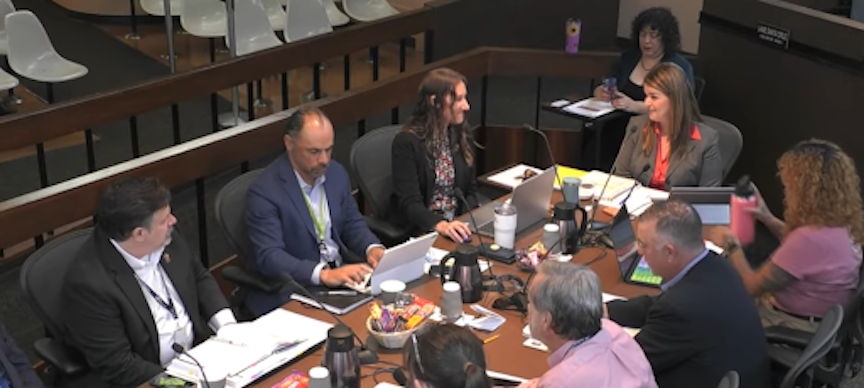
Faced with rising energy bills and climate goals that may be out of reach, the Tucson City Council is exploring whether the city should get into the power business.
At a March 3 meeting, the council discussed four possible models for public power, ranging from a community choice aggregation program to full takeover of Tucson Electric Power's grid, a move that could cost up to $4 billion and take a decade to complete.
The discussion was requested by Mayor Regina Romero and Ward 6 Councilmember Miranda Schubert in response to resident concerns about rising energy rates, and follows five years of work on Tucson Resilient Together, the city's climate action and adaptation plan.
At the same meeting, the council voted unanimously to direct the city's Commission on Climate, Energy and Sustainability to lead an exploration of long-term public power opportunities that align with the city's climate goals.
The city has been laying groundwork on the issue for some time. Fatima Luna, the city's chief resilience officer, was previously involved in talks about a possible franchise agreement with Tucson Electric Power, and the council recently met with Attorney General Kris Mayes to discuss intervening in TEP's rate case.
City staff held seven town halls in 2025 to hear what residents wanted from an energy collaboration agreement, and a draft agreement with TEP was released for public comment.
Community members have also presented their own energy collaboration agreement proposal to the council, a model that cities including San Diego have been exploring.
"An energy collaboration agreement is critically important for me to make sure that we meet the city of Tucson's climate goals, and it also defines investment by our energy utility company in our climate action work," Romero said.
Romero added that with the Trump administration cutting federal climate and sustainability funding, an energy collaboration agreement has become one of the few remaining ways to fund the Tucson Resilient Together plan.
"We are consistently hearing concerns about rising energy costs, seeing a desire for more long-term rate certainty, interest in aligning our energy supply with climate goals and a broader interest in local control," Luna said. "In short, there are pathways, but none of them are going to be simple."
The four options discussed were community choice aggregation, a municipal utility serving an existing city facility, a municipal utility serving new development and full municipalization of TEP within city limits. Under state law, any of them would require voter approval and the construction of a new operating system, including staffing and billing infrastructure, from the ground up.
Under a community choice aggregation model, the city would create an agency to purchase power on behalf of residents while TEP would continue to operate the grid. It would not require acquiring existing utility infrastructure or taking over operational control, it is focused on power procurement rather than utility ownership.
Luna said the model could offer a path to the Tucson Resilient Together goal of citywide carbon neutrality by 2045.
Community choice aggregation is not currently authorized under Arizona law, though it is on Tucson's adopted legislative agenda.
"Sometimes, it's a continuous fight against our state legislature to move forward in a direction to protect our working families," Romero said. "It is devastating the stories that I hear when it comes to utility services in our city. I've spoken with many working families that get $400, $500 electric bills every summer for four or five months."
Another option would use an existing city facility with some power generation capacity, such as a recreation center, as the basis for a municipal utility, with the city acting as both provider and customer.
City Energy Manager Michael Catanzaro said the approach would bolster energy resilience through battery storage and give the city a controlled environment to test utility procurement and billing.
The third option would have the city build new energy infrastructure from scratch rather than acquire existing assets.
Catanzaro said financial modeling indicates the approach is viable at five megawatts, enough to power 1,300 to 2,000 homes, 20 to 40 acres of industrial development or a single large industrial customer. But it faces obstacles including service territory conflicts and the need for significant upfront capital.
The most sweeping option would be full municipalization: the city taking over ownership and operation of TEP's existing assets within city limits, becoming the retail power provider with full control over rates, resources and planning.
The price tag is a major obstacle. The city estimates acquisition could cost up to $3 billion, while TEP puts the figure at $4 billion, a sum City Manager Tim Thomure noted is quadruple the city's current debt, though he added that utility revenue would help offset it.
Beyond the cost, full municipalization would likely trigger years of litigation and a well-funded opposition campaign, with the process taking up to a decade and requiring voter approval. Fewer than 10% of cities that attempt it succeed.

Several large cities, including Los Angeles, operate under this model. Locally, the Tohono O'odham Nation has the tribally-owned Tohono O'odham Utility Authority provide power to the reservation.
TEP opposes municipalization, arguing it would strain public resources and increase collective energy bills by billions over 20 years to recover the initial costs. The utility says the city's best path to bill savings and local control lies in cooperation rather than city ownership.
Romero said the cost of acquiring TEP's assets for full municipalization is "something not available to us right now" given the city's other needs, but expressed hope that an energy collaboration agreement could still deliver community benefits and the climate investment the city is seeking.
"Cooling is not a luxury here in the desert. It's a public health necessity," said Ward 1 Councilmember Lane Santa Cruz. "We hear all the same things and we experience it ourselves with these rising energy costs putting a real strain on our families, our seniors and our medically vulnerable residents, and I hope that that's something we continue to track so that we can continue to address this."
Ward 4 Councilmember Nikki Lee acknowledged TEP's low-income assistance program but said it amounts to only $20 a month, which she said makes city action on affordable energy all the more necessary given rising rates.
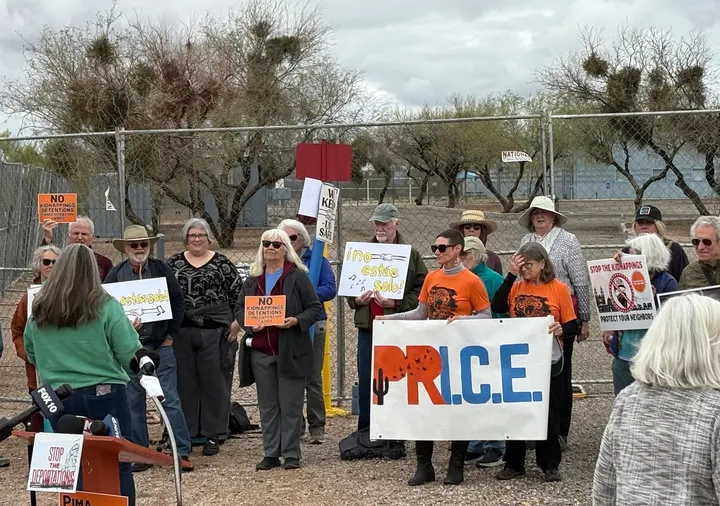
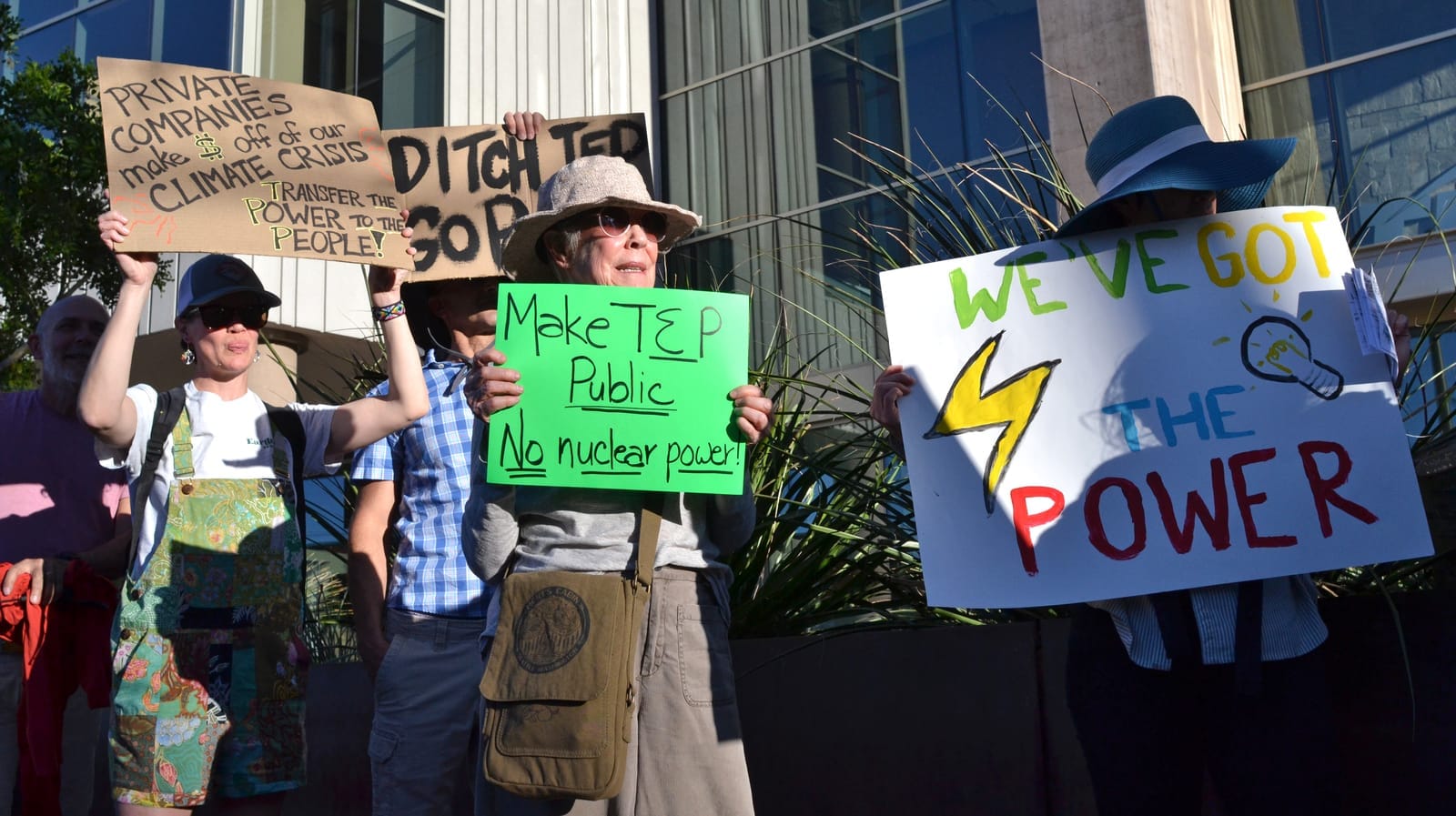
Schubert noted that the public power movement has grown significantly over the last three years through community petitions and organizing, and said her office hears from Ward 6 residents daily urging the council to take the issue seriously.
"We have heard loud and clear that Tucsonans prioritize climate resiliency, affordability, transparency and accountability," Schubert said. "As we're moving forward with this conversation about really complex scenarios with pros and cons, I just hope that we can keep it grounded in the families that are being affected by these choices and in what's going to get us the best deal in terms of affordability, accountability to the public, transparency and energy resiliency, cleaning up our grid."
Ian Stash is a journalism major at the University of Arizona and Tucson Spotlight intern. Contact him at istash@arizona.edu.
Tucson Spotlight is a community-based newsroom that provides paid opportunities for students and rising journalists in Southern Arizona. Please consider supporting our work with a tax-deductible donation.