Tucson Dreamers rally for protection from deportation
Three Tucson Dreamers facing deportation shared their stories at a rally, joined by the mayor and members of Congress demanding federal protections.
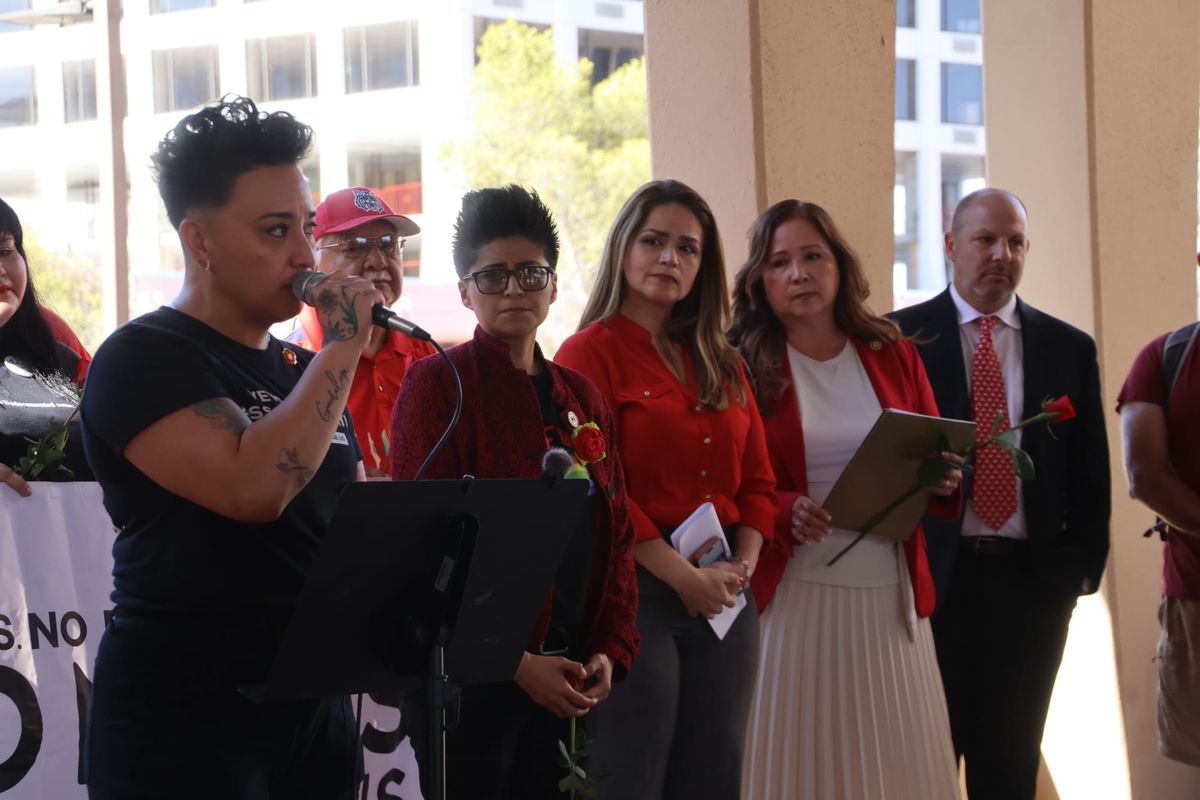
Three Tucson Dreamers facing deportation despite spending most of their lives in the U.S. shared their stories at a rally Tuesday, where Tucson's mayor and members of Congress stood behind them in demanding federal protections for immigrants who call the city home.
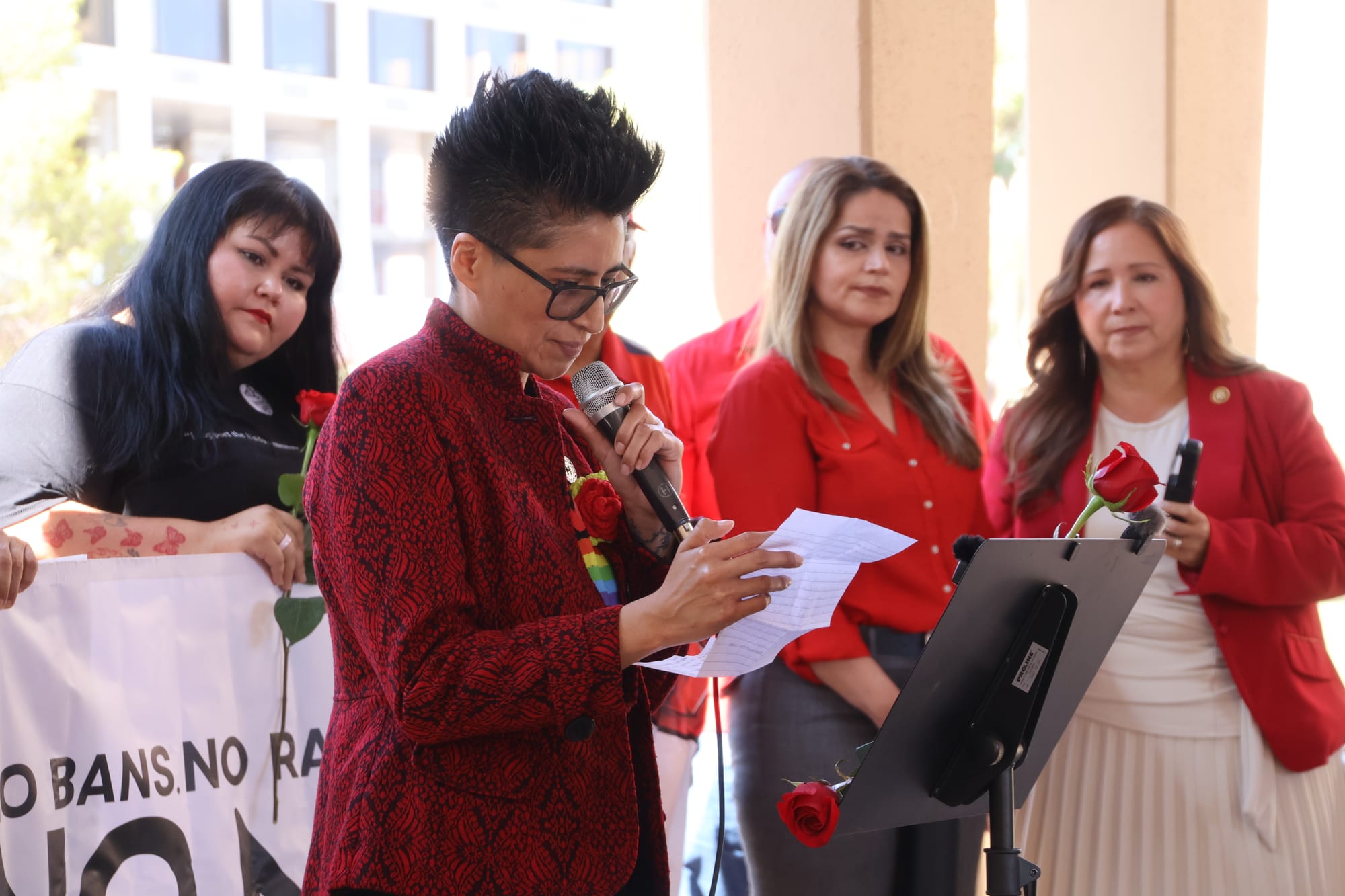
Melissa Cordero, deputy director of Climate Justice with Veterans Power America and Common Defense, coordinated the "Rally de las Rosas." The event was named for the red rose, a symbol of "a promise of dignity, hope, and resistance for every family living in this city," according to Tucson City Councilmember Lane Santa Cruz.
"As veterans … we all hold a sense of duty, and that duty does not stop just when we separate from the military or when we take the uniform off," Cordero said. "Our oaths are forever, and part of that oath is taking care of our community as well."
Cordero said it's devastating to hear about community members like Karla Toledo, Myndy Valencia and Roberto Navarro Bocanegra facing deportation, a reality that spreads fear and tears families apart. She told attendees that current immigration policies affect veterans, describing how the promise of citizenship for service members or their families has been used as a military recruitment tactic.
"They put us in the system and they promise us citizenship, but they don't give us any guidance and they do not follow up," Cordero said. "Veterans are being deported. Veterans' issues are community issues."
Tucson Mayor Regina Romero said many immigrants come to the country chasing a dream, and many parents bring their children undocumented because they believe in the same opportunity this country has offered generations of families before them.
"As mayor of the city of Tucson, I stand in solidarity with our immigrants," Romero said.
Your membership pays emerging journalists to cover Southern Arizona the way it deserves.
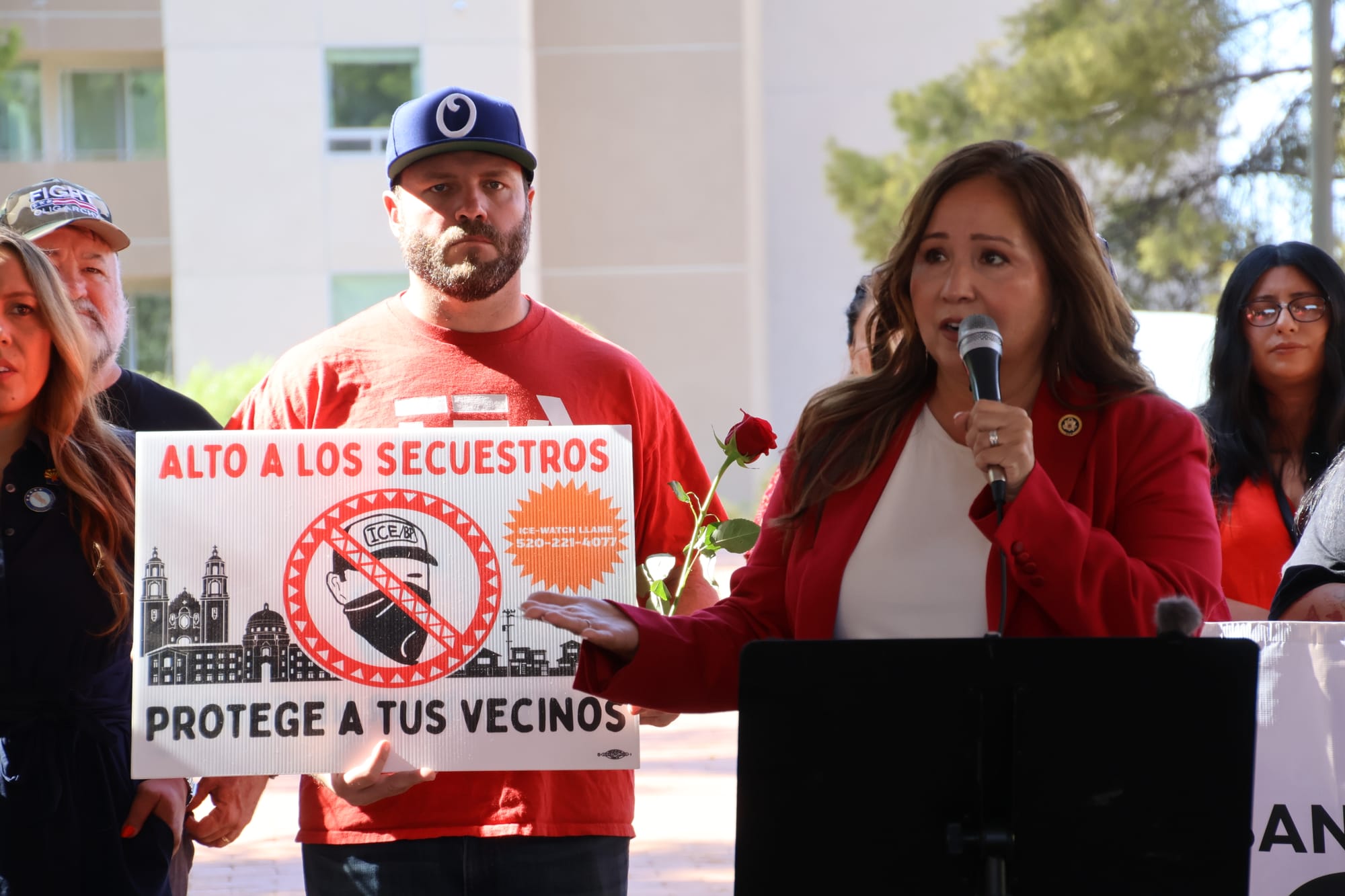
The City of Tucson has been an "Immigrant Welcoming Community" since 2012, an initiative enacted in opposition to SB1070. The law, which was ultimately struck down by the Arizona Supreme Court, allowed police to stop and request documentation from community members if there was suspicion they were in the U.S. illegally.
Local lawmakers have also been outspoken about not entering into agreements that would allow local law enforcement to enforce federal immigration laws.
"We do not do business with ICE," Santa Cruz said. "(The) Mayor and Council passed an ordinance prohibiting immigration enforcement on city property, and right now we are expanding signage across City Hall, our parks, and every city facility, so that protection isn't just written into policy, it's visible to every person that walks into that city property."
Community members have also asked about federal remedies, seeking clarification on possible legislative pathways forward.
Tucson immigration attorney Mo Goldman, who represents Valencia, Toledo and Bocanegra, received a letter Monday signed by U.S. Rep. Juan Ciscomani in response to an inquiry on opening pathways to citizenship for individuals such as his clients.
"As a proud immigrant to this great nation, I have always been a supporter of legal immigration," Ciscomani wrote. "I understand the importance of a system that allows everyone to have the opportunity to achieve the same American dream that my family and I have been fortunate enough to realize. However, we must also recognize the need for a safe and secure border."
Ciscomani said the country needs to find a balance between welcoming legal immigrants and maintaining border security.
U.S. Rep. Adelita Grijalva introduced the "Veterans Visa and Protection Act of 2026" in May, which, if passed, would allow eligible noncitizen veterans a pathway to permanent residency while maintaining their military benefits and protection from removal proceedings.
Grijalva has also co-sponsored bills that would provide increased resources to the Department of Homeland Security's Office for Civil Rights and Civil Liberties, authorize judicial review of temporary protected status terminations and establish a grant program for students, families and school personnel impacted by immigration enforcement actions.
All of the bills remain stuck in legislative committees, underscoring the uphill battle immigration reform and citizenship pathways continue to face in Congress.
"I'm proud to stand here in solidarity with Dreamers," Grijalva said. "Many of us are here because somebody in our family had the courage to come to this country to lay everything on the line for an opportunity for a better life. The Dreamers and DACA recipients … the 19,000 that have signed up … we have so many more people that should be able to qualify for this protection."
DACA, or Deferred Action for Childhood Arrivals, is the federal program that grants Dreamers, people brought to the U.S. as children, two-year renewable permits to live and work in the country, deferring potential deportation proceedings.
Grijalva said Dreamers have paid their taxes, passed background checks and consistently renewed their status, yet many are still left in limbo.
"Karla, Roberto, Myindy, and to all the dreamers … You belong here," Grijalva said. "You have always belonged here, and they are as much a part of this country as anyone else, and (you) deserve more than temporary protections that can be stripped away."
DACA recipients are waiting five times longer than last fiscal year for renewals, with some immigrant advocacy groups reporting renewals taking up to six months for approval.
During the waiting period for status renewals, DACA recipients are at risk of detainment. In a letter to Democratic senators, including Sen. Mark Kelly, then-Secretary of Homeland Security Kristi Noem reported that more than 250 DACA recipients were arrested by DHS and 86 were deported in 2025, with 241 of those individuals having a criminal history.
The term "criminal history," however, may carry connotations that differ from what is commonly perceived.
Valencia has lived in the U.S. for most of her life and has actively maintained a clean record.
Valencia was pulled over by police in 2009, before DACA existed. Although she has held active DACA status since 2012, DHS has reopened her case based on that 2009 incident. If deported to Mexico, she said she would have no support system there.
"I arrived in the United States at the age of 7. For almost my entire life, I have grown up, educated myself, and developed as an individual within this society," Valencia said. "I serve as a vital support system for my family, taking care of my needs and always ready to help out. We need immediate, secure pathways that honor our humanity and keep our families together."
Bocanegra has been in the U.S. since he was 18 months old. He is married to a U.S. citizen and has almost completed his bachelor's degree in mechanical engineering, inspired by the robotics club at his former high school.
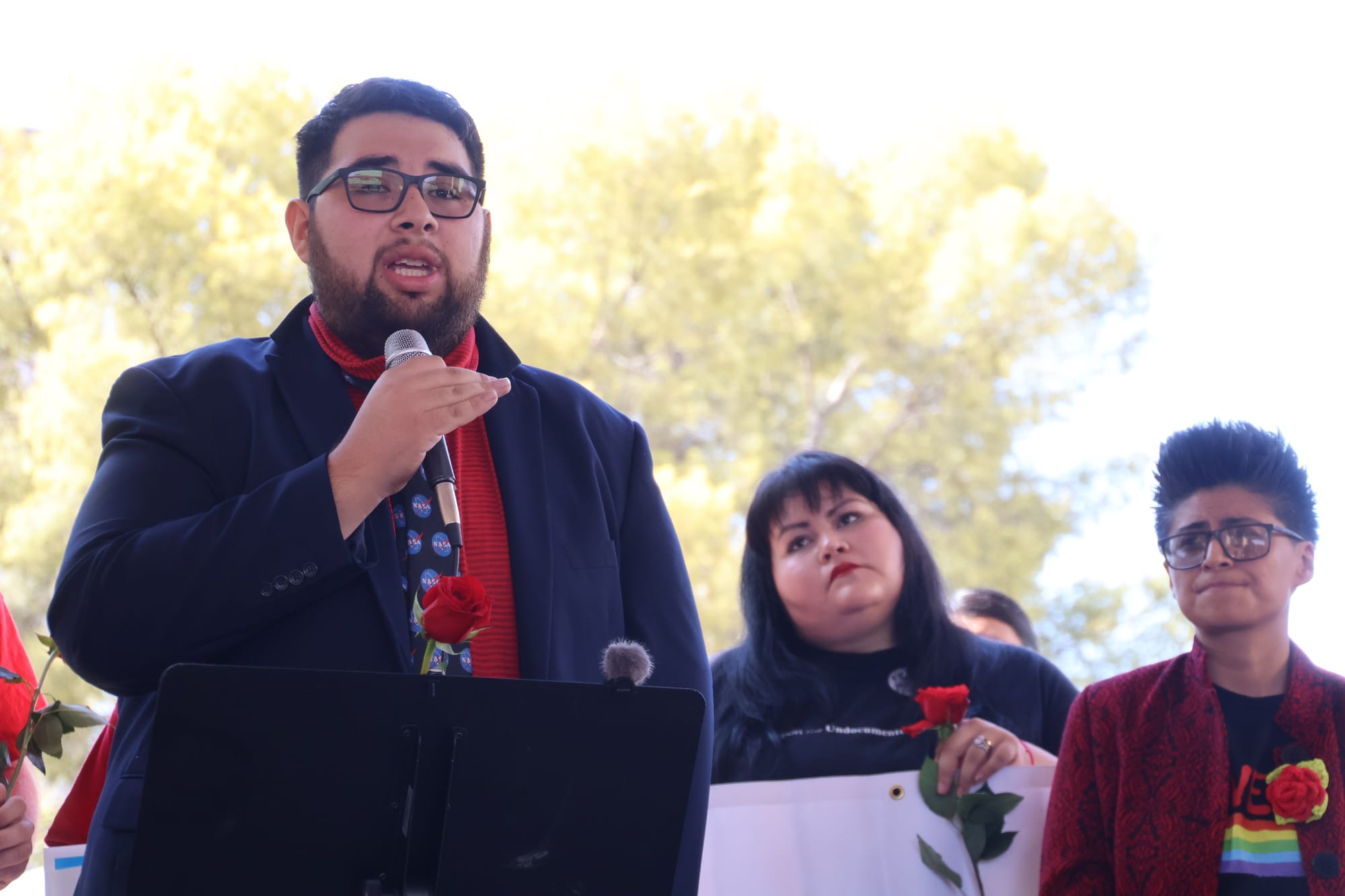
He's currently in deportation proceedings.
Bocanegra filed an I-130, a form that allows spouses or relatives of U.S. citizens to pursue permanent residency. After 18 months of waiting, the form was denied due to a signature error. In response, Bocanegra refiled the form with additional evidence of his ties to the community. One month later, he received a letter stating he was in deportation proceedings.
"Unlike Karla and Myndy, I am not a DACA recipient. I submitted my DACA back during the Biden administration in 2020, where it was reopened and was closed six months later," Bocanegra said. "It's hard for my wife. She always tells me every time I leave the house, 'Be careful out there, and make sure you come home.'"
Bocanegra said a friend, an international student from Mexico, has suggested he simply return there, telling him it's not so bad.
"I don't know Mexico," Bocanegra said. "My family, the people I love, are here in the United States. It's where I grew up. I've been here for 20 years, and it's all I know."
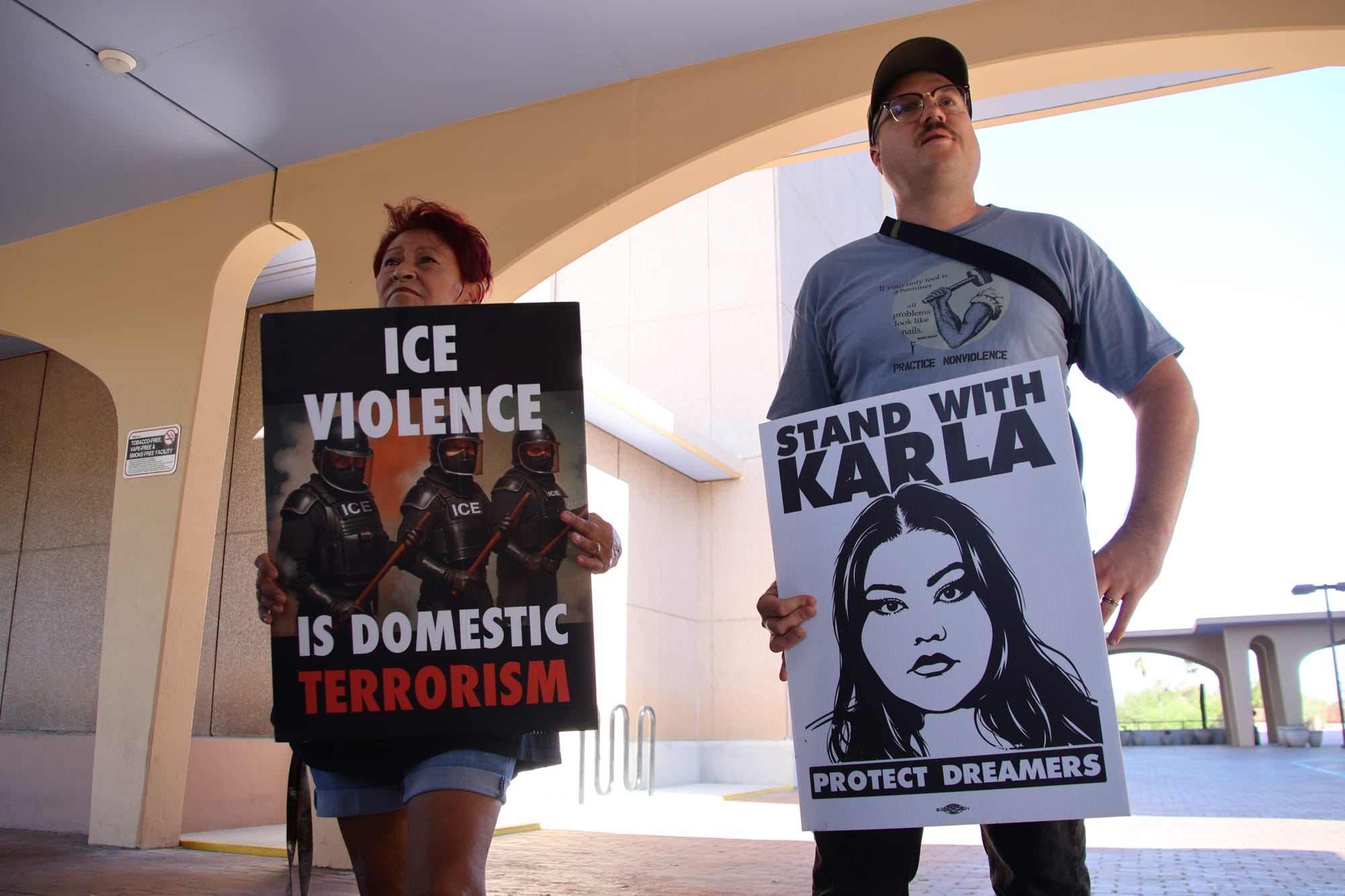
After being detained, held in custody and now awaiting a trial hearing in March, Toledo officially received her renewed DACA status, which has allowed her to work full time for a nonprofit that registers voters and part time with Red de Defensa, an organization that provides resources to families and community members affected by ICE detainment.
"What is 'the right way'?" Toledo asked. "We don't have a right way right now. Myndy, Roberto, and I have been here all our lives. We deserve to be here. This is our home. I hate when people say, 'Oh, you're going to go back home.' Home is here. Home is here for Mindy. Home is here for Roberto."
Toledo said the community needs to stand up and advocate for people like her, Valencia and Bocanegra.
"This is what community looks like," Cordero said. "We need to control our narrative and share our story. We stand in solidarity."
Topacio “Topaz” Servellon is a reporter with Tucson Spotlight. Contact them at topacioserve@gmail.com.
Tucson Spotlight is a community-based newsroom that provides paid opportunities for students and rising journalists in Southern Arizona. Please consider supporting our work with a tax-deductible donation.