
Tucson director documents one man's tiki obsession
Tucson-based filmmaker Josh Dragotta spent four years and conducted more than 100 interviews to document one man's obsession with tiki mugs and his quest to build a $500,000 tiki bar in Oro Valley.

Josh Dragotta set out to make a short film about a man building a tiki bar. Four years and more than 100 interviews later, he ended up with something much bigger.
Dragotta lived in Tucson in the late 1990s and early 2000s before moving to Los Angeles, where he spent the next 20 years making and editing films, beginning with short documentaries for productions like "Murder on the Orient Express," "The Magnificent Seven" and "La La Land."
He later moved into film and television marketing, working on projects including "Percy Jackson and the Olympians," "Bullet Train" and "Severance," earning several Clio Awards for movie advertising along the way.
"A lot of the ad work that I started in the mid-2000s were documentary oriented, but also in the marketing field," he said. "You'd see things like DVD special features, or short form documentaries, and then transition into trailers, TV spots, teasers, that kind of stuff."
His work has shown up at film festivals across the country and around the world. His 2012 film "Satan's Angel: Queen of the Fire Tassels" was an official selection at Outfest.
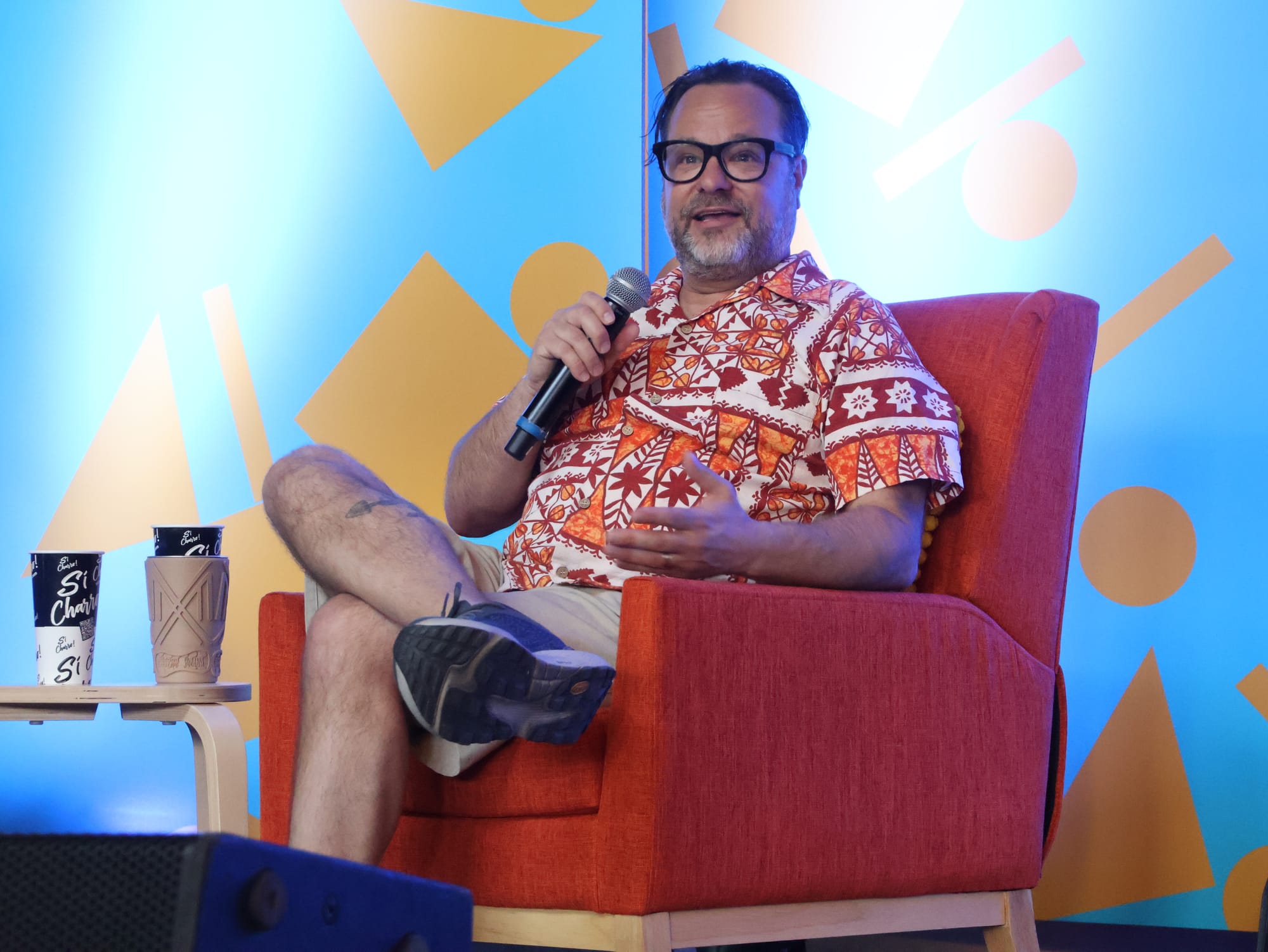
He returned to Tucson five years ago and started working on "Cabali and the Tiki Mug Obsession" the following year. He shared the story behind it at this year's TENWEST festival, an annual event celebrating entrepreneurship, creativity and innovation.
The film follows Doug "Fini" Fincal, whose love for the tiki mug collecting subculture led him to build a $500,000 tiki bar dedicated to his collection inside Oro Valley restaurant The Landing, despite some reluctance from his business partner, Scott Mencke.
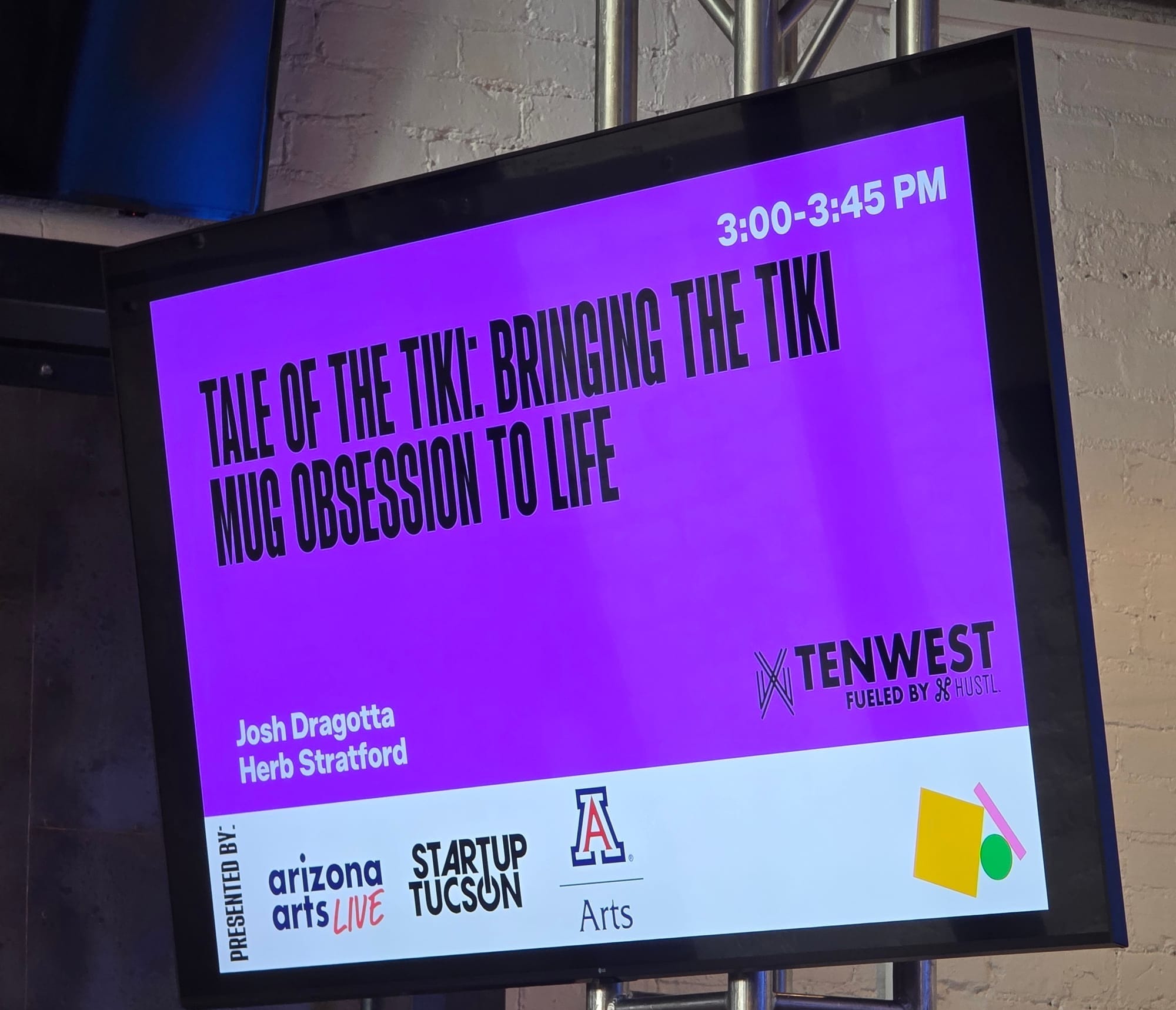
The film's website describes it as a movie about "community, passion, and purpose."
"I wanted to tell the story over a lot of different voices, as opposed to just having a few voices," Dragotta said. "I wanted it to almost seem like one singular voice that represents this scene."
The tiki subculture started in America and takes inspiration from the islands of Oceania and the Pacific. "Tiki" is the Māori word for human.
The documentary grew out of a long friendship. Fifteen years ago, Dragotta and Fincal collaborated on a short film called "Save the Tiki," following Fincal's effort to move a three-story, 25-ton tiki head from Magic Carpet Golf to his bar, The Hut.
"Fini reached out to me four-plus years ago and said, 'Hey, I got another idea. I'm going to build this bar, and I'm thinking maybe it'd be cool to do a little short film,'" Dragotta said. "He starts telling me all of these things about his involvement with tiki and tiki mugs."
At the time, Fincal had amassed almost 1,000 tiki mugs and had decided he wanted to build a bar to show them off.
As they documented Fincal and his collection, Dragotta's interest in the tiki mug subculture piqued.
"We started to get into the history of it. How it developed, and how it harkened back to pre-internet days, and just how this subculture evolved from print and zines and guerilla marketing to essentially what it is now, long lines of people waiting out overnight to buy tiki mugs for hundreds and sometimes thousands of dollars," Dragotta said.
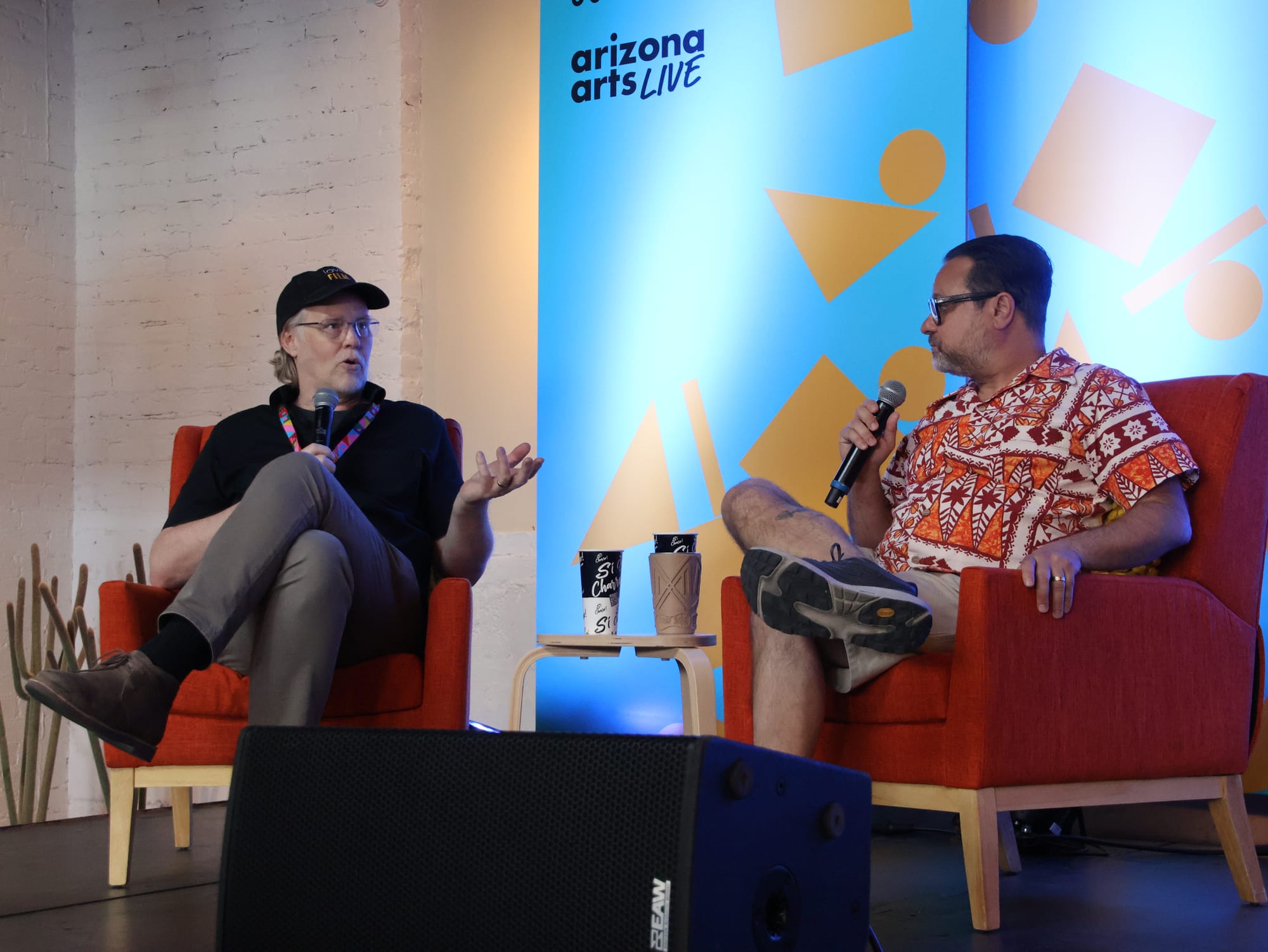
But turning their shared interest into a documentary came with plenty of challenges.
"They always say a documentary comes together in the edit, right? It's not a narrative. In a narrative, you have a script and you follow it, and it's a guide, you move through it, you get what you need, coverage and all, and then you put it together," Dragotta said. "With a documentary, it is a living organism, and it's not over 'till it's over. You're at the mercy of what you're capturing."
Filming took three and a half years, in part because that's how long it took Fincal to establish his tiki bar in Oro Valley.
Dragotta said the film's biggest challenge was its niche subject matter, finding the universal thread that would draw in viewers unfamiliar with tiki culture. He approached it as two films in one: a chronological history of tiki running nearly two hours, and a series of chapters following Fincal's construction of the bar. The editing challenge, he said, was finding the right moments to move between those two storylines.
Ironically, it was Dragotta's Los Angeles connections rather than Fincal himself that opened doors to the tiki community's most prominent figures.
"I had done a couple of short films over the years with my producing partner, Tony Marsico, and Tony's in a band called The Martini Kings," Dragotta said. "He's really tied into the music scene in LA and particularly a lot of people in this, what I refer to as the retro culture world. What Tony was able to do is start to reach out to a couple of really notable people within the community."
The connection led Dragotta to notable figures in the subculture, including Sven Kirsten, who has written extensively about contemporary tiki culture, and Baby Doe and Otto von Stroheim, producers of Tiki Oasis, a festival dedicated to Polynesian pop and island lifestyle.
The documentary spotlights tiki mug designers, self-described aficionados and casual fans, including artists who have built careers around the craft.
"Crazy Al (Evans), he's a big, tough mug maker. One of the later lines in the movie from him is, 'Finally, finally, I can sell my mug for how much passion and creativity I was putting in,' for his case, decades into this art," Dragotta said.
As he developed the documentary, Dragotta earned the friendship and trust of several members of the tiki mug community, saying that one specific interview impacted the entire project.
"We were interviewing a couple, Derek and Roxanne Weaver, who had been in the scene since the 90s. I'm interviewing Derek, he's got this beautiful home tiki bar, and he has a pretty big collection. And he says to me, 'You know, I was going to do a documentary about this,'" Dragotta said.
Weaver gave Dragotta the footage from his attempt at a documentary, saying, "I trust you guys. You guys seem cool. Just make something with it. It needs to be out there."
The film debuted at the 2025 Newport Beach Film Festival with three screenings, two of which sold out.
The Arizona premiere at TENWEST also sold out, and the reception from those inside and outside the tiki community has been overwhelmingly positive.
"Until we had that premiere in Newport Beach, I'm holding my breath, because you're representing a subculture, and that's not easy to do. Overwhelmingly, the people within that community have said to us, 'You have represented us well,'" Dragotta said.
Cabali has proven so popular that neighboring businesses have caught tiki fever, according to Dragotta. He has also received screening requests from Washington, Hawaii and Dallas, is developing a vinyl soundtrack with Tucson-based band Mellow Exotica, and is working on a beer inspired by the documentary.
"I think one of the biggest things is, when people watch the movie that have no idea what tiki is, they're blowing they're like, 'I need to go to one of these events. This is my tribe,'" Dragotta said.
Topacio “Topaz” Servellon is a reporter with Tucson Spotlight. Contact them at topacioserve@gmail.com.
Tucson Spotlight is a community-based newsroom that provides paid opportunities for students and rising journalists in Southern Arizona. Please consider supporting our work with a tax-deductible donation.