Tucson artists question public mural selection process
Some artists say Tucson's publicly funded mural commission process lacks transparency and favors repeat artists over emerging voices, raising questions about who controls how taxpayer arts dollars are spent.
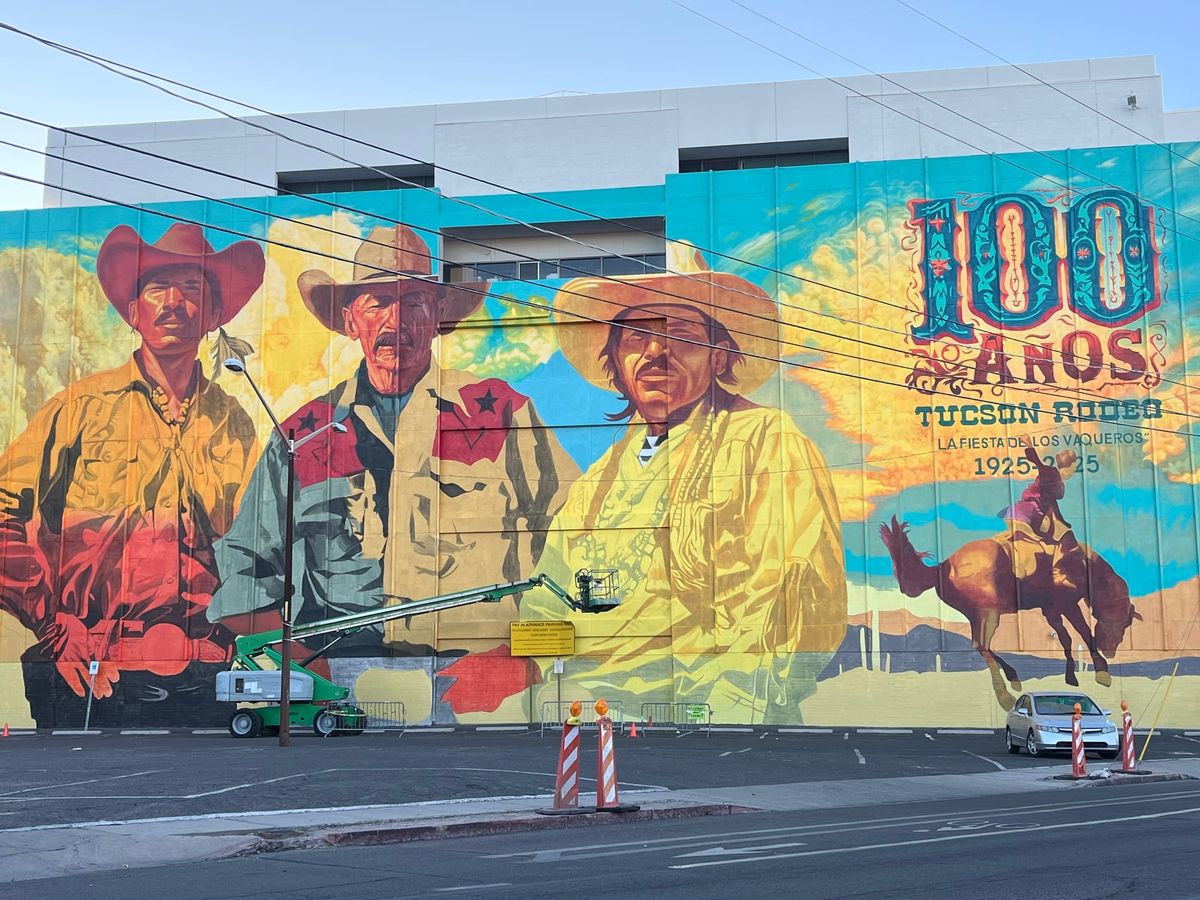
Murals cover Tucson's alleyways, storefronts and downtown walls, celebrated as symbols of culture, identity and community pride. But some local artists say the process behind the city's publicly funded mural commissions lacks transparency and favors a rotating group of insiders over emerging voices.
At the center of those concerns is the Arts Foundation for Tucson and Southern Arizona, a local arts agency and nonprofit that manages the public art process for the City of Tucson, administering grants, artist opportunities and mural commissions on behalf of its government partners.
The Arts Foundation's oversight applies only to murals on public property owned by the city or county, not to work commissioned by private businesses or property owners.
"All murals and public art that are placed on public property that's owned by the City of Tucson have to follow specific policies that are outlined in the city's public art administrative directives," said Arts Foundation CEO Adriana Gallego.
Artists apply through open calls and are reviewed by rotating panels of community members, arts professionals and project stakeholders. Members of the public can track open calls and find current project updates on the Arts Foundation's website.
"No two panels are alike," Gallego said. "There's always a new panel that's convened with unique stakeholders for every single new public art project."
Panelists review applications using published criteria and participate in public meetings before making recommendations to the city for final approval.
"The panel selects the arts for each project and gives approval of the artist's design," she said.
Not everyone sees it that way.
Self-taught muralist Abel "Pato" Aguilar, 41, said he's spent years trying to navigate the city's public art system with little success.
Aguilar is an award-winning professional artist for the past 14 years, participating in solo and group shows.
"One of my paintings is part of the collection in New Mexico of the actual state," Aguilar said.
Despite years of applying, Aguilar said he has secured just one commission through the Arts Foundation since 2019.
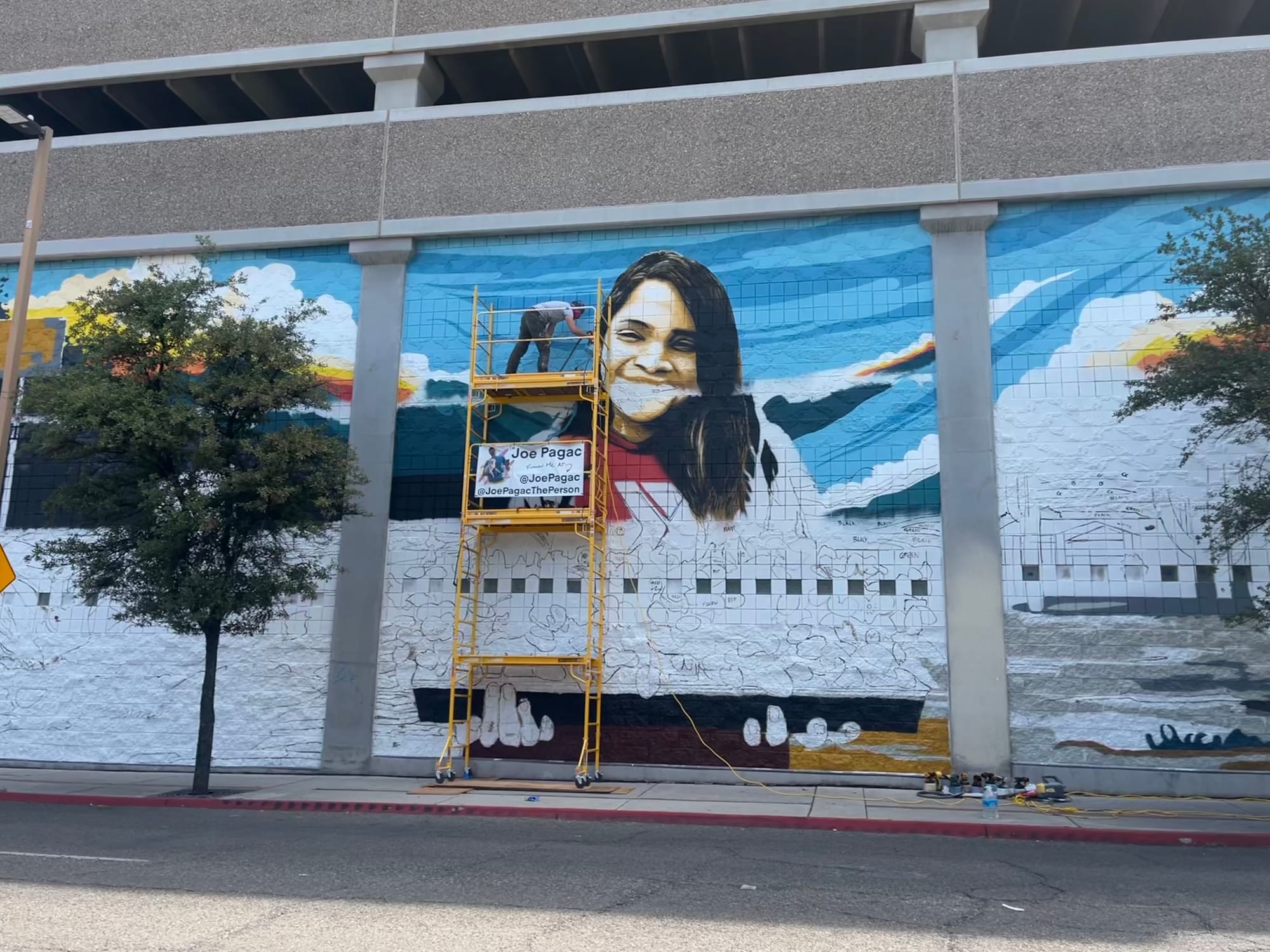
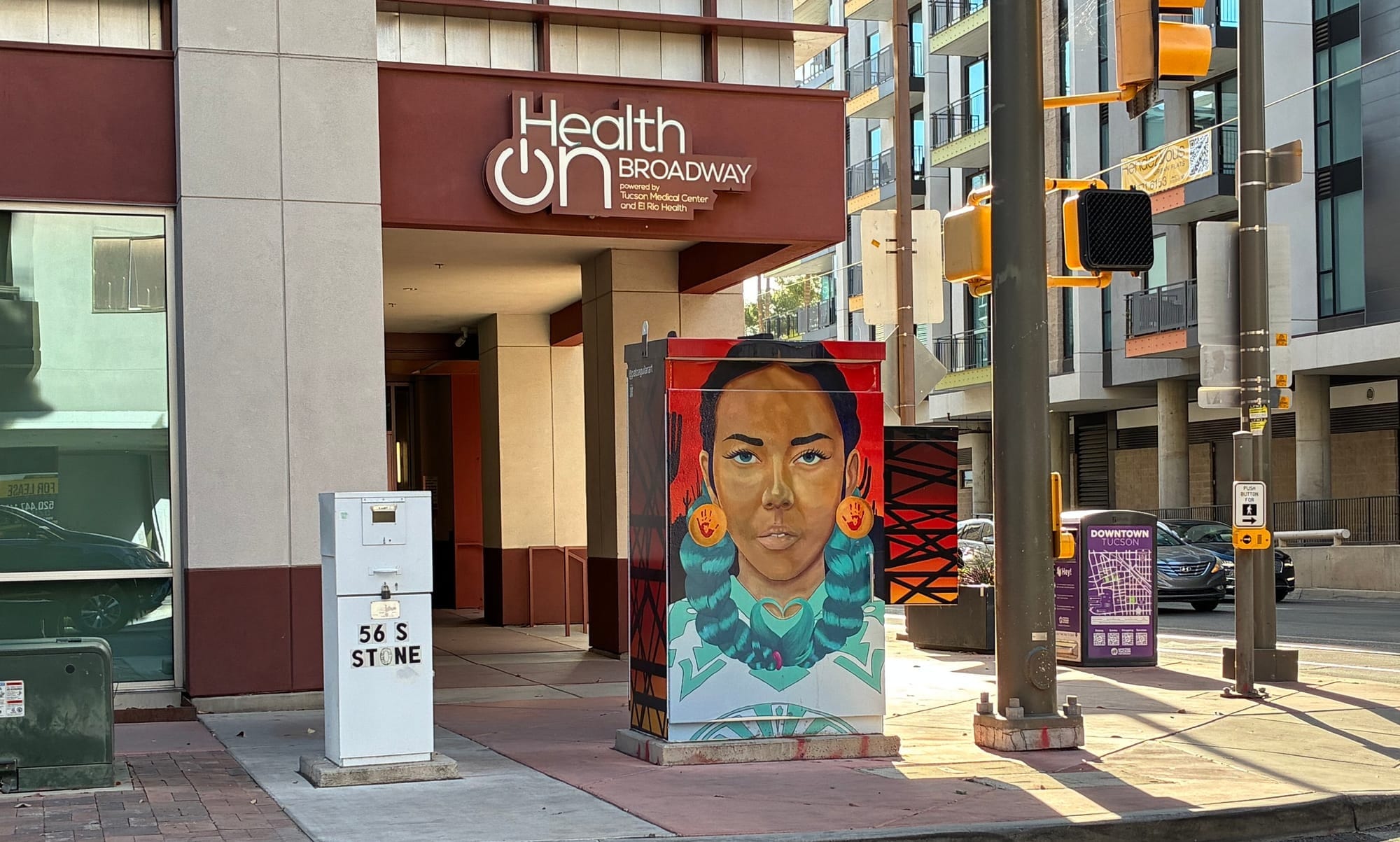
"I have only gotten ... the electrical boxes," he said, referring to the vinyl murals on utility and electric boxes along Congress Street and Broadway Boulevard in downtown Tucson.
"Red Sunset," located on the southwest corner of West Broadway Boulevard and South Stone Avenue, depicts a young Indigenous woman with teal braids and earrings bearing red handprints, a symbol associated with the Missing and Murdered Indigenous Women movement, set against a red and black geometric background.
Aguilar, who identifies as a non-tribal Tohono O'odham artist, said much of his work reflects his background.
"My work is super-focused on Indigenous community and amplifying Indigenous voices," he said. "I have been wanting to bring more representation into public artwork."
Aguilar said he believes work centered on social issues and Indigenous identity is sometimes passed over in favor of more broadly appealing murals. His concerns extend beyond artistic preference.
A second Indigenous artist who spoke with Tucson Spotlight echoed that view, saying they believe the selection process favors murals they described as "safe" or commercially appealing over work rooted in community and cultural identity.
The artist, who asked not to be named because of concerns about professional retaliation, said murals that only focus on generic desert imagery fail to reflect the full complexity of Tucson's culture and history. The artist said they eventually stopped applying for some public art opportunities altogether.
"I don't feel like writing these huge essays and filling out these crazy applications just to not get chosen," the artist said.
Aguilar said he has requested public records related to mural contracts, artist payments and scoring sheets tied to publicly funded art projects over the years, but has often been met with delays or incomplete information.
"I went to procurement, I went to housing, I went to City Hall, I went to all sorts of people to request these public records for the contracts," Aguilar said.
The Arts Foundation, as a private nonprofit organization, is not subject to Arizona public records law, but Gallego said all artists who request panel comments are provided feedback directly through the Arts Foundation.
"The panel comments are the most constructive feedback because it really helps provide a human voice and connect the artist to the thinking and evaluation behind the panel," Gallego said.
City of Tucson Public Information Officer Andy Squire said in an email that the city only maintains its own records, which remain subject to public records law. Records maintained independently by the Arts Foundation are governed separately.
"The City is aware of concerns regarding access to records," Squire wrote, adding that the city maintains oversight through its contract with the Arts Foundation and through public review processes tied to taxpayer-funded projects. "Public art opportunities and review meetings are publicly noticed, open to the public, and include opportunities for comment through Call to the Audience."
Aguilar provided years of emails, scoring sheets and correspondence with city staff and arts administrators that he says tell a different story.
He also questions how much weight scores actually carry. A scoring sheet he obtained showed that the artist who received the highest panel score did not get the commission, with another artist who scored lower ultimately selected for the project.
Gallego said scoring sheets are only one component of the selection process and that panel deliberation also plays a role in final decisions.
"It's really about having the qualitative and the quantitative information available so that there can be a holistic decision made by the panel," she said.
The anonymous artist who reviewed the scoring sheets questioned whether panelists had the expertise to evaluate mural proposals, saying the notes suggested a lack of understanding of the art form. The artist added that some muralists have discussed collaborating under a different name to avoid what they see as bias in the selection process.
Aguilar shared that frustration, saying his experience has left him fearful of retaliation.
"I feel like I lost out on all sorts of opportunities because I have been canceled by them," he said.
Aguilar said his concerns have largely gone unaddressed despite years of effort to draw attention to them, leaving him frustrated and questioning whether anyone is listening.
"When I tell people my story it really sounds like I'm this delusional lunatic," he said. "When I have (all of) this and nothing changes, I don't understand."
Aguilar said he has struggled to get traction with city officials and has been told the Arts Foundation operates independently and outside the council's authority. He disagrees, saying elected officials have an obligation to engage with constituent concerns regardless.
"They are representing our voices," he said. "That is why they have these meetings — to have dialogue."
Gallego pushed back on the broader characterization of the organization, saying criticism and differing perspectives are part of working in public service and that the Arts Foundation has worked to expand opportunities for emerging artists.
"I'm open to constructive feedback and I'm grateful to hear from our constituents," Gallego said, pointing to initiatives including entry-level grants, artists directories, public-private mural collaborations and promotional campaigns aimed at increasing visibility for local artists. "Our programs and services are built by artists, for artists and culture workers. It's all in direct response to the expressed needs of our diverse communities."
Squire echoed that, saying the city's public art framework is designed to promote transparency and equitable participation through open calls, accessible meetings and outreach to a broad range of local artists.
Concerns about access and equity in publicly funded art are not unique to Tucson. Artists and advocates across the country have increasingly questioned whether arts institutions reflect the communities they serve.
Aguilar said the stakes are higher in Tucson because much of the city's public art is funded through taxpayer dollars.
Tucson funds public art primarily through its "1% for Art" program, a mandate that allocates 1% of eligible City and Pima County Capital Improvement Program construction budgets over $100,000 or $250,000 to public art in the vicinity of the construction.
Aguilar said he recently met with someone from the city's cultural affairs department and hopes to see more opportunities for a broader range of local artists
"I have been to other places that are considered artsy and you see more diversity in their murals. You see 10 to 20 murals and all of them are from different artists," he said. "My goal is to get the city to help us sit down and have a dialogue about this."
The artist who asked to remain anonymous said they want to see more transparency, limits on repeat commissions and broader outreach to emerging artists.
"The Arts Foundation is only a middleman," the artist said. "They are not who is providing the funding, but they are in charge of deciding how the funding gets spent."
McKenna Manzo is a graduate student at the University of Arizona and Tucson Spotlight intern. Contact her at mckennamanzo@arizona.edu.
Tucson Spotlight is a community-based newsroom that provides paid opportunities for students and rising journalists in Southern Arizona. Please consider supporting our work with a tax-deductible donation.