True Concord musicians push for union recognition
Musicians with Tucson’s True Concord Voices and Orchestra renewed calls for union recognition, citing concerns over pay, job security and working conditions.
Musicians with Tucson’s True Concord Voices and Orchestra are renewing calls for union recognition, arguing that a collective voice is necessary to secure fair pay, job protections and a say in their working conditions after years of stalled organizing efforts.
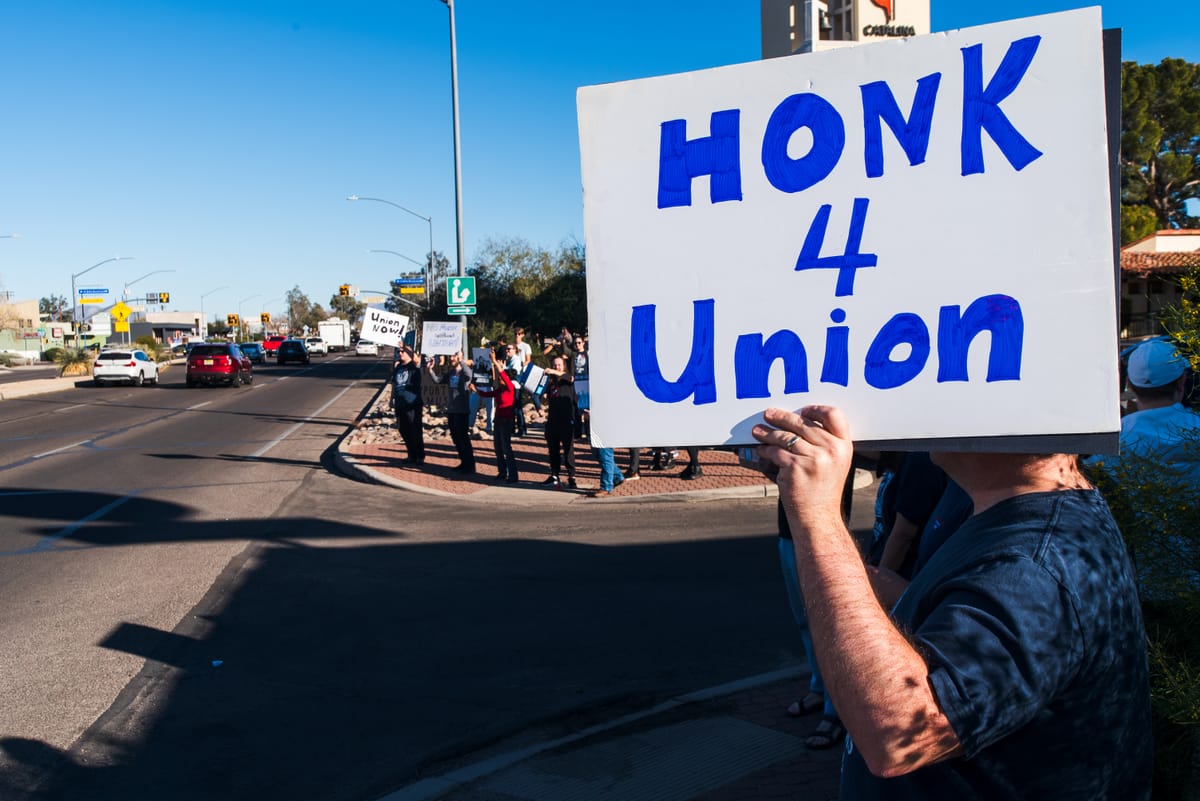
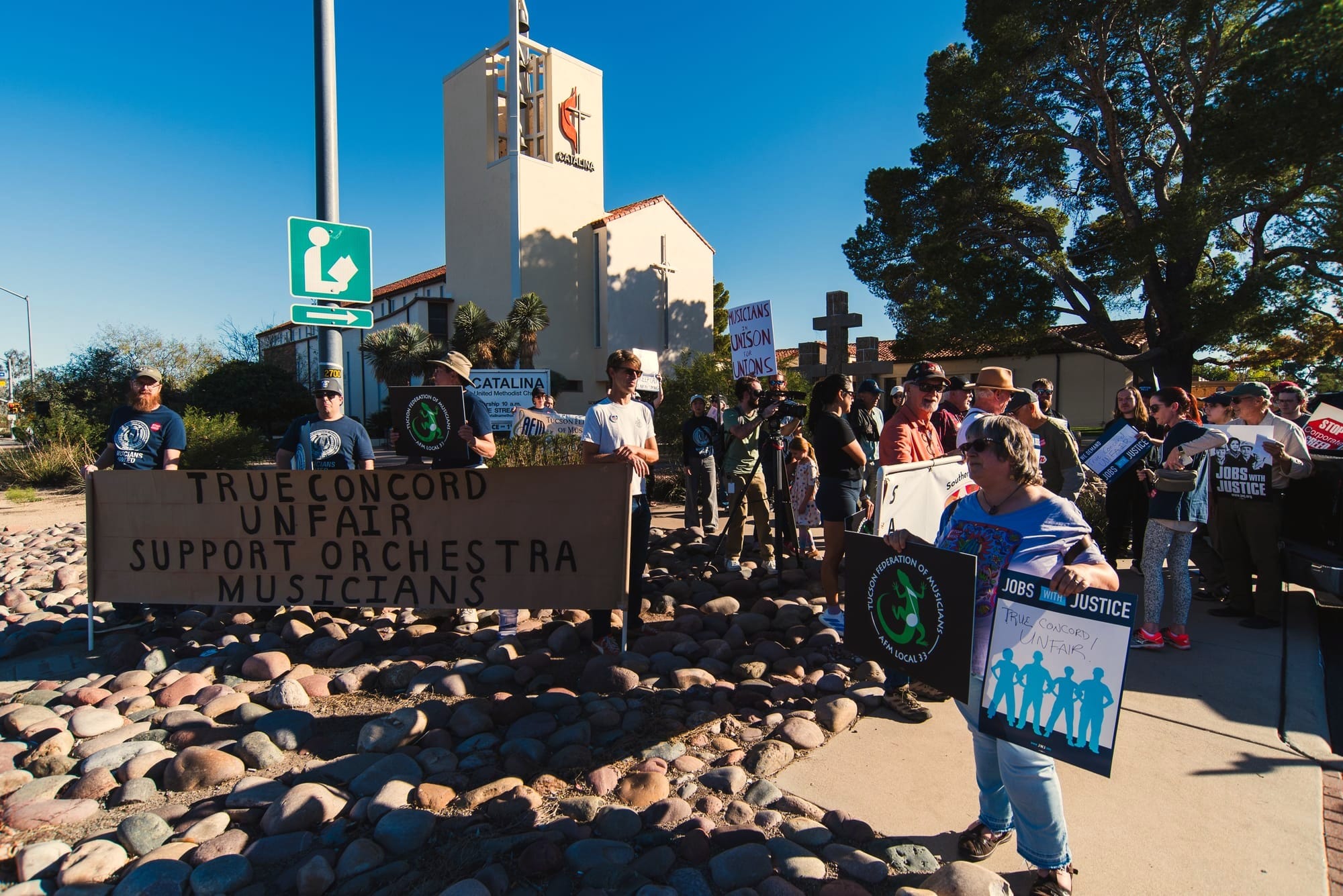
The protest took place Jan. 17 outside Catalina United Methodist Church, where the group was scheduled to perform, drawing musicians, supporters and representatives from other labor groups to the sidewalk.
Demonstrators held signs, chanted and addressed issues they say remain unresolved without union recognition, including job security, wages, working conditions and communication with management. Organizers said the demonstration reflects a broader, yearslong effort by musicians to gain formal recognition and a seat at the bargaining table.
True Concord has received two Grammy nominations over its 29-year history. The ensemble was founded by music director Eric Holton after he identified a lack of professional chamber choir and orchestra offerings in Tucson and began the group with a small cohort of graduate students.
Alana Wiesing, president of the Tucson Federation of Musicians, said organizing efforts have taken place on and off for nearly a decade, with the current campaign ongoing for almost two years.
“I think it's just a point where musicians are tired of how long it's been going on and have an attitude of enough is enough,” Wiesing said. “Let's get a seat at the table and let's get a collective bargaining agreement in place and let's finally make this happen for the musicians who deserve that seat at the table and voice in their working conditions.”
Wiesing said misconceptions about musician unions often overlook who the union actually represents.
“We’re asking for recognition of our collective voice at the table to be able to communicate and bargain in our desired working conditions with management, because right now they get to set all of the terms for our pay, our concerts, even the clothes that we wear to perform in and how recordings are operated,” she said. “There are a lot of facets of our working conditions that musicians have a better perspective for what to ask for and what they need, because they're the ones that are doing the job.”
Despite being advertised on social media, many concertgoers were unaware of the protest and the group’s desire to unionize.
Attendee Jessica Morrison, who has worked for both union and nonunion orchestras, said she was encouraged by the demonstration.
“I'm actually a classical musician and professional classical musician, so I am part of a union, so to me this is very welcoming,” she said. “I think that everybody should have the right to be represented, feel like they are protected and get all the rights that are afforded to them underneath a union.”
While she supports unionizing efforts, Morrison said she understands why some orchestras may choose not to unionize.
“Depending on the orchestra itself, I can see benefits either way. For me, being able to know that I have a pension and insurance and again protections as a musician as a person, I've always appreciated it,” she said. “But I've also worked for smaller non-unionized orchestras and I know they can't afford to hire a union musician. So I can see it goes both ways, especially in today's climate and culture.”
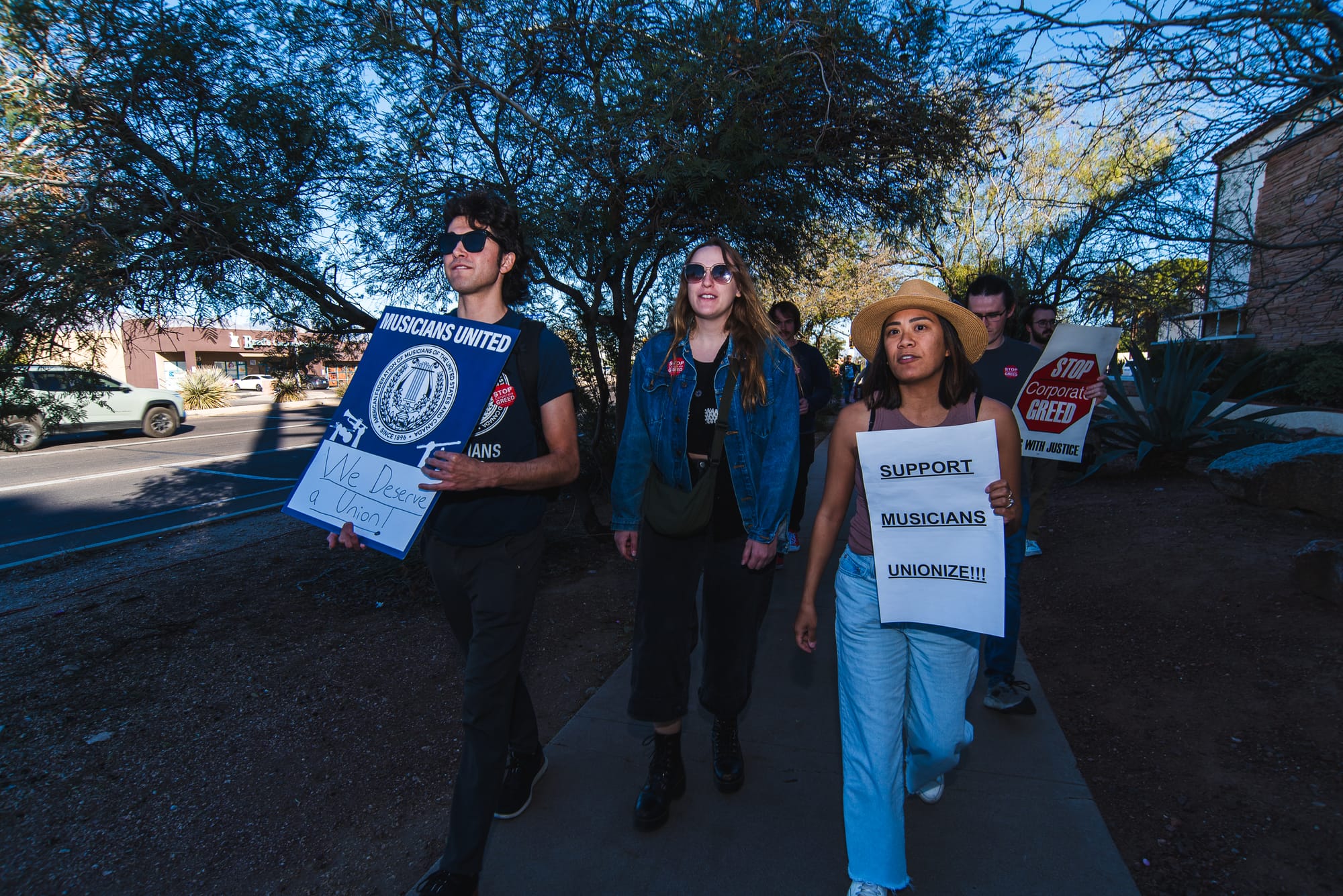
Representatives from union-based groups including Jobs with Justice, the Pima Area Labor Federation, IATSE 415 and the Pima County Democrats were also present in support.
“Management has claimed to work with us and wants to work with us collaboratively. It's funny because we're asking for the same thing,” Wiesing said. “We want a voice at the table and we have not gotten that, because they're in a position right now where they unilaterally set all of those terms. We want the respect that we deserve working with the organization.”
Dairo Brignoli, a True Concord musician, said he spent the protest speaking with attendees about why union recognition matters.
“I have been here and trying to engage with the audience, trying to explain what we are doing and why it's important that this organization recognize the union of musicians,” he said.
Brignoli said most people were supportive of their efforts.
“They have political ideas about what a union and ties are, but general people are willing to listen and they're generally supportive of the fact that they want the best possible music so they want the musicians to be paid appropriately,” he said.
Marlon Bedoy is a Pima Community College student and Tucson Spotlight intern. Contact him at marl.star.nn@gmail.com.
Tucson Spotlight is a community-based newsroom that provides paid opportunities for students and rising journalists in Southern Arizona. Please consider supporting our work with a tax-deductible donation.