"The Molino" author Melani Martinez returns to Tucson book fest
Tucson native Melani "Mele" Martinez returns to the Tucson Festival of Books to discuss "The Molino," a memoir about her family's downtown restaurant and the forces that shaped — and ultimately ended — it.
Visit us from 10 a.m. to 4 p.m. for a free photo strip featuring a custom local artist backdrop and festival branding—the perfect souvenir! You can also grab limited-edition bookmarks, pick up or turn in your scavenger hunt cards for a chance to win our bookish raffle
Ever since her youth, Melani "Mele" Martinez has always been writing.
At 11 or 12, she entered a children's essay contest about the Holocaust and felt recognized as a writer for the first time.
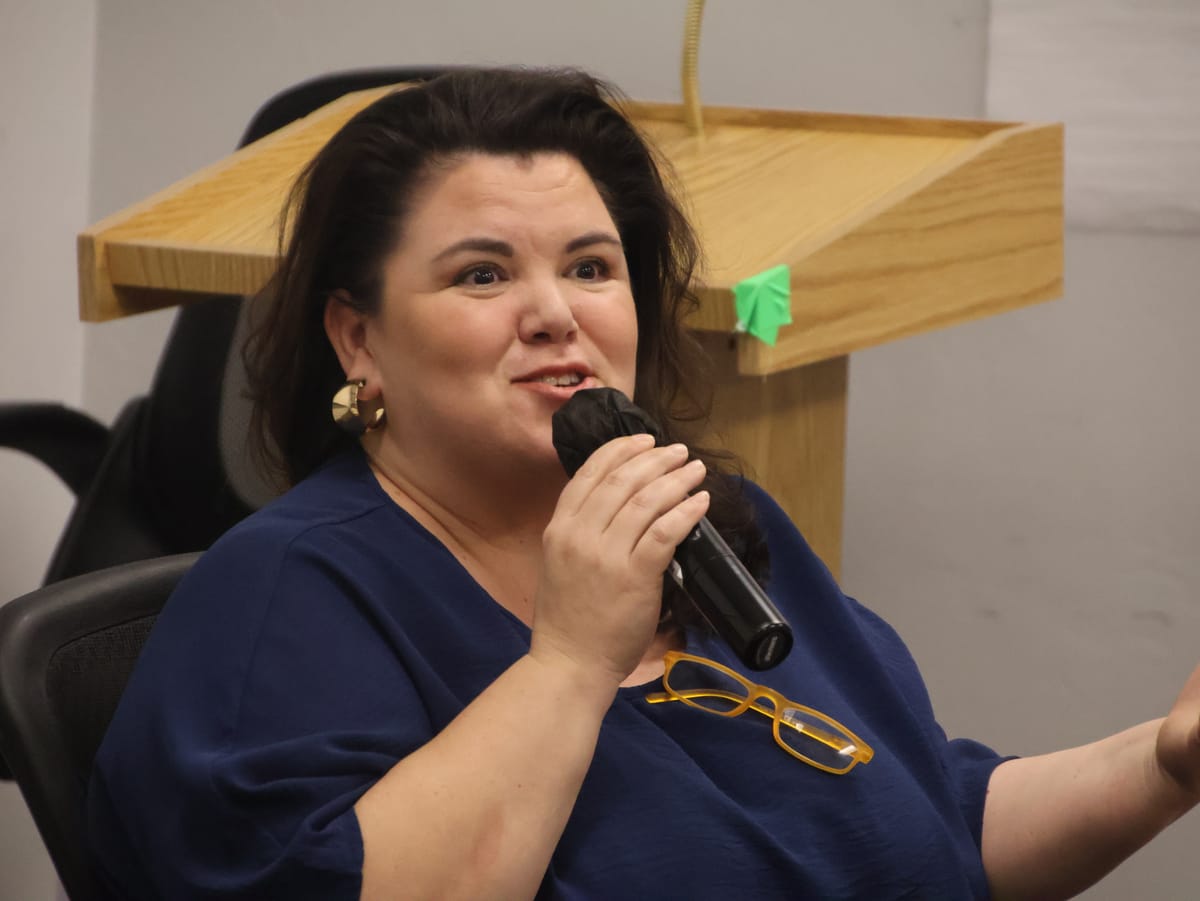
Now Martinez, an associate professor of practice in the University of Arizona's Writing Program, is being recognized on a bigger stage. Her debut memoir, "The Molino," has found a wide readership since its publication in September 2024, and she returns to the Tucson Festival of Books this year for the second consecutive year to talk about it.
But her path there wasn't linear.
"When I got to my undergrad at the U of A, I was a marketing major first, or something like that," Martinez said. "(It) took, maybe a year and a half, a few semesters before I realized I'm not going to be able to finish unless I do something that is really motivational to me, and that was going to be creative writing."
As a first-generation college student, Martinez's parents weren't thrilled with her decision to study creative writing, but she channeled that close relationship with her family into her work, unknowingly laying the groundwork for "The Molino," a memoir about heritage, belonging and loss.
"That was the first iteration of it. It was about three years later, I submitted it for the Fourth Genre prize, a creative nonfiction journal," Martinez said.
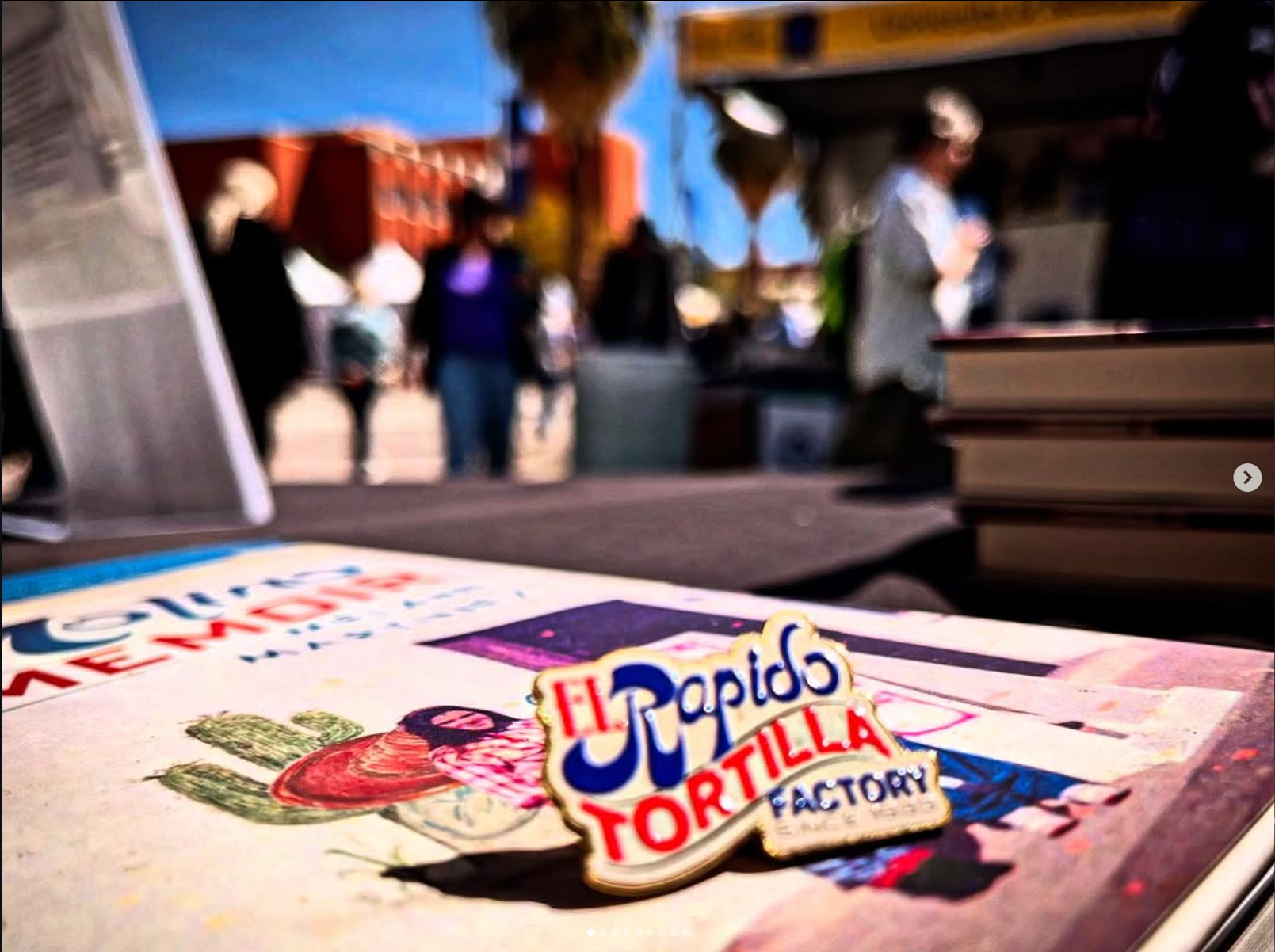
Named after the corn grinder that was the cornerstone of the family business, "The Molino" follows El Rapido, a family restaurant once located at North Meyer Avenue and West Washington Street in downtown Tucson.
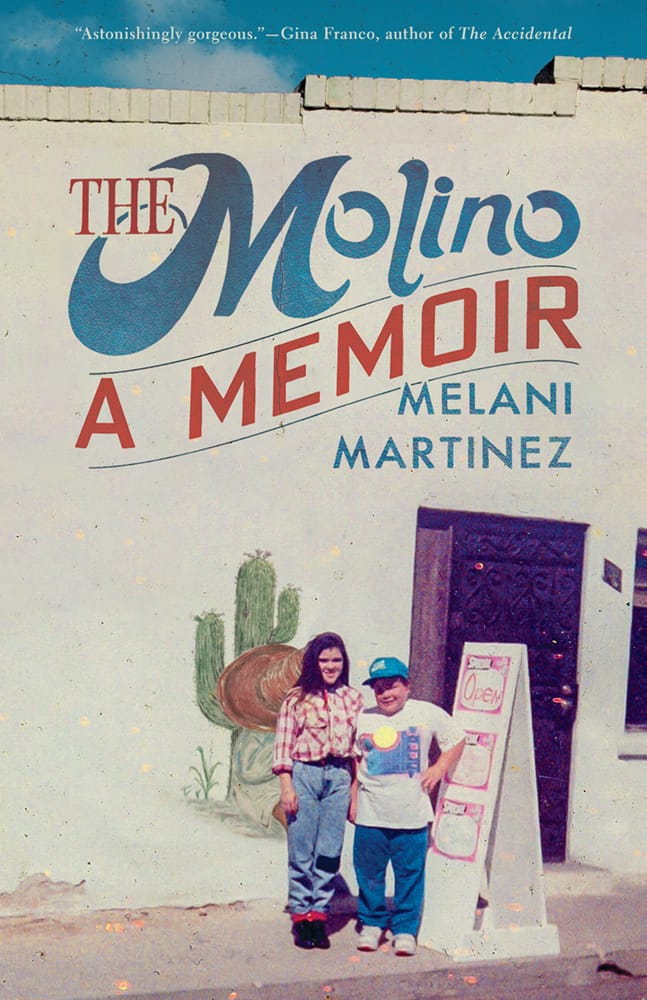
Aurelio Perez, Martinez's great-grandfather, opened the business in 1933, serving tamales and burritos to locals and visitors for nearly 70 years, during which time it was passed down to her father.
Blending memories with pensamientos, or thoughts, Martinez shifts perspective throughout the book, recounting her childhood working in the restaurant and her complicated relationship with the family business as she came of age in the 1980s and 1990s.
She balances humor with sincerity as she explores gentrification's impact on her family's business and her own path toward self-discovery.
But it would be years before Martinez would publish her family's memoir, while she focused on one of her other passions: flamenco.
"I was living in Albuquerque as part of Yjastros, the American Flamenco Repertory Company. I was there for about six years, fell in love, got married with another dancer, came back to Tucson in 2006 and really didn't get started writing again a lot," Martinez said.
Martinez went back to the UA to pursue her master's in creative nonfiction, with "The Molino" manuscript serving as her thesis.
"I did spend some time on it during that period, but I was working full-time, (a) working artist, mom (and) wife trying to make ends meet," she said.
It took Martinez a decade to return to her family's story.
"My brain was thinking about the book along the way. I don't really feel like I was ever procrastinating. I feel like I just didn't have the headspace to do it," Martinez said. "I think part of me needed to mature before I could really write the way I wanted it to be written. That jump started me into, 'No, I really have to commit time to this,' and it was really hard to do at that time."
A grant gave her dedicated time to work on the book, and other small opportunities for funding, publishing and networking solidified her aspiration to finish it.
"It was something that I needed to feel at least some form of connection … the feeling that I was part of a writing community, for sure, made a difference," Martinez said.
In her memoir, Martinez's younger self expresses dissatisfaction with life in Tucson, eventually coming around during the upheaval of her family's business — and writing it brought her even closer to her roots.
"There's no way to write a book that takes place in Tucson without paying really close attention to all the things that, maybe as a kid you just glossed over or you just didn't have an appreciation for," Martinez said. "As a writer, thinking about how I was going to have a setting for this story, I had to go back to some of those places."
As her confidence grew and the memoir took shape, she took an unconventional approach to publishing.
"I didn't get an agent, I didn't query a bunch of different people, I didn't send my manuscript everywhere. I didn't enter any of that," Martinez said. "I was unsure about working with people that I didn't have some personal connection with."
One day, she sent a cold email to the editor of UA Press, the University of Arizona's publishing department.
(Editor in Chief) "Kristen Buckles wrote back to me (and) was open to at least saying hi," she said. "My manuscript was not really ready at that time. Maybe in my mind, I was really just trying to plant a seed for later."
As the years passed, Martinez would occasionally reply to the email thread, updating Buckles on the status of her book.
The editing process was unfamiliar, Martinez said, but working with editor Elizabeth Wilder turned out to be more personal and rewarding than she had expected.
"I am on the Mele timeline, that's for sure," Martinez said with a laugh.
"The Molino" was published in September 2024 and recognized as one of the Southwest Books of the Year.
Martinez says there was no single moment of excitement, but seeing her parents hold the book for the first time moved her deeply.
"I took pictures of them holding the book, and there was something about showing them that, in some ways, translates to showing my grandparents, too," Martinez said. "I had done this story in a way to try and do my very best to honor them and to recognize them as people who deserve to be in stories that are shared."
She said honoring her family was also part of a broader effort to make space for stories like hers in Tucson's literary landscape.
"There's a lot of stories about Tucson that have gone into publishing, and very few of them (come from) authors of color. There's just very few of them that capture the lives of people like my parents and my grandparents, and they represent a pretty important population here in the city," Martinez said. "I know that that's true of many individuals who have been alongside them, their stories definitely matter to me. It's important that the rest of maybe the publishing world, especially in Southern Arizona, sees them, and sees them as the ones who have shaped this place, not the only ones, but certainly part of that story of who's shaped that place."
Workshop: Family and Food
Local writer Melani Martinez, author of "The Molino," will lead a workshop on telling family food stories. She’ll explore why capturing these moments matter, why they are important to document, and how to engage with relatives.
Where: Integrated Learning Center Room 125AB
When: Sat, Mar 14, 2:30 - 3:25 p.m.
Viva Tucson: Tucsonense History in Focus
¡Viva Tucson! In this conversation with local legends and multigenerational Tucsonans Lydia Otero and Melani Martinez, we will learn about the history of two iconic Tucson locations: La Casa Cordova, a home built in the 1840s, and El Molino: one of Tucson’s first tamal and tortilla factories.
Where: Nuestras Raíces Stage
When: Sun, Mar 15, 4 - 4:55 p.m.
Topacio “Topaz” Servellon is a reporter with Tucson Spotlight. Contact them at topacioserve@gmail.com.
Tucson Spotlight is a community-based newsroom that provides paid opportunities for students and rising journalists in Southern Arizona. Please consider supporting our work with a tax-deductible donation.