Ride and Drive brings military history to life in Tucson
The Tucson Military Vehicle Museum’s Ride and Drive program lets visitors ride in and drive restored military vehicles on a one-mile dirt track. The Tucson Military Vehicle Museum’s Ride and Drive program lets visitors ride in and drive restored military vehicles on a one-mile dirt track.
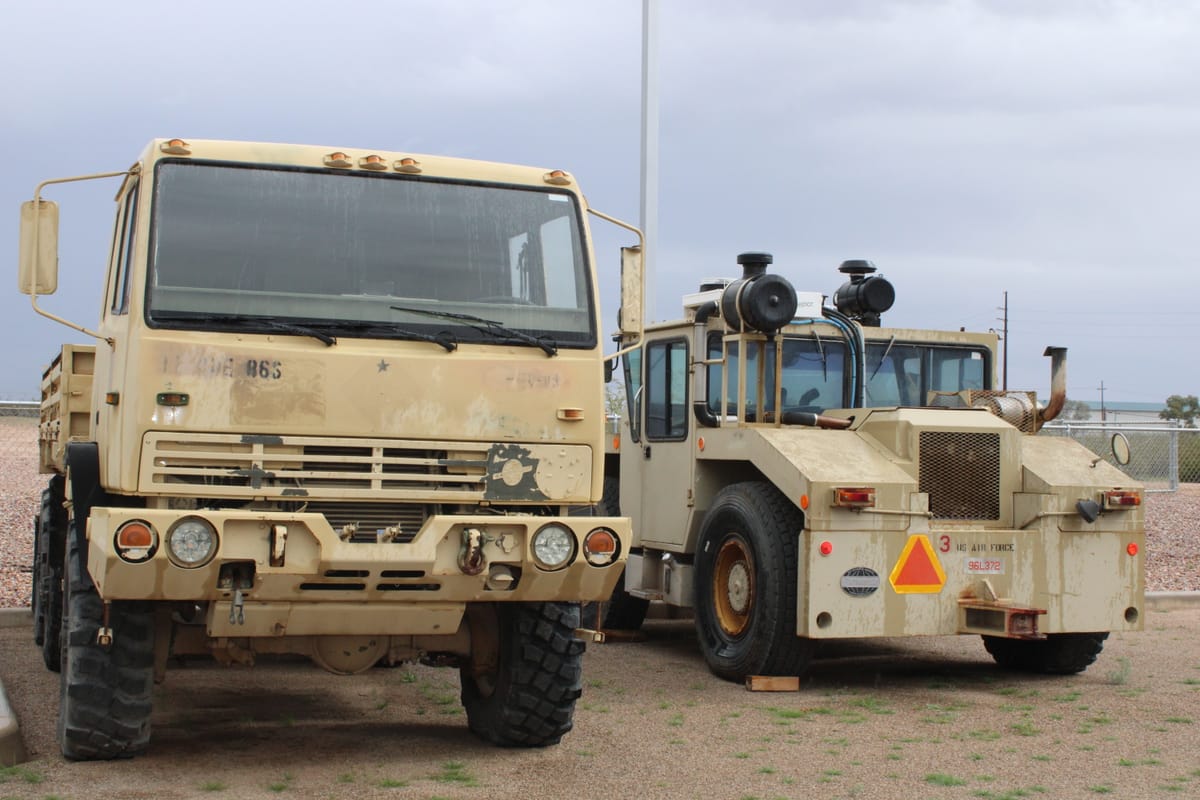
At the Tucson Military Vehicle Museum, history doesn’t sit quietly behind exhibit barriers; it rumbles, kicks up dust, and invites visitors along for the ride.
The museum has launched a new Ride and Drive program that lets visitors climb aboard and even get behind the wheel of restored military and emergency vehicles on a one-mile dirt track in southeast Tucson.
The program began in November and has quickly become one of the museum’s most popular offerings.
Planning for the program began long before its official debut, following the donation of a significant vehicle collection belonging to Count Ferdinand von Galen, former chairman of the museum’s board.
Von Galen’s family donated 21 restored U.S. and British World War II vehicles in his memory, honoring his wish that the public be able to experience them up close.
“This was kind of the next chapter, the rest of the story,” said Sofia Miranda, the museum’s marketing and brand manager. “It had been a sparkle in leadership’s eye for years and now that it’s finally here, everyone is really proud of it.”
The Ride and Drive program is designed to complement the museum’s mission of preserving and interpreting military history with accuracy and care.
“There are a lot of professionals here who really care about historical accuracy,” Miranda said. “Just because someone tells a story doesn’t mean it’s something we’re going to teach as fact. Maintaining that authority as a historical institution is important and this program fits within those same standards.”
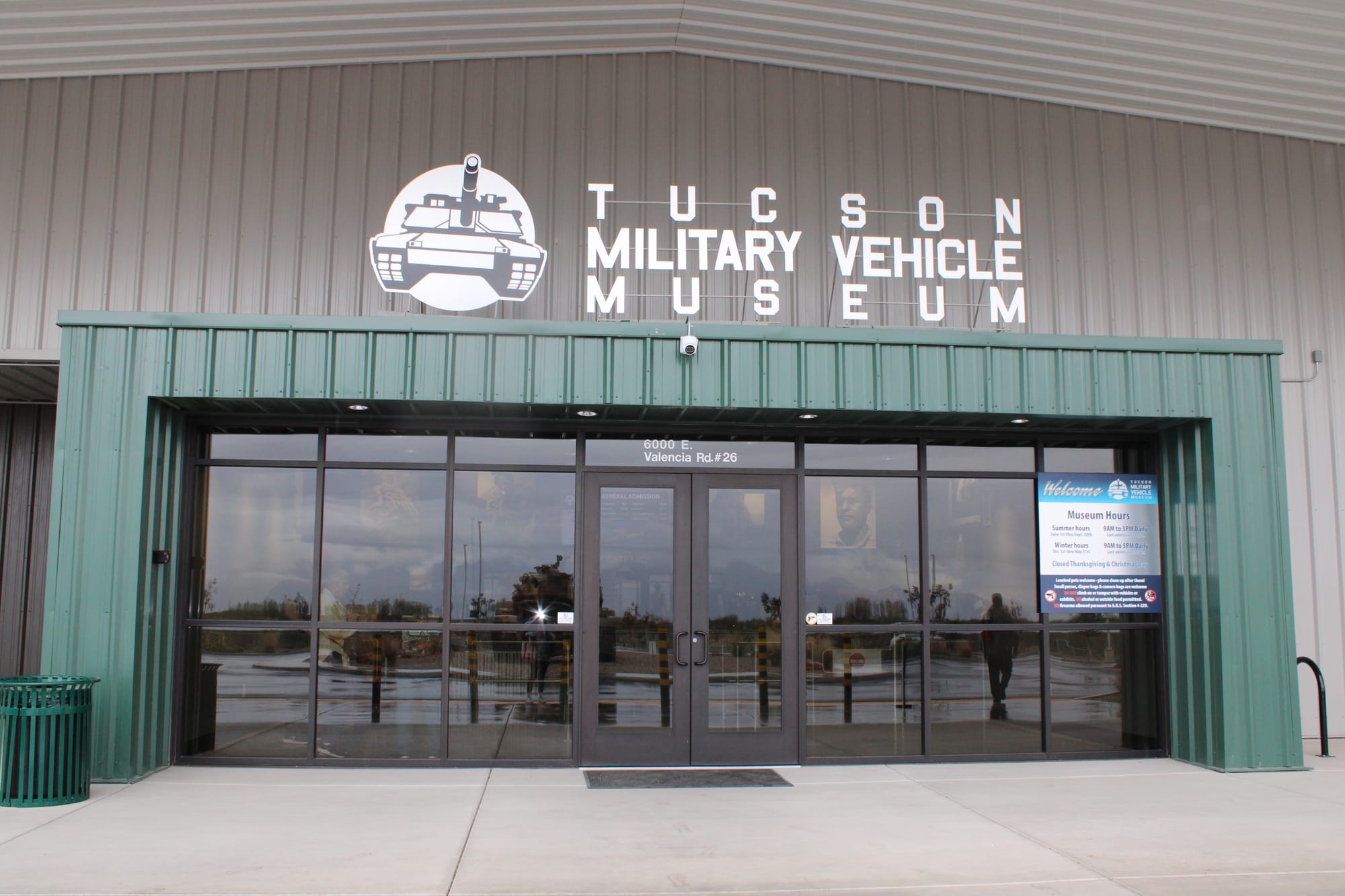
Visitors can choose between ride experiences, priced at $5, or drive experiences, priced at $50. General admission is not included with the experiences.
Ride options include the DUKW amphibious vehicle, a 2 1/2-ton “deuce-and-a-half” truck, and a HMMWV, more commonly known as a Humvee.
Riders travel in open-air vehicles along a continuous one-mile dirt track, surrounded by desert landscapes, cacti, mountain views and the occasional airplane flying overhead.
Visitors are encouraged to bring water, sunscreen, sunglasses and a hat.
Drive experiences are available to participants ages 18 and older with a valid driver’s license.
Guests can choose between a Humvee, Land Rover or fire truck, with each 30-minute session consisting of a 10-minute instructional period followed by about 20 minutes of driving time.
Unlike typical fixed exhibits, the ride and drive experiences engage all five senses, making history more memorable and accessible, especially for younger visitors.
“The sights, the sounds, the smells, those are all part of learning,” Miranda said. “It’s not just entertainment. Bringing these vehicles to life helps create inspiration and understanding in a way a static exhibit just can’t.”
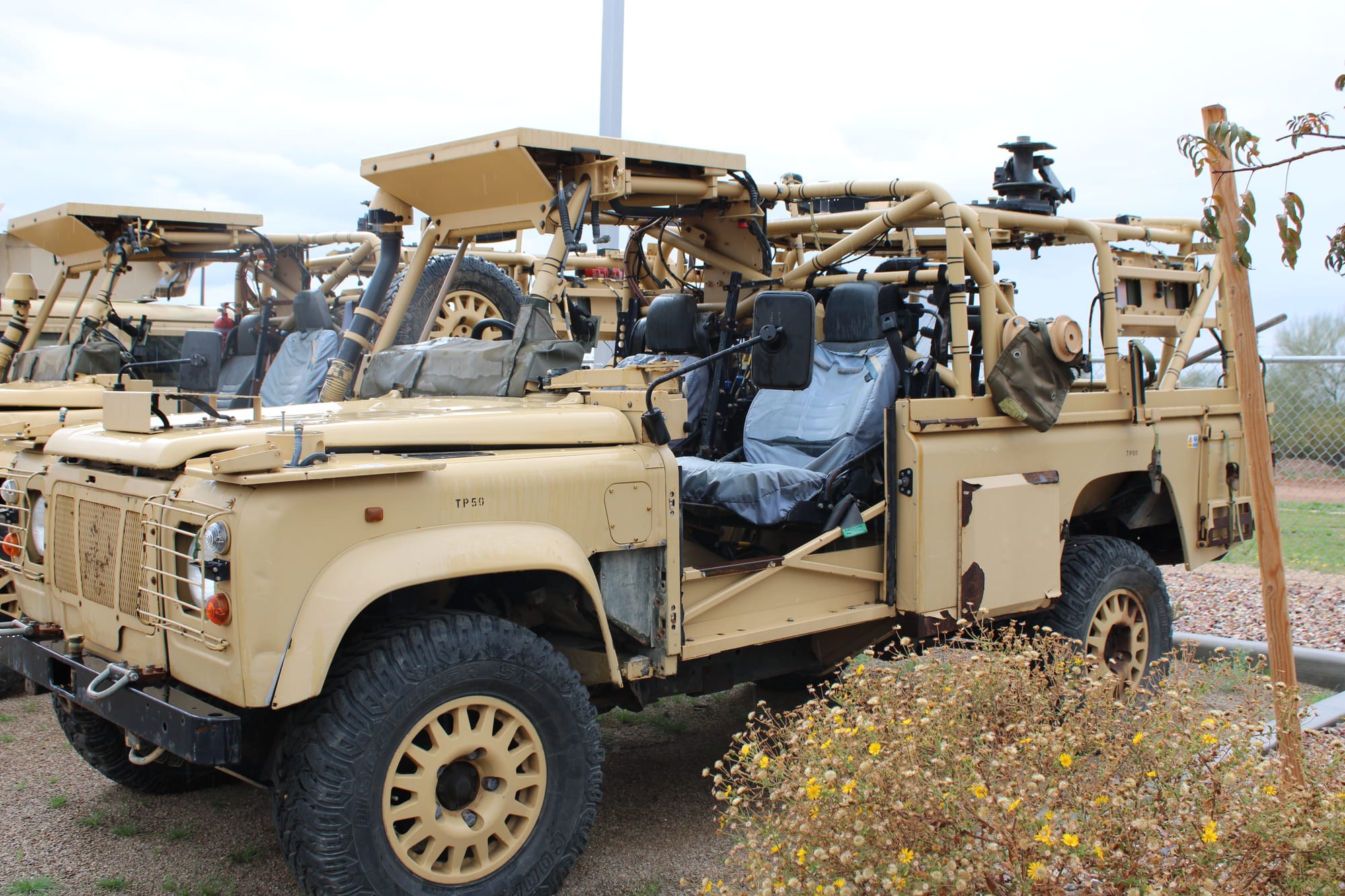
Public response has been overwhelmingly positive, with sessions frequently selling out.
Veterans have connected deeply with the experience, often recognizing vehicles they once operated during their service.
“Some veterans will say, ‘I drove that when I was in,’ and now it’s here in a museum,” she said. “It’s meaningful and it’s very respectful. Ground vehicles don’t always get the same attention as aviation, so this fills an important gap.”
In the Humvee, riders feel every bump of the dirt track as dust clings to the vehicle’s exterior. Both details are small but powerful reminders that these machines were built for real-world conditions, with even a short ride offering perspective on the millions of service members who have relied on vehicles like these across generations.
Looking ahead, the museum plans to expand the program thoughtfully, with additional vehicles, new track options and future infrastructure improvements, including the possible addition of British CVRT vehicles.
“We’re not in a rush,” Miranda said. “We want to do this right.”
For now, the Ride and Drive program offers visitors something rare: the chance to experience history not just by seeing it, but by feeling it, dust, noise and all.
McKenna Manzo is a graduate student at the University of Arizona and Tucson Spotlight intern. Contact her at mckennamanzo@arizona.edu.
Tucson Spotlight is a community-based newsroom that provides paid opportunities for students and rising journalists in Southern Arizona. Please consider supporting our work with a tax-deductible donation.