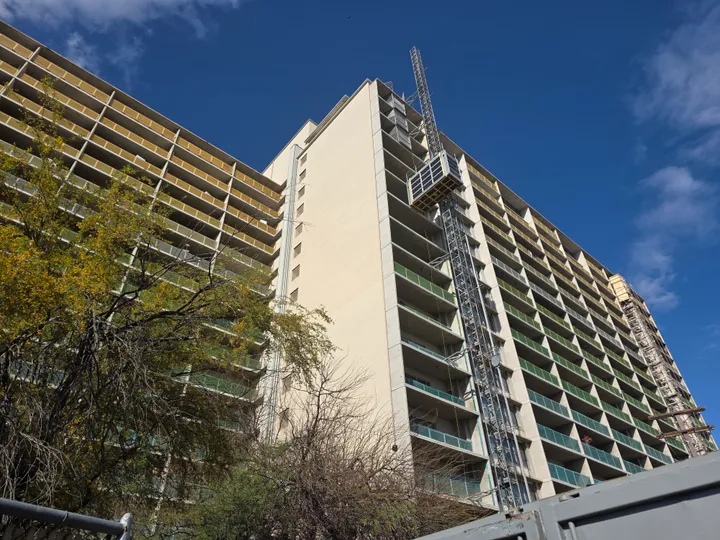
Project Blue secures Pima County approval in narrow board vote
Pima County supervisors narrowly approved a $3.6 billion agreement for Project Blue despite months of community backlash over water use, secrecy and public health concerns.
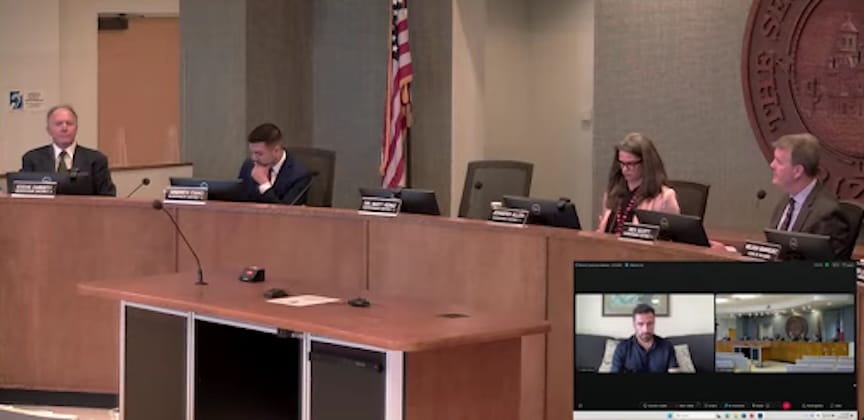
Pima County supervisors narrowly approved a binding agreement to advance the controversial Project Blue data center development Tuesday, pushing the $3.6 billion proposal forward despite months of community backlash over water use, secrecy surrounding its corporate end user and long-term public health risks.
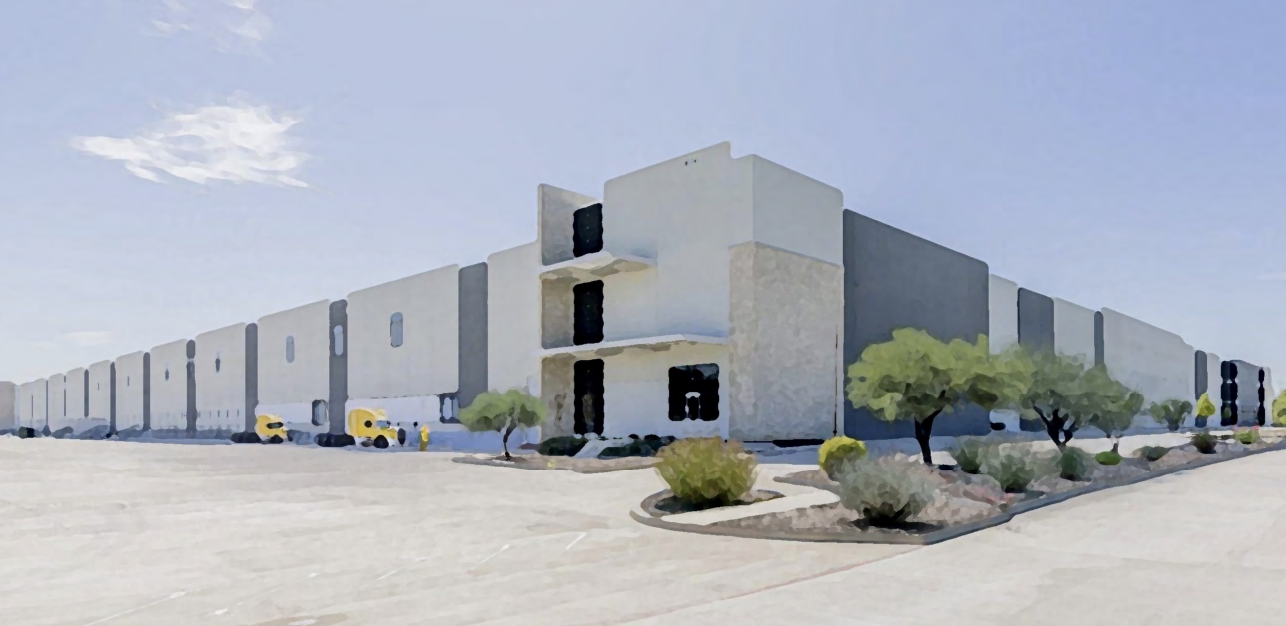
Developer Beale Infrastructure has promised to invest $15 million in the community, with $5 million allocated to STEM and trade school education and the remaining $10 million to be distributed during future phases of the project. Beale has also committed to using 100% renewable energy in the project’s construction and minimizing water consumption.
Despite these promises, many community members remain concerned about the lack of transparency, rising water and power costs, and the absence of information about the corporate end user. Amazon and Meta were previously identified as potential end users, but both have since backed out, leaving the question unresolved.
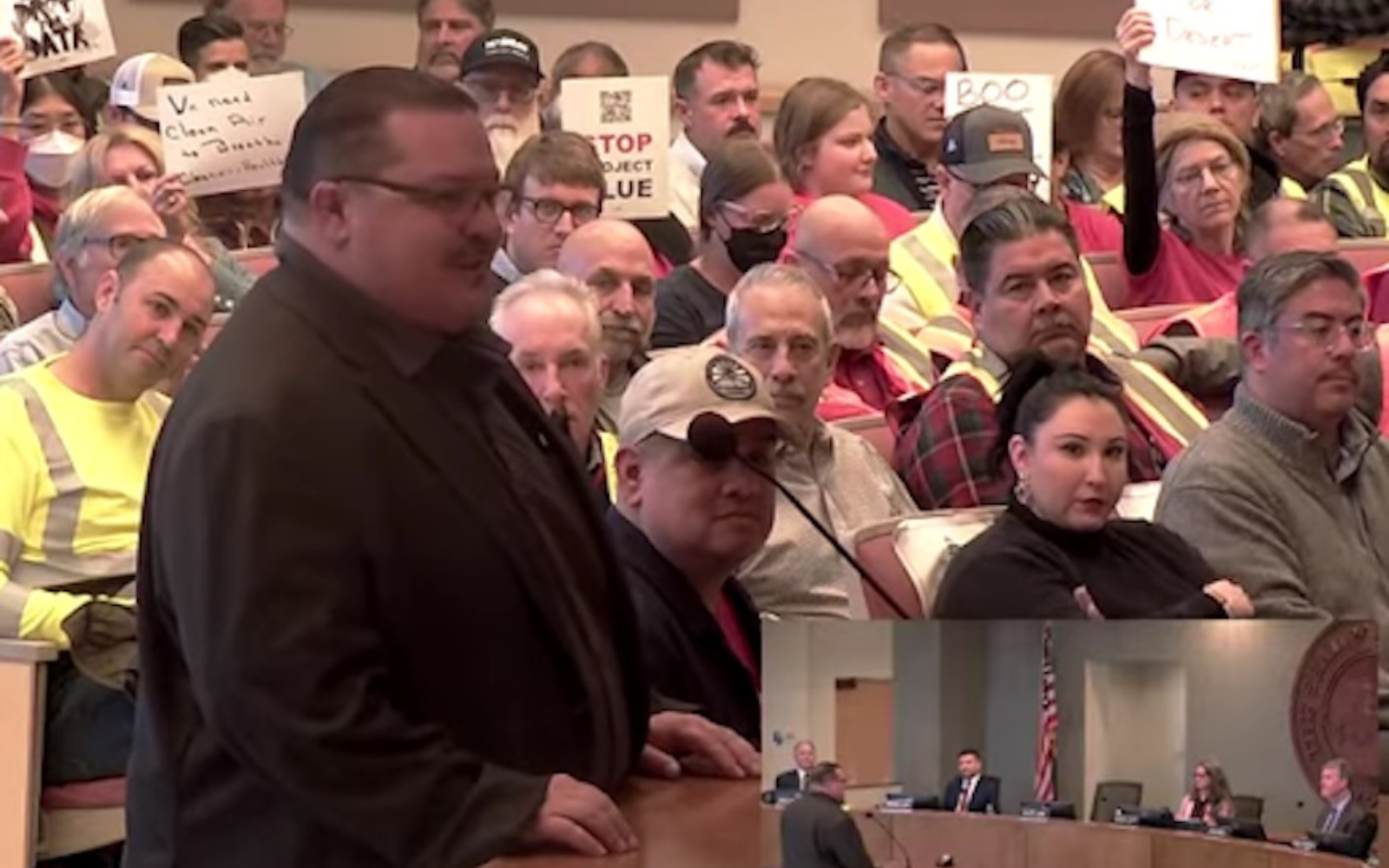
As in past meetings, many community members who spoke were unconvinced by Beale Infrastructure’s promises and opposed Project Blue on the grounds that it would burden the local water supply and increase energy rates.
Derek Espatis expressed frustration that elected officials around the country are ignoring pushback against data centers, saying these officials have been “wined and dined” by lobbyists.
Espatis criticized District 1 Supervisor and Board Chair Rex Scott, saying he cares “more for his ego than his community,” as well as District 2 Supervisor Matt Heinz for refusing to support a more binding contract that would require the company to honor its worker contracts.
“If this is government, then it's no different than the federal administration: centralized power, corporate favoritism and decisions imposed on the communities rather than made with them,” Espatis said. “Pima is moving in the terrorism of the federal assault upon our communities in favor of a few outsiders determined to with your help raise our comm community. You were elected to protect this county as hollowly acknowledged in your land acknowledgement. Not sell it off.”
Glenda Avalos of the No Desert Data Center Coalition reflected on six months of opposition to the project, saying the fight has “robbed” the community of peace and that the project was attempting to mislead them.
She also noted that the investments proposed by Beale Infrastructure would amount to “crumbs” compared with the money the company stands to earn, pointing out that the $15 million commitment is less than the $23.9 million the parent company, BlueHour Technology, paid each of its CEOs in 2024, an amount that has since increased to $47 million.
“There are people who are going to get paid because of this particular project, but we will all pay afterwards,” Avalos said. “We will pay with our future, the water, the quality of life. We all stand here before you wanting the same thing. We want the quality of life and we’re fighting for the next generation. This project is not going to give us that.”
Robert Royce said he has vocally opposed the project from the start and is concerned about how it will affect affordability in the region. While he said he sympathizes with the union members who support the project, he still believes its impacts would be negative for the community as a whole.
“We have to weigh the needs of the few against the needs of the many,” Royce said. “My needs are affordable electricity. I can’t afford to watch my electric rates double as I try to survive Tucson summers. I can’t afford to subsidize the enormous amount of water usage that’s going to drain our aquifers.”
In contrast, the project received support from several organized labor groups, who were optimistic about the potential job growth and the promised investments in trade school opportunities.
Mark Estus, a member of Tucson’s chapter of the International Brotherhood of Electrical Workers, urged supervisors to advance Project Blue, saying he believes the project will deliver numerous benefits to the county.
“I would like you to consider the economic development and prosperity that would take place in passing this project,” Estus said. “There’s millions of dollars that could be flooded into the economy in support of the trade schools. There could be a tremendous benefit to the community if you pass this forward.”
Albert Villal Pandel, a business representative of the International Association of Sheet Metal, Air, Rail and Transportation Workers, also expressed support for Project Blue, saying it would create high-paying jobs for area sheet metal workers and technicians and prevent them from seeking employment out of state.
“When workers are forced to travel for employment, it places a real strain on families and households,” Villal Pandel said. “Projects like Project Blue allow parents to be home at the end of the day to support their families, coach sports and remain active in their communities. This project supports the families and the stability that allows people to be at home right here in Tucson.”
Michael Vazquez, executive director of the Arizona Building and Construction Trades Council, called Project Blue a “historic labor agreement,” saying he believes it provides a great opportunity for high-paying jobs with benefits. Vazquez added that because the unions secured a project labor agreement, workers would be protected from wage theft.
“These are the types of jobs we want to attract to Pima County because they will not only create 3,000 plus jobs, but it will also offer any opportunity to change someone's life,” Vazquez said. “I say this because I see every day what a good-paying union job can do for an individual, their family and their community.”
The agreement passed on a 3-2 vote, with Scott, Heinz and District 4 Supervisor Steve Christy voting in favor.
District 5 Supervisor Andrés Cano opposed the project, saying he respects the concerns of the labor organizers who appeared at the meeting. He acknowledged the need for more high-paying jobs and expressed openness to expanding apprenticeship programs to support workers like them.
Cano thanked community organizers like the No Desert Data Center Coalition for raising awareness about the impact of big tech companies. He also noted the retreat from the “hundreds of millions of dollars” in public benefits that were promised when Tucson was still involved in negotiations, adding that the $10 million future commitment contains language that could allow it to be reduced or withdrawn.
“Throughout the United States, communities are warning us what happens when local governments approve massive data center deals without enforceable guardrails,” Cano said. “Harm to public health, strain on water and energy and residents losing their right to say yes or no. We cannot rush deals like this for short-term gains because the costs do not stay short term.”
Cano talked about the recent unveiling of a mural in South Tucson dedicated to residents who died as a result of water contamination, saying the community he grew up in knew the consequences of neglecting public health and that he did not want to make the same mistake with Project Blue.
District 3 Supervisor Jennifer Allen also voted against the agreement, acknowledging the community’s public health concerns while emphasizing the importance of keeping labor jobs in the county rather than continuing to let workers commute to Pinal and Maricopa counties to support organized labor elsewhere.
She thanked the Pima County Attorney’s Office for reviewing the proposed data center, saying that Beale Infrastructure initially did not want to enter into a legally binding contract, but agreed to do so thanks to the pressure.
“Our vote opened up the floodgates and now we're going to all have to deal with the consequences. Not just what is happening on the 290 acres of ours, but looking at what's happening in Marana, what could be happening in Sahuarita, what could be happening on Davis-Monthan,” Allen said. “Data centers now saw an opening and they have jumped in and are wedging that opening into something larger, and we are still not prepared for the impacts.”
Allen said that Tucson Electric Power does not currently have the capacity to power Project Blue, meaning the data centers would rely on coal-fired energy, thereby extending the lifespan of the declining coal sector. She added that coal-fired plants pose serious public health risks and have harmed — and will continue to harm — the people who live near them.
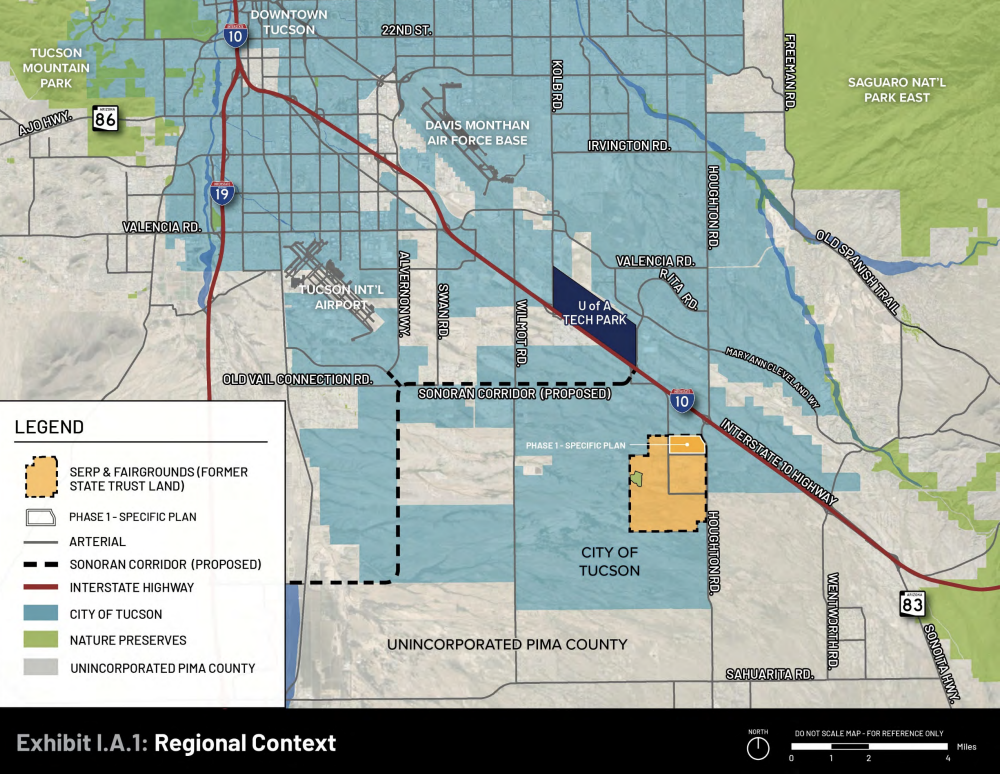
Allen also expressed concern about the lack of information regarding Beale Infrastructure’s plans for the 290 acres it purchased. She said supervisors have no clarity on what phases two and three of the project will entail, how much energy will be required or even how many data centers are planned.
Allen said she took solace in the steps the county has taken against data centers in recent months, including reforming nondisclosure agreements, ending data center tax breaks and reforming zoning.
“Hopefully when this comes to us again, as it will, we have laid out the bricks in which we can say no, as we should have said from the get-go,” Allen said. “This decision, this project, is the legacy of the board. And that pains me.”
Scott was the only one of the three supervisors who voted to advance the project who publicly explained his decision. He said the plan the board approved in June provided for more efficient use of potable and reclaimed water and was, at the time, aligned with the county’s water and infrastructure plans.
The memorandum of agreement he later voted to approve commits the project to using a closed-loop system to cool its data centers — circulating only a minimal amount of water — and to complying with existing water regulations.
“From the beginning, one of the most compelling features of this project has been the economic benefits to the county and our constituents. Beal will pay the county close to $21 million for this acreage,” Scott said. “This $3.6 billion capital investment in this project is the largest of its kind in the history of our county, and will have a positive, profound effect on our local economy.”
Scott also highlighted the projected $58.8 million in tax revenue that he said would benefit local school districts and government, as well as the fact that only 1% of Pima County employers add more than 180 local jobs, the number Project Blue is expected to provide.
“There has been passionate and thoughtful opposition to this project, often based on legitimate concerns about how we make use of and govern the technologies that play larger roles in our lives,” Scott said. “However, there has also been unduly alarmist and defeatist rhetoric deployed by some project opponents calling into question our abilities as a community to balance economic development with environmental stewardship. Pima County has historically struck that balance.”
Scott said that while he supported the project’s approval, he emphasized the importance of ensuring that both the county and Beale Infrastructure are held accountable for the terms of the agreement.
Ian Stash is a journalism major at the University of Arizona and Tucson Spotlight intern. Contact him at istash@arizona.edu.
Tucson Spotlight is a community-based newsroom that provides paid opportunities for students and rising journalists in Southern Arizona. Please consider supporting our work with a tax-deductible donation.