
Skills on display, ICE tech ties and more

Students showcase careers at Pima JTED program event
From firefighting drills to cybersecurity demos and cosmetology makeovers, Pima County high school students put their future careers on display last weekend during Pima JTED’s annual program showcase, giving families a hands-on look at the skills and pathways students are building before graduation.
The Jan. 24 event featured 32 programs, giving current students the opportunity to demonstrate what they have learned and prospective students a clearer idea of available career paths.
Pima JTED, or the Joint Technical Education District, provides students with hands-on opportunities in career-focused programs designed to prepare them for the workforce.
Nineteen of those programs are offered at JTED’s two-story Innovative Learning Center, located at 3300 S. Park Ave.
Mel Randall, a student in the cosmetology program, was among those excited to showcase her work at Saturday’s event.
“In the cosmetology program, we learn about hair, skin, and nails,” she said. “We learn theory, we learn basic practice skills, and we have a full-service salon that anyone can come in.”

Raytheon employee Jason Pototsky oversees JTED’s artificial intelligence and cybersecurity programs and attended the showcase to explain the program’s scope.
“The cybersecurity program is a two-year program geared toward getting students into the job field in cybersecurity,” he said. “At the end of it, they leave with, if they pass, a Security+ certification, that gets them right in the door working for either health care or DOD, since that's an entry-level requirement for those positions.”
Pototsky said the program introduces students to the Linux operating system and the Python programming language.
Other programs highlighted hands-on training in public safety fields. While her fire service classmates demonstrated how to unroll a fire hose, Victoria Garcia Cruz spoke about JTED’s sense of community.
“I'd say my favorite part about JTED, not to sound corny, but I think the community,” she said. “The community is really important here because you don't want to be somewhere where you don't feel like you fit in, or somewhere you don't like being because it seems like you have no friends there, you know? Everyone here in my program specifically is really sweet.”
Garcia Cruz said that sense of support helps keep her grounded.
“There are days where I go into JTED, and I feel bummed out, and I just leave so happy because everyone there is so nice and they're so funny,” she said. “It's basically like family, … but it's truly a beautiful thing.”

Ryo Wigginton, a student in the law, public safety and security program, said the curriculum covers law enforcement, the role of a lawyer, psychology and crime scene investigation.
“I joined the program because I'm really interested in criminal psychology, and I wanted to become a criminal profiler,” he said. “That is actually one of the units that we've done so far. It's really entertaining.”
Sophia Lee, a student in the early childhood education program, said her favorite part of JTED is working with Little Lions, a daycare and skills-instruction site connected to Mountain View High School.
“I love having that opportunity, especially since I … work in the preschool,” she said. “That was my first job, and it's just a great experience. It's a way for me when I go into … a career later, I can be like, hey, this is my job.”
Deborah Kresal, an employee and instructor with Little Lions for eight years, said the daycare pairs preschoolers with high school students in the early childhood education program as part of their hands-on experience.
“Almost everybody says the thing they love the most is the buddy days, and during our buddy days, we set up different things for them to go through. We try to have something that's kind of a movement fun, movement activity, maybe something that's got creative art, and then maybe another science or something else, and they really just get to make that connection with them,” Kresal said. “The preschoolers love their buddies, and they look forward to it so much. We all wear our matching t-shirts that day, and it's just a really great bonding day.”

Beyond early childhood education, the showcase also highlighted programs focused on health and human services.
“We are a program that prepares students to enter the mental health field. A lot of our students will pursue college degrees in, like, social work, psychology, pre-nursing to be a psychiatric nurse practitioner in the future,” said instructor Maeve Sielawa, who started the social and mental health technician program. “Or they can enter at an entry-level position, such as … behavioral health techs.”
Student Frida Gomez said her favorite part of the program has been the in-depth learning about mental disorders and how to use the Diagnostic and Statistical Manual of Mental Disorders.
“You learn about mostly every disorder,” Gomez said.
Student Janae Pool said the program has helped her excel in college courses and feel more prepared for hands-on work.
“I really understood a lot of the material and understand a lot of what I'm doing in college because of the program,” she said. “I really think it helped me ... understand not only what I wanted to do, but kind of prepared me … for what I'm going to be doing hands-on.”

Tech firms’ ICE ties spotlighted by #NoTechForICE campaign
As immigration enforcement expands nationwide, a growing coalition of organizers is drawing attention to the technology companies quietly powering U.S. Immigration and Customs Enforcement operations, arguing that data tools and surveillance systems have become central to detention and deportation efforts.
Immigrant communities and overpoliced minority groups have long faced surveillance by ICE. But the Department of Homeland Security and its subagencies are not building that technological infrastructure alone. For decades, it has been fueled through contracts with major technology companies.
As detentions and disappearances increase in sanctuary cities across the country, so do the technological capabilities supporting federal enforcement operations.
The digital and grassroots Latinx and Chicanx organization Mijente is mobilizing across Arizona for its #NoTechForICE campaign to raise awareness about these partnerships and how they affect digital safety and privacy. The group’s latest stop was in Tucson for a Jan. 22 event at the Global Justice Center.
The campaign, led by Jacinta González, is informed by the group’s 2018 report, Who’s Behind ICE, an investigation of “the technology industry’s ‘revolving door’ relationship with federal agencies” and how these companies fuel immigrant arrest, detention and deportation systems. The research, commissioned by Empower LLC, is a collaboration between Mijente, the National Immigration Project and the Immigrant Defense Project.
“What we have seen happen is that the criminalization of migration has become incredibly profitable,” González said. “For a long time, it was profitable to the detention centers, right? CCA and GEO have made billions of dollars off detaining our communities. But now, the tech industry has also seen that it is an incredibly lucrative industry.”
Mijente has been fighting for immigrant justice since its inception in 2015 following the #Not1MoreDeportation campaign. Now, the group is visiting communities across Arizona to educate residents about these partnerships.
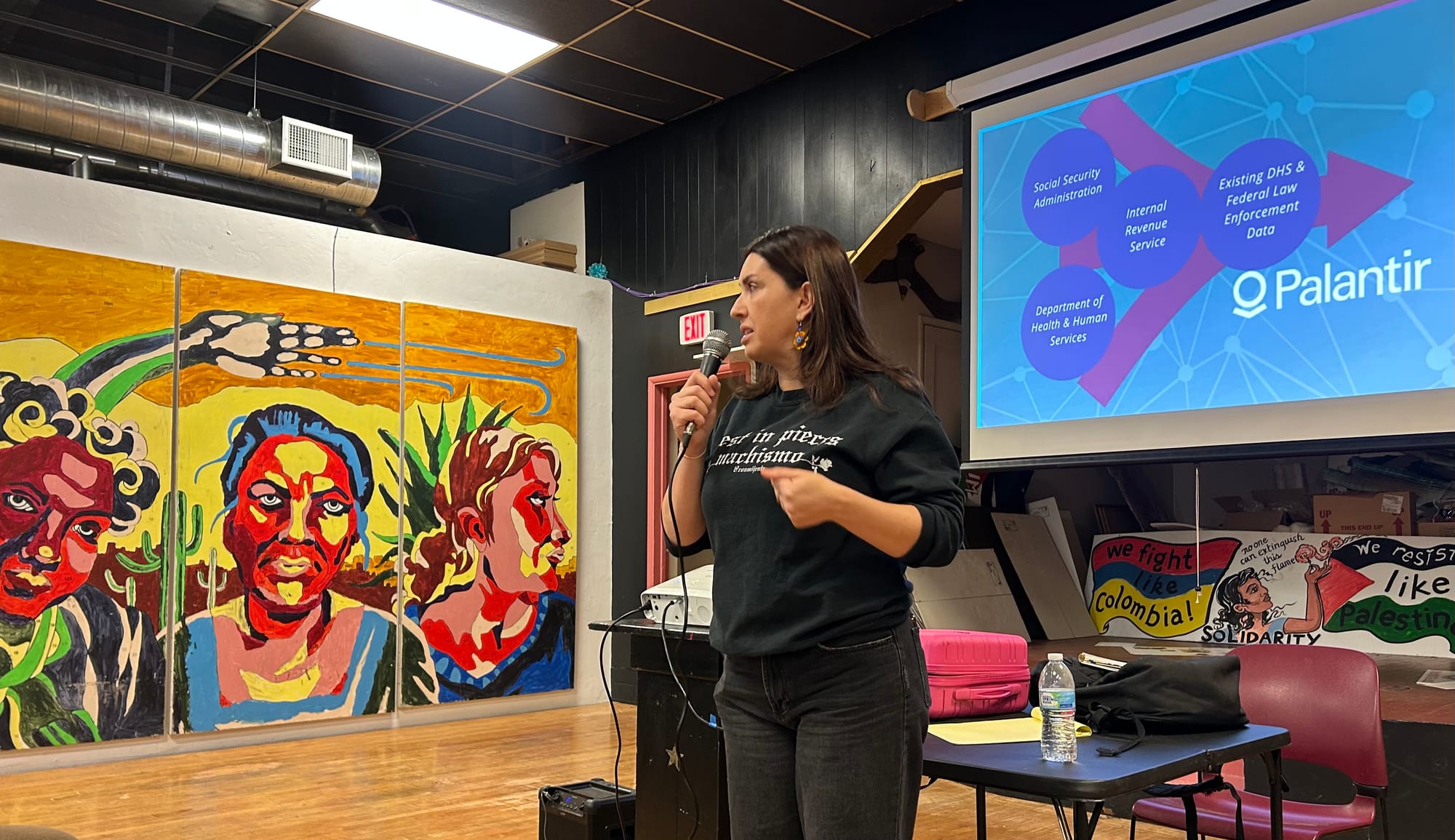
What are the major contracts between tech giants and DHS?
Companies including Palantir, Amazon, Salesforce, Microsoft and Hewlett-Packard hold contracts with DHS to provide digital tools used for detection and detention. Among them, Amazon Web Services and Palantir are currently at the forefront of technology supply and data storage.
About 10% of DHS’s $64 billion budget for fiscal year 2026 is dedicated to data management, with most data systems supporting immigration enforcement either hosted on commercial cloud storage platforms or in the process of moving to the cloud.
This shift is known as the cloud industrial complex, or the “public-private partnership among industry lobbyists, tech executives, key federal legislators, and tech executives-turned-government officials,” according to the report.
DHS maintains contracts with Amazon’s data management program, Amazon Web Services, to store case management information and biometric data such as fingerprints and iris and facial scans.
Amazon holds more federal authorizations to manage this data than any other technology company. In fiscal year 2025, Amazon held 114 authorizations under the Federal Risk Management and Authorization Program alone.
“All of this data tracking has really made it so that the Fourth Amendment is optional for agencies like ICE, because why would you get a warrant if you can purchase the information from a tech company?” González said.
Software and data analysis firm Palantir also sells two major operational tools to ICE, even as human rights organizations investigate its involvement in AI system development for the Israel Defense Forces.
Those tools include the Investigative Case Management system and the FALCON Search and Analysis system. ICM is the core case management tool for Homeland Security Investigations. Like other Palantir products, the FALCON-SA system maps relationships between people and places and creates data visualizations linking individuals, addresses, organizations and personal information.
What can residents do to protect their data and digital identity?
After Alex Pretti was killed by federal agents in Minneapolis, these companies have come under increased public scrutiny.
Anti-authoritarian organizers and scholars stress the importance of community members distancing themselves from a regime’s “pillars of support,” noting that businesses are among the most influential nonstate institutions within any political system.
Consumer pressure can influence corporate decisions, as seen with Avena Airlines and the Minneapolis Hilton hotel chain. Nonviolent civil disobedience and boycott tactics can also include setting up anonymous tip lines for employees to report ICE collaborations, leafleting customers about a company’s federal contracts or authorizations, and avoiding purchases from companies with federal partnerships.
“Student organizing against recruitment fairs, against contracts, against all of this has been super, super helpful,” González said. “Immigrant rights organizing, fighting to make sure you have better policies. Making sure you catch data loopholes if you do have a sanctuary city, making sure you cut Flock cameras, if you have them in your city, make sure that you don't get the extra drones that your sheriff wants.”
Mijente’s website provides a wide variety of toolkits for community and campus organizing. González stressed the importance of students and young people in these efforts and urged readers to explore the group’s #NoTechForICE student toolkit.

Protests in Tucson follow killing of Minneapolis nurse
The killing of Minneapolis nurse Alex Jeffery Pretti has sparked protests and vigils nationwide, including demonstrations in Tucson where activists, nurses and elected officials are calling out what they describe as a pattern of misinformation, excessive force and unchecked power within immigration enforcement agencies.
Pretti, 37, worked as an intensive care nurse at the Minneapolis Veterans Affairs Medical Center and was fatally shot by U.S. Border Patrol agents during a federal immigration enforcement operation on Jan. 24. The two federal agents who fired their weapons have been placed on administrative leave.
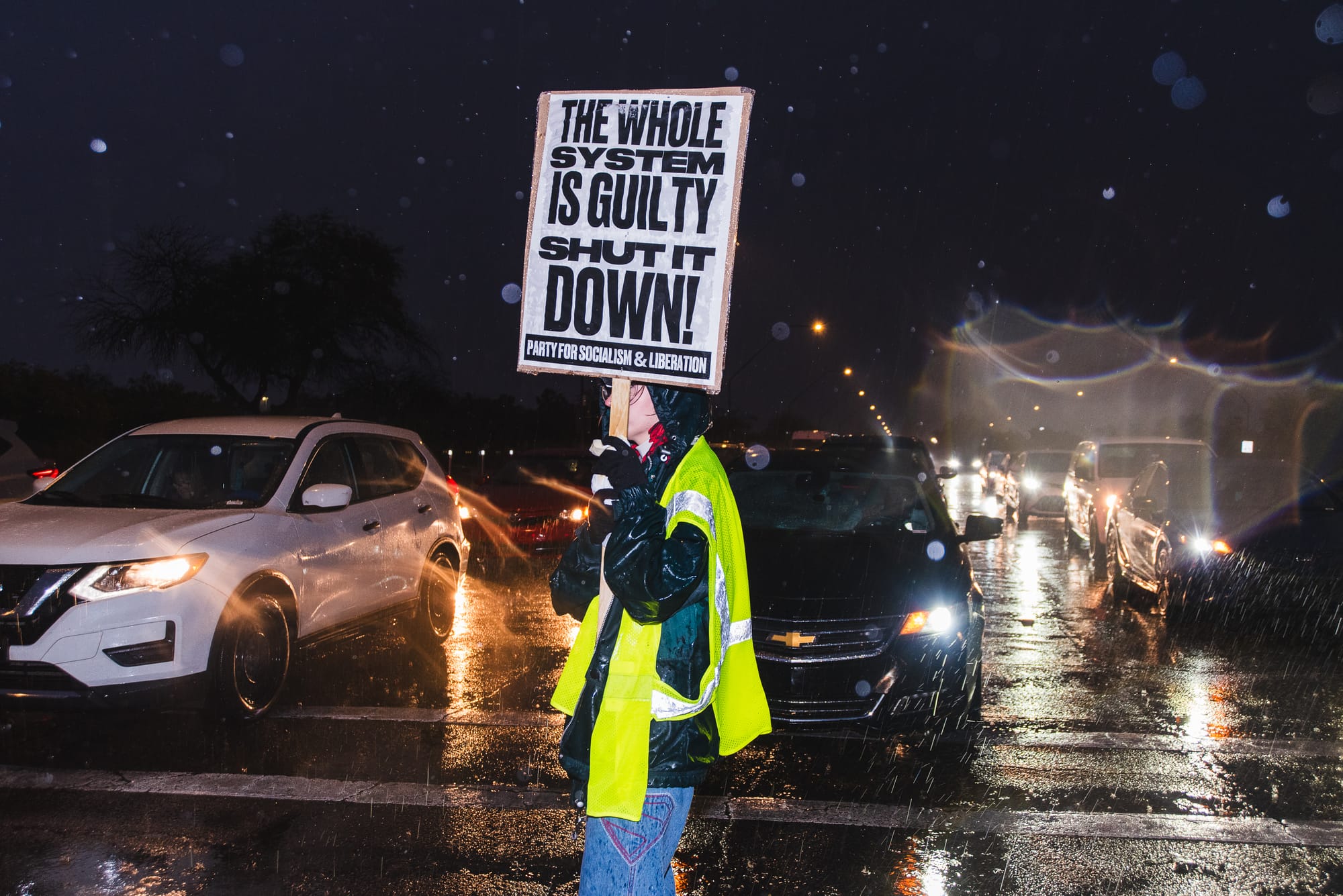
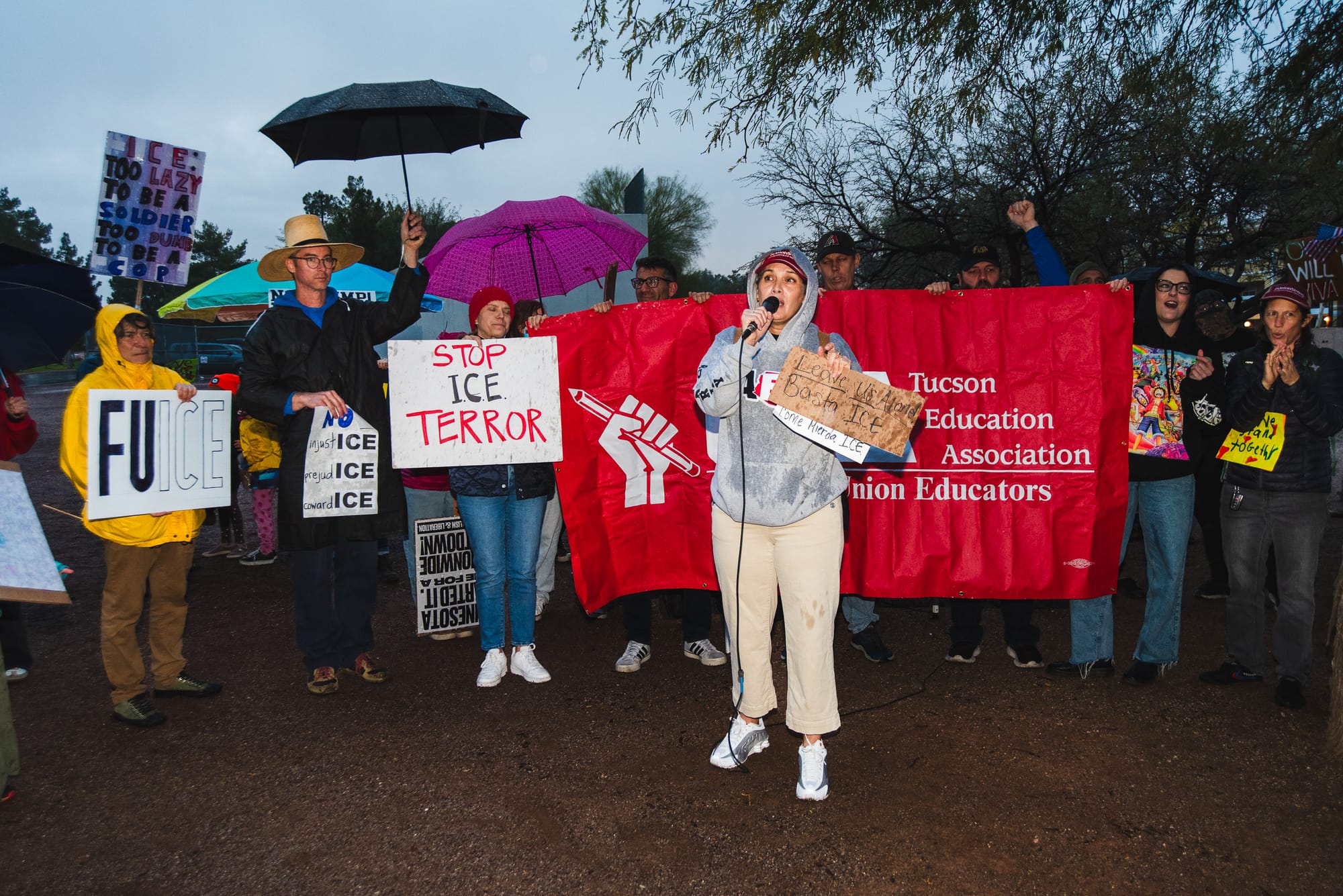
The Party for Socialism and Liberation’s Tucson branch organized quickly, hosting an emergency protest at 5 p.m. at Freedom Park that called for a general strike in solidarity with Minneapolis and challenged initial government statements about the Pretti shooting.
Dozens of community members ventured out into the rain for the event, holding signs and huddling together under umbrellas.
“We have to go national because literally any inch we give them, they'll give them a mile and we shouldn't even give them anything to begin with,” said speaker Christopher Duran Quiroz, a representative of Tucson Democratic Socialists of America.

U.S. Rep. Adelita Grijalva also spoke at the event, addressing recent congressional votes related to immigration enforcement funding.
“I wish I could say it's going to be better, but until there are some changes in Congress and other people that are there, it's not going to be,” she said. “I was a ‘Hell no’ on that vote and we all should have been. And if we would have stayed together, it wouldn't have passed.”
Grijalva pushed back on how federal agencies communicate about enforcement actions and use of force.
“It's a lie. I mean, when you're looking at the story, minutes after something happens, they right away … put a spin on it. They did the same thing with me, the same thing with Renee Nicole Good,” she said. “They're doing the same thing with the gentleman today, the nurse in Minneapolis. That's what they've been doing. And it's unfortunate because then all of the people that are blindly believing what this administration says comes after anyone that's against us and threatens us.”
After hearing from speakers, protesters marched to Border Patrol’s Tucson headquarters on North Swan Road.

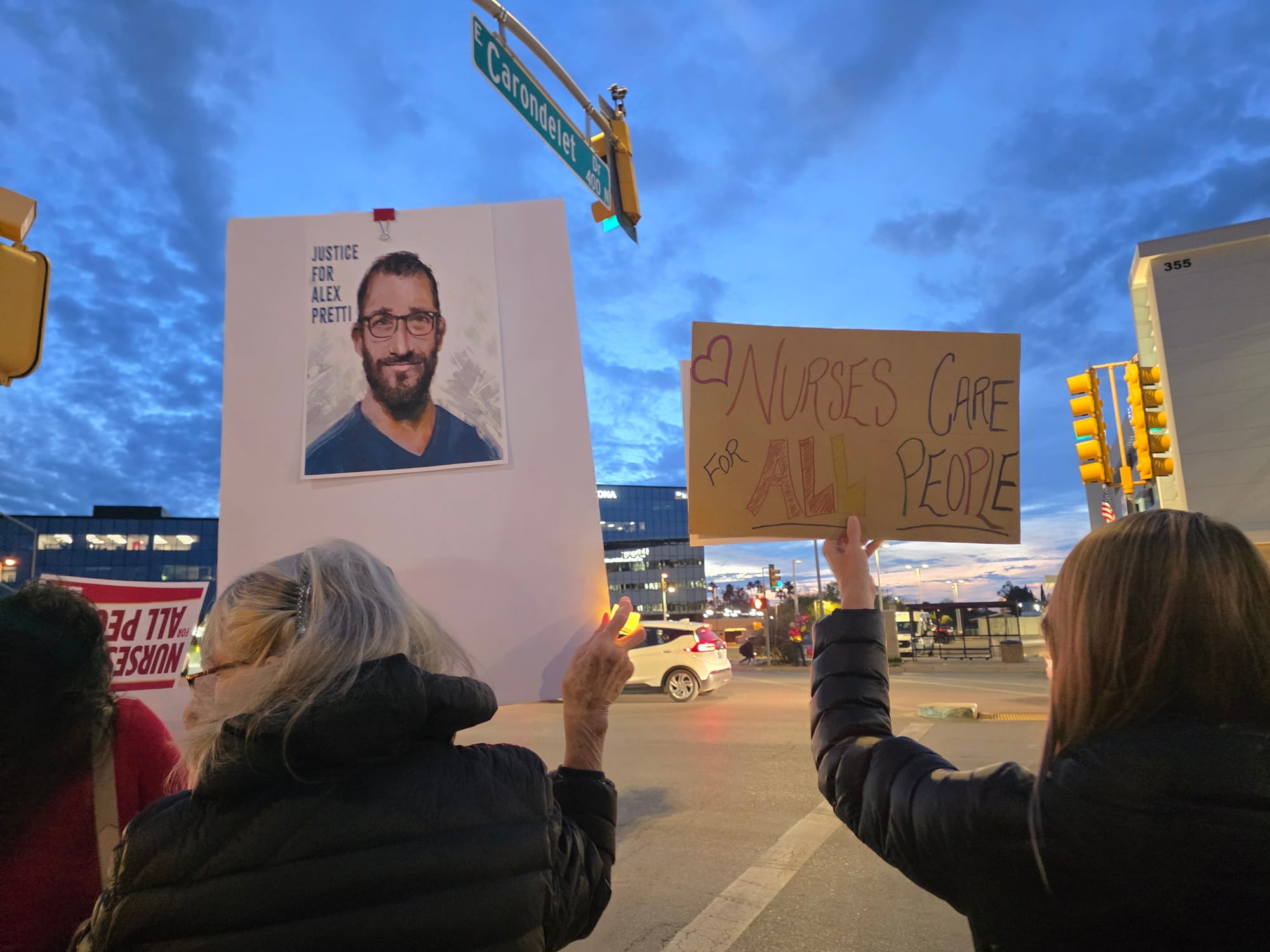
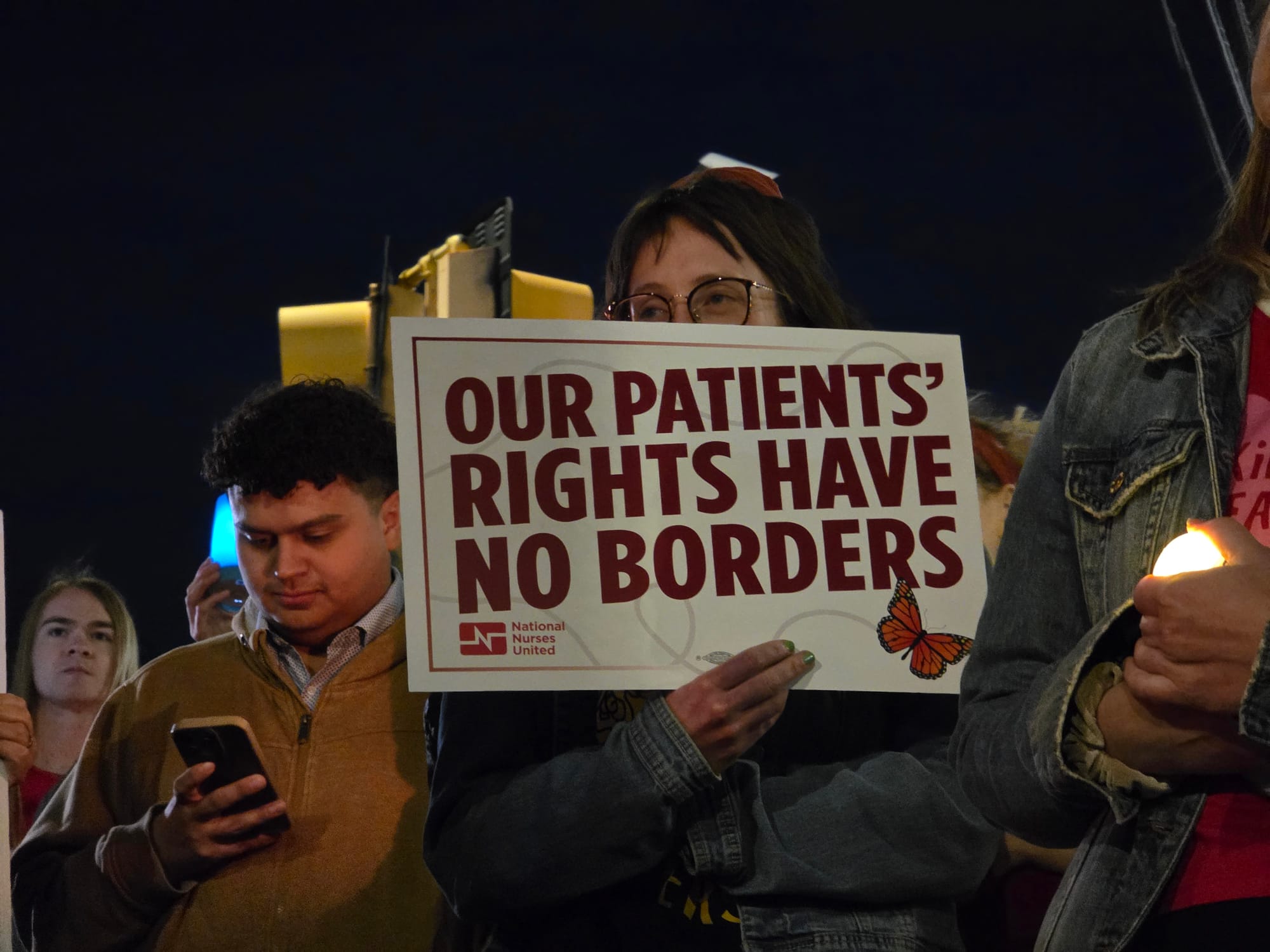
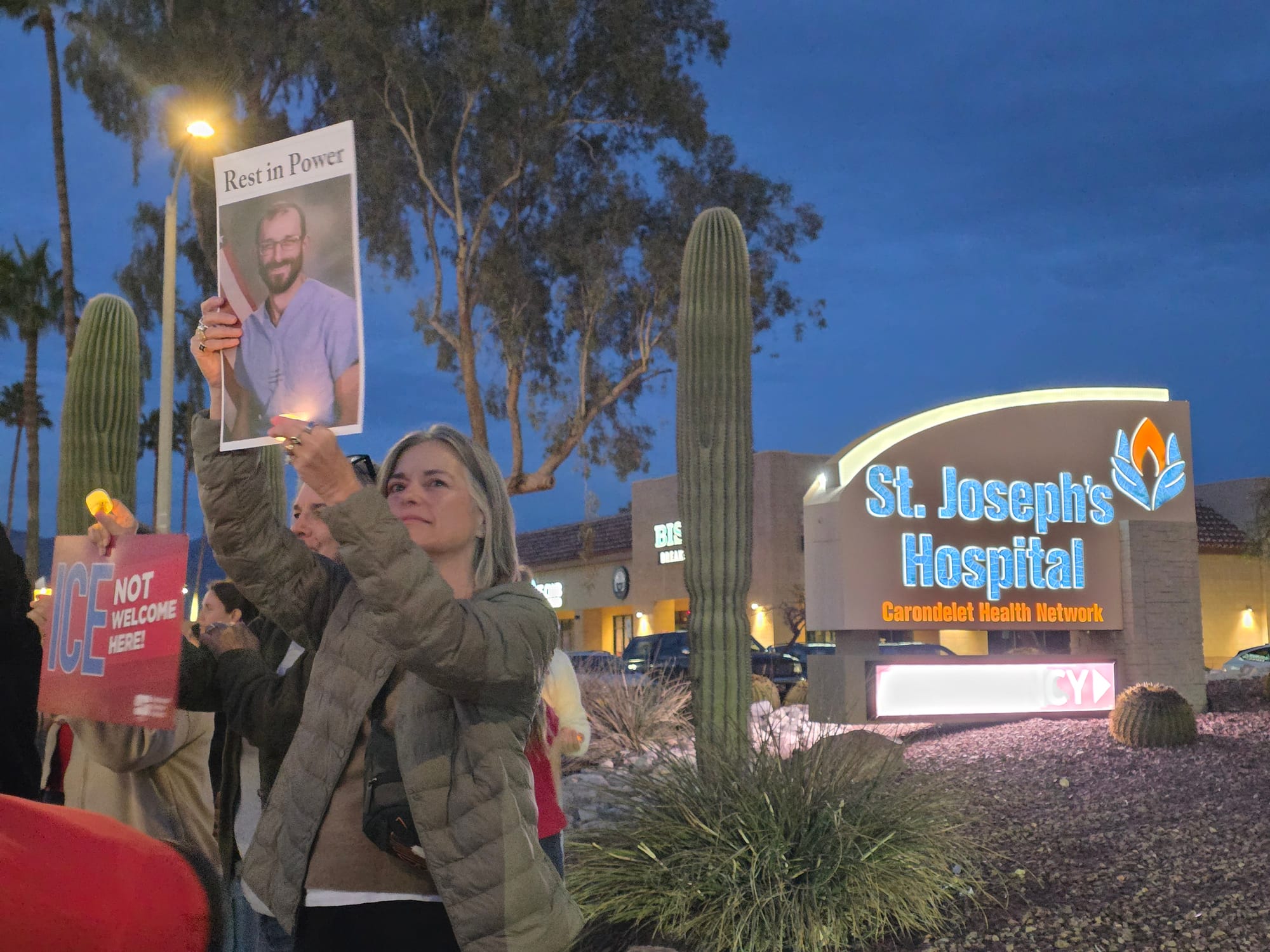
Several days later, on Wednesday, nurses, health care workers and community members gathered outside St. Joseph’s Hospital to honor Pretti at a vigil organized by the local chapter of the National Nurses Union.
The vigil was part of a weeklong series of events held nationwide, with organizers calling on Congress to abolish ICE, which they described as a public health concern.
Nurses and community members held signs calling for justice for Alex Pretti and the abolition of ICE.
“I wanted to show my solidarity with (the nurses) because the horrific shooting in Minneapolis touched my heart,” said retired nurse Bonita Pilon Loman, who worked in hospitals across Tucson and with the immigrant community through the county’s Casa Alitas. “I'm originally from Wisconsin, and have family there who are talking about arming themselves because they're scared with ICE just across the border, it's touching my family and I.”
Tucson resident Roger Pfeiffer said he has increased his activism in response to recent violent confrontations involving ICE.
“I think this situation in Minnesota is unbelievably terrible. It's a world turned upside down,” he said. “The only way that I think we can help to change it is if we come out and show our displeasure and anger and total revulsion of what's been going on.”

Union member and ICU nurse Dominique Hamilton told attendees she has seen a pattern of police-involved violence over the past decade and views these cases as a public health issue.
“When we talk about advocating for our patients, we mean not just their safety, but their humanity, (Pretti) was a union nurse who believed that healthcare workers should have a responsibility to stand up when systems cause harm,” Hamilton said. “Repression of protest is incompatible with the values of care, dignity and human life that guide our work. When a nurse is killed for opposing cruelty. It's not just an attack on one person, it's an attack on all workers.”
Patrick Robles, Grijalva’s district director, spoke about her opposition to the ICE funding bill and said they were both pepper-sprayed while observing a December ICE raid in Tucson.
“We can't have any more Alex Prettis. We cannot have any more Renee Nicole Goods who are standing up for our communities and are dying at the hands of federal law enforcement officers,” Robles said. “Not one more.”
A poll by The Economist and YouGov conducted after Good’s killing found that a majority of respondents believe ICE is making the country less safe, that agents should not wear masks during arrests, and that the agency should be abolished.
"We should have the right to protest, and people who exist here should have the right to apply for asylum, apply for their green cards, and not be living in fear,” Hamilton said.

Photos by Marlon Bedoy and Topacio "Topaz" Servellon.
Tucson Spotlight is a community-based newsroom that provides paid opportunities for students and rising journalists in Southern Arizona. Please support our work with a paid subscription.