New mural honors Tucsonans lost to decades of TCE pollution
A new mural honoring generations harmed by TCE contamination highlights the community’s long fight for accountability, healing and environmental justice.
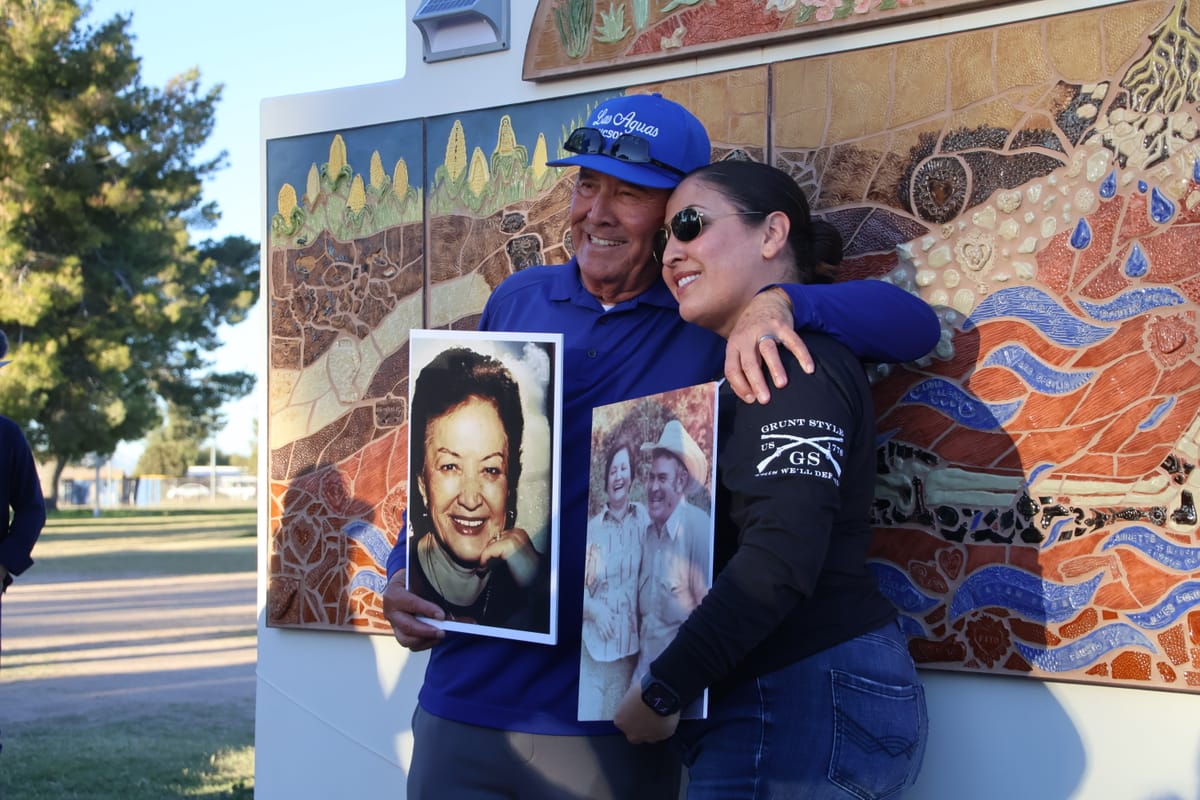
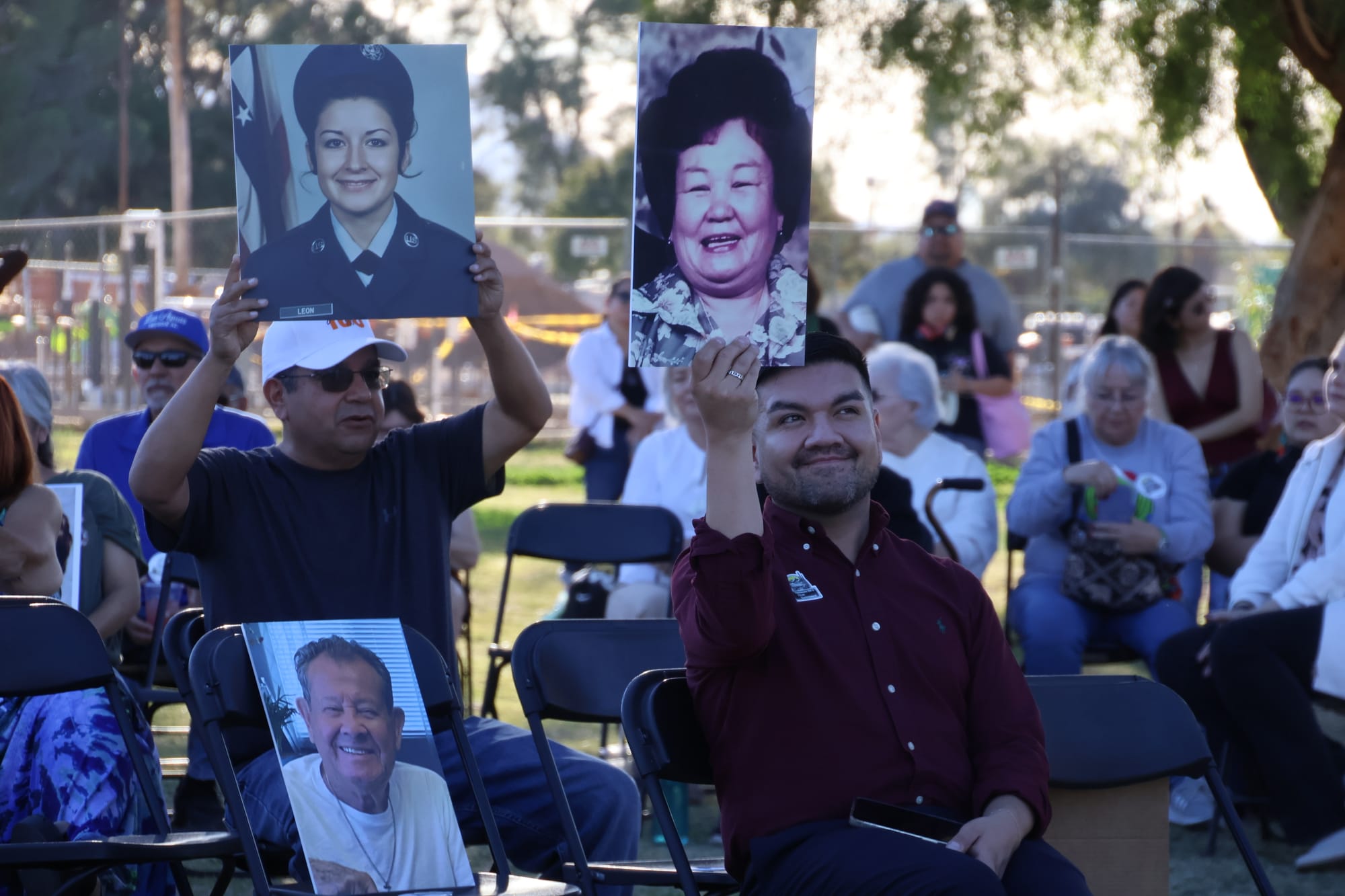
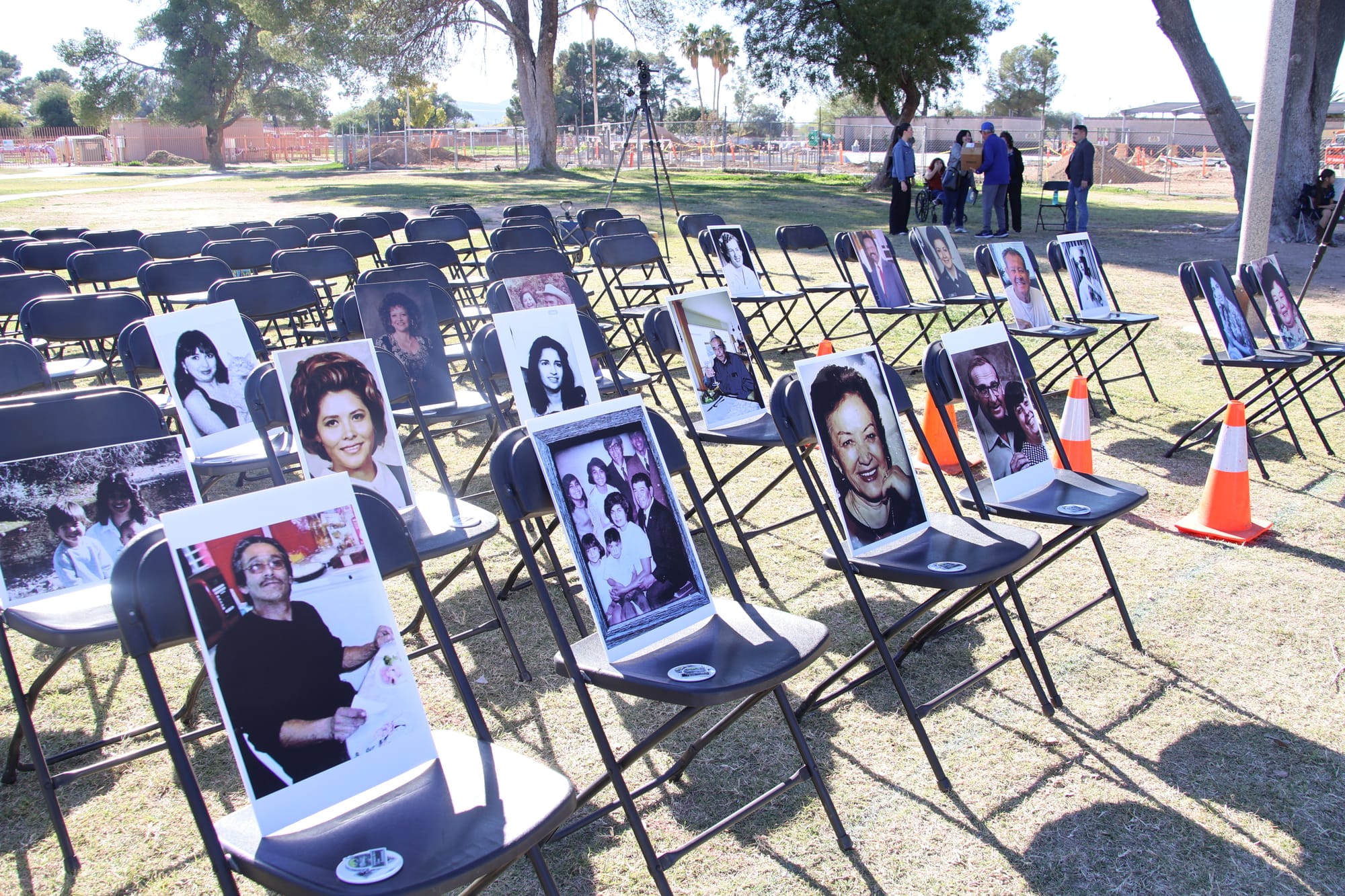
Community members and local leaders gathered Saturday to unveil a commemorative mural honoring Southside Tucson residents who died after decades of groundwater contamination from TCE, a toxic chemical once dumped by Hughes Aircraft.
In 1985, investigative journalist Jane Kay revealed that Hughes Missile Systems, now Raytheon, had contaminated Tucson’s groundwater with trichloroethylene (TCE), an industrial solvent. With little oversight, wells, pits and drains along Old Nogales Highway were used as dumping grounds for TCE, creating a contamination plume that eventually spread into residential wells in Southside Tucson.
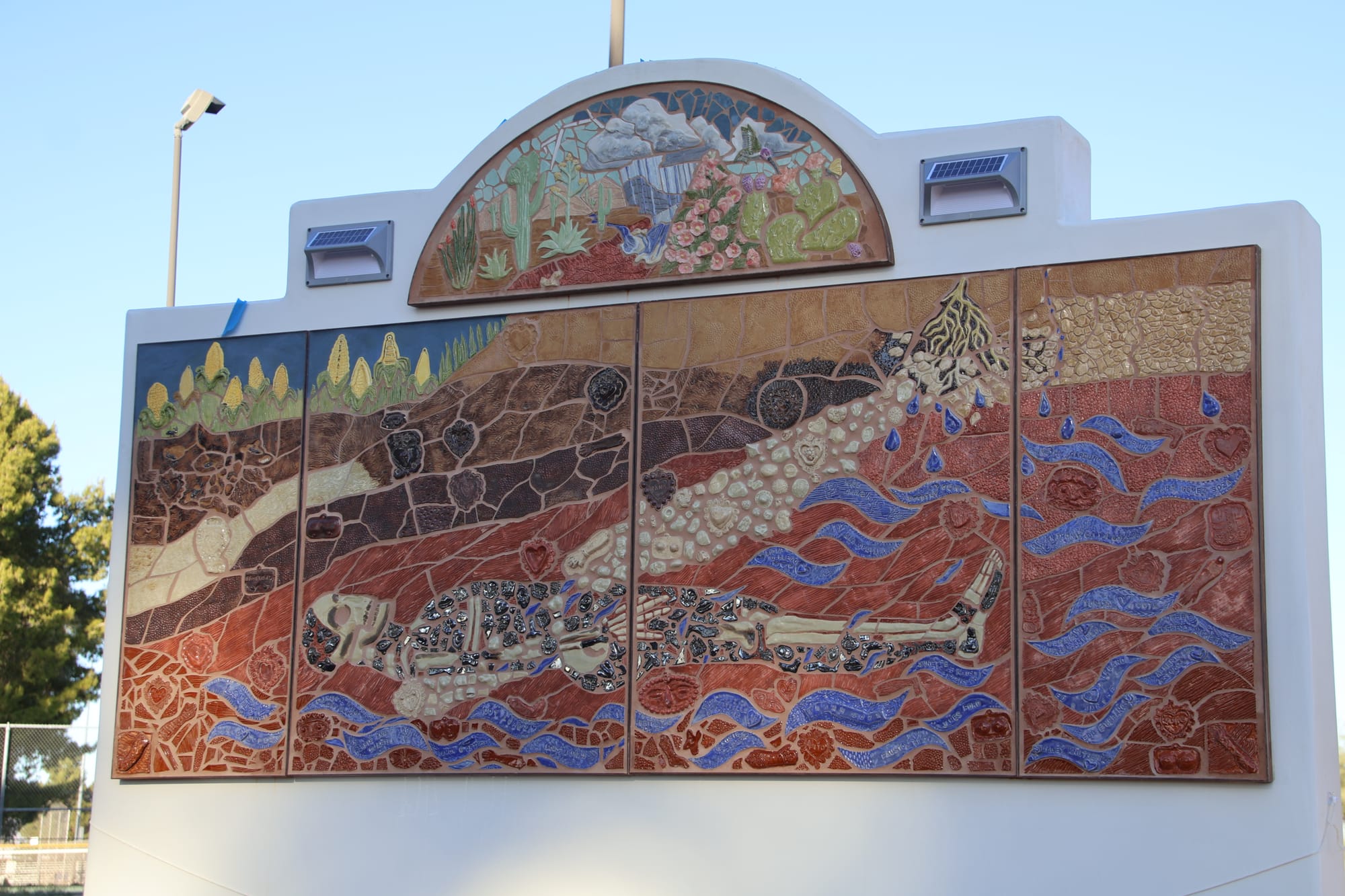
The commemorative mural, located at Mission Manor Park, is made up of more than 300 clay mosaic pieces depicting the underground water cycle and connecting the human experience with how the Earth absorbs water.
Pima County Supervisor Andrés Cano told attendees the generational trauma from environmental racism, such as the TCE plume, is part of why he and others have been opposing projects like the proposed Project Blue data center and the Rosemont Mine.
“For too long, communities and families in District 5 have been treated as acceptable sacrifice zones, exposed to PFAs, TCE, beryllium, which impacted my nana Rosa, who is no longer with us,” Cano said. “Industrial pollution without consent, accountability or protection. That history demands more than remembrance. It demands action. That history demands more than remembrance. It demands action.”
U.S. Rep. Adelita Grijalva said her father, Congressman Raúl Grijalva’s advocacy for those impacted by the TCE plume, helped launch his political career.
“My dad championed legislation called ‘Environmental Justice for All’ and what it would do is it would require that companies that are going to do anything remotely impacting our environment have to consult with our communities,” Grijalva said.
Adelita Grijalva has been appointed to the House Committee on Natural Resources, a seat her father once held, fulfilling her campaign promise to advocate for the protection of natural resources.
“Tucson is not going to be silent,” Grijalva said. “Environmental justice is not a moment, it is a movement. It is a promise we have to keep every single day for every family.”
Alex Jimenez, the lead artist of the mural, previously served as an artist in residence for Tucson Water. Through the residency, she learned about the south side’s history with TCE contamination. When organizers of “Survival and Resistance” — a yearlong community project honoring those affected by the contamination — approached her, she was invited to turn that history into a commemorative public artwork.
“It feels so good,” Jimenez said about seeing her piece fully realized. “Working with the South Side community and hearing from people affected by TCE, it was a seed of an idea that I sketched years ago, and I wanted to find a way to work around this issue of water and healing and loss, and find more ways to unite the narrative around the experiences of people.”
Eduardo Quintana worked for Hughes Aircraft and witnessed the TCE dumping firsthand. He became a whistleblower, later advocating for transparency and accountability from Hughes and becoming one of the founding members of Tucsonans for a Clean Environment.
“It was not an accident,” Quintana told attendees. “In the early 1950s there was a lawsuit by some local residents that the water was contaminated, and they brought it to the attention of Hughes Aircraft and other officials. There’s been an attempt to bury it for 40 years (since).”
Through decades of advocacy by Tucsonans for a Clean Environment, lawsuits were filed against Hughes Aircraft, and new water treatment facilities and a clinic specializing in TCE-related care were established. Local advocacy also helped spur the creation of the Pima County Department of Environmental Quality, the passage of the Environmental Quality Act and the designation of the TCE plume as a Superfund site.
Today, Tucson’s water meets all national standards, and Southside residents have not received water from contaminated wells since 1981. But historic and intergenerational trauma can still be felt within the community.
Diana Manriquez was drawn to the event by memories of her mother, Lydia Gallego, who was diagnosed with non-Hodgkin lymphoma. This type of cancer is not caused by hereditary genetic factors but by a mutation in a person’s DNA over the course of their life. Research has suggested chemical exposure, including to TCE, is a risk factor for non-Hodgkin lymphoma.
Gallego learned this from her siblings who lived on the south side. Three of her eight siblings died from cancer — a disease that eventually claimed Gallego’s life as well.
“It was devastating for me because I was a teenager,” Manriquez said. “My mother was extremely sick. She wasn't expected to live more than about six months. I was just focused on her and her wellbeing (and) her health.”
For many families, the consequences of the TCE plume have echoed through multiple generations.
Erika Jaramillo said her grandmother Olga learned about the TCE lawsuits in the 1980s.
“All her life she had spent here, drinking the water from here,” Jaramillo said. “We always suspected (something). It was always in the back of our heads.”
Olga died from pancreatic cancer in 2004. To this day, Jaramillo avoids drinking tap water in her home.
“We need to make sure (this) is remediated,” Jaramillo said. “Water is an absolute necessity. Not everybody can afford to have water delivered or drink bottled water. They depend on that resource in the city.”
The City of Tucson’s Human Relations Commission has adopted a resolution reaffirming the city’s commitment to addressing groundwater contamination on the south side.
But some believe remediation must go beyond lawsuits and financial settlements. Patricia Carrillo, a member of Las Aguas — a grassroots organization founded in 2019 to provide community education on the water contamination history — said more direct support for survivors is needed.
“Las Aguas is more for a health facility for the victims,” Carrillo said. “A trust fund, a free clinic, educated doctors that are not just educated in medicine, but in the contamination alone, so that (the community has) proper resources and proper diagnoses that we can link to the contamination.”
With the “Survival and Resistance” project culminating in the mural’s commemoration, co-curator Sunaura Taylor reflected on the group’s work over the past year.
“I don't think that we could have imagined when we started that we would have the level of collaboration from elected officials, different organizing groups, different community members,” Taylor said. “The fact that it's truly a collective effort, I'm overjoyed to see how successful it was.”
Co-curator Alicia Vasquez said the mural and commemoration were exactly what she hoped for.
“This is a representation of multiple generations, multiple families, multiple experiences,” Vasquez said. “I’m really proud of what we can create when we come together with a shared vision.”
Manriquez, who lost her mother to cancer believed to be caused by TCE, expressed gratitude for Vasquez and Taylor.
“Part of me is angry, because it could have been prevented,” Manriquez said. “But (I’m) very thankful for those who took the courage, not only to establish a memorial, but voice their concerns and make sure that this doesn't happen again.”
Topacio “Topaz” Servellon is a reporter with Tucson Spotlight. Contact them at topacioserve@gmail.com.
Tucson Spotlight is a community-based newsroom that provides paid opportunities for students and rising journalists in Southern Arizona. Please consider supporting our work with a tax-deductible donation.