Lochiel border wall protest camp closes in Southern Arizona
Activists closed their Lochiel border wall protest camp a week after Border Patrol raided the site and contractors cut down a 200-year-old cottonwood.
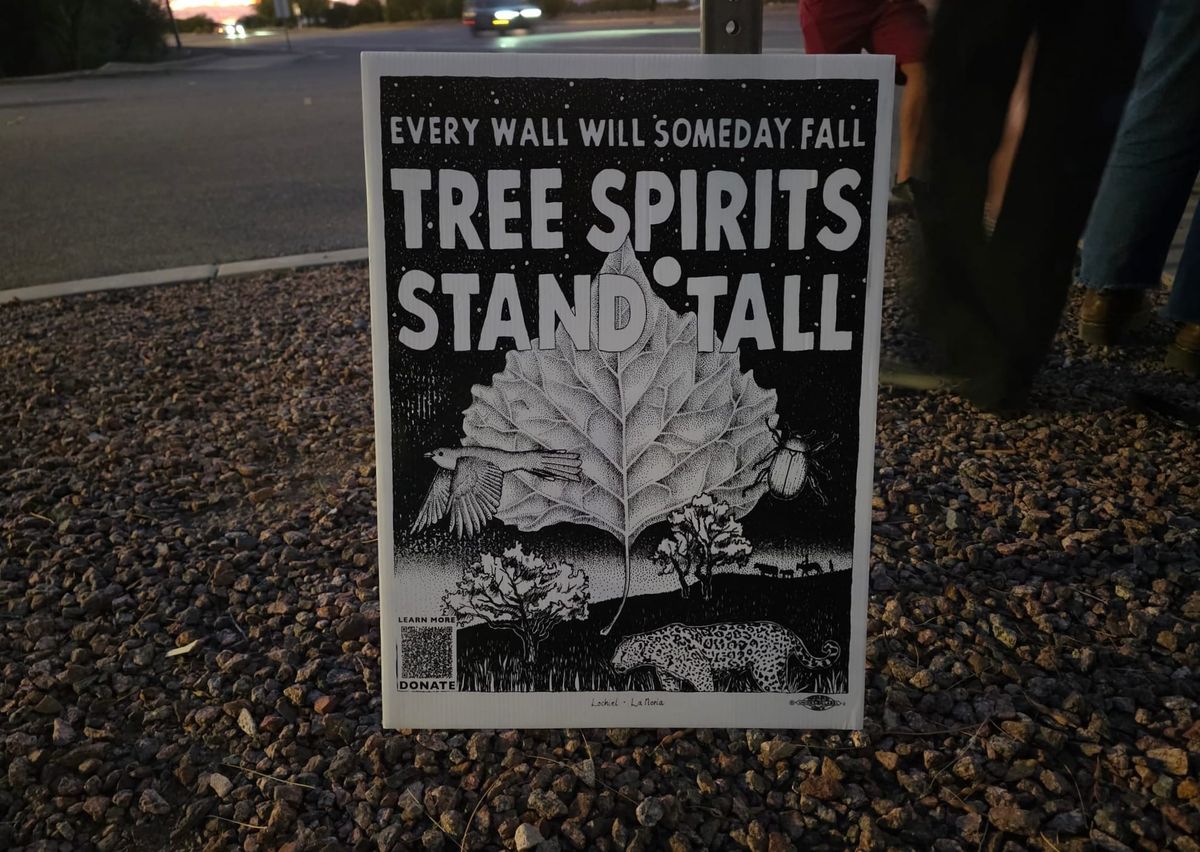
Activists closed their border wall protest camp in Lochiel on Monday, a week after federal agents raided the site and crews cut down a cottonwood that land defenders had occupied for more than two months.
Activists spent Monday afternoon cleaning up the encampment. They’re planning another border camp in the Southwest for November, with a location to be announced, and are asking supporters to back the Tadai Me:i camp and efforts to protect Quitobaquito Springs.
The Oct. 12 closure caps a week of arrests, allegations of mistreatment by federal agents and protests that stretched from the border to Tucson.
Activists call the cottonwood “the grandmother tree.” Conservation groups estimated it was 200 to 250 years old. It stood in the San Rafael Valley along the U.S.-Mexico border and became a symbol of environmental and cultural protection for land defenders trying to stop construction of a double border wall.
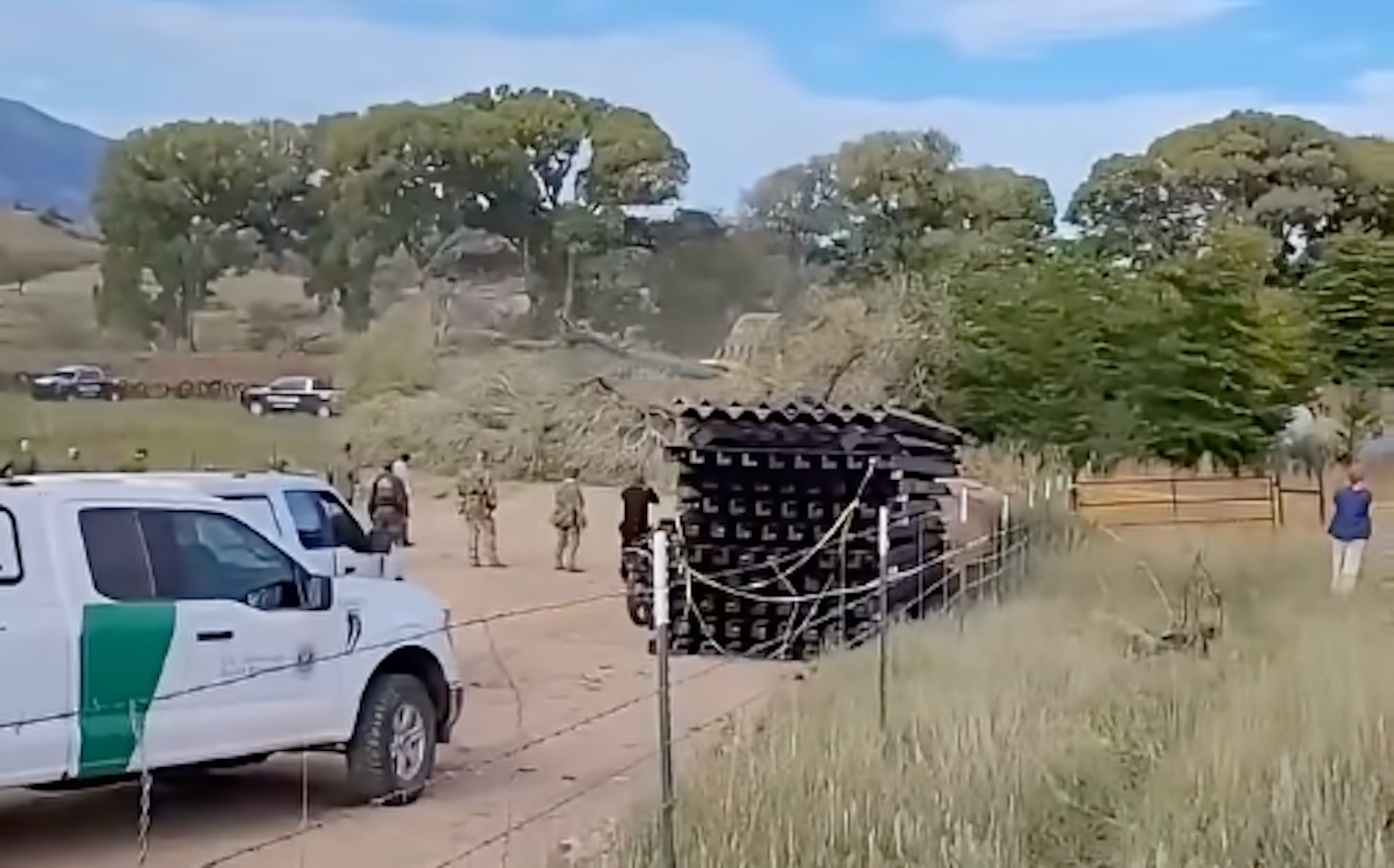
At about 6:30 a.m. Monday, Oct. 5, dozens of armed agents, including members of the U.S. Border Patrol Tactical Unit, known as BORTAC, entered the encampment, called Camp O:Shad. Activists said they had permission to be on the private property and that agents entered without showing a warrant and began destroying tents.
At least 20 people were arrested and taken to the Border Patrol’s Sonoita station, according to activists. Ten were cited and released. Of the 10 detained, six were released that day and four were released the next day.
As arrests occurred, crews used a cherry picker to cut limbs from the tree while a tree sitter was still in its branches. Agents then used the cherry picker to pull the sitter out, and contractors cut the tree down between 8 and 9 a.m. As it fell, land defenders wept and screamed.
The removal was carried out by Fisher Sand and Gravel under a $309 million border wall contract awarded by U.S. Customs and Border Protection. CBP said the tree stood on federal land and that it has now removed all four cottonwoods at the site marked for removal.
Border Patrol told Tucson Spotlight the operation was conducted with partner agencies “to maintain public safety, protect personnel, and ensure compliance with applicable federal laws and land-use restrictions.”
Southern Arizona news written by journalists who live it. Free in your inbox.
The agency said most activity remained peaceful but that agents took enforcement action in response to alleged violations and an alleged assault on a federal officer.
“U.S. Border Patrol respects the public’s right to lawfully express their views. Individuals are expected to comply with lawful orders and avoid conduct that endangers others or interferes with authorized federal operations,” the agency said.
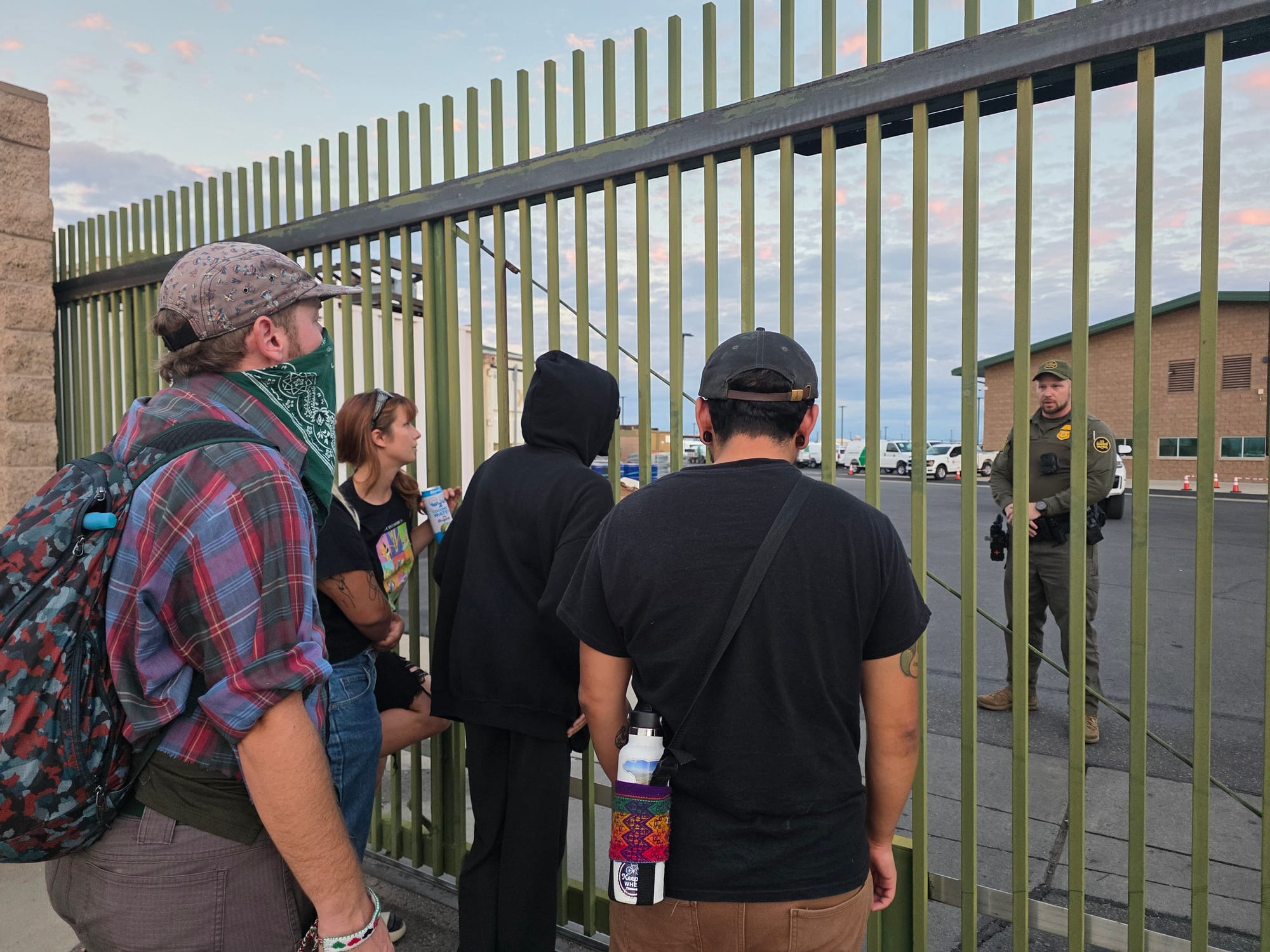
That afternoon, about 50 people protested outside the Tucson Federal Building. Around 6 p.m., about 20 gathered outside the west entrance of Border Patrol’s Tucson Sector headquarters at Swan and Golf Links roads.
Duane waited outside the entrance after learning his wife, Carol, had been arrested that morning.
“I received a call and found out that my wife had been arrested this morning about an hour and a half ago, and so I understood that there was a chance that she might be headed this way,” Duane said.
He said it wasn’t Carol’s first time at the encampment, and that over decades of activism, one or both of them have been arrested for civil disobedience before.
“Carol has been involved intentionally with supporting sacred protection of sacred lands and indigenous land members. I am glad she found the courage to act on it,” Duane said.
One protester who came from the federal building rally had spent time at the encampment. She described a community built around caring for the trees and slowing construction without violence.
“Every morning there’s a sunrise ceremony, everyone gets up at the break of dawn and says a prayer in different ways … very prayer forward and nonviolent protest,” she said.
She hadn’t been back since the tree came down. A friend told her the video was hard to watch on mute, but hearing the screams and crying was worse.
“People are seeing it as a grandmother. It’s like literally seeing your grandmother fall to the ground and die,” she said.
The days that followed
On Tuesday, Oct. 6, CBP interrupted a sunrise ceremony near the site and arrested five more activists. More than 30 CBP vehicles lined the border that day. Activists said the locations of those arrested weren’t disclosed for nearly 24 hours. They were released Wednesday.
On Wednesday, Oct. 7, a protester locked herself to a Fisher Sand and Gravel truck to halt construction. In a press release, activists said Fisher employees wrapped her in a Mylar emergency blanket three times and turned on the truck, trapping exhaust under the blanket while Border Patrol agents stood by. Activists said agents later drove the truck about 100 feet with her still attached and that Patagonia Fire and Rescue was turned away when it arrived. She was eventually removed and detained.
Activists said at least 30 people were arrested between Oct. 5 and 8.
On Thursday, Oct. 8, activists rallied outside the Bureau of Land Management office at 3201 E. Universal Way.
Jen Lazada, a National Guard veteran and political activist, described what the protester on the truck endured as “essentially a gas chamber.” She also criticized the use of BORTAC, calling it “an extreme measure to take for nonviolent protesters.”
Lazada said that when she visited Lochiel, she saw three or four women in their early 20s standing between the tree and a bulldozer, facing officers in tactical gear.
“Border patrol is harassing peaceful people and violating their constitutional rights,” she said.
Another protester said those arrested during the raid were hurt in custody.
“They were eventually released with a lot of injuries, beaten, and pepper sprayed in controlled custody,” the protester said.
Activists also pointed to new limits on public land and humanitarian aid. In late September, federal land agencies issued emergency closures blocking public lands along the border. The U.S. Forest Service closed roughly 55 miles of the Coronado National Forest along the border until Jan. 20, 2029. The federal government has also denied permit renewals for humanitarian aid groups that bring supplies to the border.
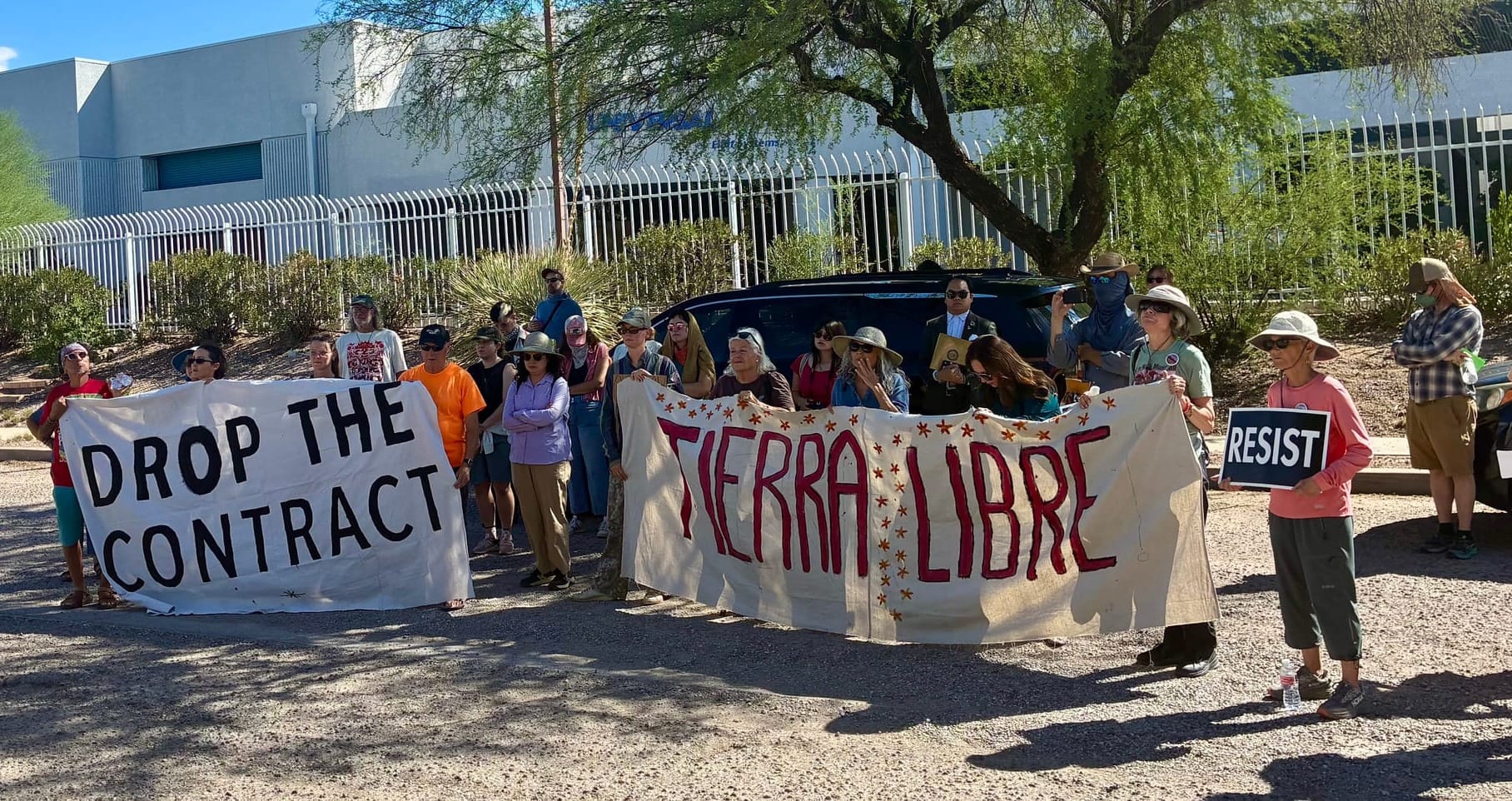
The Forest Service said the closure order is meant “to protect public health and safety during construction of the international border wall.”
Activists said restricting aid will harm people who live along and travel through the border region.
“Humanitarian aid is never a crime,” one protester said.
Erick Meza, borderlands coordinator for the Sierra Club, said the rally was meant to pressure BLM to change the construction plans.
“We are outside of BLM offices to tell them to grow some spine and be able to stand up,” he said.
Meza said the administration should consider a design that wouldn’t destroy the area’s ecosystem. He pointed to BLM’s mission statement, which calls for sustaining “the health, diversity and productivity of public lands for the use and enjoyment of present and future generations.”
“These closures completely go against their mission,” Meza said.
Under Section 102 of the Real ID Act, the Department of Homeland Security can waive any local, state or federal law it deems an impediment to border wall construction.
Cultural stakes
The San Rafael Valley and surrounding borderlands hold cultural and spiritual significance for the Tohono O’odham Nation, whose ancestral lands extend across the border.
U.S. Rep. Adelita Grijalva has raised concerns about construction near culturally significant sites, including Quitobaquito Springs and Monument Hill in Organ Pipe Cactus National Monument. Parts of Monument Hill were blasted in February 2020 during earlier wall construction, and she said ancestral remains buried at Quitobaquito Springs are now threatened.
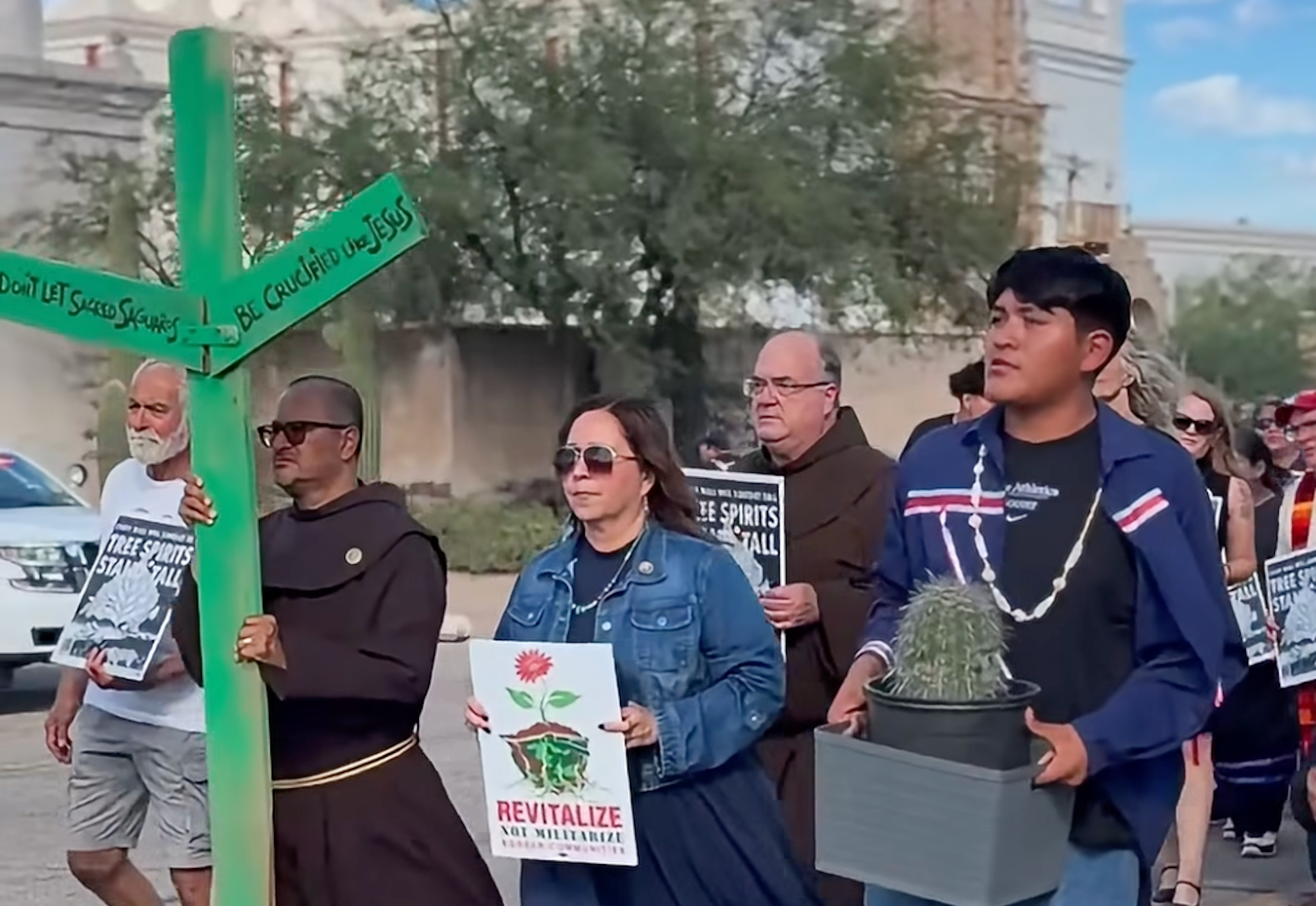
Grijalva recalled visiting Quitobaquito Springs with Tohono O’odham Nation Chairman Verlon Jose and Vice Chairwoman Carla Johnson.
“I go to church in Lochiel near the trees. I go to Quitobaquito Springs to get grounded. I would never think of desecrating your cemeteries,” Grijalva recalled Jose saying. “But that’s what this nation is doing to them,” Grijalva said.
She said the sites are sacred whether or not people practice the religion tied to them.
The grandmother tree was the last of four cottonwoods at the site marked for removal. Contractors cut down the other three on July 27, and the tree sit began the next day. Cottonwoods provide shade and support wildlife in the San Rafael Valley.
On Tuesday, Oct. 6, land defenders began sitting in Abuela, another old-growth cottonwood just across the border in La Noria, Mexico. Activists said the tree sit stalled work on the southern wall.
Late Thursday, a Fisher employee operated an aerial lift as Mexican firefighters tried to reach the tree sitter, according to activists. When they couldn’t reach her, activists said, the firefighters cut away her platform and supplies, including food and water, and damaged her safety line. She came down on her own around 5:30 p.m. Friday.
A tree sitter reflected on the grandmother tree’s loss in an Oct. 7 press release from activists.
“I searched for even one leaf that did not have a hole from being eaten and never found one. She was her own ecosystem,” the tree sitter said.
Tadai Me:i, an Indigenous activist group, is protesting the removal of saguaros and ocotillo for wall construction at its camp, which remains active.
“We do not intend to back down. Our resolve only grows with their violence,” said Adriana, one of the demonstrators, in the Oct. 7 release.
Topacio “Topaz” Servellon is a reporter with Tucson Spotlight. Contact them at topacioserve@gmail.com.
Ava Schrag is a University of Arizona journalism student and Tucson Spotlight intern. Contact her at avaschrag@arizona.edu.
Tucson Spotlight is a community-based newsroom that provides paid opportunities for students and rising journalists in Southern Arizona. Please consider supporting our work with a tax-deductible donation.