Hundreds pack forum over ICE plan for closed Marana prison
Hundreds of Marana residents and advocates gathered at community forums and a Town Council meeting to oppose plans to convert a closed prison into an ICE detention facility, raising concerns about human rights, economic impacts and oversight.
A growing coalition of Marana residents, civil rights groups and immigration advocates is mobilizing to stop a shuttered prison from being converted into a U.S. Immigration and Customs Enforcement detention facility, drawing hundreds to community forums and town meetings in recent weeks.
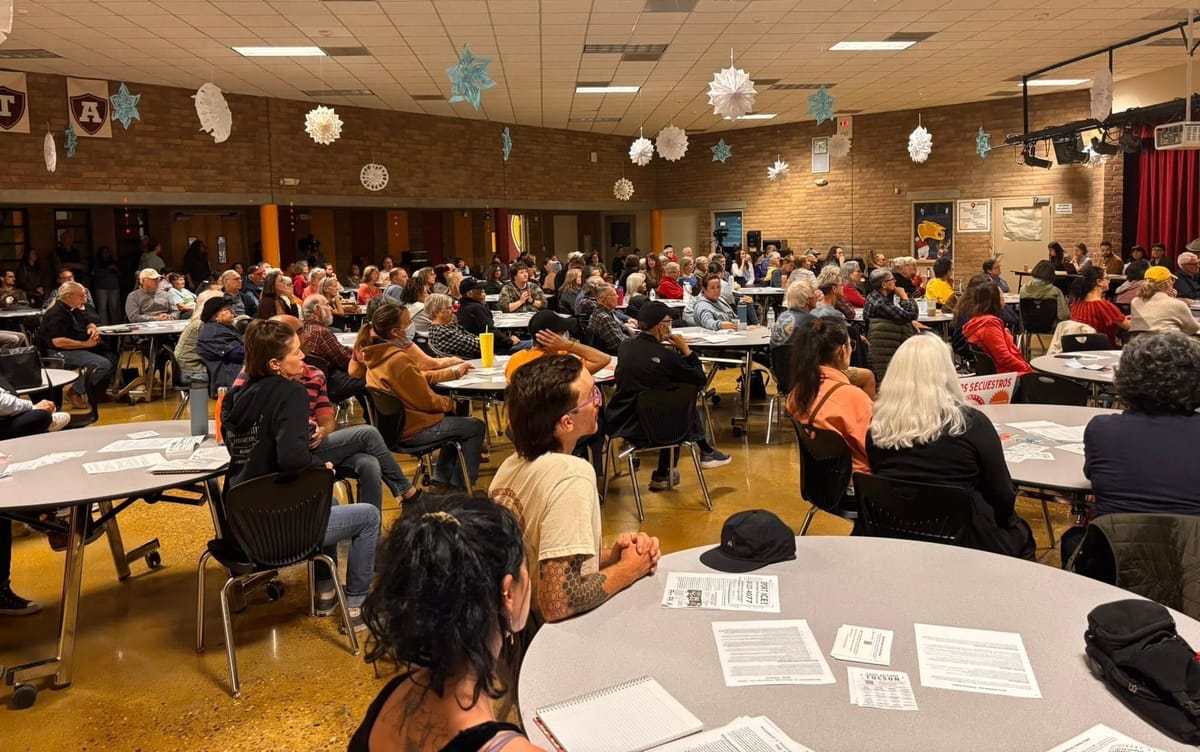
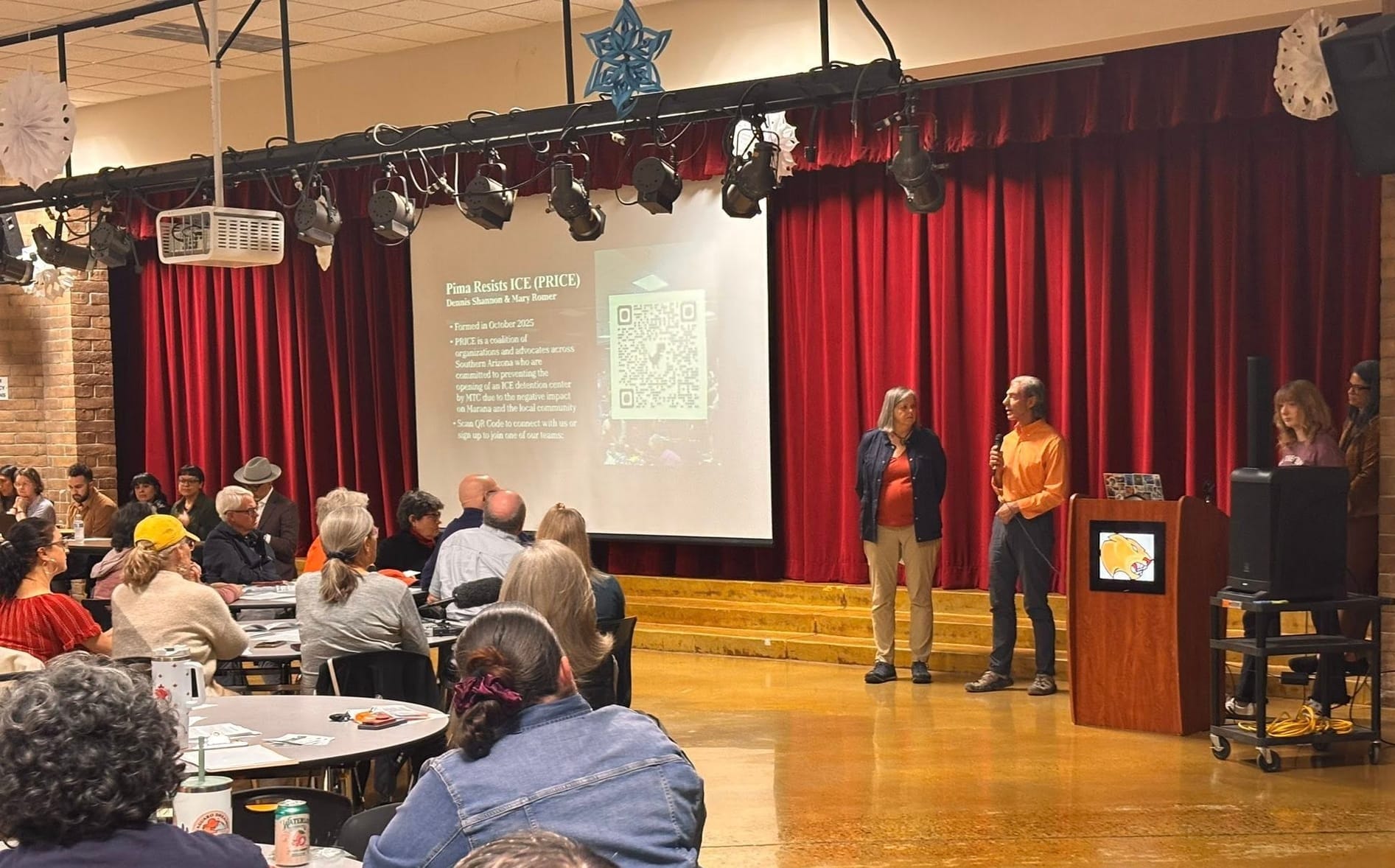
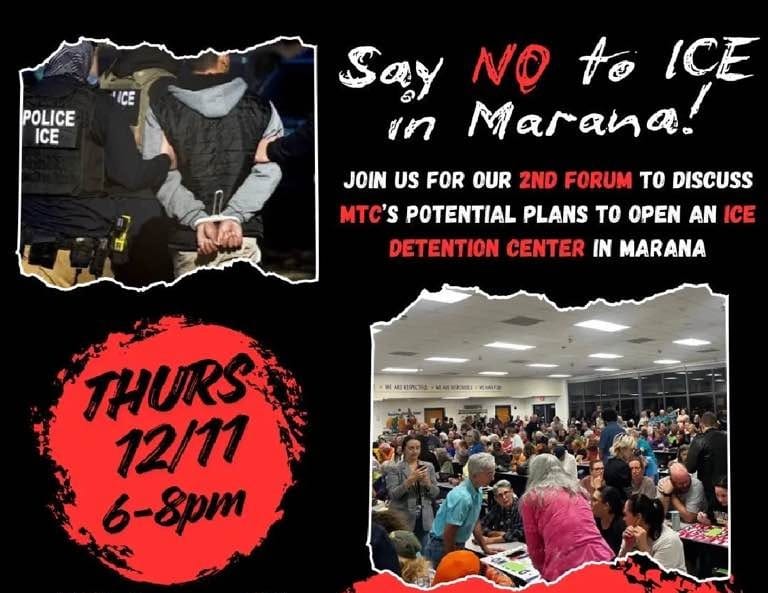
More than 150 people gathered at Tortolita Middle School last week for a community forum moderated by Pima County District 3 Supervisor Jennifer Allen to voice opposition and discuss next steps to prevent further development.
The Dec. 11 panel included representatives from several groups who addressed the potential impacts of an ICE facility in Marana and fielded questions from the audience. Also in attendance were representatives of Pima Resists ICE, to share their efforts.
“I had the good fortune to be born in this country. They didn’t. They’re fleeing poverty, they’re fleeing violence, they’re fleeing persecution, they’re fleeing war,” said immigration and human rights attorney Luis Campos Vasquez. “When they arrive at our borders they are victimized again by our government. It’s an intolerable situation and it’s shameful.”
In 2013, the state purchased the Marana prison from Utah-based private prison operator Management and Training Corp. for $150,000. The prison closed in 2023 because of a declining population and cost-cutting efforts. In May, MTC bought the facility back for $15 million.
MTC operates five immigration detention centers nationwide. Advocates cited the company’s history of alleged abuses and noncompliance with Arizona Department of Corrections standards for inmates and employees, raising concerns about the facility’s potential return to use.
“We have to call it what it is. This is persecution, the way that these immigrants are being incarcerated,” said Coalición de Derechos Humanos member Alba Jaramillo. “This is the fight of our lifetime. This is going to be the moment where we’re gonna look up and say, ‘What did I do?’”
Emails obtained by Arizona Luminaria in November show communication between Marana officials and MTC representatives indicating that zoning for the facility is already in place and few legal hurdles remain before conversion can begin. Records obtained by the ACLU of Arizona also show MTC’s intent to open a detention center.
ACLU of Arizona representative Noah Schramm said supporters of ICE facilities often argue they benefit local economies by creating jobs, a claim he said is not supported by research.
“Research on prisons and facilities consistently show that these institutions do not deliver broad economic benefits that the community expects,” Schramm said.
Studies show declines in surrounding property values, few or no gains in private-sector employment, and increased strain on local resources such as water, electricity and roads.
Panelists also pointed to reports criticizing MTC facilities for workers’ rights violations, chronic understaffing, poor wages and limited oversight.
Liz Casey, an advocate and social worker for the Florence Project, shared experiences from Arizona prison towns such as Eloy and Florence, warning that Marana could face similar challenges.
“There are thousands of people in Arizona who are being subjected to human rights abuses, and as Alma said, medical neglect, wrongful deaths,” Casey said. “My goal at the Florence Project is first of all to file complaints to oversight committees. One thing to note is that there are no oversight committees anymore.”
In July, Gov. Katie Hobbs signed legislation creating an independent Arizona prison oversight committee, but weeks later its funding was stripped from a state budget bill.
Panelists encouraged residents to engage with elected officials, noting that Marana has not yet received a required business license application from MTC.
“Make it clear not only to MTC, but also to your local elected representatives in the House and the Senate, that this is intolerable, that this is a priority issue, that this is something you will not stop bothering them about,” Casey said.
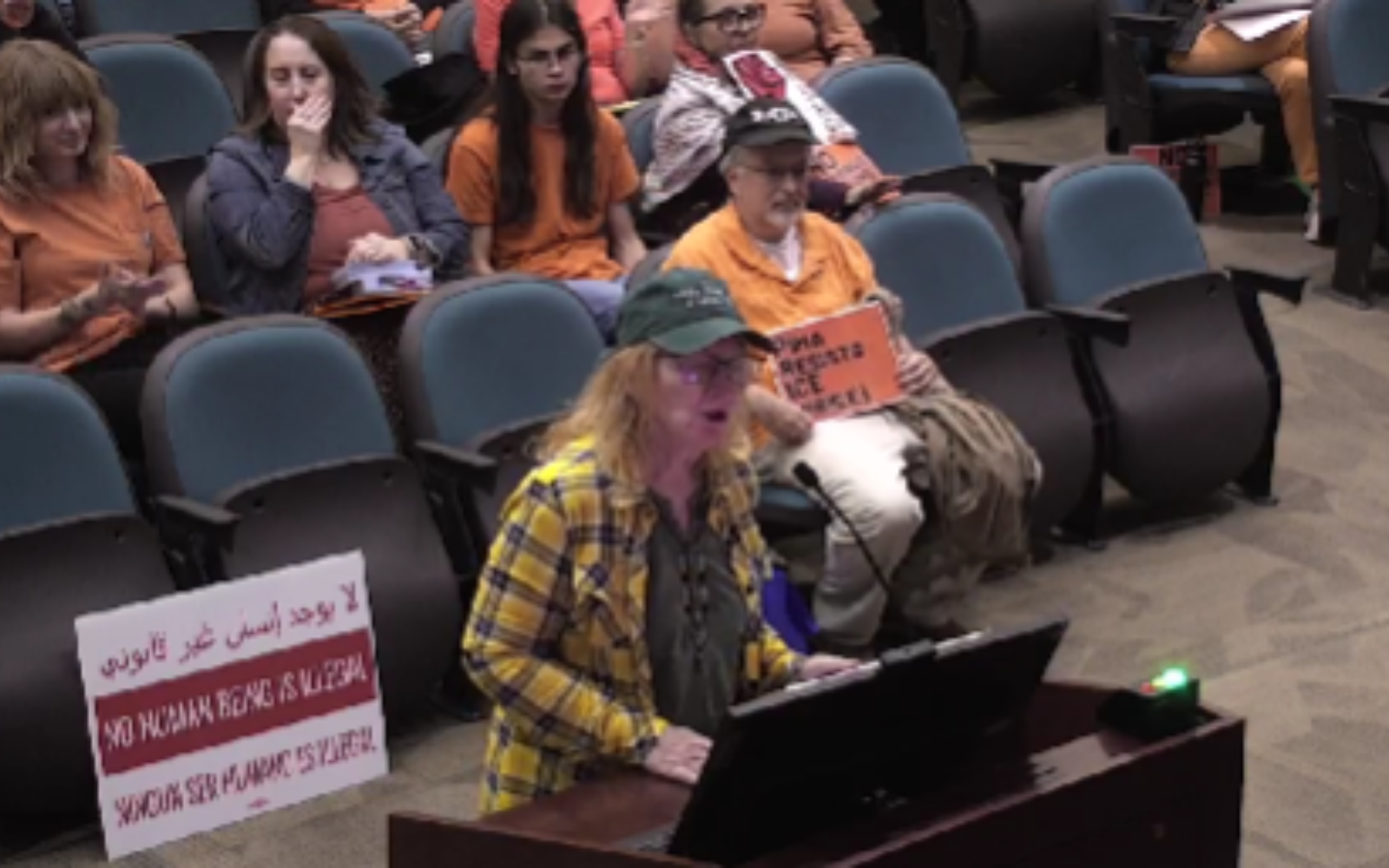
Residents carried those concerns to the Town Council’s Dec. 2 meeting, filling the full 30-minute public comment period.
While several speakers acknowledged that stopping the facility outright may be difficult, they urged town officials to pursue greater oversight and safeguards if it opens. Others raised concerns about the town’s image and potential strain on resources such as water.
Retired teacher Katie Gilson told the council members they could be “the heroes or the villains,” proposing measures to increase accountability, including requiring police supervisors to respond to incidents involving federal agents.
She also suggested police confront federal arrest teams to demand warrants, identify officers who conceal their identities and coordinate with the state Accountability Commission when necessary.
Gilson further proposed establishing “ICE-free zones” in government buildings, schools, health facilities and parks, backed by signage and court orders.
“Arizona has a strong Democratic governor and attorney general as well as two Democratic senators, which makes us a target,” Gilson said. “Reject the ICE program that allows local officers to act as deportation agents. Develop community networks and provide training to create ICE alerts. Chicago and Charlotte have done a great job with this.”
Resident Jennifer Powers said she worries the facility would undo years of efforts to beautify Marana and improve quality of life.
“I’m sure you’ve heard the reports of the history of MTC. Of the abuses, the millions of dollars in fines they’ve had to pay, the closures they’ve had to make,” Powers said. “And that’s prisons where they have allowed people to go in and observe them. It’s my understanding that they’re not going to allow you to go into their prisons and observe.”
Powers said she fears declining property values and a future similar to Florence, Arizona, following the opening of the Central Arizona Florence Correctional Center.
Tucson resident Vivek Barthon said the detention center is tied to what he sees as broader regional threats, including the expansion of AI data centers. He said public investment in ICE-related infrastructure could force towns into a “race to the bottom.”
“It’s the only other industry that’s growing right now, and that’s because they provide the infrastructure for the cruelty that ICE and this detention center will deliver,” Barthon said. “They’re growing because they're building. They’re growing their surveillance infrastructure and producing surveillance software to be stored in these data centers.”
Shannon Cardia said mass deportation is inhumane and expressed concern over ICE detention practices, including cases where individuals presenting proof of citizenship are detained in poor conditions.
She said Marana could soon face similar issues, noting that 74% of ICE detainees lack criminal records and that many deaths in custody are preventable.
“Detention separates people from their children, their loved ones and their livelihoods,” Cardia said. “It destabilizes communities and leaves families struggling to pay their bills.”
Marana resident Gloria Mendoza said the town’s sense of safety would change for her as someone with a Hispanic last name.
“I don’t want to carry my passport with me everywhere I go,” Mendoza said.
Julie Prince urged council members to broaden their news consumption and recall her own fear when stopped by Border Patrol while traveling, despite speaking Spanish.
“I would like you to research news that’s out of your local bubble,” Prince said. “Actually review things that you wouldn’t normally watch. Actually immerse yourself in this.”
She closed by reminding the council that five members face reelection in 2026, saying, “We’re watching.”
Bill Cicala, a longtime Tucson-area resident, said Marana’s reputation with visitors could suffer if an ICE detention center opens nearby.
“ICE is not the answer to our problems,” Cicala said. “I am not in the government to be able to do something about it, but I am an individual that can protest, stand up and voice my opinion. I am voicing my opinion to this council.”
Marea Jenness said her Yiddish last name comes from her grandfather, who immigrated to the United States illegally. She presented a proposed proclamation urging the town to affirm its commitment to being “safe, welcoming and inclusive” and to oppose the establishment of an ICE facility.
Brad D’Emidio suggested alternative uses for the closed prison, including a community farm, mental health and addiction services, a vocational education center and an emergency care facility.
He said such projects would be better investments and criticized the detention proposal as rooted in “hateful rhetoric” from Washington, D.C. D’Emidio also praised Town Attorney Jane Fairall and urged her to find a way to stop the project.
Howard Duran, a retired victims’ advocate for the Pima County Attorney’s Office, said volunteers are working to advance the Justice for All Initiative, a proposed 2026 ballot measure that would provide legal representation for undocumented minors.
“You can imagine what it’s like for a kid to cross the border and be in court and not even speak the language,” Duran said. “The reason we need an initiative like this is because of the climate of fear, intimidation, prejudice and xenophobia that has been created by the current Trump administration, basically as an exercise in political theater.”
Ruby Wray is a journalism and creative writing major at the University of Arizona and Tucson Spotlight intern. Contact her at rubywray@arizona.edu.
Ian Stash is a journalism major at the University of Arizona and Tucson Spotlight intern. Contact him at istash@arizona.edu.
Tucson Spotlight is a community-based newsroom that provides paid opportunities for students and rising journalists in Southern Arizona. Please consider supporting our work with a tax-deductible donation.