How Tucson influencers turned Instagram into community
Tucson influencers Megan Monge and Hannah Hildreth use Instagram to highlight local food, small businesses and community connections in the post-pandemic creator economy.
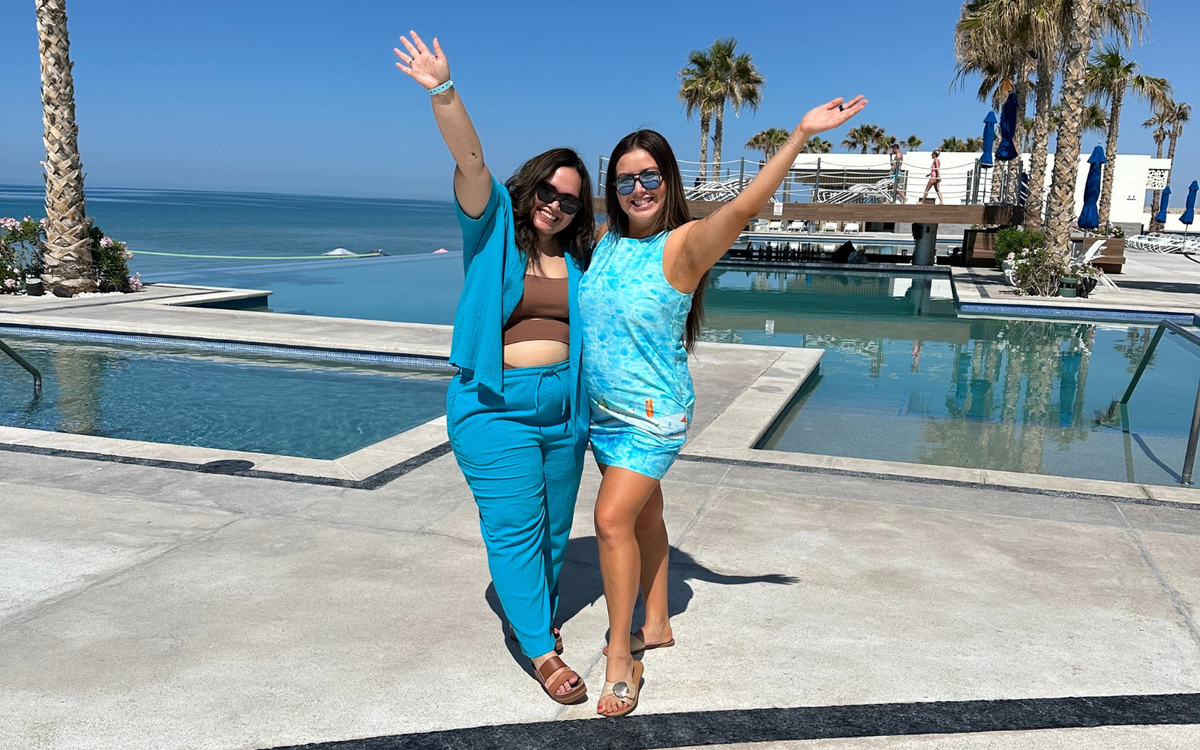
When the pandemic emptied Tucson’s dining rooms, it filled Instagram feeds, and local creators stepped in as unlikely lifelines.
What began as casual food posts during lockdown has grown into a community-driven influencer scene, where creators like @Tucsonlocalista and @hannahjeansplate use their platforms to spotlight small businesses, guide locals to hidden gems and turn social media into a digital love letter to the city.
In 2020, lifelong Tucsonan Megan Monge saw a need for content creation centered around small businesses. As a way to support them, she started creating videos of places she would go to eat, posting her orders, building relationships with owners and sharing her experiences with her roughly 3,000 followers.
“The business owners would tell me, ‘Megan, thank you so much because of you, you know, we've been able to, kind of get through COVID,’” Monge said. “It made me feel good. It made me feel like my work is needed, that this type of content creation is really needed in the community.”
She had no idea at the time that her Instagram account would become a hub for locals and visitors to find places to eat and things to do.
Monge, who goes by @Tucsonlocalista on Instagram, focuses specifically on Tucson, sharing local restaurants, activities and events. She recently started sharing more of her personal life, including posts about her dog and her weight loss journey.
While her focus initially was restaurants, she noticed people becoming interested in her as a person, asking where she got her nails and hair done.
Monge’s following has grown to just under 35,000, placing her in the category of a micro-influencer — creators with between 10,000 and 50,000 followers. Micro-influencers tend to focus on a specific niche and are often perceived as more authentic. According to a Forbes article, consumers can become distrustful when influencers appear to prioritize brand deals solely for financial gain.
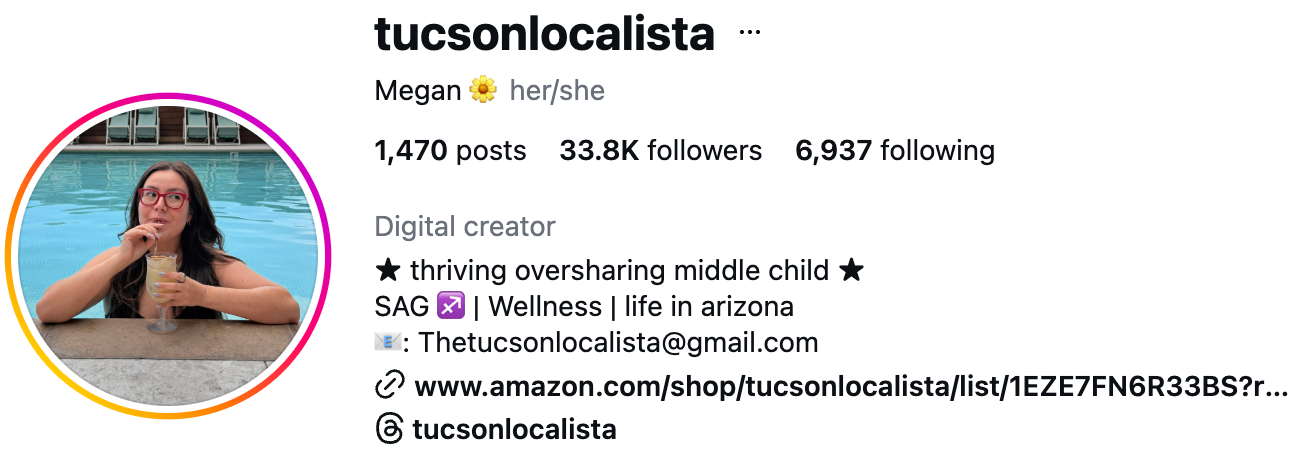
Monge describes her account as “very Tucson coded,” a guide for Tucsonans who already live here and want to discover new restaurants and things to do.
“You'll see a lot of Tucson small businesses, things to do in Tucson. You know, my favorite restaurants. And it just really encompasses who I am,” Monge said. “I'm very outgoing. I'm very extroverted. I like to try new things. So I think it's a fun Instagram to really go find something new to do.”
While micro-influencers like Monge have built sizable audiences, they represent just one layer of Tucson’s creator ecosystem. On a smaller, more personal scale, another group of content creators is shaping the city’s online community just as meaningfully.
Nano-influencers typically have between 1,000 and 10,000 followers and often share content rooted in everyday life. Hannah Jean Hildreth, who runs the Instagram account @hannahjeansplate, is a Tucson-based creator who moved to the city in 2019 for a job in higher education.. After moving frequently and arriving without knowing anyone, she hoped to build a sense of belonging.
Hildreth has always loved food. While living in Hawaii and being surrounded by a vibrant food scene, she developed a genuine passion for photographing and filming her meals, earning her the reputation of being the friend who always has photos and videos of where everyone ate.
At first, she rarely shared her content publicly, occasionally posting on a private account where only family and friends engaged with her posts. Within her close circle, she quickly became the go-to person for restaurant recommendations.
But in 2020, Hildreth, like Monge, joined the wave of content creators.
“I think (the pandemic) was the perfect storm, I guess, for me to also start posting publicly,” Hildreth said. “It felt weird at first. I used to feel really self-conscious, but now I don't really care because people see what they want to see on the internet and whether they think it's cringe or not, that's up to them.”
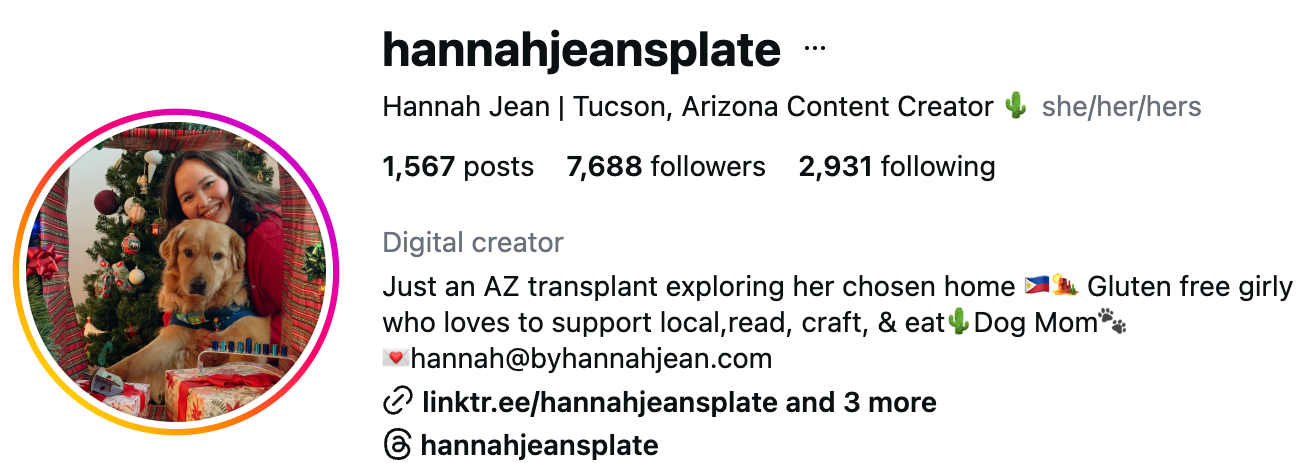
Hildreth’s content focuses on local places to eat and explore. More recently, after going gluten-free, she shifted her account, @hannahjeansplate, to highlight gluten-friendly restaurants around Tucson.
The shift was driven by more than a personal dietary change; it came with a growing sense of responsibility to her audience.
“I'm going to share my Yelp review. I feel an obligation almost to share because there're so many places that don't have a review that says if they're gluten free,” Hildreth said.
For Hildreth, this work ties back to her broader purpose of helping others. She often calls restaurants directly to ask about gluten-free options, then writes reviews or creates videos to showcase what’s available for people with dietary restrictions.
As her presence in Tucson’s food and creator community grew, Hildreth began connecting with others who shared her approach to content creation. She met Monge at a Yelp event, where the two bonded over shared values and interests.
“It’s nice to have someone that understands (content creation),” Hildreth said. “But you also have to have someone that you feel comfortable with and has a growth mindset of seeing as cheering each other's successes and not being a competition.”
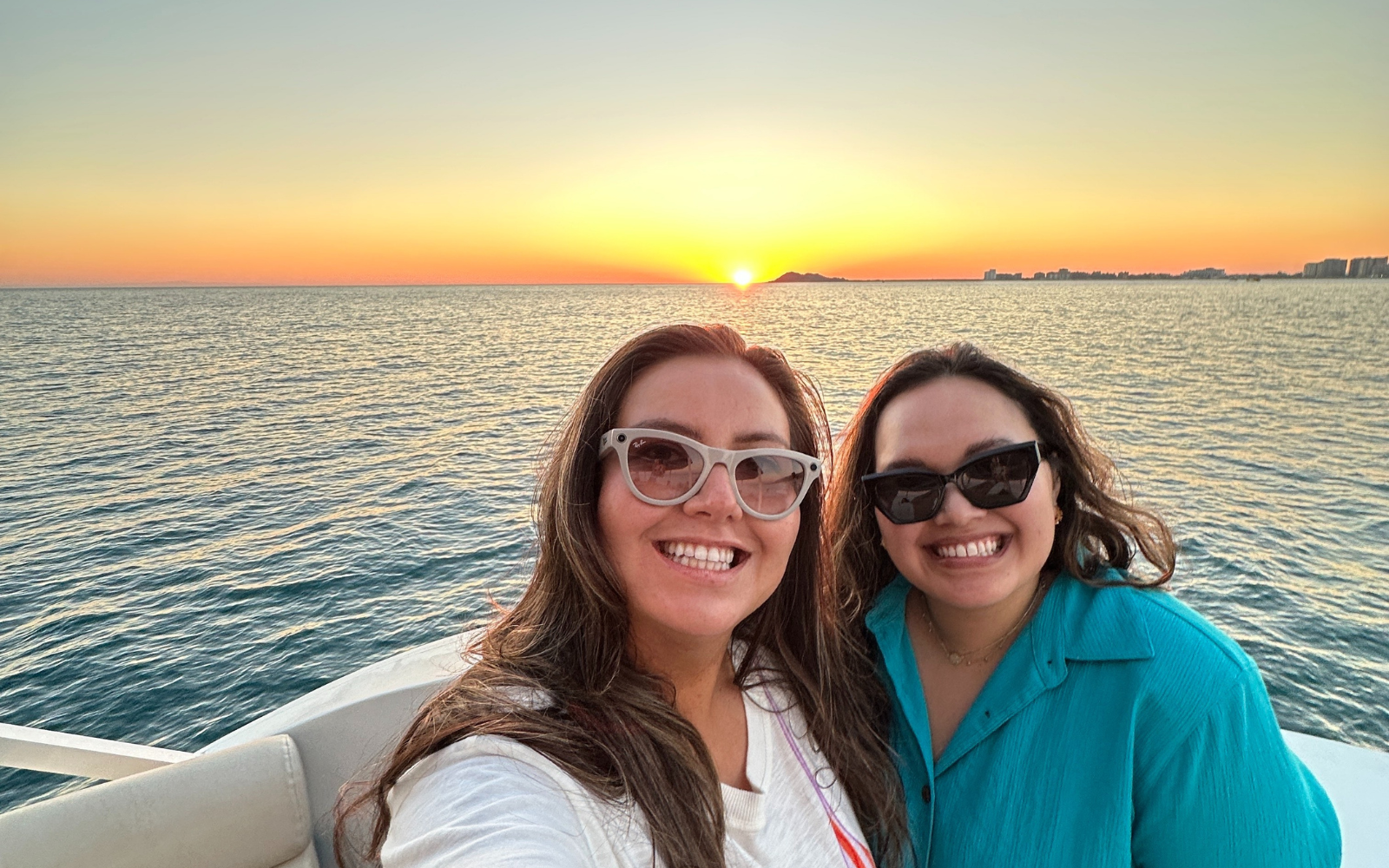
In 2025, Monge secured a partnership with a resort in Puerto Peñasco, Mexico, and was able to bring along one guest — Hildreth.
“Since we get along so well, it's not just about creating content, it's about us. Being friends, talking about what book we're reading or where we want to go thrifting or what our dogs are up to, or our families,” Hildreth said.
A 2022 Adobe study on the Future of Creativity in the creator economy found that, for most creators, content creation remains a hobby or side hustle.
Both Monge and Hildreth work full-time jobs and view their social media platforms as work on the side. Both have secured partnerships with Fry’s Grocery Store and monetized portions of their content through a mix of product trades, services and paid collaborations.
“Being able to monetize, being able to get brand deals has really helped me pay my bills,” Monge said. “It's really life changing for me because I have been able to invest in other aspects of my life.”
Beyond monetization, Monge and Hildreth remain committed to their original mission: supporting the community by highlighting local places to eat and things to do in Tucson.
“I’m just sharing my love and passion for where I live,” Monge said.
For both creators, that commitment is rooted in a shared affection for the city — one they express in different but complementary ways.
“I'm just hoping people can connect to these places and find a deeper love for Tucson,” Hildreth said.
Diana Ramos is a University of Arizona alum and Tucson Spotlight reporter. Contact her at diana@tucsonspotlight.org.
Tucson Spotlight is a community-based newsroom that provides paid opportunities for students and rising journalists in Southern Arizona. Please consider supporting our work with a tax-deductible donation.