Grijalva tours Tucson food bank amid cuts, rising hunger
U.S. Rep. Adelita Grijalva toured the Community Food Bank of Southern Arizona as leaders warned that federal funding cuts and SNAP disruptions are driving rising hunger.
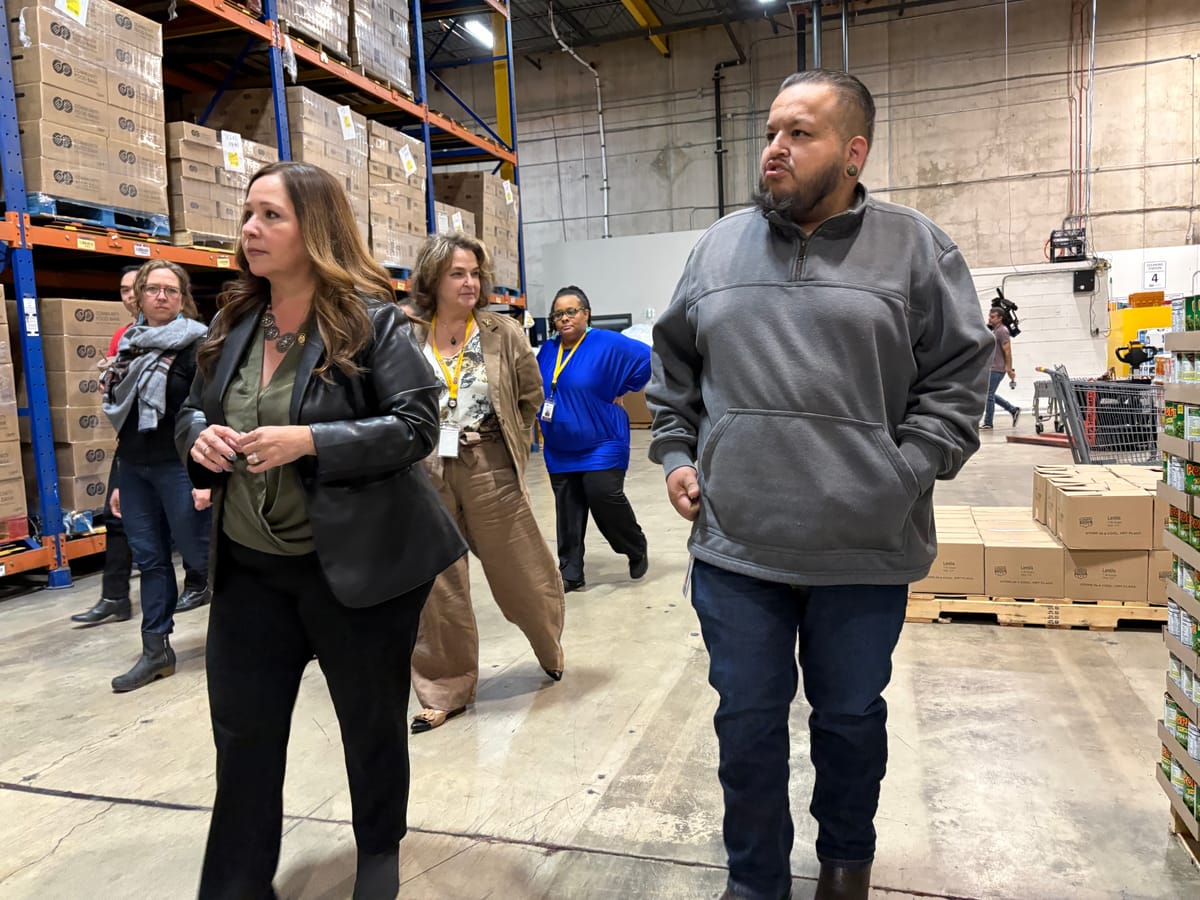
U.S. Rep. Adelita Grijalva toured the Community Food Bank of Southern Arizona on Friday as leaders warned that federal funding cuts and shrinking food supplies are colliding with a sharp rise in need.
During her visit, staff described emergency food boxes that are now significantly smaller and deliveries that are increasingly unreliable.
Grijalva said the cuts are already having real consequences for families who rely on food banks to get through the month.
Recent provisions in the “One Big Beautiful Bill” cutting SNAP benefits have gone into effect. An October SNAP system shutdown also delayed or disrupted benefits for some recipients, adding to food insecurity for families already struggling. At the same time, the federal government has sought to “eliminate fraud and waste” by cutting discretionary spending for certain programs, including purchases of food for emergency food banks.
“We noticed an increase of 30% in people who weren’t using food banks before, coming through as a result of the shutdown,” said CEO Natalie Jayroe.
The surge in demand is being felt not just locally, but nationwide, staff said.
“It’s been taking a toll on a lot of people across the nation,” said the food bank's director of policy and community organizing, Claudio Rodriguez, adding that he has seen an increase in families and individuals coming through in the last few weeks.
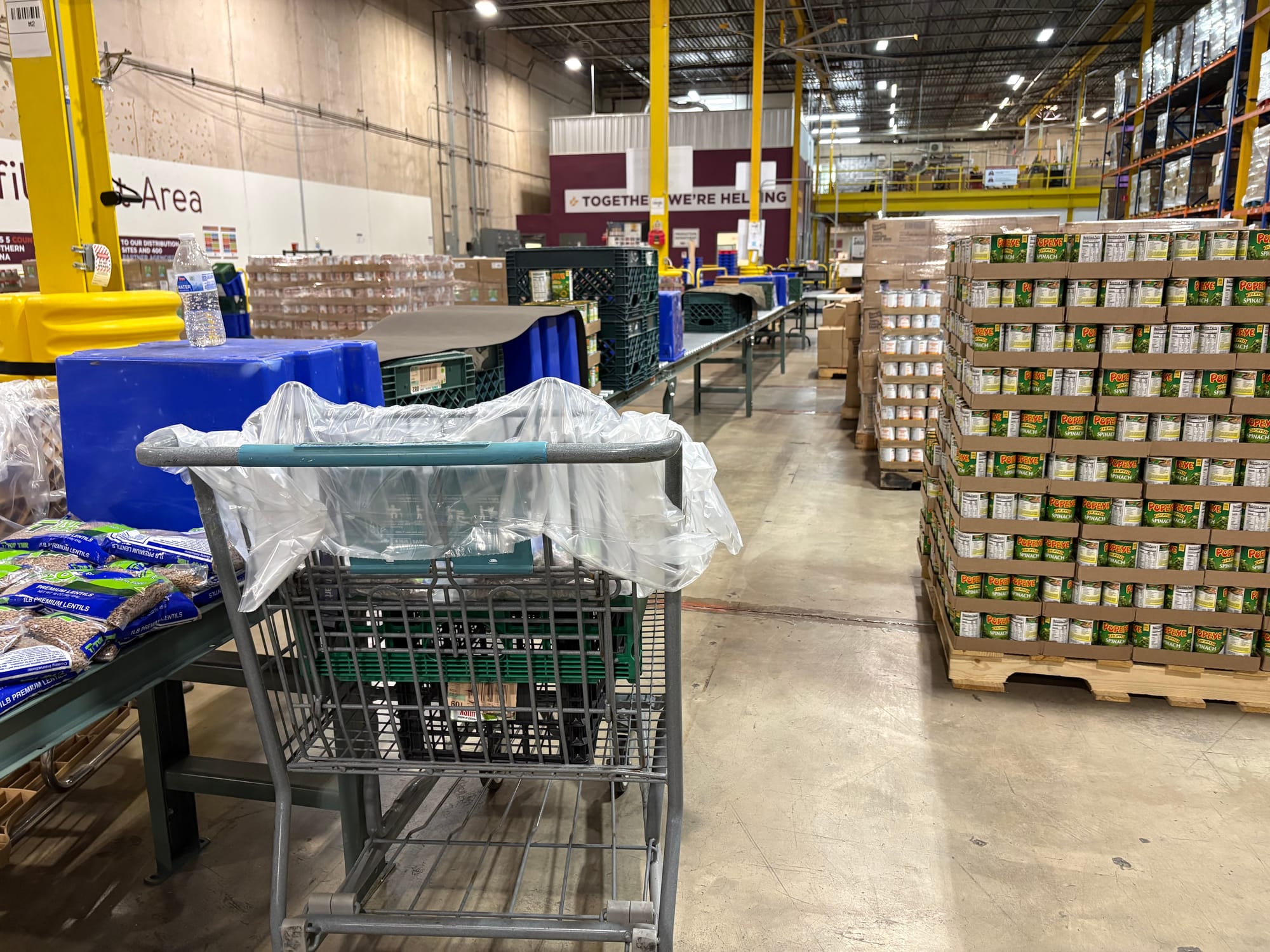
Jayroe said the organization’s emergency food boxes, meant to last a month, are now 50% smaller.
The funding program under which emergency food banks operate dates back to the New Deal era and involved paying farmers to supply food banks. A significant portion of those supplies also came from USDA purchases made to stabilize market prices and redistribute food to national food banks.
“When they said, ‘No more discretionary spending,’ for us, that was half of the food from USDA that we distribute,” Jayroe said.
Without those purchases, farmers lost a guaranteed buyer, leaving food banks without supplies and produce left to rot in fields when it could no longer be sold to USDA.
“There are some funding sources that have been cut by this administration that are having a critical effect on all of our communities, and it’s not going away,” Grijalva said.
Food bank leaders said those cuts are already showing up in day-to-day operations.
“We have loads that are being canceled, and we don’t get to know why,” Jayroe said.
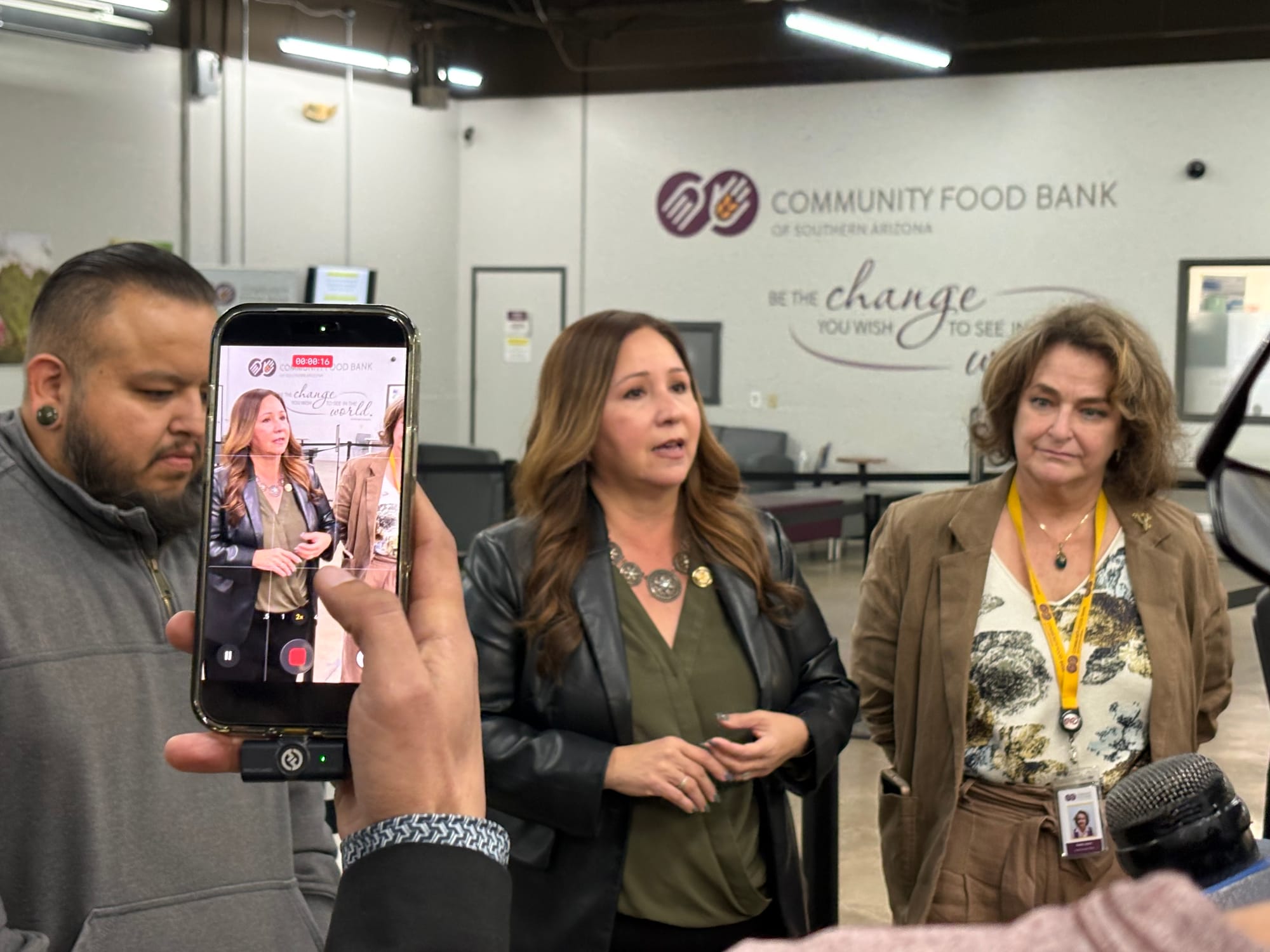
She said the food bank was expecting shipments of pasta that were canceled by the supplier without notice. Because of strict federal health and safety guidelines, the organization cannot easily switch suppliers or quickly replace canceled shipments.
These supply issues can be minor on their own, but without government resources to supplement them, they quickly become major. Waiting for those problems to be resolved is not realistic for people living in poverty.
“Every day feels like an eternity when you are hungry,” Grijalva said, adding that trade tariffs and closed border policies in Southern Arizona may be affecting routine supply lines.
The Community Food Bank of Southern Arizona gets a majority of its fresh produce from suppliers near the border.
Grijalva said there is currently no solution to the sweeping tariff policy without a shift in control of the House and Senate, citing a lack of bipartisan cooperation despite efforts by Democratic lawmakers.
Despite a recent surge in ICE deployments across Southern Arizona, there have been no confirmed reports of ICE or Customs and Border Protection agents targeting food banks.
Grijalva said enforcement actions should be barred from “safe spaces” such as food banks and health care centers, warning that fear of enforcement can undermine public health and community safety by discouraging people from seeking emergency services.
Quentin Agnello is a University of Arizona alum and freelance journalist in Tucson. Contact him at qsagnello@gmail.com.
Tucson Spotlight is a community-based newsroom that provides paid opportunities for students and rising journalists in Southern Arizona. Please consider supporting our work with a tax-deductible donation.