Free online tai chi helps Tucson cancer patients cope
Free online tai chi and yoga help Tucson cancer patients and caregivers through integrative care at the Cancer Center.
Some mornings, Tucsonan Peggy Turk Boyer connects her computer to the TV and follows a tai chi instructor on Zoom, an hour that helps her care for her husband, who was diagnosed with cancer five years ago.
She learned about the classes during a regular visit to the Arizona Cancer Center with her husband. A former practitioner of tai chi, Turk Boyer noticed a poster inviting patients and their caregivers to attend the free online classes.
She signed up immediately.
“(Tai Chi) is very relaxing, it stretches muscles that don’t get stretched,” Turk Boyer said.
Turk Boyer, 73, started attending the classes last fall, saying they’ve helped her to feel relaxed and less anxious as she cares for her husband, 81. Sometimes he joins in when she reminds him it will help with his balance.
Her husband used to enjoy walking, but a fall three or four months ago left him able to walk only short distances, Turk Boyer said.
“He had a physical therapist telling him that Tai Chi would be good, even though I told him that,” Turk Boyer said with a chuckle.
Your membership pays emerging journalists to cover Southern Arizona the way it deserves.
The classes that Turk Boyer and her husband enjoy are offered to patients and caregivers for free as part of the Arizona Cancer Center’s Circles of Holistic Care program, known as COHC, which uses integrative medicine as complementary treatment.
According to the National Cancer Institute, about 2 million people in the United States will be diagnosed with cancer in 2026. Cancer is also the leading cause of death for Hispanic people in the U.S.
A cancer diagnosis can be emotionally, physically and spiritually draining, says COHC Program Director Dr. Reya Sharman. Patients go through multiple treatments, including radiation, surgery and chemotherapy, and she believes integrative care can treat the whole person alongside their systemic treatment.
“With COHC there’s actually an opportunity for people to feel like they are healing and not just getting treatment,” said Sharman, adding that she noticed many of her patients feeling unwell even after treatment.
COHC was started in December 2022 with a $1.1 million donation from the estate of Tom and Catherine Culley. Before her death, Catherine Culley, who was 100 years old, expressed her interest in a bequest for Arizona-based cancer research.
COHC aims to support cancer research from a holistic perspective that takes into consideration body, mind and soul.
COHC offers a series of programs ranging from nutrition to spirituality, with a schedule that varies. Its current offerings include recurring sessions of yoga and tai chi, which are most requested by patients.
Classes are offered online by certified instructors, and patients and caregivers can sign up for the classes through COHC’s website.
Once signed up, participants receive an email with the Zoom link. After the class, they receive an email with a recording, in case they missed it or want to do the class on their own time.
“We do have to consider who our patients are and their physical limitations as well. So for some people, it’s a matter of just like, ‘I can’t physically get there to the cancer center. It’s far away from me or it’s just a matter of comfort of doing (the classes) in my own home. I can do it without judgment or without having other people see me and know that I’m patient here,’ so patient privacy reasons, as well,” Sharman said.
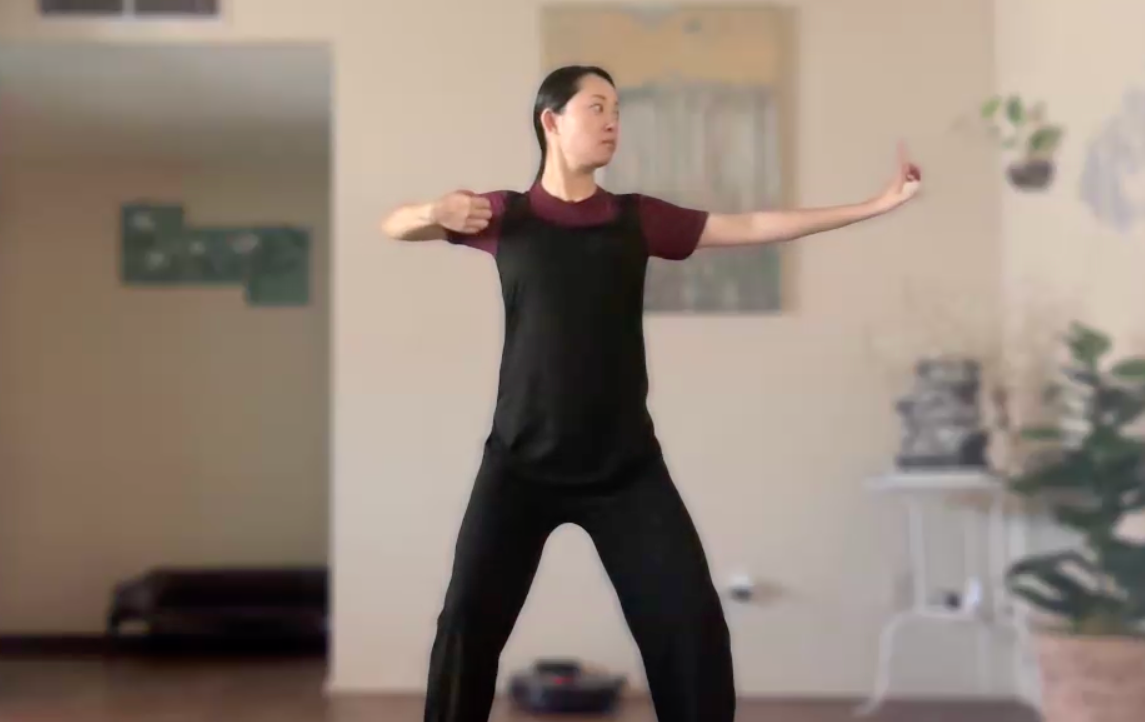
Yunjia Yang teaches a one-hour tai chi class every Tuesday morning via Zoom. Through the screen, she invites patients and their caregivers to follow the movements.
“Tai Chi is a gentle, mind-body movement. It is slow, coordinated with mindfulness and with breathing,” said Yang, who has more than 10 years of experience teaching tai chi. “The concept is similar to yoga, but with Tai Chi there is not too much stretching or abending. It’s mostly standing.”
Research suggests that tai chi can support balance, pain management, cognitive health, sleep, quality of life and emotional well-being. The low-impact exercise can be adapted to different levels of mobility.
It’s recommended as a form of exercise for individuals undergoing difficult treatments or with preexisting health conditions, including cancer patients and survivors.
At home, Turk Boyer connects her computer to the TV and starts the class. As the class progresses, Yang reminds participants to keep a straight back and keep breathing through each movement.
“I feel a presence of mind during the hour that I do the Tai Chi class, I feel a peacefulness afterwards that helps me be there for my husband,” Turk Boyer said, adding that she wishes she could practice it more often, but sometimes her husband’s medical care appointments conflict with the weekly class.
The COHC offers other services and has hosted a mindfulness series led by a licensed psychiatrist who works with cancer patients. The sessions covered how to manage stress and anxiety, how to use breathing to cope and how to breathe through nausea, and they were offered in English and Spanish.
Last year, COHC hosted a drumming therapy circle, considered one of the oldest mind-body wellness activities, allowing patients and caregivers to come together and connect through music and healing in community.
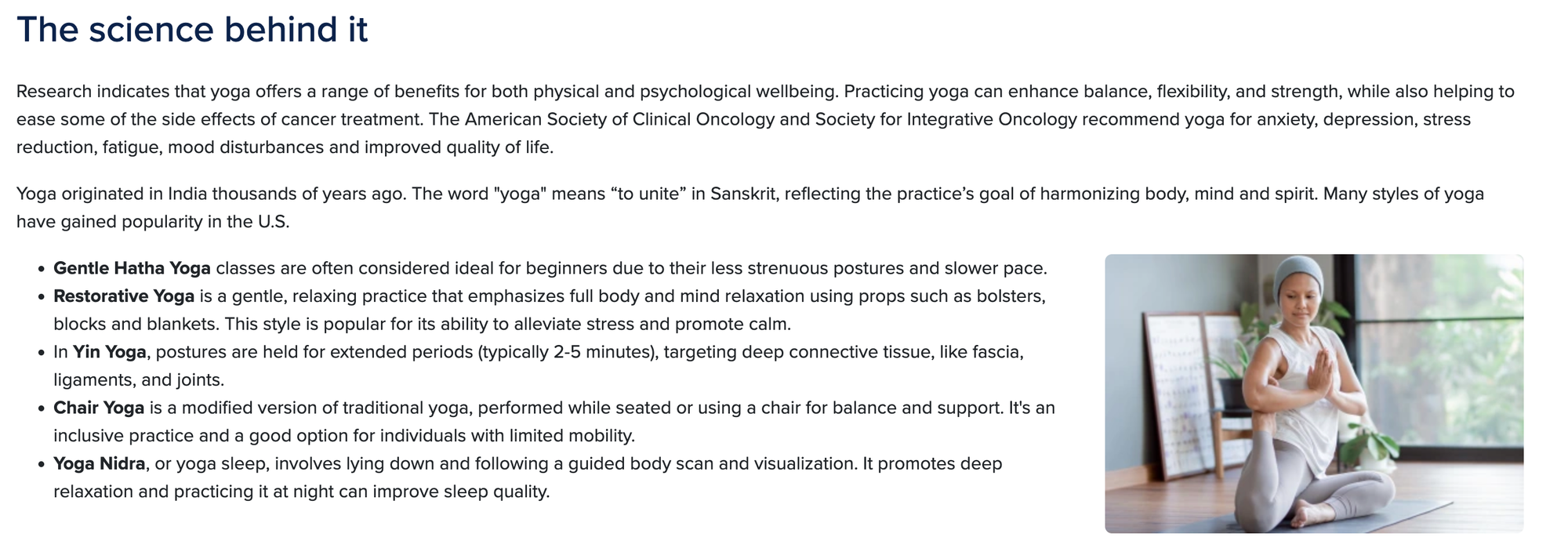
COHC has served more than 300 patients and caregivers since its creation. All services are rooted in integrative medicine and integrative oncology, which aims to target whole-person care.
“For integrative oncology, we use evidence-informed complementary therapies. These therapies are used to help heal the patients, they are done alongside standard care treatments for patients,” said Sharman. “While patients are getting systemic therapies, surgery, radiation treatments, (integrative oncology) does not replace any of these things, but it kind of helps build resilience, coping skills to help them get through their cancer treatments better.”
Integrative oncology is relatively new field of study. The Society for Integrative Oncology was founded in 2003, a pivotal moment in the maturation of the field. Though it is a patient-centered and evidence-informed approach to cancer treatment, some providers still don’t understand its benefits, says COHC Clinical Leader Dr. Anna Roshal.
“You cannot blame them, right? (Integrative oncology) is very new,” Roshal said. “We are trying in the future to do a lot of education with our own colleagues about the benefits that (integrative oncology) brings to our patients.”
COHC’s nurse navigators help patients access and understand what resources are available to them, including COHC’s own. But many times, patients find out about COHC through their oncologists.
“The oncologist is the kind of person that can be that bridge for the most appropriate touch of services,” said Sharman, explaining that patients tend to have more trust in their providers.
COHC wants to expand its services to add more in-person options, like acupuncture and massage. Additionally, it would like to create a patient care assistance fund to help patients with lodging, transportation to access COHC services and other needs. But with COHC still operating under the $1.1 million donation, more funding will be needed to expand.
“If we’re going to provide more hands-on services, like acupuncture, for example, that is a huge financial barrier. Most acupuncture services are not covered by insurance,” Roshal said. “Finding a way to provide that to the patients without them incurring significant cost is a big challenge.”
Most insurance companies do not cover integrative medicine. Data from the 2022 National Health Interview Survey shows that 36.7% of adults used complementary health approaches such as yoga, meditation, massage therapy, chiropractic care, acupuncture, naturopathy and guided imagery/progressive muscle relaxation.
According to the survey, patients spent $14.7 billion out of pocket for visits to complementary and integrative health practitioners such as chiropractors, acupuncturists and massage therapists.
Sharman hopes that with time, more integrative medicine services will be covered by health insurance plans. But it is going to require the efforts of integrative oncologists to conduct research and disseminate findings that could improve insurance coverage for integrative medicine.
“Anything in medicine, we’re always at least 10 to 20 years behind,” Sharman said. “We knew mental health was important decades ago and now we’re getting good coverage for it.”
As part of the Cancer Center, COHC is committed to advancing integrative oncology research by publishing its findings to help the community and the field. COHC is working to improve its tracking system for class attendance and to implement a more structured outcome report beyond just attendance to better measure the program’s impact.
COHC also wants to implement more services in Spanish to better serve Southern Arizona’s Spanish-speaking population.
“Language should not be the barrier for you to get these services,” Sharman said. “One of the things we talked about is our handouts. How can we have them in Spanish but translated appropriately so that it’s not a language barrier?”
Though still a young program, COHC continues to listen to patients and caregivers so it can offer integrative medicine services that meet their needs.
“I think (integrative medicine) is wonderful. Getting the mind and the body working together is essential to healing, whether it heals our body ultimately or not, but healing or providing a healthier and more peaceful path forward,” Turk Boyer said.
Diana Ramos is a University of Arizona alum and Tucson Spotlight reporter. Contact her at diana@tucsonspotlight.org.
Tucson Spotlight is a community-based newsroom that provides paid opportunities for students and rising journalists in Southern Arizona. Please consider supporting our work with a tax-deductible donation.