Flandrau celebrates 50 years with new exhibit, holiday shows
As it enters its next half-century, Flandrau is highlighting its legacy of science education with refreshed exhibits and immersive programs that continue to spark curiosity in visitors of all ages.

As Flandrau Science Center and Planetarium closes out its 50th anniversary year, families continue to spill through its exhibit halls and settle under its dome, eager for the blend of curiosity and spectacle the center has offered for decades.
The center celebrated its official anniversary on Saturday, Dec. 13, the day it first opened its doors to the public.
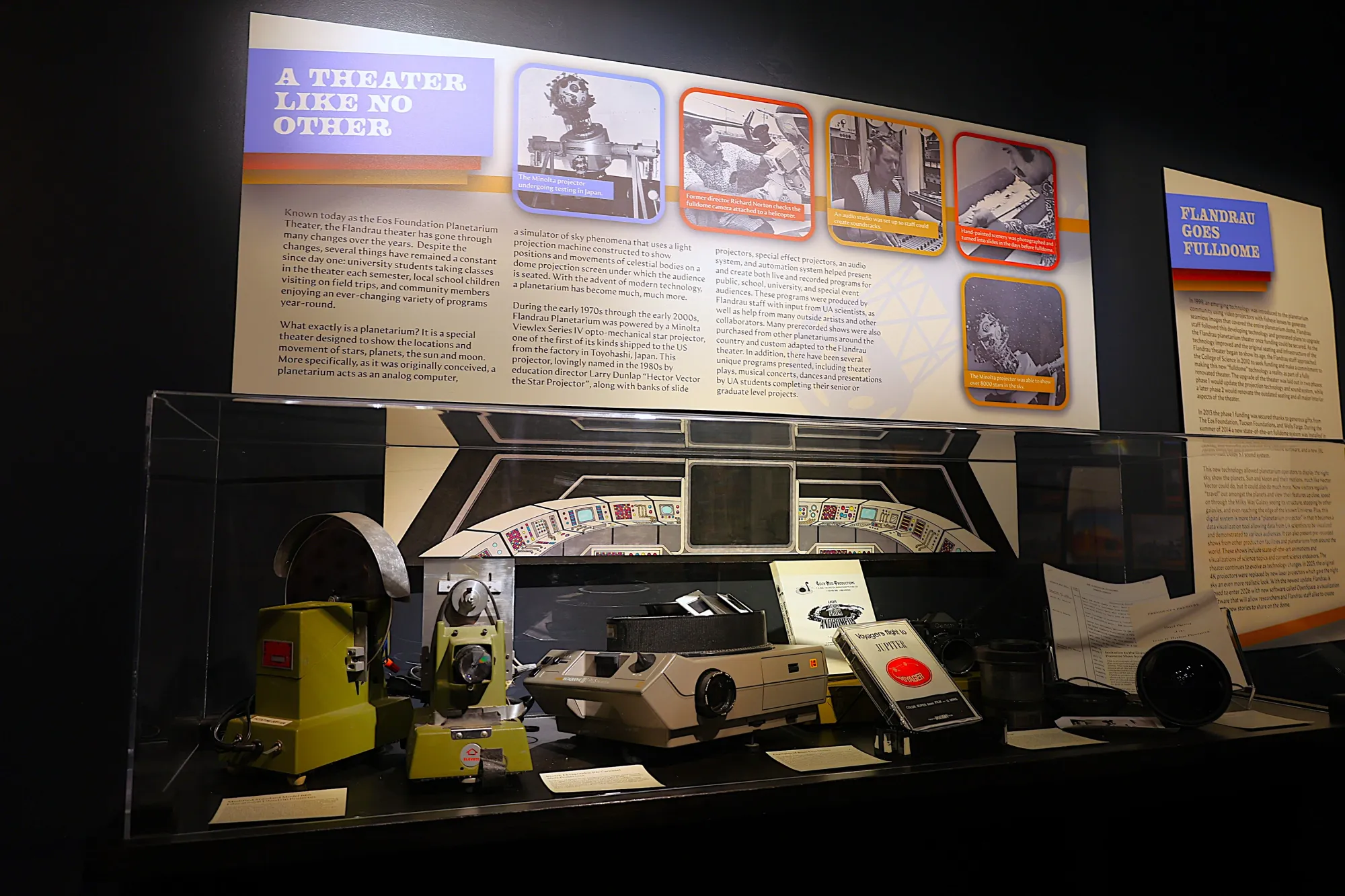
It marked the occasion with a free admission day and the opening of a temporary exhibit that traces the center’s origins through its major milestones and innovators. The exhibit walks visitors through five decades of milestones, showcasing the founders, scientific breakthroughs, community partnerships and evolving technology that shaped Southern Arizona’s only science center and planetarium.
It will remain on view through early spring before being replaced by a new astronomy experience, “Mysteries of the Cosmos.”
Flandrau is also offering a lineup of holiday-themed planetarium shows and laser events throughout the month, including the popular “Season of Light” show and other music-driven light displays. Each ticket includes access to the science center’s hands-on exhibits, making the holiday programs a family-friendly way to explore and celebrate under the dome.
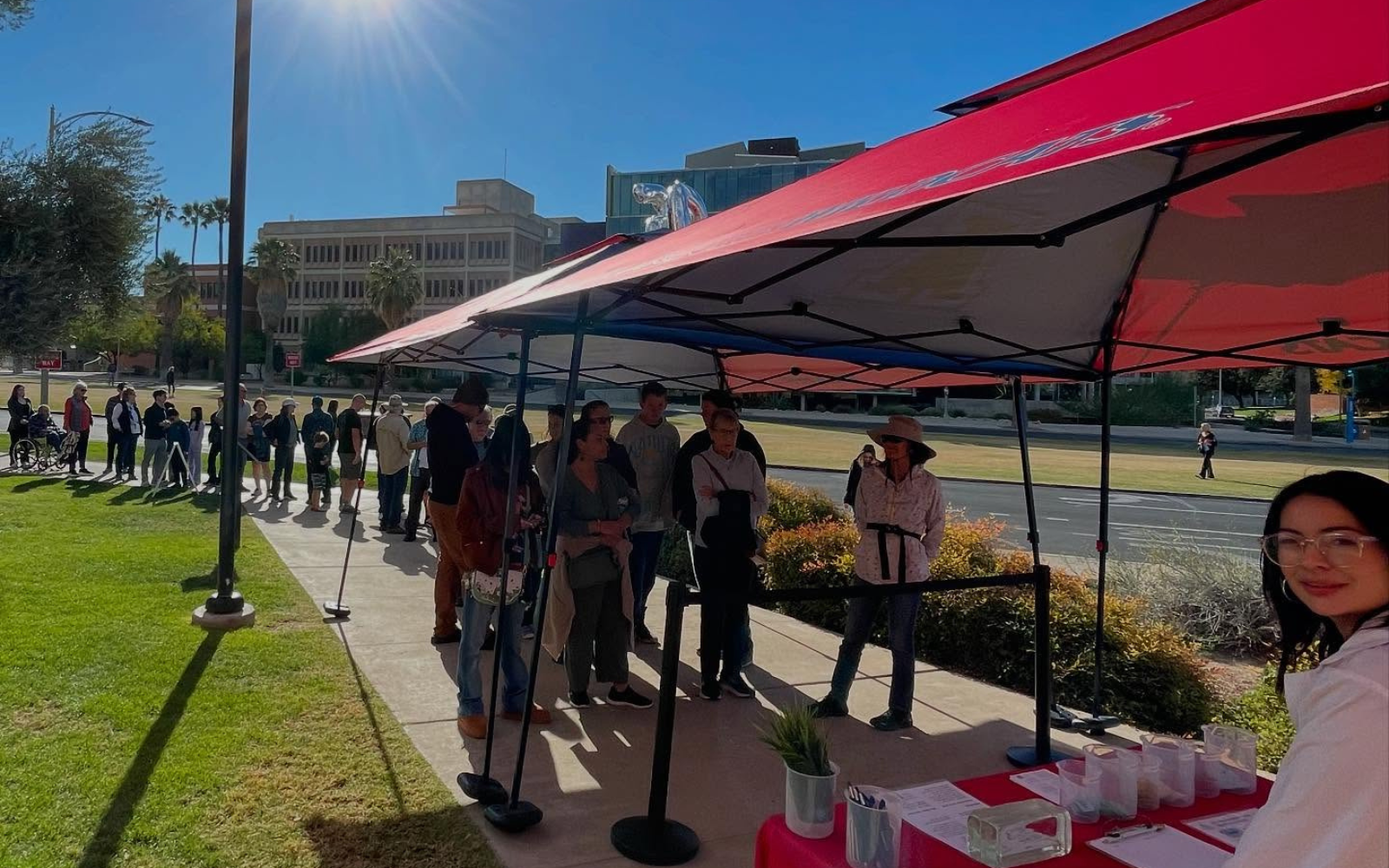
The center, located near the UA Mall, offers year-round programming and special events. From the outside, the building might appear unassuming, but inside it boasts large, interactive screens, hands-on exhibits and the dome-shaped Eos Foundation Planetarium Theater.
The theater-like room sits at the heart of the center, topped with a white dome that uses a network of projectors to create a movie-like visual experience. The seats are angled for comfortable viewing, encouraging visitors to lean back and look up. With its vibrant imagery and rich sound, the dome creates an immersive experience.
The center also includes its “Universe of Science” exhibit, where visitors can explore the anatomy of the human brain, the “sky islands” of unique mountain climates, and get up close with insects and sea life. The interactive exhibits are designed to engage visitors while educating them about the need for ecological protection.
“I think inspiring kids to work more in STEM is beneficial to our society as a whole,” said star talk speaker Robin Alvarez.
Alvarez is one of the center’s many star talk presenters who host the planetarium experience and lead discussions following the shows. From an operating booth inside the theater, speakers control a digital night sky, highlighting constellations, planets and other topics during their talks.
In addition to its regular programming, the planetarium hosts special screenings such as October’s showing of “Black Holes: The Other Side of Infinity,” narrated by Liam Neeson and paired with a star talk and video about black holes.
Shows like “Black Holes,” while meant to entertain, are also designed to broaden visitors’ understanding of celestial bodies and how the universe works.
“It was entertaining for sure,” said Manuel Hernandez, who attended the screening with Gabriel Coe.
The pair said they hadn’t been to the planetarium in a long time and were eager to return with their nieces and nephews.
“I like the way they visualized the gravity wells inside of black holes,” Coe added.
Visitor Patrick Christian, who said he spends more time at planetariums than most, agreed.
“It was nice to have the opportunity to see the show while I was in Tucson,” he said. “I’m a big fan of science.”
Alvarez said that sense of connection is what drives his work at Flandrau.
“The reason I do like working this job is I get to inspire kids,” he said. “When I was growing up, I was inspired by big faces in the scientific community.”
Quentin Agnello is a journalism major at the University of Arizona and Tucson Spotlight intern. Contact him at qagnello@arizona.edu.
Tucson Spotlight is a community-based newsroom that provides paid opportunities for students and rising journalists in Southern Arizona. Please consider supporting our work with a tax-deductible donation.