Downtown Tucson mural celebrates women's history
Three Tucson muralists created "Women Weaving History," a two-story mural on the Ceres building in downtown Tucson commissioned by Rio Nuevo to honor the women who have shaped Southern Arizona's culture across generations.
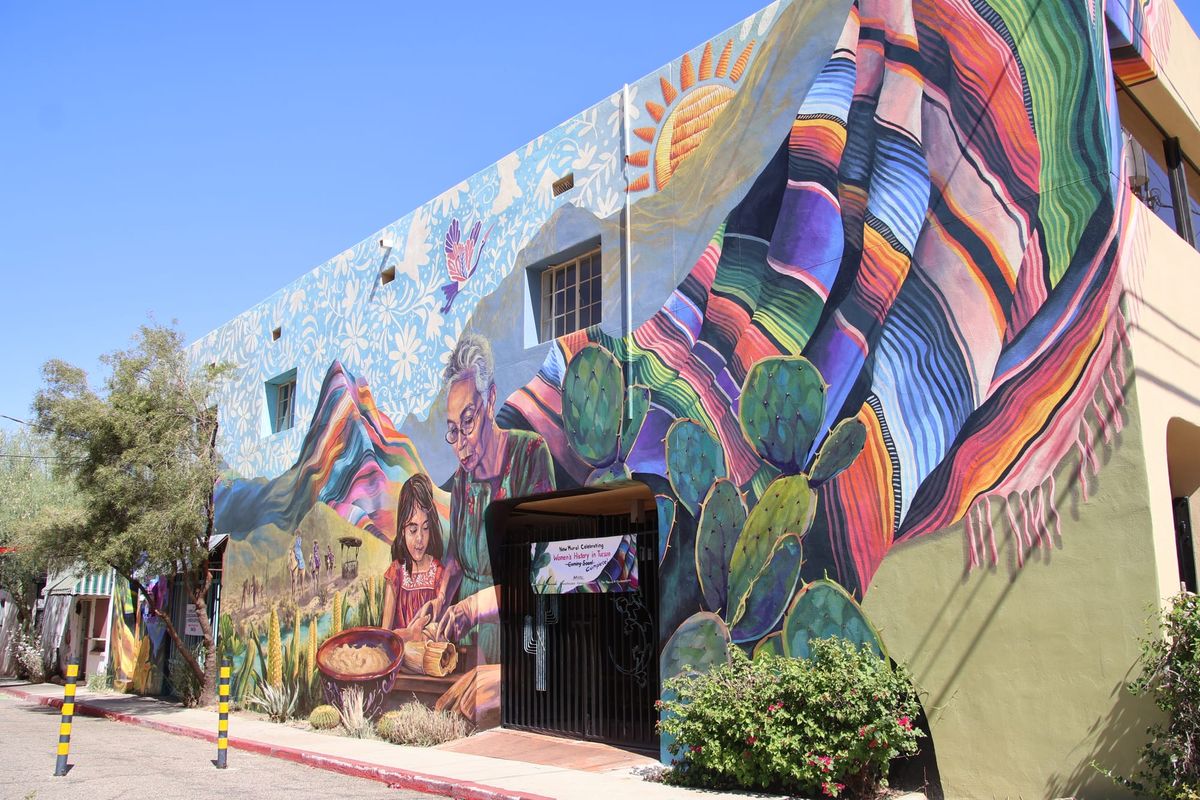
A new two-story mural in downtown Tucson honors the women who have shaped Southern Arizona's culture and history, from Tohono O'odham basket weavers to tamale-making grandmothers.
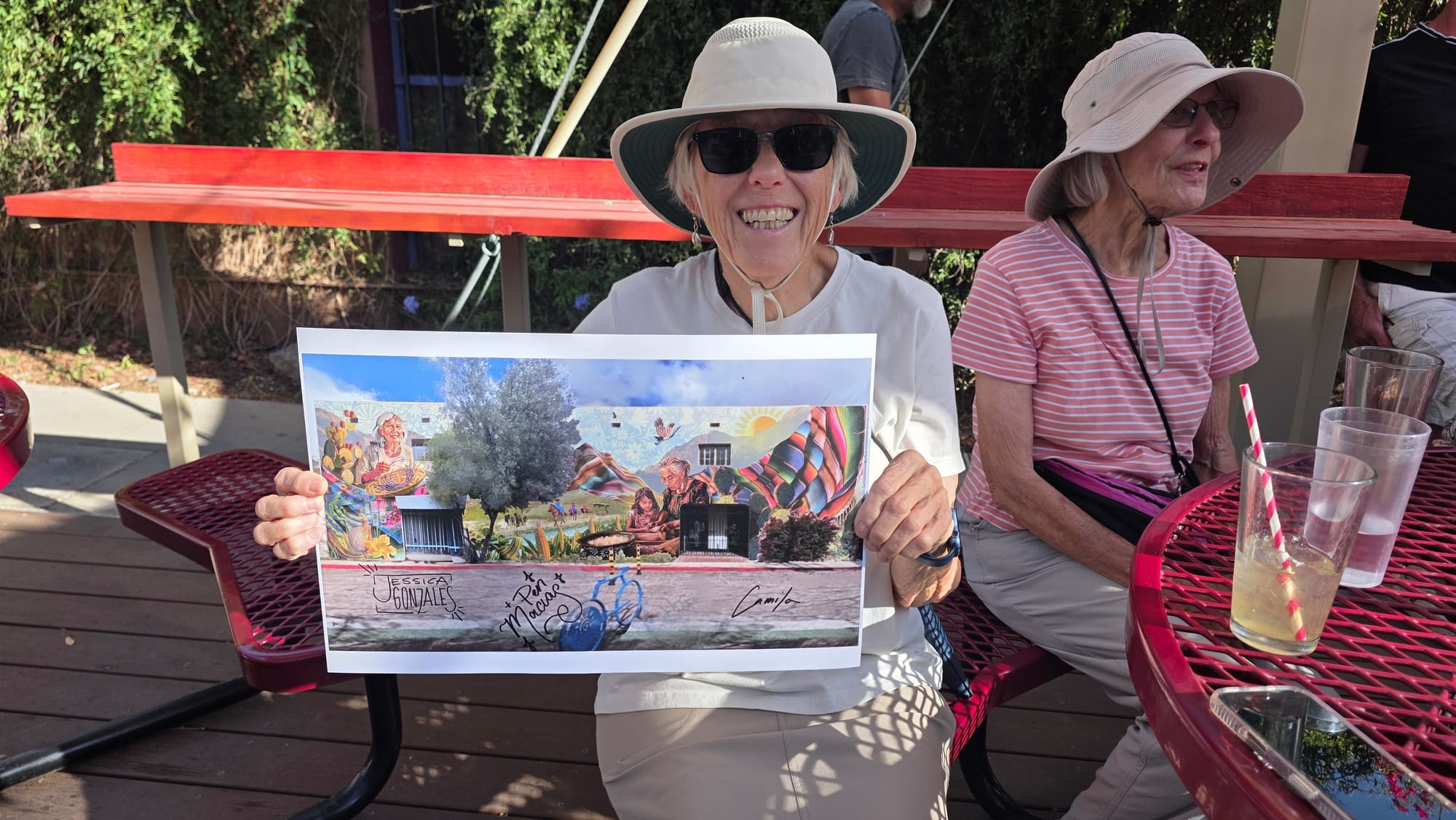
Rio Nuevo commissioned muralists Jessica Gonzales, Camila Ibarra and Pen Macias to create the piece near the corner of North Court Avenue and West Washington Street, spanning two walls of the Ceres building and two walls across the street leading into Jojo's Restaurant.
Rio Nuevo hosted a watch party May 21, giving the public a chance to watch Gonzales, Ibarra and Macias paint the final touches on the mural, which was months in the making.
The artists visited the Presidio San Agustín del Tucsón Museum and participated in walking tours of the area, speaking with historians and photographers before finalizing their design, which took around three weeks to complete.
"They presented a design to us that just brought tears to our eyes," said Rio Nuevo board member Jannie Cox, who oversees the group's funding for mural projects across downtown Tucson. "These buildings just needed something more. We want it to be about the history of Tucson, and we want people to walk into it and become part of it."
The mural's theme is "Women Weaving History," designed so that everyday women can see themselves in the figures depicted.
The mural honors Tohono O'odham women, depicting a woman weaving a basket, women playing tóka, a traditional game played with oars made from mesquite branches and leather, and women planting crops at the base of Sentinel Peak along what was once the Santa Cruz River.
Your membership pays emerging journalists to cover Southern Arizona the way it deserves.
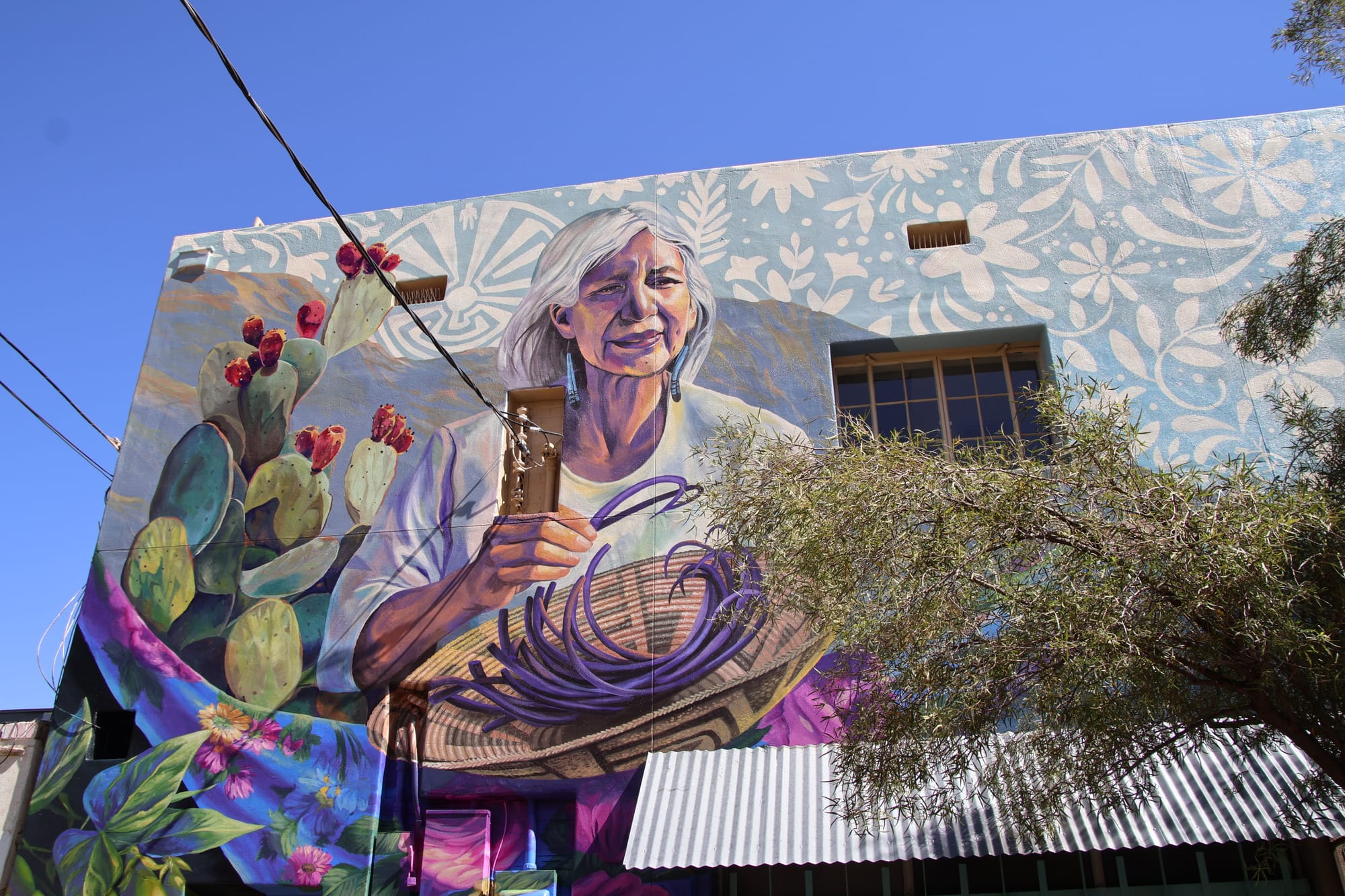
The mural also features the "three sisters," corn, squash and beans, honoring crops central to the region, and women on horseback leading a procession for El Día de San Juan, a celebration commemorating St. John the Baptist and the arrival of summer rain. A dog, butterfly and stork are hidden within the mural as a nod to the building's history as The Stork's Nest, Tucson's first maternity ward, established in 1922.
The mural incorporates additional symbols rooted in the region's living history, including the Tohono O'odham Maze of Life, the Embroidered Sun and traditional Zarape textiles.
"We saw the owner of that building tearing down some wallpaper that the previous owner covered the building with, and they discovered a wallpaper that had a dog and a butterfly in it that was dated to when the maternity ward was here in the 1930s," Ibarra said.
For Ibarra, the project was a natural extension of a lifelong creative instinct.
"I think the earliest memory I have ever, is of me creating a scooter out of construction paper in preschool, and everyone's reaction is what stuck with me: maybe I'm good at making things," Ibarra said.
Ibarra landed her first mural project in high school, but her path to becoming a muralist was not linear. She initially attended college to become an engineer, finding a position in the field after graduation.
"That felt like a safer route for me. But throughout that whole experience, I was always painting," Ibarra said.
She painted on weekends, after work and sometimes late into the night.
"It kind of stuck … and finally, about a little over a year ago, I went (into painting) full time, just because it got to the point where I had to turn down mural projects because I was working too much," Ibarra said.
When Rio Nuevo reached out to Ibarra about the project, she responded within seconds. She reflected on the process, saying it was a bonding experience not only for the artists but also for the community.
"It was a great opportunity to learn and get to know each other better. Our bond has been so great ever since we've worked on this. It's just been the most rewarding thing," Ibarra said. "Women pass down traditions, pass down culture, wear it on their sleeves, and just I want them to feel a connection to women when they see this mural. It really connects with people in the community."
That connection to generational tradition runs through the mural itself, which also features a grandmother teaching her granddaughter to make tamales, figures inspired by Macias' own daughter and grandmother.
Also known as "The Desert Pen," Macias describes her style as colorful and whimsical. She has been creating art since she was old enough to pick up a crayon, eventually attending art school after creating her first mural at 15.
She continued pursuing art in college and has been creating murals for more than two decades.
"It's such an incredible honor to do this project with these other women. They're women I've known for several years, but haven't gotten to work professionally with before," Macias said. "(Rio Nuevo) sent us a group text, and they were like, 'Would you like to do this project together?' and I was like, 'Absolutely!' That's the dream."
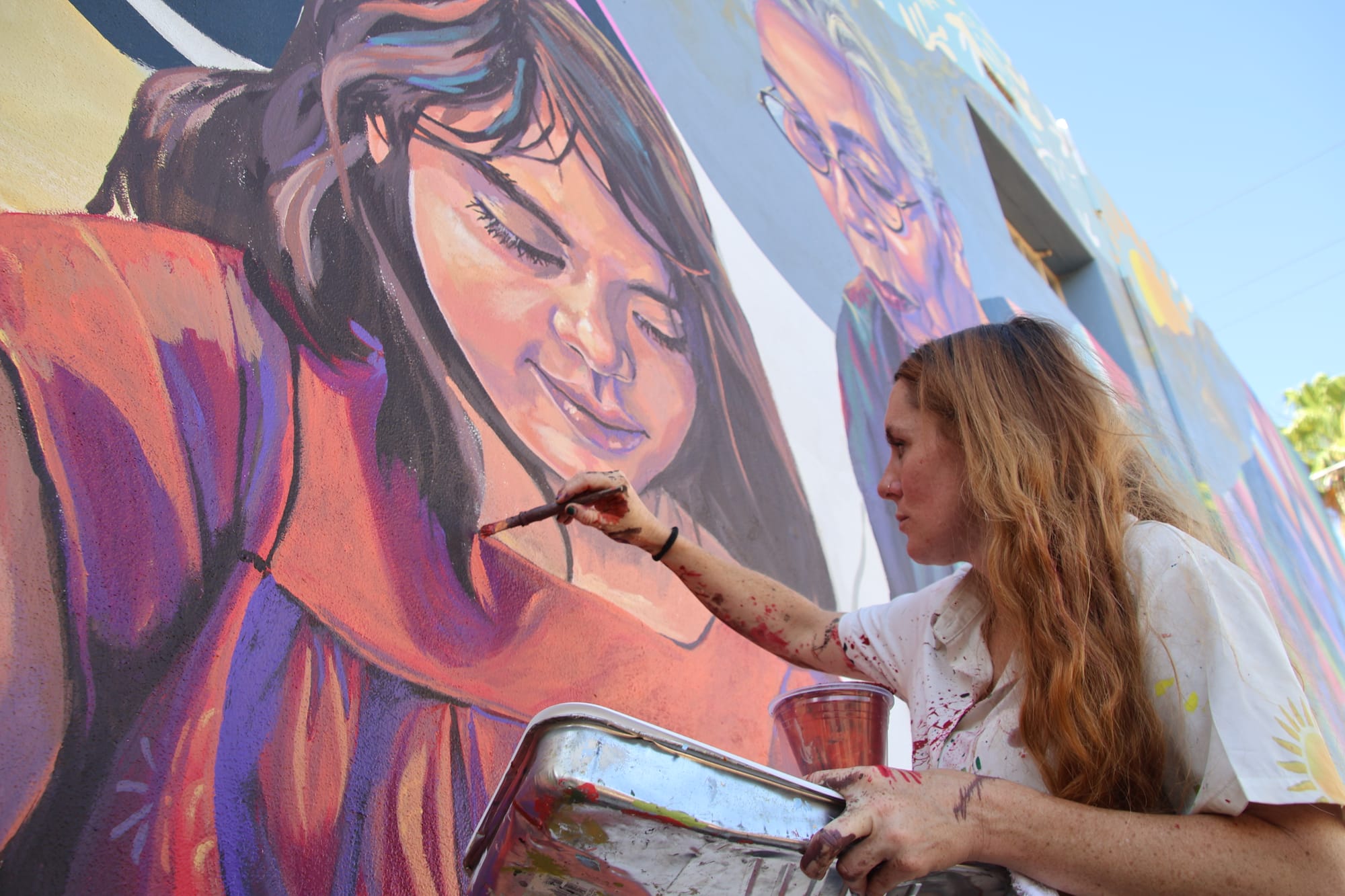
Macias called the experience a once-in-a-lifetime opportunity to truly celebrate women.
"There's not a lot of public art for the women of our city," she said, noting that the two restaurants located closest to the mural, Jojo's and Ceres, are both women-owned. "The story we really want to tell is just how women are keeping our culture alive. I hope people come and see this wall and see the women in their life that make their life so colorful."
For Gonzales, the project carried a similar personal weight. A painter, muralist and interdisciplinary artist, Gonzales said she has been making art for as long as she can remember.
"My family is artistic … and my mom recognized it at a young age, it was always very, very supported," Gonzales said. "I felt fortunate enough to always know that it was gonna be my path in life."
It was Gonzales' first collaboration with Rio Nuevo, but working alongside Macias and Ibarra, both of whom had previously worked with the organization, put her at ease.
"I appreciated the concept of having three women collaborate on this project," Gonzales said. "We got to work together to really make sure that our vision for the project felt like the right thing for the wall, and I really felt like we took a lot of time and effort to come up with something that felt genuine and authentic. It felt like it was a really good marriage of opinions and input."
Gonzales said the project was also an opportunity to grow as an artist.
"I've learned a lot from these women and from this experience, and it feels really invaluable as an artist for those reasons," Gonzales said. "The fact that we all have very different visual languages and different styles and interests. Putting them together has meant that I've had to kind of get outside of my box and try new color palettes (and look) at composition differently. I'm going to take pieces of this, and I'm going to carry them through into my personal work, which is really cool."
Topacio “Topaz” Servellon is a reporter with Tucson Spotlight. Contact them at topacioserve@gmail.com.
Tucson Spotlight is a community-based newsroom that provides paid opportunities for students and rising journalists in Southern Arizona. Please consider supporting our work with a tax-deductible donation.