'Democracy Now' documentary screens at Tucson's Loft Cinema
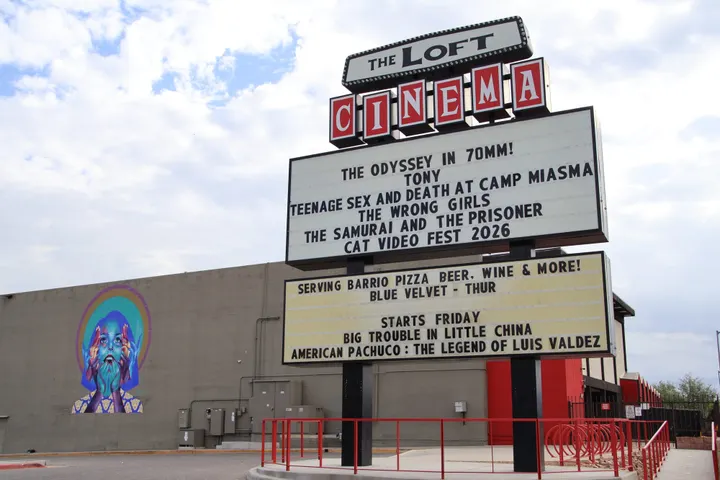
"Steal This Story, Please!," a documentary following Democracy Now co-founder Amy Goodman through three decades of independent journalism, is screening at The Loft Cinema in Tucson through June 18.
A documentary about one of independent journalism's most recognizable voices is playing in Tucson through June 18, arriving at a moment when press freedom is under scrutiny nationwide.
The Loft Cinema is screening "Steal This Story, Please!," a documentary following Amy Goodman, journalist and co-founder of the independent, award-winning daily news hour "Democracy Now," through three decades of on-the-ground reporting.
The film, created by Oscar-nominated filmmakers Carl Deal and Tia Lessin, takes its title from the show's desire to have its stories picked up and amplified by mainstream news outlets.
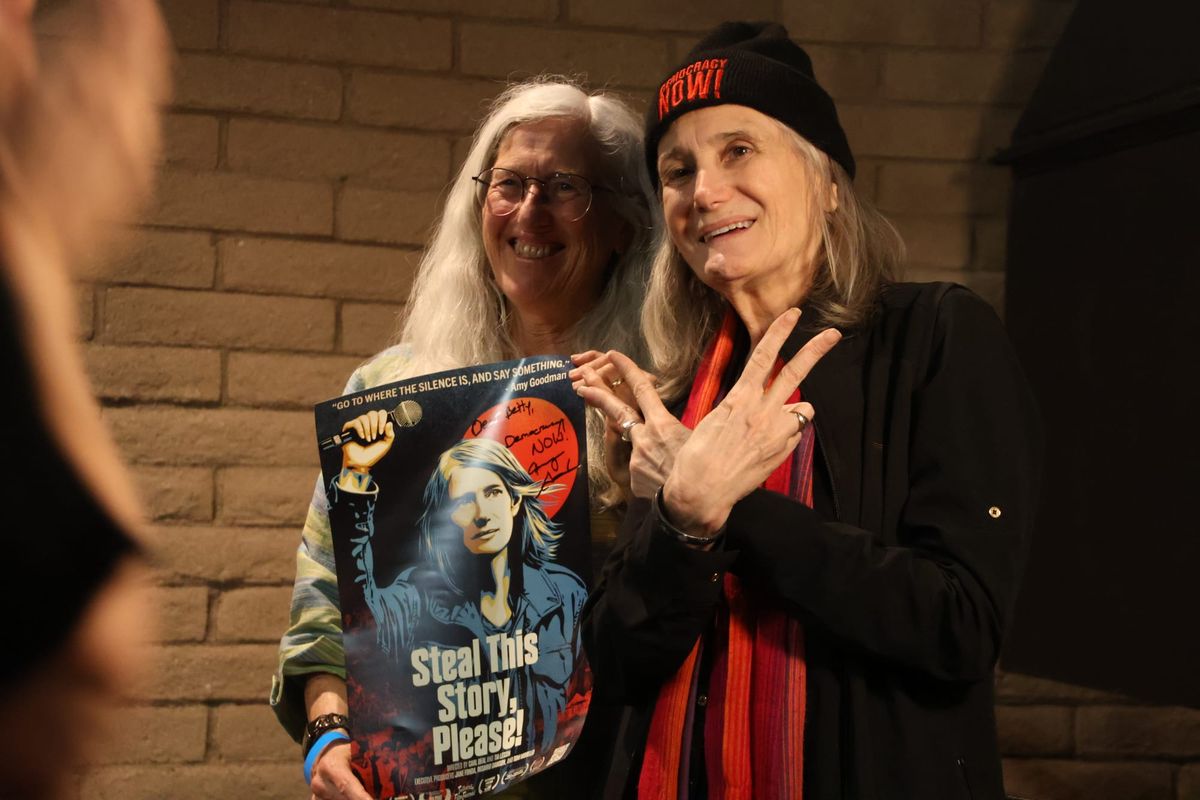
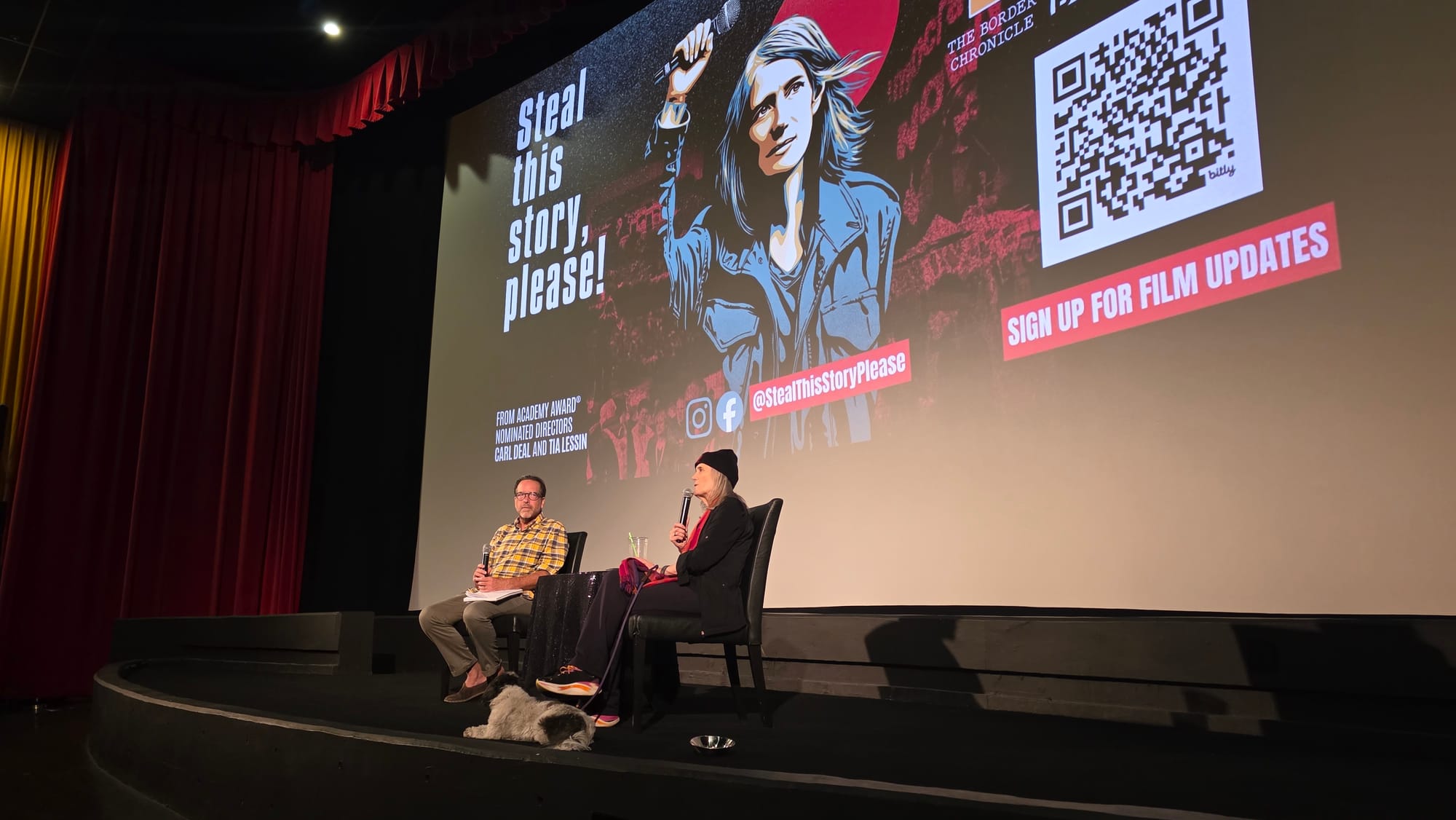
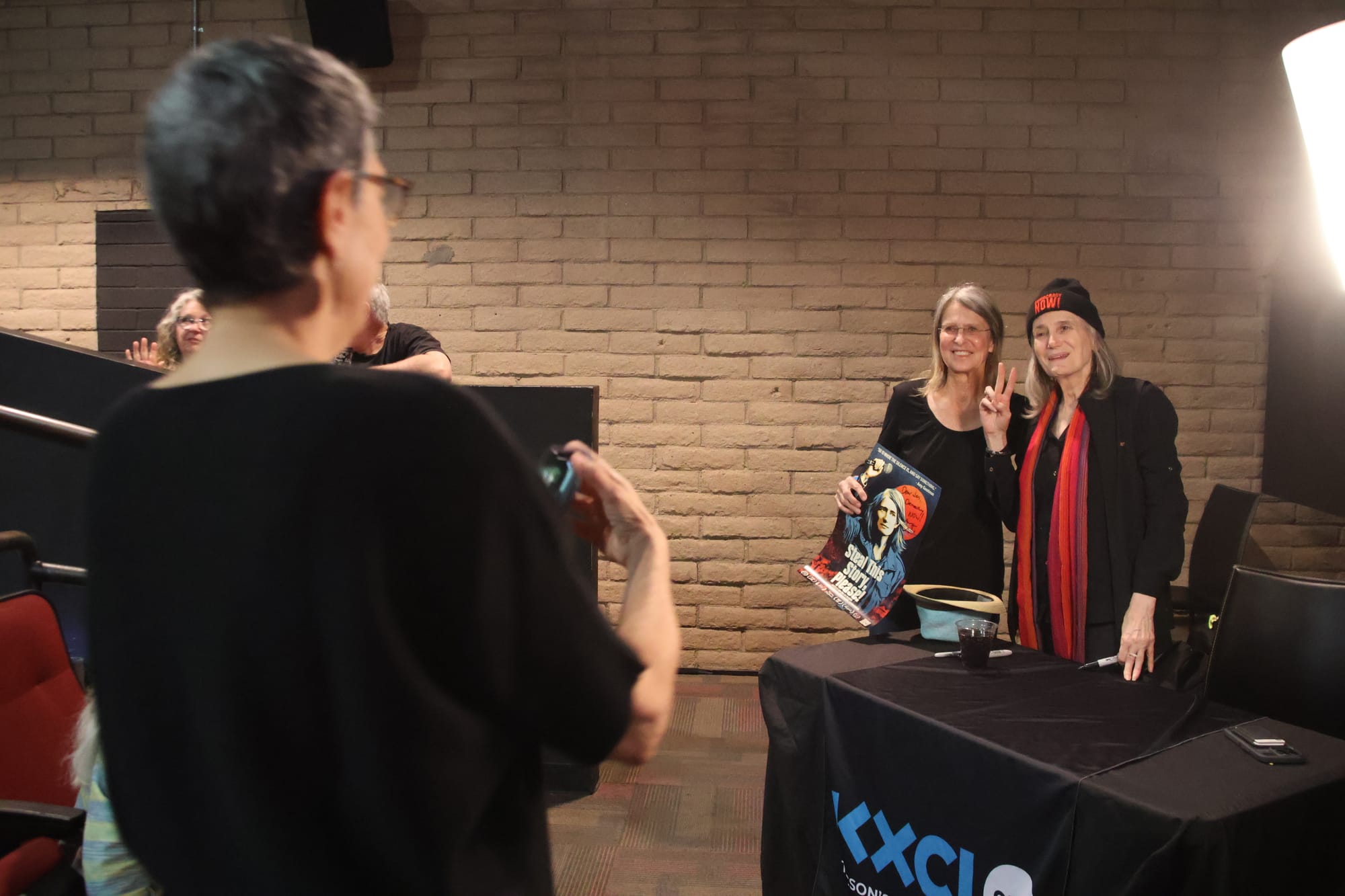
Goodman, who was in Tucson May 29 and 30 for a post-screening Q&A, described the program as a "grassroots, unembedded, independent, international investigative news hour."
The documentary traces Goodman's journalism roots from supporting her brother's homemade newspaper as a child to becoming editor-in-chief of her high school paper, with her motivation rooted in her family's social justice work.
One example featured in the documentary is Goodman's 2016 coverage of the Dakota Access Pipeline, in which she filmed security guards using pepper spray and attack dogs against Native American-led protesters. The story, initially published on Democracy Now, was later picked up by NPR, CBS and Fox News.
"I think for me it was just that that's how I felt most comfortable approaching the world, and how I could steep myself in social justice issues since I was a kid," Goodman told Tucson Spotlight. "Each story reinforces that."
Tucson Spotlight is free for every reader because donors make it possible. Join them.
Before co-founding "Democracy Now" in 1996, Goodman and journalist Allan Nairn were beaten by Indonesian soldiers while covering the East Timor independence movement in 1991, after witnessing the Santa Cruz massacre, in which soldiers killed 270 pro-independence demonstrators during the U.S.-backed occupation of the region.
The experience only deepened her commitment to the work.
"It just increased my commitment that we have a job to do, especially coming from the most powerful country on earth as American journalists, and that is to expose what is happening, hold those in power to account," Goodman said.
Founded in 1996, "Democracy Now" takes its name from the assertion "Democracy, now!" and has built its mission around independent journalism and amplifying voices often excluded from mainstream media.
Though she has been arrested and faced warrants for her arrest simply for covering news, Goodman's commitment to the work has not wavered.
"I would quote Isabel Allende, the great Chilean writer, who said, 'For every thug there is in a community, there are 1,000 compañeras and compañeros who are there to help,'" Goodman said. "There are so many more people who are there to help, and our job as journalists is to go to where the silence is, and so often it isn't silent there. It's raucous, it's rowdy. People are organizing, people are helping other people, they're building community, but it doesn't hit the corporate media radar screen. That's where we live."
Actions by the Trump administration have affected journalists across both nonprofit and corporate media. In May, President Donald Trump signed an executive order cutting all CPB funding for NPR and PBS. In July, the administration clawed back $1.1 billion in CPB appropriations, leading to the dissolution of the nearly 60-year-old corporation in January.
Seventy percent of the corporation's funding had supported more than 1,500 public radio and television stations, including smaller and rural outlets.
The FCC, whose chair was appointed by Trump, has opened inquiries into CBS, ABC and NBC over editorial decisions. Trump has also filed lawsuits against the Wall Street Journal, the New York Times and the BBC over unfavorable coverage.
"(Trump) calls the media, 'The enemy of the people,'" Goodman said. "Nothing could be further from the truth."
Denis Moynihan, Democracy Now's special projects coordinator, who accompanied Goodman on the documentary tour, put it more bluntly.
"Driving much of it is greed and this attempt to consolidate authoritarian power," Moynihan said. "Suppressing the press, controlling the press, and building a compliant press is critical for authoritarians, but there's also, I think, an emerging awareness that we need a vibrant, free press in this country. In practice we have to fight every day to try to do the good work, the journalism that's required, but also to protect the institutions (of press)."
Goodman said criticism has not shaken her commitment to the work.
"You're going to get a lot of pushback, but there's a reason why you're a journalist," Goodman said. "There's a reason why journalism is protected by the U.S. Constitution. It's essential to the functioning of a democratic society, and the flip side of that is the public's right to know."
Goodman said looking away from difficult stories amounts to abandoning the responsibilities of the profession.
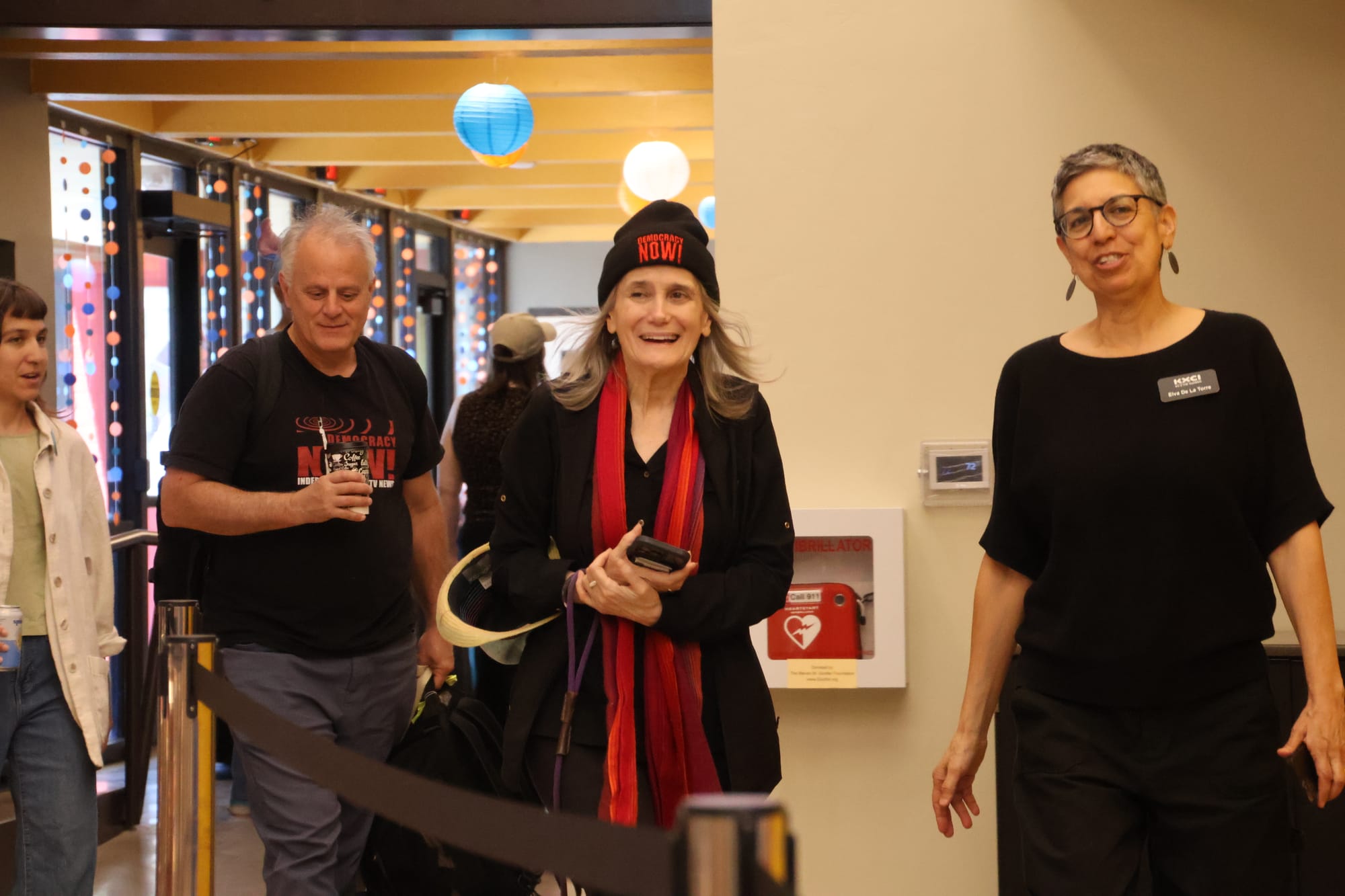
The screening drew support from one of Tucson's longest-running independent media partners. Radio station KXCI, which has broadcast "Democracy Now" since the late 1990s, hosted a pre-screening reception with Goodman at the May 30 showing.
"Amy Goodman has been a huge supporter of KXCI and someone who champions independent local community radio stations from the very beginning," said Executive Director Elva De La Torre.
KXCI is the only radio station in Tucson that is a member of the National Federation of Community Broadcasters, alongside stations in Patagonia, Bisbee and the Tohono O'odham Nation.
"KXCI is one of very few stations in the country left who are completely 100% independent. We really are listener supported," De La Torre said. "We continue to proudly air Democracy Now, because we believe in independent journalism and independent media. We believe that it's really important to make sure that voices are uplifted and broadcasted."
That connection to independent journalism runs deep at the station.
KXCI Director of Operations and Donor Relations Amanda Shauger started at the radio station as a volunteer, later learning digital editing skills that allowed her to cover local events for the station.
She documented Dick Cheney's visit to the Pima County Fairgrounds in 2004, Teresa Heinz-Kerry speaking at the Tucson Convention Center during her husband's presidential campaign and filmmaker Michael Moore's visit to Tucson alongside Linda Ronstadt.
She also pitched stories to "Democracy Now" during Goodman's second visit to Tucson, which had been the first place Democracy Now ever broadcast outside its New York studio.
"I had heard about (University of Arizona) students who were being told they couldn't register to vote here," Shauger said. "Their permanent residence was allegedly somewhere else, and it had to do with where they live. But the law in Arizona is that all you have to do is be a resident of Arizona for 30 days, and you can register (to vote). Their rights were being curtailed."
It's a sentiment Goodman said drives everything Democracy Now does.
"We cannot achieve democracy in any permanent way. We have to fight for it every day, and that I believe is what the practice of journalism is all about," Goodman said.
Topacio “Topaz” Servellon is a reporter with Tucson Spotlight. Contact them at topacioserve@gmail.com.
Tucson Spotlight is a community-based newsroom that provides paid opportunities for students and rising journalists in Southern Arizona. Please consider supporting our work with a tax-deductible donation.