Border immersion brings student research to Tucson
ASU students gathered in Tucson to present original research on migration and borders after spending a day experiencing the U.S.-Mexico border crossing firsthand with BorderLinks.
For one day, students traded the classroom for the desert border, walking through Nogales to experience firsthand what migrants face when crossing, then returned to share what they found.
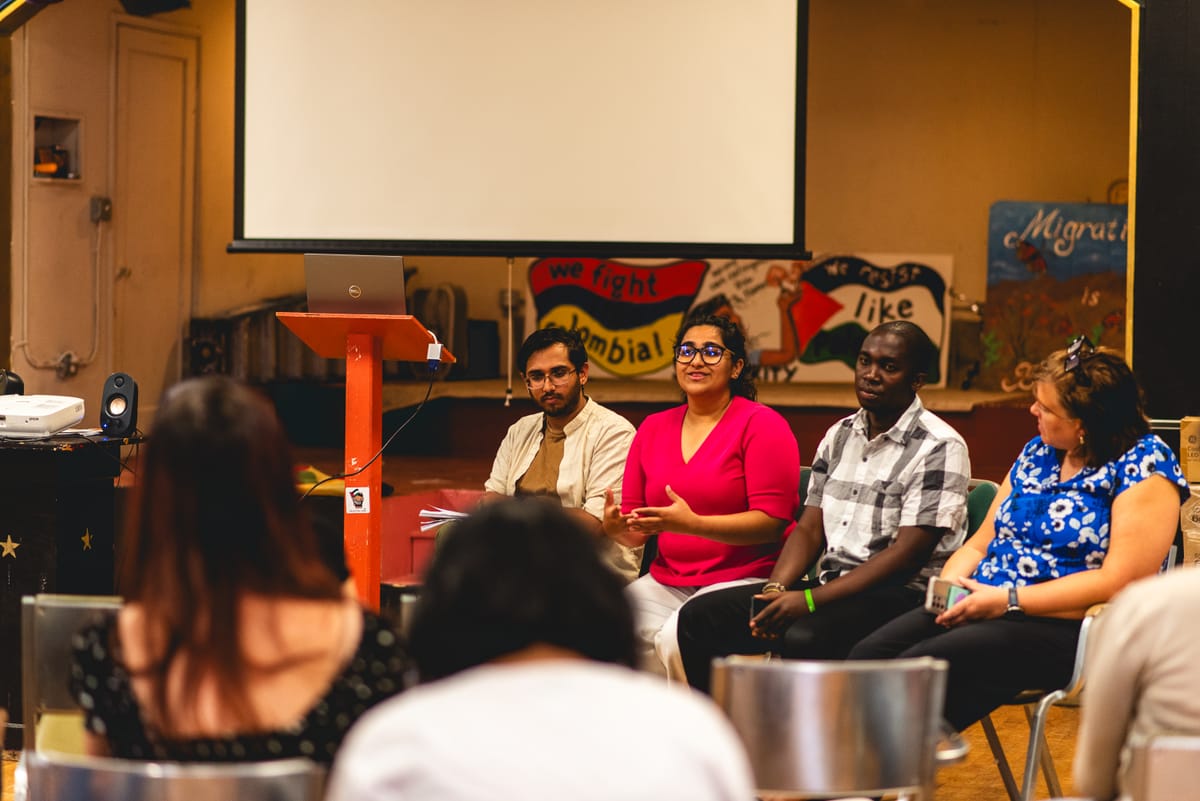
The Barrett Borderlands Future conference, organized by BorderLinks in collaboration with ASU's Barrett Honors College, drew graduate and undergraduate students to the Global Justice Center on March 22 to present their original research on migration, borders and policy.
BorderLinks is a nonprofit that offers learning opportunities that explore migration and life along the U.S.-Mexico border.
"We really love this kind of event because it's all about moving people into action," said BorderLinks co-director of education Ren Manning. "This space is crossing between academic and community organizing, and that's always what we're trying to do is move people into action like education for the purpose of people being more activated."
Nellie Jo David, co-founder of the O'odham Anti-Border Collective, delivered the keynote address, "When Borders Cross O'odham: Maintaining Connections During Active Conquests to Divide Our People," exploring the relationships between militarization, settler colonialism and borders on and off O'odham territory.
"I strongly believe that if we had just a foundational education of truth from an early age, that would make a world of difference," David said. "Now more than ever, we need to advocate ... we need to bring our children and young folks up in the truth of their history of what's happened here, and that goes a long way."
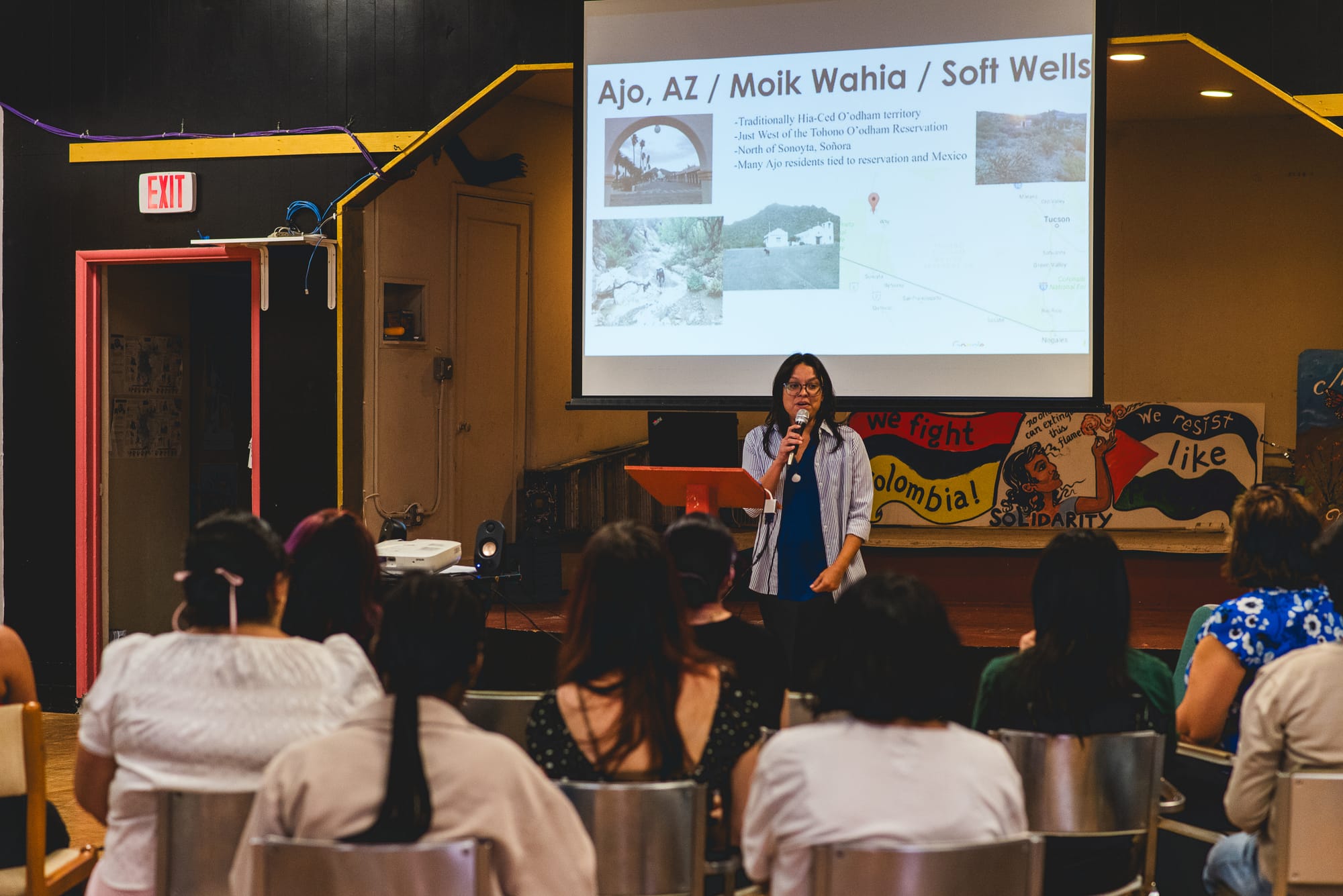
The keynote set the tone for a day of student research that examined how borders, and the systems that enforce them, shape lives on both sides.
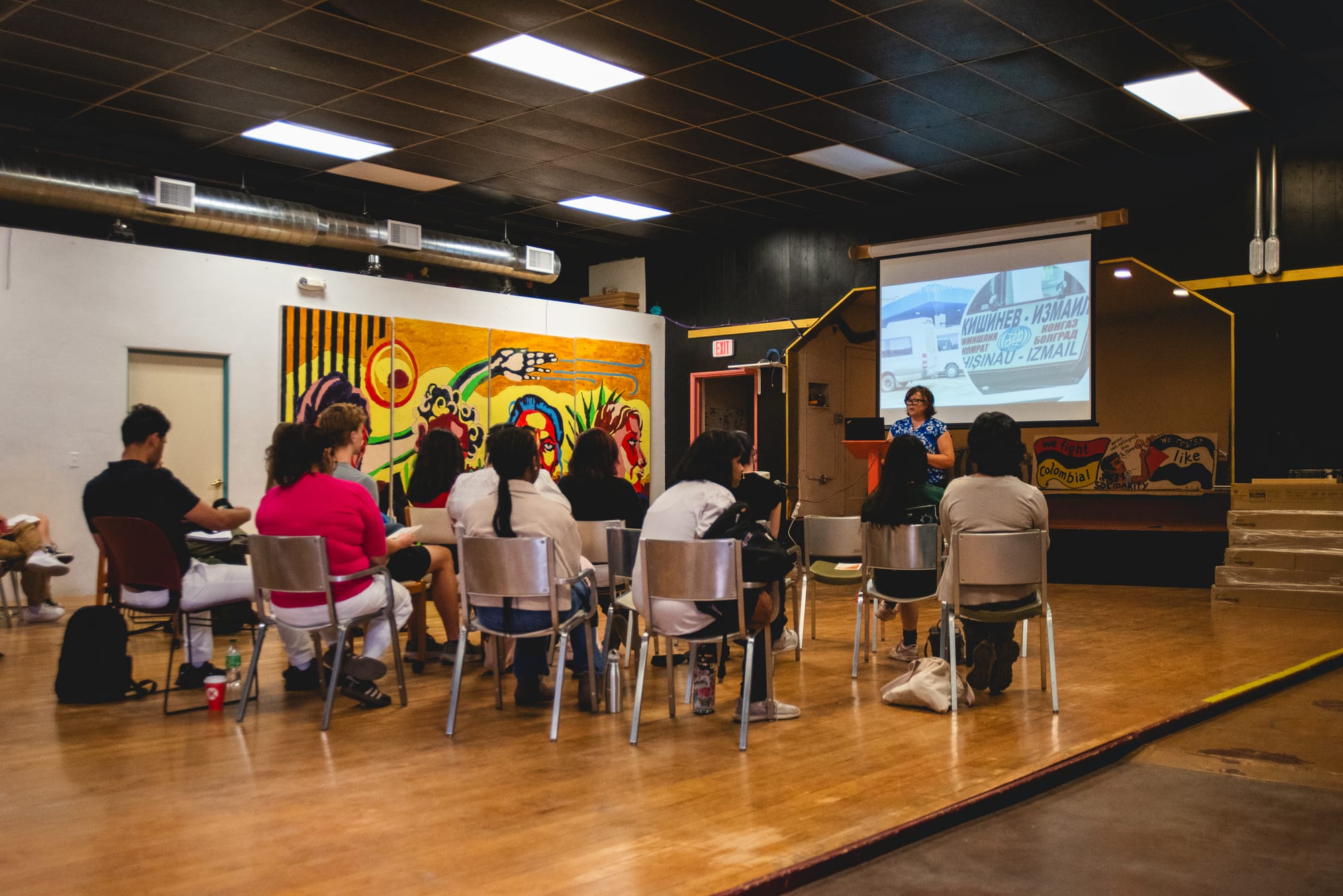
Arizona State University student Rebecca Stuch's project, "Moldova as Borderland: Histories, Boundaries and Lives Across Constructed Lines," documented the historical changes to Moldova's borders, the empires that controlled the region over time, and the implications for migration, refugees and daily life today.
Stuch said the impulse to construct borders, whether physical walls or mental "us versus them" divisions, exists everywhere, but that local communities consistently find creative ways to work around them.
"Because of these constructs we can have people that hate each other, or people who die because of it that don't need to ... having organizations that are helping bring people together to understand these differences, and how these borders are impacting people on a daily basis, is really important," she said.
ASU student Shivya Kalra's presentation, "Walls That Don't Work: Comparing Migrant Death Patterns Along the India-Bangladesh and U.S.-Mexico Borders," examined how living near a border shapes perception, and how negative portrayals of people on either side can drive division.
Kalra drew on her own experience growing up near the India-Pakistan border, where she said propaganda shaped how she saw her neighbors.
"Having this opportunity made me realize how everyone's basically the same at the end of the day," she said.
She described reconnecting with a Pakistani classmate she had once refused to speak to.
"His mom is now so sweet and she's like my mom. She sends me food whenever she sends food for him. Having a different mom in a different country, separated by a border, is so enlightening to me, because it's just a wall at the end of the day," Kalra said.
A presentation from the University of Texas at El Paso shifted the focus from borders as physical divides to the communities that form across them.
Student Sugat Borthakur's research, "Redistribution of Resources in Mexican-born Older Adults in El Paso County, Texas," examined how older adults share resources with family and friends through both formal and informal networks, challenging the assumption that they are passive recipients of support rather than active contributors.
"Most of the literature looks at older adults as passive recipients of social support. It's always, 'Oh, how are we helping older adults?' There's very, very, very little research on how older adults are helping us," Borthakur said.
ASU professor Abby Wheatley helped organize the event and said it bridges the gap between classroom learning and lived reality.
"There's a big difference between teaching a class and letting students kind of experience it for themselves," she said. "The experiential component is really important. Bringing students to see it for themselves, experience it for themselves, they start developing more complicated nuanced questions. They develop more of a passion for the work. They connect with particular groups and community members."
Marlon Bedoy is a Pima Community College student and Tucson Spotlight intern. Contact him at marl.star.nn@gmail.com.
Tucson Spotlight is a community-based newsroom that provides paid opportunities for students and rising journalists in Southern Arizona. Please consider supporting our work with a tax-deductible donation.