Annual Migrant Trail Walk concludes in Tucson
More than 40 walkers completed the 23rd annual Migrant Trail Walk, carrying crosses through 75 miles of Sonoran Desert to honor migrants who died crossing the U.S.-Mexico border near Tucson.
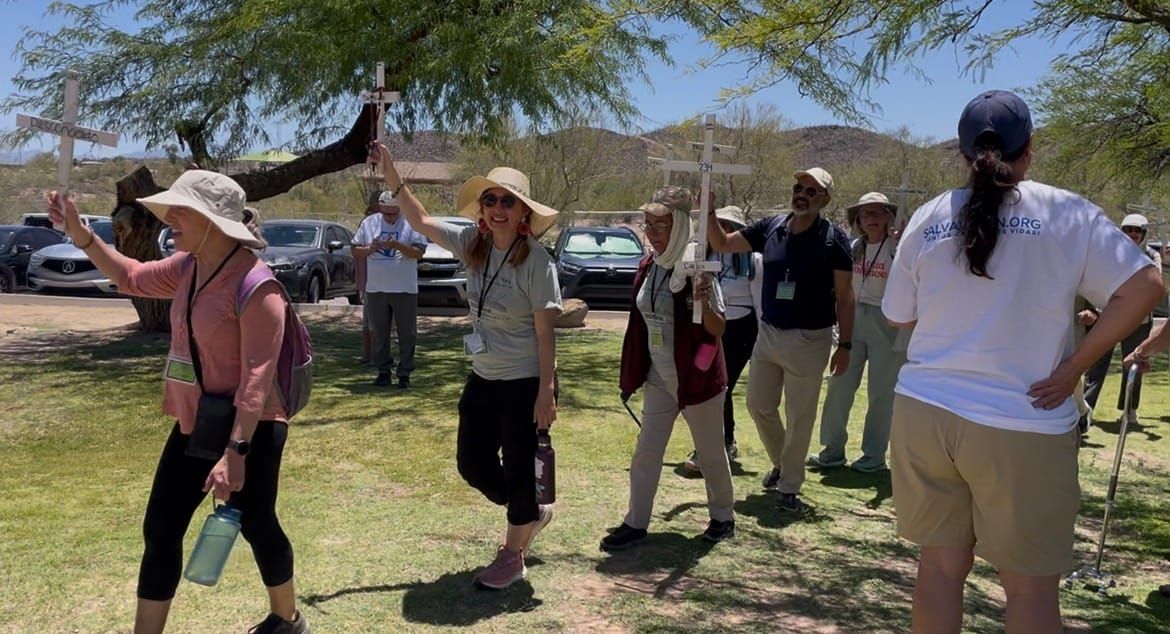
Dozens of walkers completed a 75-mile trek through the Sonoran Desert last month, each carrying a cross bearing the name of a migrant who died crossing the U.S.-Mexico border or the word "desconocido," unknown.
The 23rd annual Migrant Trail Walk drew more than 40 walkers who set out to honor and bear witness to migrant deaths in the U.S.-Mexico borderlands, completing the 75-mile route from Sasabe, near the U.S.-Mexico border, to Tucson's Kennedy Park on May 31.
For organizers, the core mission is simple: those who die crossing the desert should not be forgotten.
"We have to voice it, if we don't make a memory, it doesn't exist. We have our crosses, but what about this trail?" said Isabel Garcia, a legal defender and co-chair of the Coalición de Derechos Humanos. "It's one of those cultural memories that has to stay intact."
The Migrant Trail brings together people from around the world to advocate for change and express concern about U.S. border and immigration policies.
"I brought water to the walkers and I was so moved that I knew I had to be a part of it for the rest of my life," said Sharks, a first-time walker who previously worked with the nonprofit Humane Borders.
Share Tucson Spotlight with a friend. Every signup earns you a raffle entry to win a gift card to a local Tucson favorite. Four winners drawn August 1.
Humane Borders works closely with the Migrant Trail to maintain water stations in the Sonoran Desert along the Arizona-Mexico border wall and on routes frequently used by migrants.
"It's so incredibly vast out there. You can look and a mountain seems close, but when you inquire about how long, it's about four or five days away," Sharks said. "And being out there, not knowing where your water is coming from or where your next plate of food is coming through. It's a lot."
The walkers are supported in ways migrants are not.
"We're so careful, every hour and a half to two hours, we stop and get water. After another hour and a half, we get snacks. Dinner is provided for us, and lunch is provided for us. And that's not how it is for the migrants," said volunteer Rolande Baker. "Those are human beings who have mothers and fathers, brothers and sisters, and children. That's why we're doing what we're doing. This is what we should be taking care of."
Baker drives a support van alongside the walk, helping ensure safe travels for participants. Walkers are provided food, water, additional transportation and first aid as needed.
"We only knew 19 people's names. Everybody else, we don't know who they were. We know there were 109 people, but were only able to identify 19," Baker said. "These other people are like 'where's my aunt, uncle, brother, sister.' They're waiting for a phone call and we have no way of telling them."
Susan Schorn traveled from Austin, Texas, to walk in support of her daughter's work as a forensic anthropologist along the Texas border, where she tends to migrant remains in hopes of reuniting them with their families.
"It made me want to better understand what someone who dies on the border ends up going through. The heat and the thirst, the fatigue and the immense sense of isolation when you are in the desert," Schorn said. "As I walked holding a cross labeled 'desconocido,' I felt I was carrying their spirit. Those who died crossing the border are, above all else, brave."
Ken Jones said he has known about the trail since its start but walked for the first time this past year, traveling from Asheville, North Carolina to participate. He said it was an experience he would never forget.
"I'm so taken with the community that we have here, even though I don't live here. It's a community of love," Jones said. "I go home with a presence in me. The presence of the souls in the desert, the presence of the people still trying to get here. I will take that presence home. Our presence does change things, it does change us."
Others spoke to the bonds formed along the way.
"For seven days, I eat with you, I drink with you, and I sleep with you," said walker Don Manuel Ortiz. "It's an honor to stay in this group."
For many walkers, the journey was transformative. Most said they hoped to return next year.
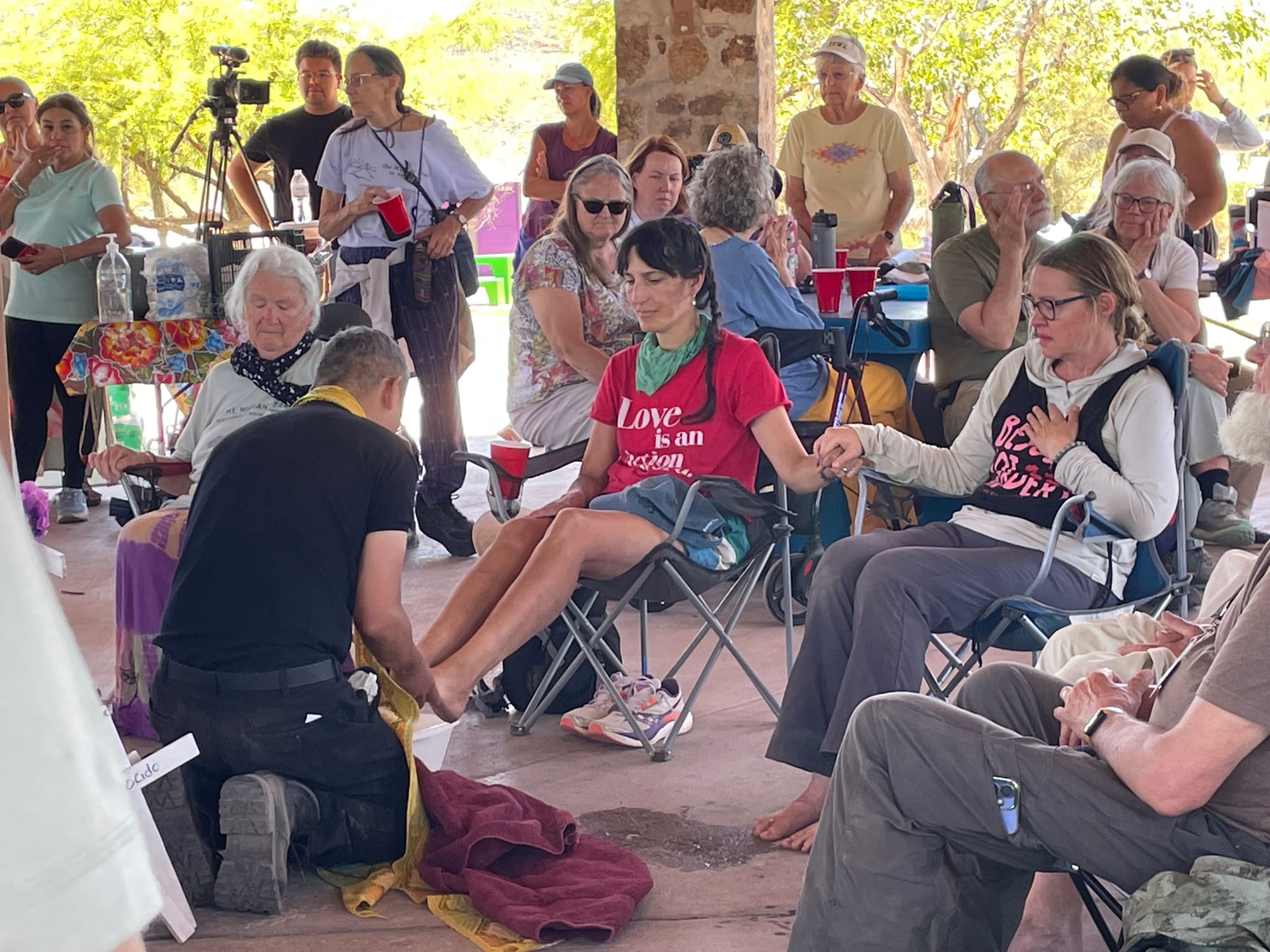
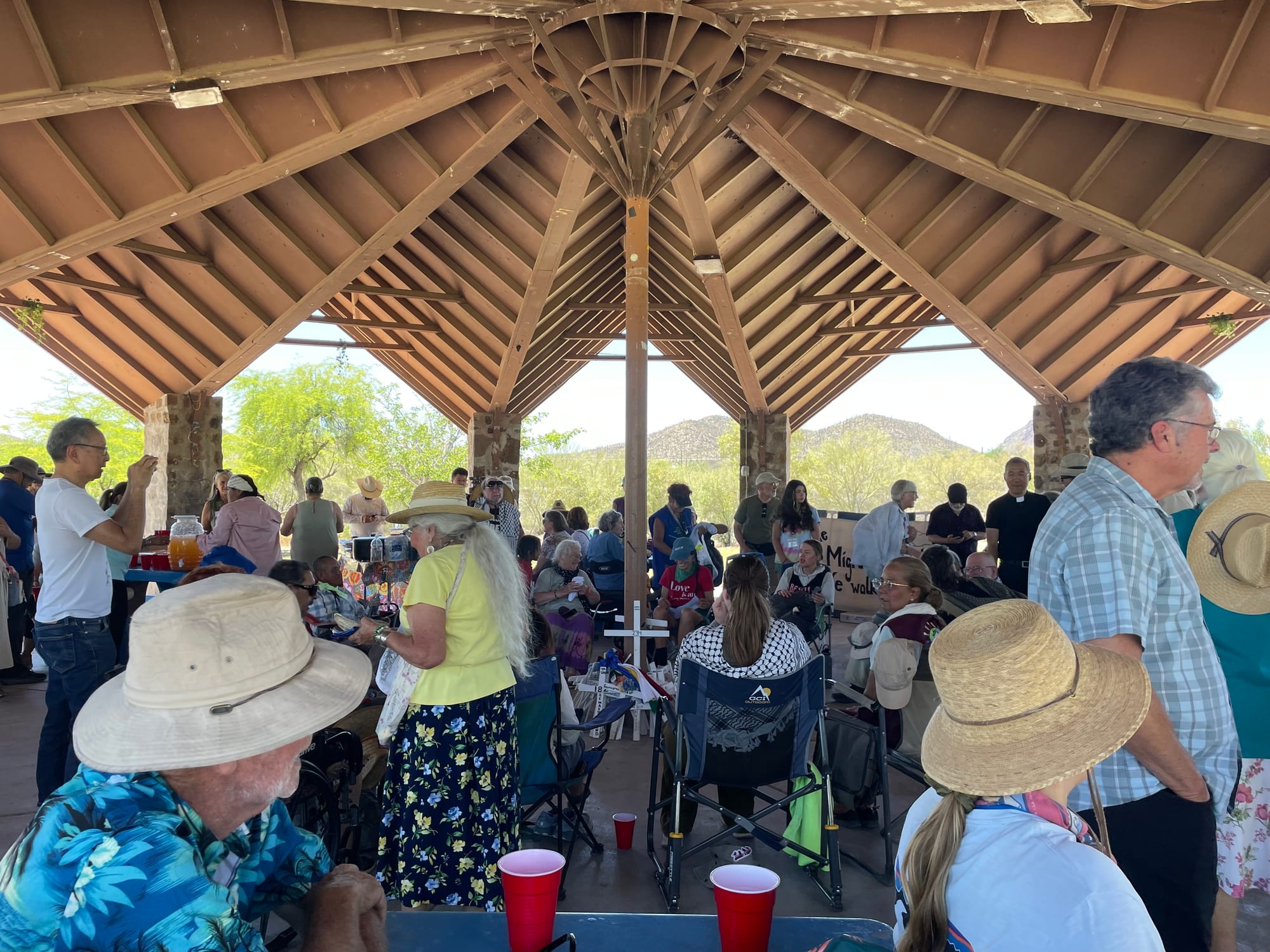
The walk concluded with a foot-washing ceremony performed by a local priest, with onlookers invited to join in singing Leonard Cohen's "Hallelujah."
"It's a special kind of closing and honoring of these people who were loved by someone," said Lulu Matute, a returning walker and organizing coordinator at School of the Americas Watch, a nonviolent grassroots movement that advocates for the closure of a U.S. combat training academy in Georgia that trains Latin American military personnel.
More information about the Migrant Trail and its mission can be found on its website.
Gabrielle Cotnoir is a University of Arizona journalism student and Tucson Spotlight intern. Contact her at gabriellecnews@gmail.com.
Tucson Spotlight is a community-based newsroom that provides paid opportunities for students and rising journalists in Southern Arizona. Please consider supporting our work with a tax-deductible donation.