Tucson Heat Summit tackles rising temps
City officials and climate experts gathered at Tucson’s Southern Arizona Heat Summit to address rising temperatures, extreme heat data and community resilience efforts.
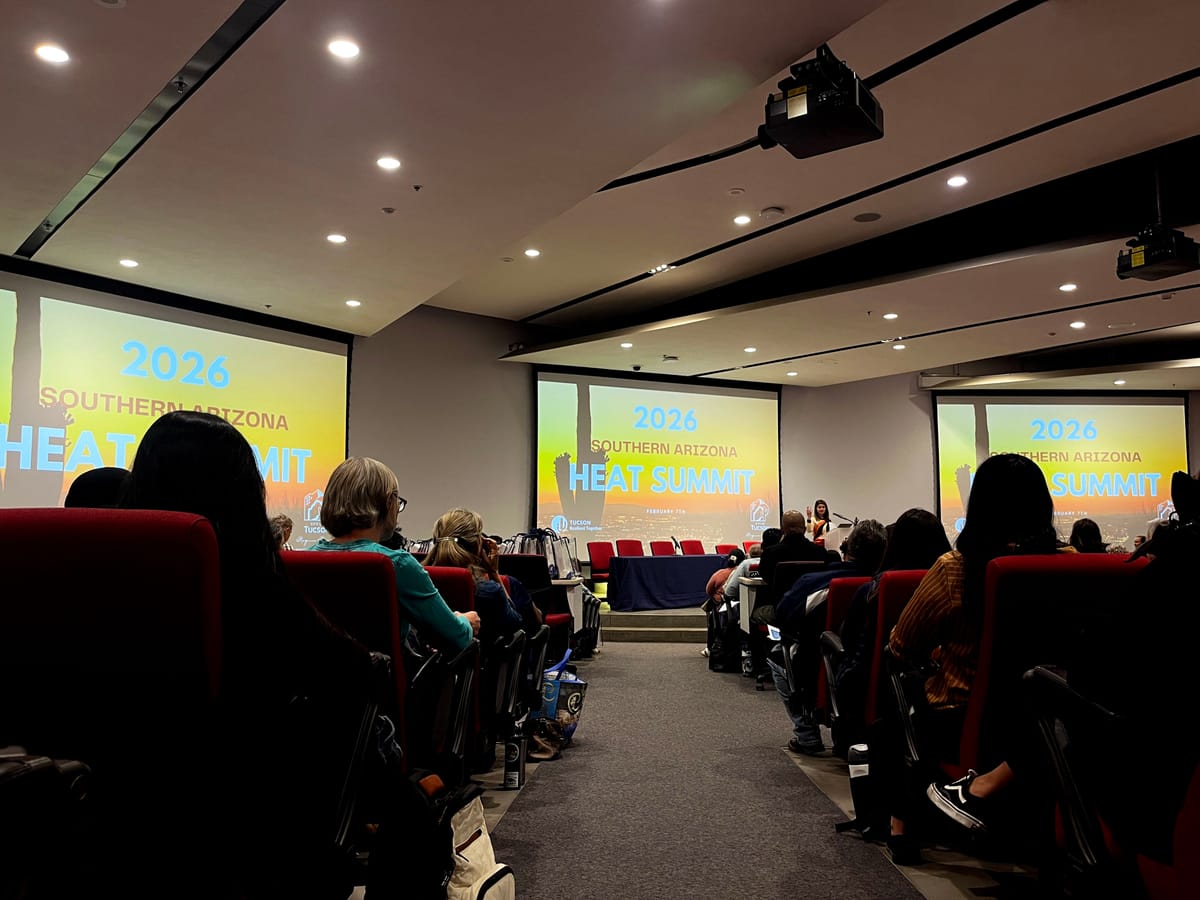
As extreme heat intensifies across Southern Arizona, local leaders and climate experts gathered to confront a growing threat that officials say is arriving earlier, lasting longer and hitting vulnerable communities the hardest.
The City of Tucson hosted its third annual Southern Arizona Heat Summit on Feb. 7 at the Environment and Natural Resources 2 building, bringing together regional officials, researchers, nonprofits and residents to discuss the impacts of rising temperatures and strategies to adapt.
The summit is a regional gathering of local officials, community leaders, nonprofits, researchers and residents to discuss the challenges and mitigation of extreme heat.
“Tucson is one of the fastest warming cities in the country,” said Tucson Mayor Regina Romero. “It hits hardest where shade is scarce, housing is older, incomes are lower and access to healthcare is limited.”
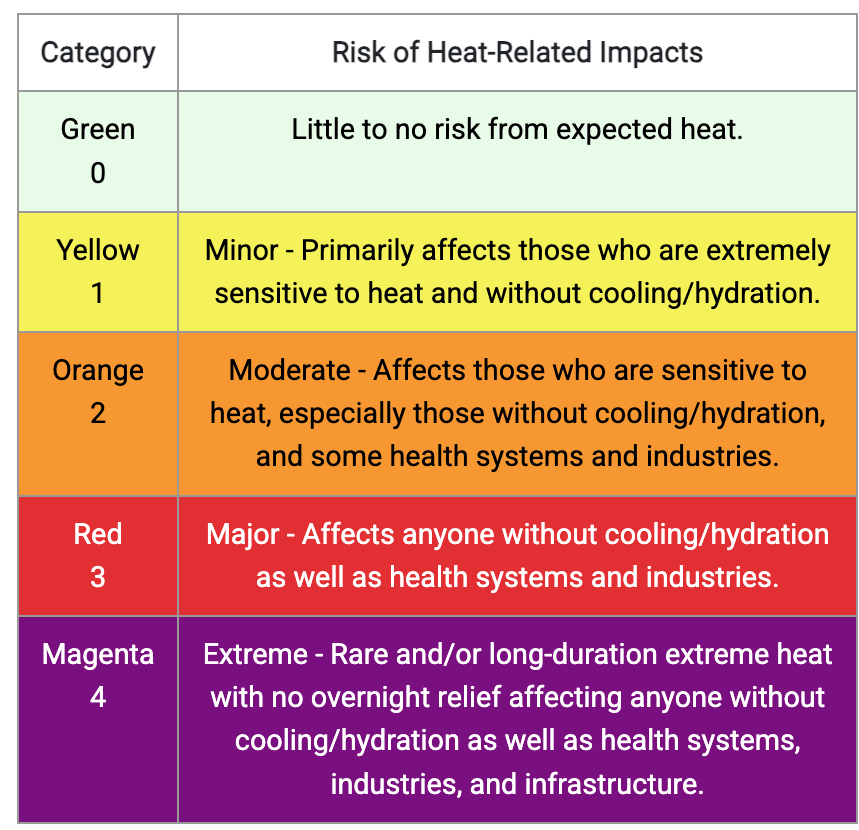
The National Weather Service uses a heat index chart to measure and track extreme heat, with temperature levels broken down by color, ranging from good (green) to extreme danger (magenta). This measurement system includes data dating back to 2005.
Looking at the data, Tom Dang, science and operations officer for the National Weather Service, said there are more red, orange and magenta heat days in recent years.
“That is what we’re talking about with climate change and the warming of the sun,” he said. “If you’re really diving into the data, what you’ll notice is that prior to 2017, there were no magenta days.”
Dang said the extreme heat days that Arizona is experiencing did not exist prior to 2017.
“We do also recognize that the key seasons they’re starting earlier and they’re lasting longer,” he said.
To better understand what those longer seasons mean for public health, the National Weather Service paired its temperature data with Arizona Department of Health Services records on heat-related illnesses from 2018 to 2024.
“What we can see is that the most heat related issues here in Pima County, they were reported in 2023 and 2024,” Dang said.
Dang noted that the data showed emergency room visits on days categorized as relatively warm are gradually decreasing, saying this reflects community efforts to protect one another from extreme heat.
Participants in the summit also heard about how the state has been aligning heat resilience efforts throughout each county.
“Our focus is on ensuring that whether you live in a rural town or a major metro area, the standard of protection remains high and coordinated across the board,” said Eugene Livar, chief heat officer for the Arizona Department of Health Services.
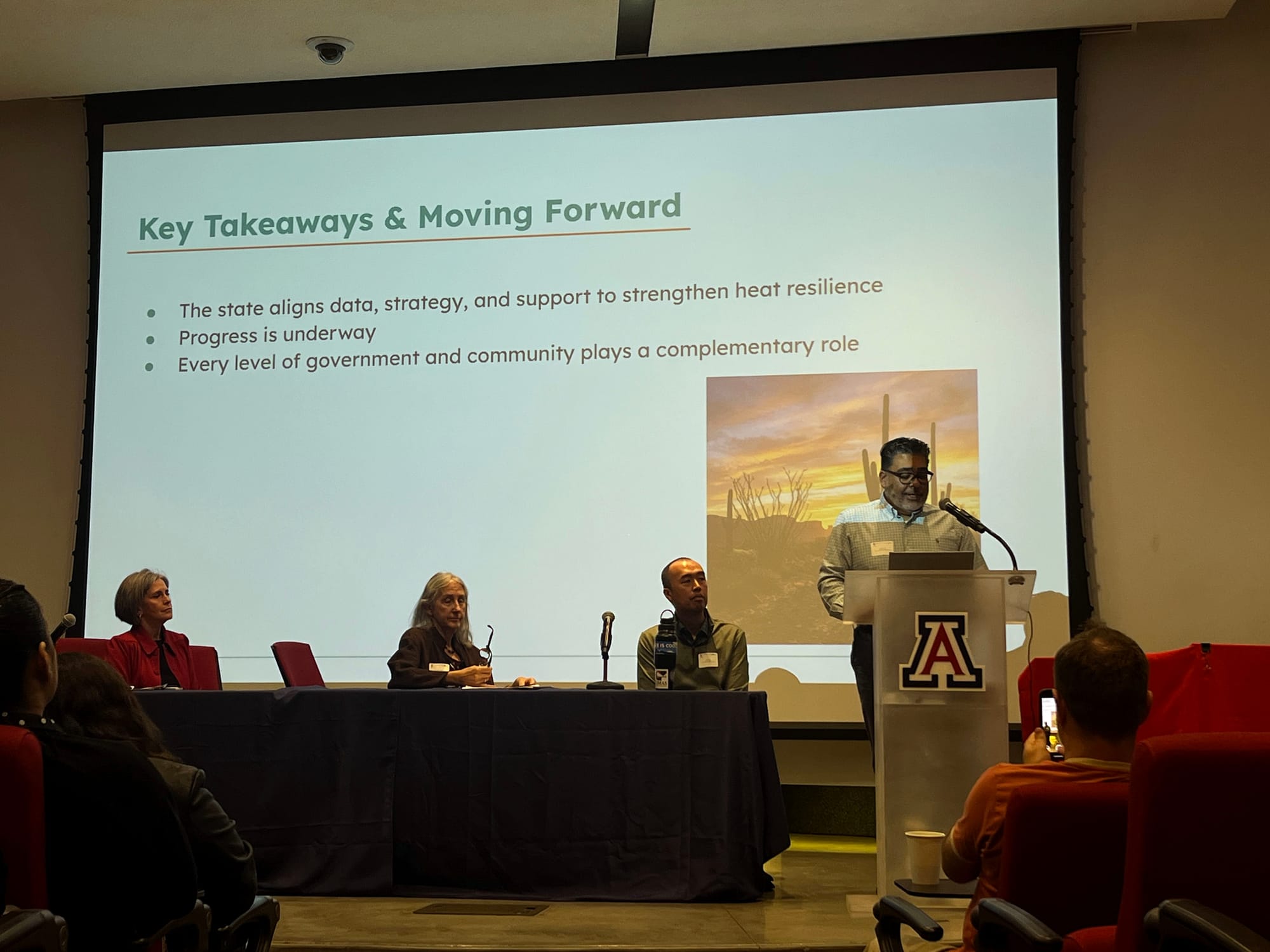
As chief heat officer, Livar looks at the big picture based on weather data.
“This data allows the state to allocate resources where they are needed more and ensure our response is grounded,” he said. “We provide guidance and support that helps our local partners.”
Tucson has positioned itself as a national leader in heat mitigation efforts, developing an award-winning heat action roadmap, adopting a heat worker protection ordinance, advancing policies that help inform resilience efforts at the state level and participating in a heat simulation at Harvard University, sharing life-saving policies and strategies with cities across the country, Romero said.
“This kind of peer learning matters and it reinforces that local action can shape national practice,” she said.
The summit included informational sessions in the morning on mitigating heat in vulnerable communities and amplifying youth voices. After lunch, participants split into breakout groups for three additional afternoon sessions.
With climate funding becoming less reliable and science becoming politicized, cities like Tucson have to be resourceful and resilient, Romero said.
“This particular community, Tucsonans, we know how to find a way,” she said.
Arilynn Hyatt is a journalism major at the University of Arizona and Tucson Spotlight intern. Contact her at arilynndhyatt@arizona.edu.
Tucson Spotlight is a community-based newsroom that provides paid opportunities for students and rising journalists in Southern Arizona. Please consider supporting our work with a tax-deductible donation.